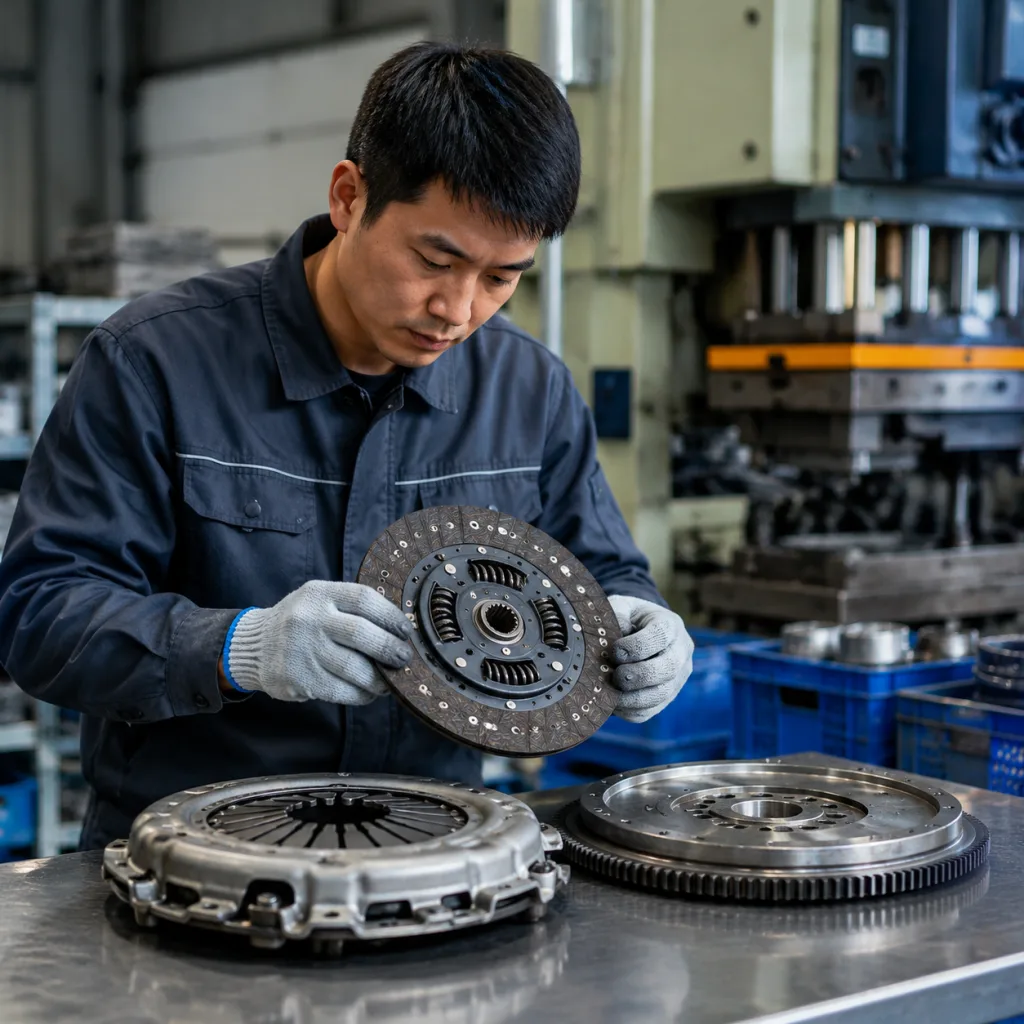
For procurement teams sourcing a clutch kit Genesis aftermarket replacement, the biggest risk is not price alone. It is fitment drift: release height, spline count, friction diameter, diaphragm spring load, and flywheel interface must match the vehicle application exactly. A valid replacement should be verified against OE dimensions, torque capacity, and pedal-feel targets before it enters stock or workshop use. Driventus supplies clutch kits as an independent aftermarket manufacturer; brand names are referenced for fitment only. We build to controlled process standards under IATF 16949:2016 and ISO 9001:2015, with material and compliance practices aligned to export market requirements such as REACH (EC) No 1907/2006 where applicable. This post explains what buyers should verify, how replacement quality is checked, and where to review related product and OEM support information.
What a correct replacement kit must match
A clutch kit is not interchangeable by appearance alone. For Genesis applications, procurement teams should confirm the following before approving a replacement part:
Disc outside diameter and friction face width
Spline count and hub profile
Pressure plate bolt pattern and cover height
Release bearing type and contact geometry
Clamp load and pedal-effort window
Flywheel surface compatibility for single-mass or dual-mass systems
Service-life expectations under stop-start and highway duty
Typical buyer controls should be written into the RFQ and incoming inspection record, not left as workshop judgment. For example, a replacement should be specified to the OE nominal disc diameter with a practical tolerance of about ±0.3 mm on diameter-critical interfaces, spline engagement verified to full axial insertion without binding, and cover height held tightly enough to preserve release travel and pedal ratio targets. If the application uses a dual-mass flywheel, the supplier should state whether the kit is designed for DMF reuse, flywheel replacement, or conversion, because the wrong choice can create chatter, overheating, or incomplete release even when the part “fits.”
When these variables are controlled, the replacement behaves like the OE assembly in installation and operation. If any one dimension is off, technicians can see chatter, incomplete release, or premature wear even when the kit “fits” loosely in the bellhousing.
Dimensional checks buyers should request
Procurement teams should ask suppliers for a drawing or inspection sheet tied to the exact application. For replacement sourcing, the key data points are measured, not assumed.
Check point
What to verify
Why it matters
Disc OD
Matches OE nominal diameter
Affects torque transfer and thermal capacity
Hub spline
Count and major/minor diameter
Prevents input shaft mismatch
Pressure plate
Overall height and bolt circle
Controls release travel
Release bearing
ID, OD, and contact face
Avoids noise and uneven loading
Rivet and lining spec
Material and thickness
Determines wear rate and engagement feel
Runout
Measured after assembly
Reduces judder and vibration
Clamp load
Measured at specified installed height
Confirms holding capacity under peak torque
</tr></thead><tbody> </tbody></table>A practical procurement request should also include tolerances and units. Ask for disc thickness, lining thickness, hub protrusion, and cover height in millimetres; clamp load in newtons or kilograms-force; and runout in millimetres at the specified gauge radius. As a buying rule, reject any proposal that only gives “compatible” wording without measured values, because that language cannot support repeatable stock approval or warranty defense.
If the OE reference is known, buyers should keep the cross-reference on file and match the replacement kit against it during incoming inspection. That is especially useful for multi-location repair chains that need repeatable service results across branches.
Validation testing that reduces returns
A replacement clutch kit should be validated before wide release into inventory. Driventus uses controlled inspection and test steps consistent with IATF 16949:2016 and ISO 9001:2015 expectations for traceability and process control.
Typical checks include:
Static dimensional inspection of disc, cover, and bearing components
Clamp-load verification against the target application range
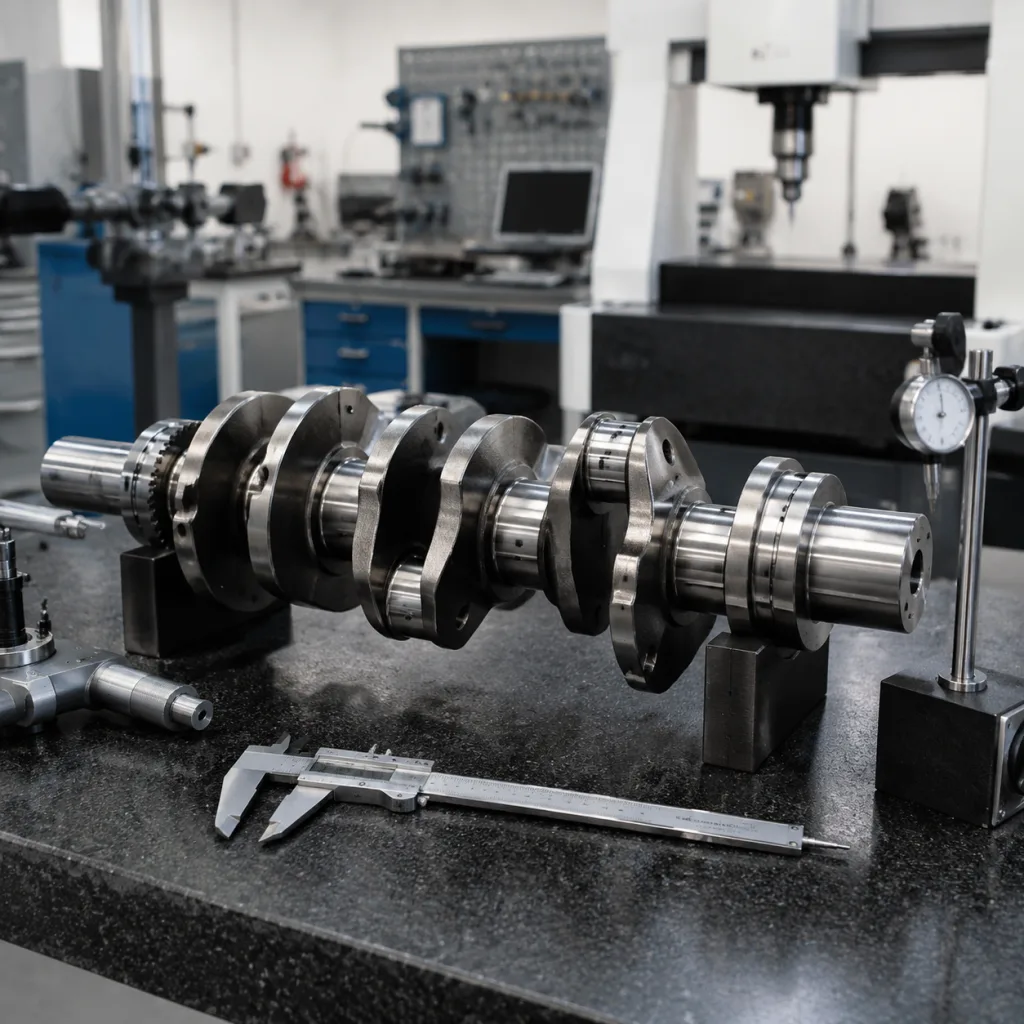
Runout and balance checks on rotating parts
Friction material inspection for uniformity and bonding integrity
Assembly fit checks with mating hardware and alignment tools
Packaging and traceability review for batch identification
In a buyer-facing validation plan, the sample size and pass/fail criteria should be stated up front. A sensible incoming lot check is 100% visual plus AQL-based dimensional sampling, with first-article approval on the first production lot and revalidation when tooling, friction material, or supplier source changes. Ask for the actual test conditions as well: installed height, temperature, applied load, and balance speed for rotating components. That turns the report from a marketing document into a usable control record.
For buyers, the practical benefit is fewer warranty claims and fewer installation disputes. If a sample set passes dimensional and functional checks, the part is more likely to perform consistently in distribution and workshop channels.
Why OE-equivalence matters for procurement
OE-equivalence is not a marketing claim; it is a purchasing control method. The goal is to secure the same functional outcome as the original part without relying on a vehicle manufacturer’s approval.
Driventus is an independent aftermarket manufacturer; brand names are referenced for fitment only.
For Genesis clutch applications, that means the replacement should be matched on:
Geometry
Materials
Release characteristics
Thermal capacity
Installation interface
In practical terms, the buyer should look for parity on the measurements that affect torque handling and drivability: disc OD, spline interface, spring rate or clamp load, facing material, and release-bearing contact style. If your fleet or channel has a target service life, make that explicit in the spec. For example, a light-duty urban use case may prioritize smooth take-up and low pedal effort, while a highway or towing profile should emphasize higher thermal margin and clamp reserve.
If the kit is intended for regional distribution, equivalence also helps simplify cataloging, training, and technical support. Buyers can compare one approved replacement against the OE baseline instead of managing multiple uncertain variants.
Where Driventus fits in the sourcing process
Driventus supplies clutch kits and other engine and powertrain components from Taizhou, Zhejiang, for B2B customers in more than 60 export markets. Buyers can review our catalog, check the quality system, and explore custom manufacturing for private-label or application-specific needs.
For teams that manage broader engine programmes, the engine components range can also support consolidated sourcing across adjacent part families. That can reduce vendor count and simplify incoming inspection rules.
For commercial discussions, MOQ, packing format, and lead time should be confirmed by application and order volume. As a sourcing baseline, buyers should expect MOQ to vary by kit family and packaging requirement, with standard export cartons usually more efficient than mixed SKUs. Price should be quoted against the exact vehicle application, target certification pack, and order volume tier, because a 100-set trial order, a 500-set replenishment order, and a container-scale order will not price the same. Lead time should also be tied to stock status and test requirements: ready inventory can ship much faster than made-to-order parts that require confirmation samples, label approval, or custom packaging.
A good supplier response should include inspection data, packaging detail, clear cross-reference notes for the exact vehicle fitment, and an explicit commercial offer that separates unit price, tooling or label cost if any, and transit method.
Buying checklist for replacement approval
Use this checklist before adding a clutch kit Genesis aftermarket replacement to stock:
Confirm OE application and transmission code
Verify disc diameter, spline, and hub design
Review pressure plate height and clamp load data
Check bearing type and release geometry
Ask for dimensional records or first-article data
Confirm packaging, batch traceability, and label format
Validate against a test vehicle or bench fixture when possible
Confirm MOQ, price tier, and lead time for the target order quantity
A strong approval process should also define tolerances before purchase order release. For example, set acceptable limits for disc runout, lining thickness variation, and cover height variance, and require the supplier to state whether measurements are taken at room temperature with calibrated gauges. If the application is sensitive to pedal feel, request a sample install on the exact transmission code and capture release point, engagement point, and any noise or vibration notes.
If the supplier cannot provide measured data, the part should not be treated as a controlled replacement item. Procurement controls are cheaper than rework, returns, and workshop downtime.
Frequently asked questions
Yes, if the disc, cover, bearing, spline, and release geometry are matched to the OE application and verified by measurement. Visual similarity is not enough.
Ask for process and quality controls under IATF 16949:2016 and ISO 9001:2015. For material and export compliance, REACH (EC) No 1907/2006 may also be relevant.
Request dimensional data, traceability, and sample validation. Then confirm installation fit and functional performance on the intended transmission before release to stock.
If you need an OE-matched clutch programme, send the application details and target volume through our contact page: /contact.html