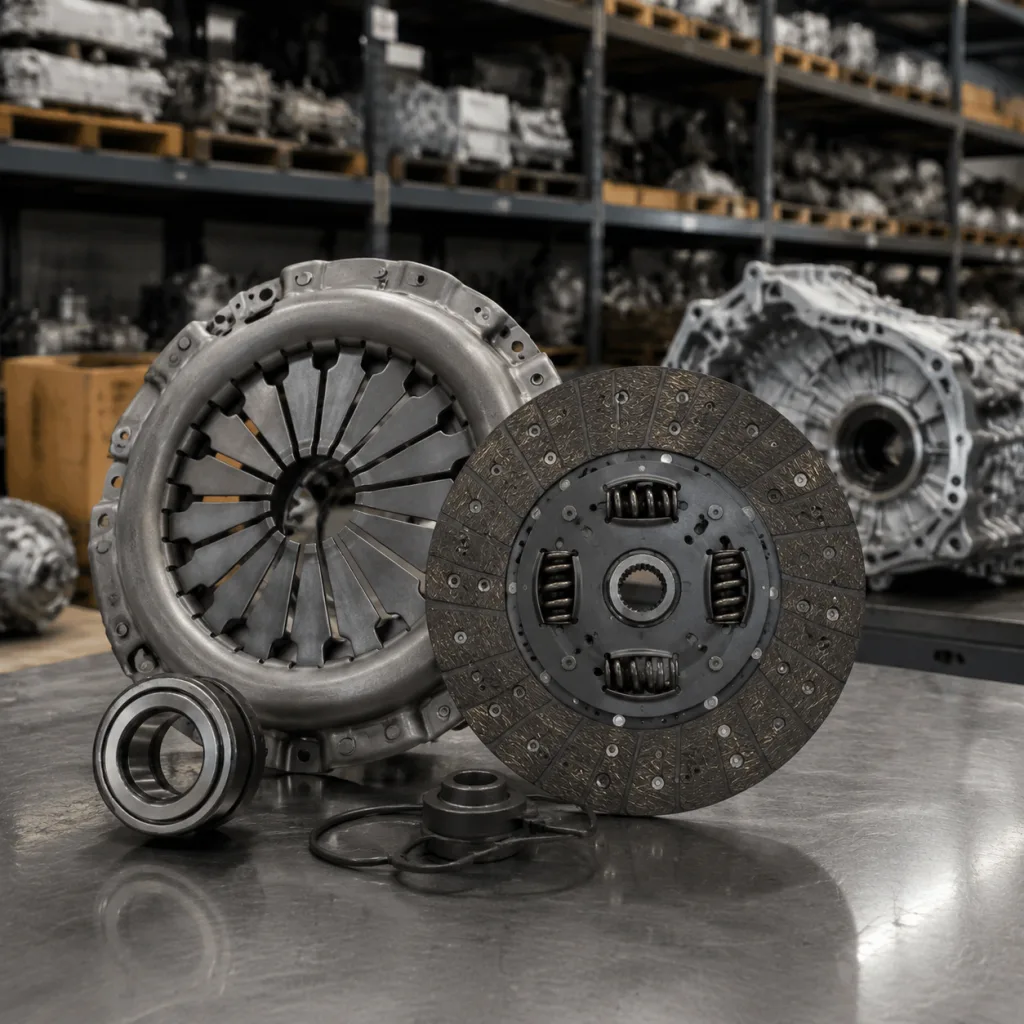
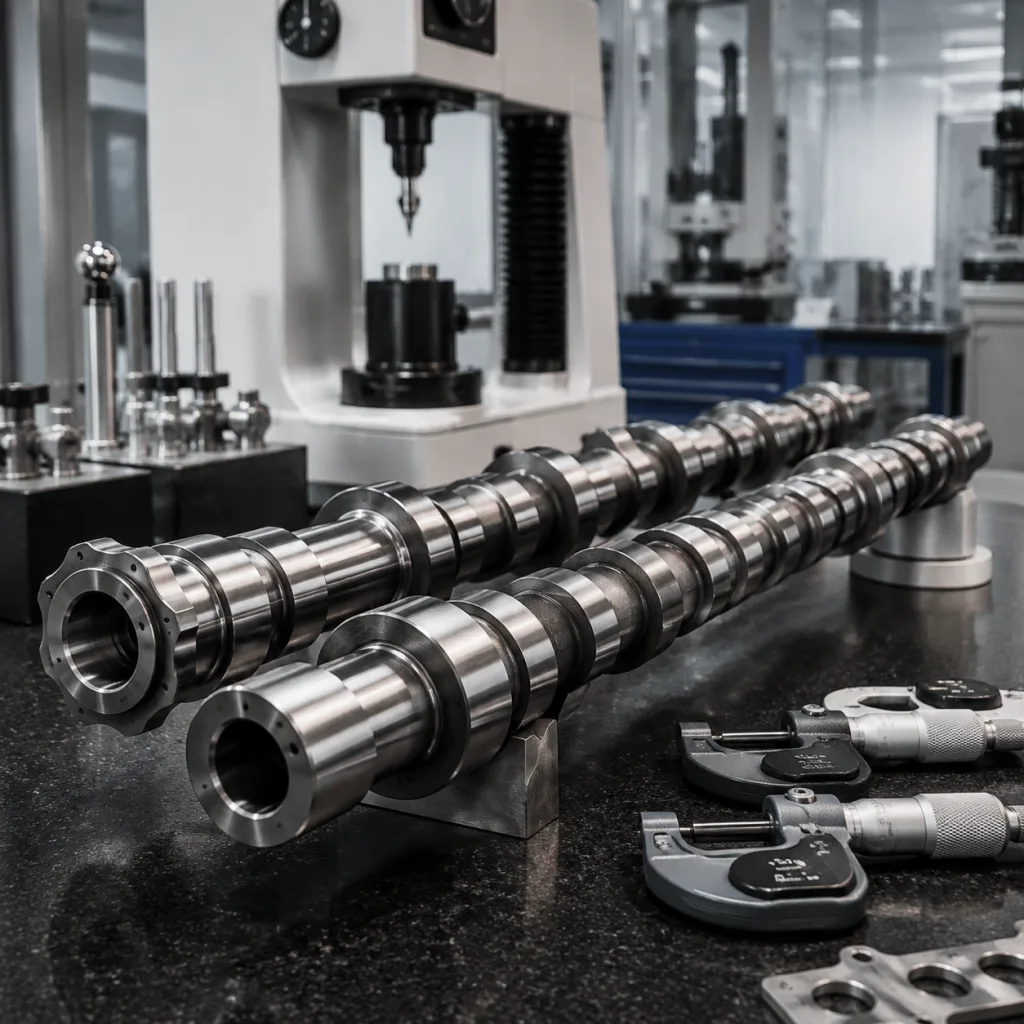
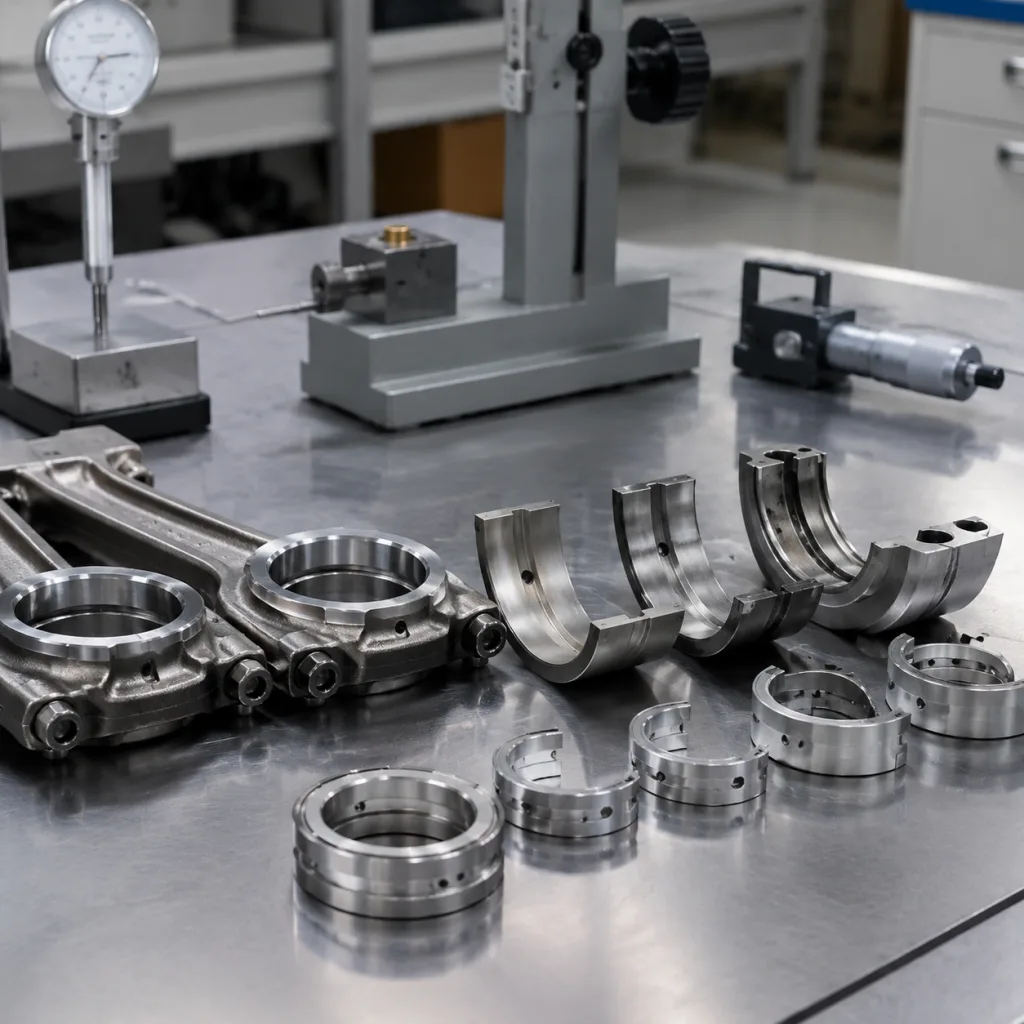
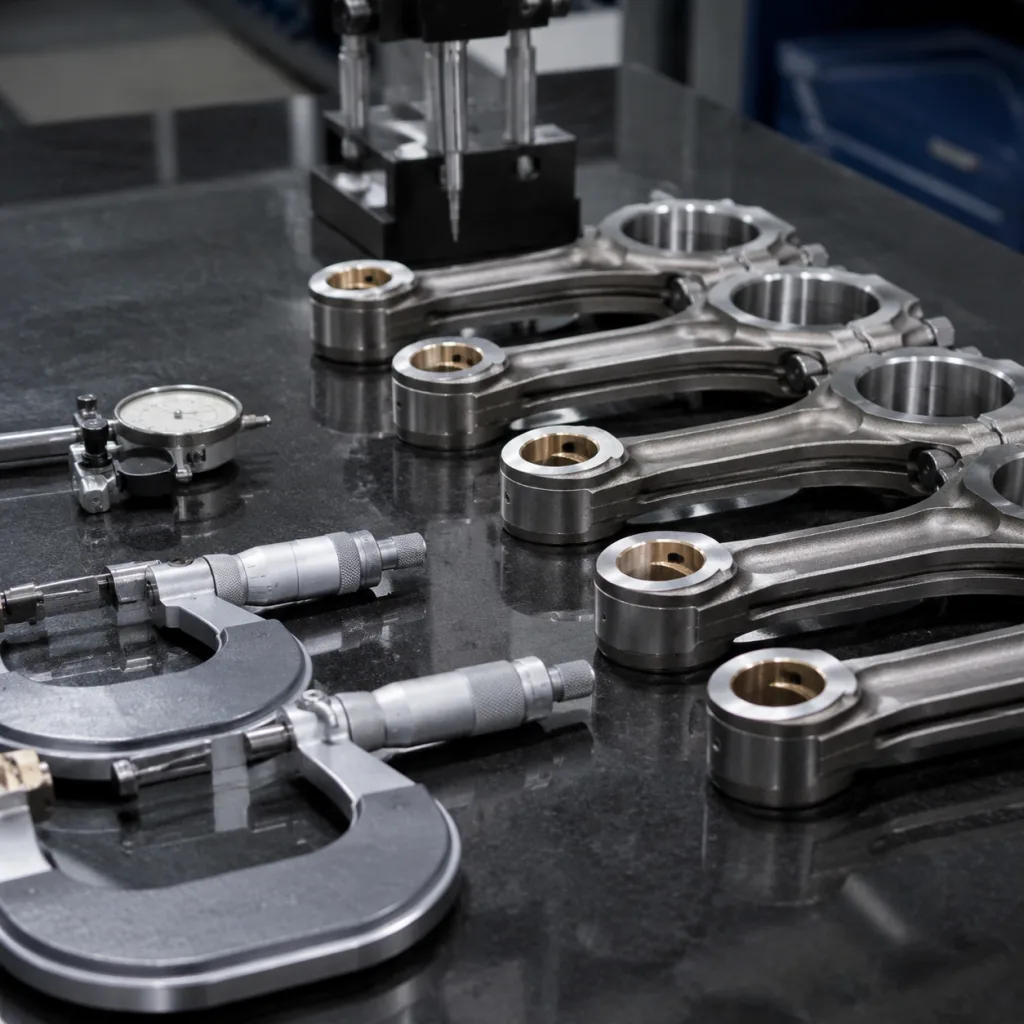
A clutch kit Dodge OE equivalent program fails when it is treated as a simple catalogue match. The part number may cross. The kit may look correct in photos. Then a repair chain reports clutch drag, bearing noise, harsh take-up, or a spike in returns after the first container lands. For importers, distributors, and fleet repair suppliers, the sourcing decision should start with installation geometry, release behavior, clamp load, friction performance, and batch repeatability—not price alone. A typical kit includes a clutch cover assembly, driven disc, release bearing, and alignment tool; some applications also require a pilot bearing, pilot bushing, or concentric slave cylinder. Before pricing is frozen, buyers should lock the critical-to-quality values: disc OD, spline count, hub offset, cover bolt circle, diaphragm finger height, release-bearing working height, clamp load, and runout. Driventus supplies clutch kits as an independent aftermarket manufacturer, with production control under IATF 16949:2016 and ISO 9001:2015. This article gives procurement teams a practical way to qualify Dodge OE-equivalent clutch kits without using unverified approval claims or vehicle-manufacturer endorsement language.
Decision Framework: When Is a Dodge Clutch Kit Truly OE-Equivalent?
OE-equivalent means the replacement assembly is engineered to match the fit, function, and service performance expected for the target application. It does not mean the part is supplied to, approved by, or endorsed by a vehicle manufacturer.
Use this decision filter before adding a clutch kit Dodge OE equivalent SKU to your range:
1. Will it install without adaptation? The cover outside diameter, bolt pattern, dowel location, release bearing height, disc thickness, hub projection, and total stack height must suit the flywheel and bellhousing package. Buyers should define nominal dimensions and allowed deviation. For example, disc OD may be controlled within about ±0.5 mm, fixture-controlled bolt-circle positions within about ±0.2 mm, and release bearing working height within an agreed application tolerance.
2. Will it hold torque with reserve? Clamp load, friction coefficient, facing area, and heat resistance must support the engine torque. Many replacement programs target at least 10–20% reserve over stock engine torque, but only after confirming pedal effort and release travel remain acceptable.
3. Will it release cleanly? Diaphragm spring load curve, finger height, and bearing contact geometry must match the available fork or hydraulic travel. On some layouts, a 1–2 mm error in finger height or bearing height is enough to create drag, overtravel, or bearing noise.
4. Will it feel like a service replacement, not a modified part? Hub springs, cushion segments, damper travel, and facing runout affect judder, rattle, gear clash, and engagement harshness. Disc lateral runout is commonly kept to a sub-millimetre value, often around 0.5–0.8 mm depending on diameter and application.
5. Will workshops receive the right supporting parts? Kit content and installation notes must match the replacement procedure for the target vehicle range, including flywheel condition, pilot support, hydraulic bleeding, and disc orientation.
Driventus is an independent aftermarket manufacturer; Dodge and other brand names are referenced for fitment identification only. Buyers should define the target range using application data, sample parts, drawings, or OE-style references where available. A useful RFQ file includes the vehicle list, competitor or reference numbers, sample photos, required kit BOM, target annual volume, destination market, and any workshop warranty history from the current supplier.
Failure Modes to Prevent Before the First Shipment
A visual match is not a qualification method. Small errors in release height, disc offset, spline form, or cover geometry can turn a promising program into a return problem. Procurement teams should request a dimensional report before approving a clutch kit Dodge OE equivalent range for stocking.
Failure mode to avoid
Check point
Typical verification method
Practical target or record to request
Reduced torque capacity or bellhousing interference
Driven disc outside diameter
Vernier, gauge fixture, or CMM
Nominal OD and tolerance, commonly ±0.5 mm
Installation failure or input shaft wear
Spline count and major/minor diameter
Go/no-go spline gauge
Tooth count, major/minor diameter, pressure angle or sample gauge fit
Drag, slip, or poor bedding-in
Disc thickness and parallelism
Micrometer at 4–8 points
New-part thickness range and facing variation
Flywheel, crankshaft, or transmission interference
Disc offset and hub projection
Height gauge and sample comparison
Flywheel side/transmission side offset with datum
Misalignment, vibration, or assembly rejection
Cover bolt circle and dowel position
CMM or fixture plate
Bolt PCD, dowel diameter, angular position
Incomplete release or excessive pedal effort
Diaphragm finger height
Height gauge under defined load
Free height and loaded height at agreed cover deflection
Noise, uneven wear, or hydraulic overtravel
Release bearing contact profile
Profile gauge and sample comparison
ID, OD, face radius, working height, clip style
Clutch drag, judder, and warranty returns
Disc lateral runout
Dial indicator
Usually below about 0.5–0.8 mm by diameter
Vibration and added bearing load
Cover balance and runout
Dynamic balancer and dial gauge
Balance grade or max residual imbalance by part size
</tr></thead><tbody> </tbody></table>For replacement programs, Driventus normally controls cover stamping dimensions, spring heat treatment, rivet setting, facing bonding, hub machining, and final assembly balance through documented inspection plans. When a customer supplies reference samples, reverse engineering should include both free-state and loaded measurements. Diaphragm geometry, clamp load, and release position change under working deflection.
A low-risk approval flow is simple but strict: receive 2–3 reference kits, measure all CTQ dimensions, issue a drawing or inspection standard, build pilot samples, perform fitment and bench validation, then freeze the BOM and packaging before mass production.
Validation Deep-Dive: What the Test File Should Prove
Testing should answer one question: will the kit behave consistently in the field, not only at incoming inspection? A kit can pass basic dimensions and still create claims if clamp load varies, the driven disc is unstable at speed, or the release system needs more travel than the vehicle provides. Driventus structures validation around material control, mechanical performance, and lot-to-lot repeatability.
A practical validation package can include:
Clamp load testing at specified cover deflection, recorded against a nominal load and allowed batch range. Buyers often request lot average, minimum, and maximum values.
Disc burst-speed testing with defined safety margins, commonly set well above maximum engine speed for the application and documented by disc diameter.
Friction coefficient checks at controlled temperature and pressure, including fade and recovery after heat exposure.
Thermal cycling to evaluate fade, recovery, facing crack resistance, rivet security, and cushion plate stability.
Release-load curve measurement for pedal feel consistency, including release load, peak load, and travel points.
Torsional damper testing for hub spring rate, pre-damper behavior where used, stop angle, and angular travel.
Static and dynamic balance checks for rotating assemblies, with correction records for cover assemblies when required.
Facing bond strength, rivet retention, burst integrity, and cushion deflection checks where specified.
Salt-spray or humidity checks for exposed metal components when required by the destination market or long ocean-freight route.
For quality planning, IATF 16949:2016 supports APQP-style controls, production part approval documentation, traceability, and corrective-action discipline. ISO 9001:2015 supports broader process control and customer-specific requirements. Chemical and material declarations may be required for EU programs under REACH (EC) No. 1907/2006, especially for friction materials, coatings, greases, rubber components, and corrosion-protection treatments.
A buyer-ready approval file normally contains dimensional reports, material and friction-facing declarations, clamp-load curves, release-travel data, runout records, bearing inspection data, packaging drop or compression notes where required, and a control plan for ongoing lots. If your team needs to align inspection records with internal supplier files, review our quality system before placing a trial order.
Scenario Planning: Avoiding Kit-Content and Packaging Mix-Ups
Scenario: two Dodge applications use a similar disc diameter. One needs a different release bearing height. Another has a pilot component change in a split model year. The catalogue looks tidy. The warehouse does not. If the wrong bearing or pilot part enters the box, the return cost can equal the cost of a completely incorrect clutch cover.
That is why kit-content control matters as much as the clutch assembly itself. A Dodge replacement clutch kit can vary by model year, engine, transmission, flywheel type, release fork design, and hydraulic system. Buyers should avoid merging applications only because one major dimension appears similar.
Recommended sourcing data includes:
Vehicle application range by region, model year, engine code where available, and transmission family
Kit bill of materials with each component drawing or controlled specification
Sample-based dimensional approval records with revision number and approval date
Interchange references in the buyer’s format, including OE-style references only where supplied by the customer dataset
Installation notes covering flywheel resurfacing limits, bearing fitment, disc orientation, fastener guidance, and hydraulic system checks
Carton labelling with part number, batch number, production date, barcode, and traceability code
Clear rules for supersessions, split-year applications, and kit-content changes
Export packaging has one job: make sure the approved kit arrives in usable condition and can be identified quickly. It should protect diaphragm fingers, prevent bearing contamination, reduce corrosion risk, and keep the driven disc flat during ocean freight and warehouse storage. A practical pack uses a rigid inner support for the pressure plate, a separator to stop the driven disc from rubbing against the cover, sealed bearing packaging, anti-rust paper or VCI protection where required, and an outer carton matched to pallet stacking.
Buyers should define carton burst strength or compression requirement, barcode symbology such as EAN-13, UPC, Code 128, or GS1-128, label fields, and maximum carton weight for warehouse handling.
Driventus can support neutral packaging, customer-label packaging, and barcode formats for receiving and inventory control. Buyers can compare part families through our catalog or discuss application-specific requirements through custom manufacturing. Once a cross-reference is approved, any change to cover supplier, friction formulation, bearing type, pilot component, label logic, or carton layout should be handled as a controlled revision—not an informal substitution.
Supplier Audit Q&A for Replacement Clutch Kit Programs
A supplier audit should not stop at certificates. For a clutch kit Dodge OE equivalent line, the audit must test whether the factory controls the processes that influence engagement quality, installation success, and warranty rate. Clutch kits combine stamped steel parts, heat-treated springs, machined hubs, friction material, bearings, and riveted assemblies. One weak sub-process can compromise the complete kit.
Q: How are diaphragm springs controlled? Ask for hardness checks, load-curve records, fatigue validation, and heat-treatment consistency. Furnace records and quench/temper parameters should be retained by lot.
Q: How is friction material verified? Review batch control for formulation, thickness, density, bonding strength, and coefficient-of-friction testing. If the friction facing changes, the approved performance file should change too.
Q: Is spline geometry checked functionally? Visual inspection is not enough. Spline broaching or machining should be verified with calibrated functional gauges.
Q: What happens after the cover is assembled? Cover assemblies should be checked for runout, balance, rivet setting, and release-finger height after assembly—not only before assembly.
Q: How are bearings controlled? Release bearings should come from approved sources with checks for rotation torque, noise, grease, seal condition, and axial/radial play. The same logic applies to pilot bearings, bushings, alignment tools, and concentric slave cylinders when included.
Q: Can the supplier trace a finished carton backward? Each carton should connect to the production lot, inspection record, material batch, and key sub-supplier data.
During an on-site or remote audit, request incoming inspection records, in-process control sheets, final inspection reports, calibration certificates, operator work instructions, rework limits, complaint 8D reports, and traceability from a finished carton back to the friction-facing and bearing batches. Also check first-piece approval at setup, patrol inspection during assembly, and final AQL inspection before packing. For mixed-SKU orders, line-clearance practice is critical so release bearings, pilot components, labels, and instruction sheets cannot be crossed between similar kits.
Buyers importing into the EU, UK, US, Canada, Australia, Brazil, or other regulated markets should define documentation expectations before production. Typical files include inspection reports, material declarations, packing lists, certificates of conformity, customer-specific test summaries, and traceability records linked to the shipped batch.
Commercial Roadmap: Samples, MOQ, Lead Time, and Replenishment
The best purchasing result usually comes from matching the technical risk to the commercial plan. A narrow Dodge application range may need low initial quantities, careful sample validation, and high cross-reference accuracy. A distributor stocking program may need broader coverage, consistent carton design, stable lead times, and scheduled replenishment.
When requesting pricing, define:
Target part numbers or application list
Annual volume forecast and first-order quantity
Required kit contents for each SKU
Packaging type, label fields, barcode standard, and carton strength requirement
Validation documents required for approval
Destination market and compliance documentation needs
Incoterms, shipment mode, and preferred delivery window
Any private-label, neutral-label, or warehouse receiving requirements
MOQ and price depend on whether the SKU uses existing tooling and validated components or needs new development. Catalogue-style clutch kits using existing parts usually price best when grouped by platform and ordered in carton or pallet quantities. Private-label packaging, uncommon bearings, new friction materials, or new cover tooling raise the first-order threshold.
Do not force one price to cover every stage. Separate the program into sample quantity, pilot order, and replenishment order. A typical development path may use 2–5 sample sets per SKU, a pilot lot after approval, and then scheduled quarterly releases based on the annual forecast.
Lead time also has layers. Existing SKUs with standard packaging move fastest because components, gauges, and carton artwork are already controlled. New or modified kits require time for sample measurement, drawing confirmation, tooling or fixture adjustment, pilot assembly, validation, packaging artwork approval, and mass production. Expect longer timing when the program includes customer-label cartons, barcode data integration, mixed-container consolidation, or destination-specific compliance files.
Before issuing the purchase order, confirm price breaks, MOQ per SKU, MOQ per shipment, tooling cost if any, sample cost, payment terms, Incoterms, inspection hold points, and forecast validity.
Driventus manufactures engine and powertrain components in Taizhou, Zhejiang, and exports to more than 60 countries. For clutch kit replacement projects, our role is to provide controlled production, dimensional matching, consistent documentation, and practical sourcing support for B2B buyers. We do not claim vehicle-manufacturer approval or endorsement for independent aftermarket parts.
Frequently asked questions
No. OE-equivalent means the kit is designed to match fit, function, and service requirements for the target application. It does not mean approval or endorsement by a vehicle manufacturer. Driventus is an independent aftermarket manufacturer; Dodge and other brand names are referenced for fitment only.
Useful samples include the clutch cover, driven disc, release bearing, pilot bearing or bushing where used, and any customer drawings or application data. Loaded height, spline geometry, bolt pattern, clamp load, disc offset, bearing working height, and disc runout should be measured during development.
Yes. Driventus can support neutral or customer-label packaging, barcode requirements, carton traceability, and application-specific kit content. Documentation requirements, MOQ, artwork approval, and label data should be agreed before production so inspection and compliance files match the buyer’s market.
If you are qualifying a Dodge replacement clutch kit range, share your application list, target kit contents, annual volume, packaging plan, and documentation requirements to [request a quote](/contact.html).