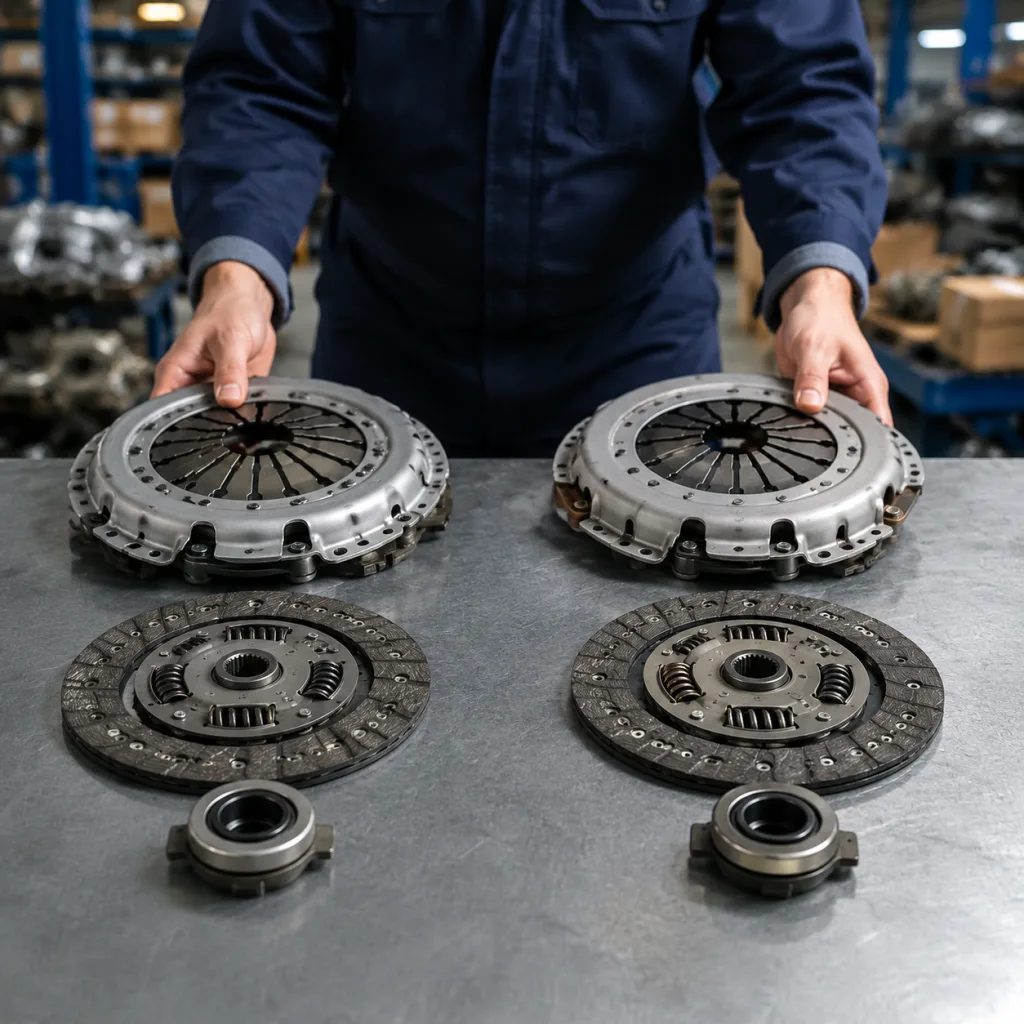
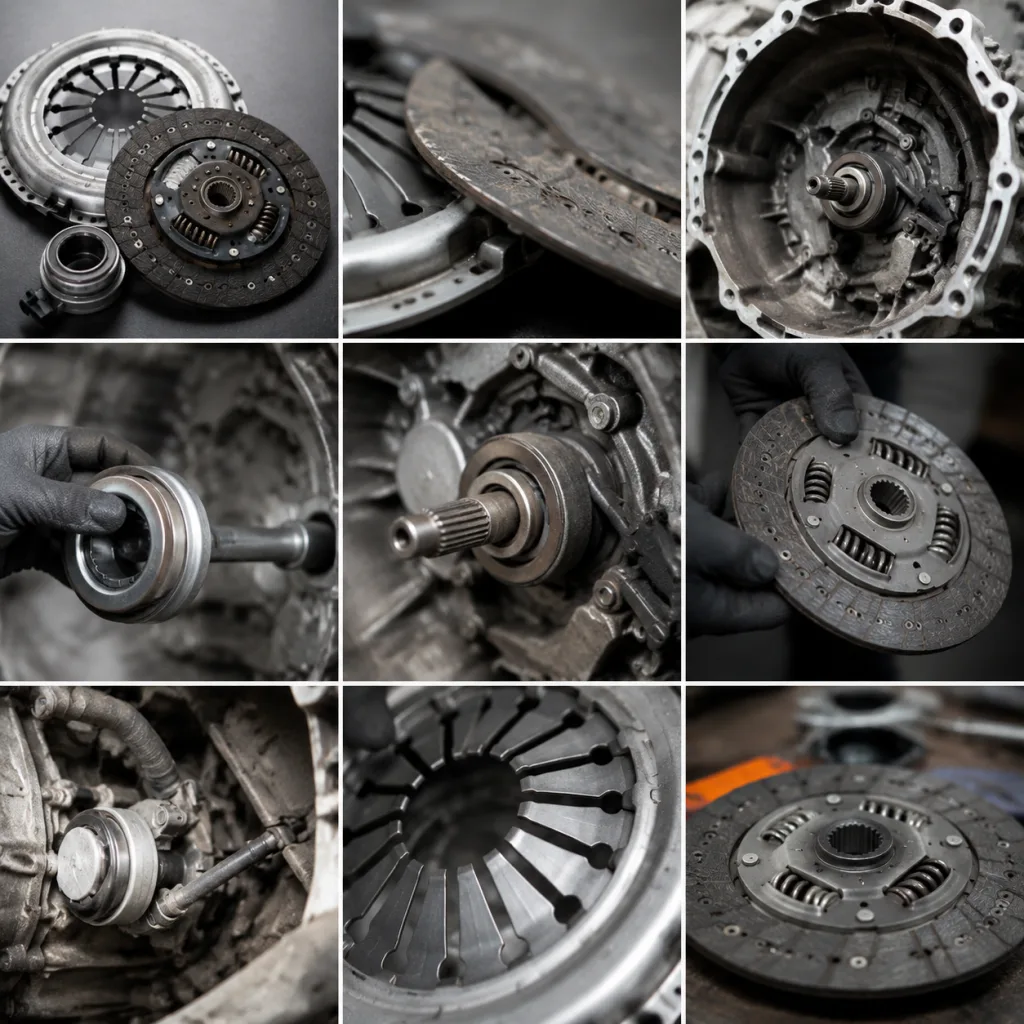
A clutch kit Citroen replacement works only when the full fit stack is right: release load, spline fit, friction diameter, cover height, and bearing interface. Buyers should judge offers by measurable evidence, not by whether the kit looks close on paper. Driventus supplies clutch kits for B2B replacement programmes with dimensional control, traceable materials, and production under IATF 16949:2016 and ISO 9001:2015. Driventus is an independent aftermarket manufacturer; brand names are referenced for fitment only. For current ranges, see [our catalog](/products.html), review our [quality system](/quality.html), or [request a quote](/contact.html).
How to tell if a Citroen clutch kit is truly a match
A Citroen clutch kit replacement should be judged against the OE fit stack, not the badge alone. The right kit repeats the original release geometry, spline engagement, and installed height within controlled tolerances.
Use these checks first:
Driven plate diameter: usually 180 mm, 200 mm, 215 mm, or 228 mm depending on the application, with lining width matched to OE
Hub spline profile: count, major diameter, and spline depth verified against the gearbox input shaft
Pressure plate cover height: confirm against OE nominal, with no uncontrolled deviation from the approved drawing
Clamp load: validate against OE-equivalent release and holding requirements, not visual similarity
Release bearing OD and contact face: confirm sealed or unsealed design, contact angle, and fork interface
Flywheel surface runout: inspect before fitment; excessive runout can cause chatter and uneven engagement
Typical control limits in a replacement programme should sit in the part master record, including radial runout, concentricity, and stack-height checks against the approved nominal specification. Where an OE cross-reference exists, verify it against the application record rather than assuming it from a model name. The usual failure points are engine code changes, dual-mass versus solid flywheel variants, and transmission-specific release systems.
Compare offers on the numbers, not the brochure
The fastest way to separate a dependable offer from a risky one is to compare measurable data side by side. Price matters, but only after fit, validation, and packaging are clear.
Check
Why it matters
What to confirm
Friction diameter
Controls torque capacity and pedal effort
Match OE diameter to within the approved nominal; confirm lining width and rivet pattern
Spline count and major diameter
Ensures hub engagement
Verify against gearbox input shaft data and spline tolerance band
Cover height
Affects release travel and engagement point
Measure against OE nominal and allowed stack-height tolerance
Clamp load
Determines holding capacity
Compare validated test data at specified deflection
Bearing design
Affects noise and service life
Confirm sealed or non-sealed type, contact face, and bore size
Flywheel compatibility
Prevents vibration and chatter
Match dual-mass or solid type and confirm surface condition
Packaging/label data
Reduces pick errors and returns
Confirm OE reference, application code, batch number, and barcode format
</tr></thead><tbody> </tbody></table>In sourcing terms, a workable quotation should place MOQ, unit price breaks, lead time, and technical acceptance criteria on the same line. For standard catalogue items, MOQ is often 100–300 sets, with lower quantities priced higher because setup, packing, and freight are spread across fewer units. For production runs, ask for sample quantity, first-article timing, and whether dimensional reports ship with each batch.
Driventus tests production parts for dimensional consistency and functional stability before shipment. The aim is OE-equivalent fit, not a visual match. That reduces comeback rates for distributors and repair networks working across multiple branches.
What validation should a buyer ask for?
A replacement clutch kit should come with evidence, not just a claim of compatibility. The key question is whether the design stays inside specification after repeated cycles, temperature shifts, and release events.
Ask for these controls and references:
IATF 16949:2016 for automotive quality management in serial production
ISO 9001:2015 for process control and corrective action discipline
REACH (EC) No 1907/2006 for material compliance in the EU supply chain
Useful validation for clutch assemblies includes torque transfer checks, release-load verification, concentricity inspection, and endurance cycling. A practical RFQ should request the initial sample inspection report, critical dimensions with stated tolerances, material declaration, and an endurance summary showing cycle count, load condition, and failure criteria. Buyers may also request 100% inspection on spline fit and runout, with AQL sampling for cosmetic and packaging checks.
For regional programmes, application-level verification may also reference OEM service data and gearbox fitment records. Driventus maintains production traceability so incoming inspection can be tied back to batch records, dimensional reports, and lot-level packaging codes.
Where Citroen fitment usually goes wrong
Many clutch returns start with an incomplete vehicle record, not a bad part. A kit can appear correct and still fail at installation if the application split is hiding in the engine, transmission, or flywheel variant.
Confirm these details before ordering:
VIN-based application data
Engine code and transmission code
Flywheel type and condition
Release bearing interface and fork style
OE 06A…-style cross-reference only when already listed for the target application
Commercial terms should be locked before release too. Confirm whether the quote is ex-works or landed, the sample approval window, expected production lead time, and the price validity period. For standard Citroen replacement programmes, 15–30 days is a common planning range for stocked or semi-finished items and 30–45 days for new production after drawing approval, but the real lead time should follow capacity and raw material availability.
If a customer records the request only as “Citroen replacement,” treat it as incomplete. Tie the part record to engine, gearbox, OE reference, and sales order revision together. That is usually what cuts returns and workshop delays.
How Driventus runs replacement supply
Driventus is built for repeatable aftermarket supply, not one-off spot buying. Buyers can source from our catalog, compare family coverage with engine components, and use custom manufacturing when a replacement item needs a private-label or application-specific variant.
For clutch programmes, the practical advantages are:
Batch traceability for incoming inspection
Dimensional checks against approved master data
Controlled materials and production records
Packaging suitable for distributor and workshop channels
Support for cross-reference validation during sourcing
MOQ and price-break planning for distributor replenishment
The result is a replacement part that is easier to audit and closer to OE fit in a multi-site supply chain. Buyers can usually improve unit cost by consolidating by application family, agreeing a forecast, and ordering against monthly call-off quantities. That also helps blunt freight and raw-material swings while keeping service levels stable.
Driventus is an independent aftermarket manufacturer; brand names are referenced for fitment only. If you need a quotation for current applications or a new cross-reference review, use request a quote.
Frequently asked questions
Yes. Spline fit, friction diameter, cover height, and bearing interface should match the OE specification or an approved equivalent. Small deviations can change pedal feel, release travel, and engagement point, so buyers should request nominal dimensions, tolerance bands, and first-article approval data.
Yes. Driventus supports B2B supply for distributors, wholesalers, and repair chains with batch traceability, validated production controls, and application-based cross-reference support. Standard programmes can be quoted with MOQ, tiered pricing, lead time, and packaging requirements based on forecast volume.
Production follows IATF 16949:2016 and ISO 9001:2015 processes, with material and compliance considerations aligned to REACH (EC) No 1907/2006 where applicable. Buyers can also request dimensional reports, lot traceability, and test summaries for incoming inspection.
If you need a verified clutch kit Citroen replacement with OE-equivalent fit, defined tolerances, MOQ/price/lead-time terms, and documented quality controls, contact Driventus for application review and pricing via /contact.html.