Clutch Kit Audi Replacement: OE-Equivalent Buying Guide
Choosing a clutch kit Audi replacement is more than confirming model-year fitment. For procurement teams, the priority is repeatable OE-equivalent performance across the full application range: driven plate diameter, spline count, clamp load, release travel, torsional damping, bearing height, and flywheel interface. A kit can look correct in a catalogue and still create workshop complaints if the friction material, diaphragm spring rate, cover geometry, or release system does not match the vehicle build code and transmission variant. Driventus supplies independent aftermarket clutch kits for B2B channels and validates them against dimensional drawings, material controls, batch checks, and endurance testing. Driventus is an independent aftermarket manufacturer; brand names are referenced for fitment only. This guide outlines the technical checks buyers should use before sourcing, the documentation worth requesting, and the controls that help reduce returns across distribution, export, and repair-chain supply.
What an OE-equivalent replacement must match
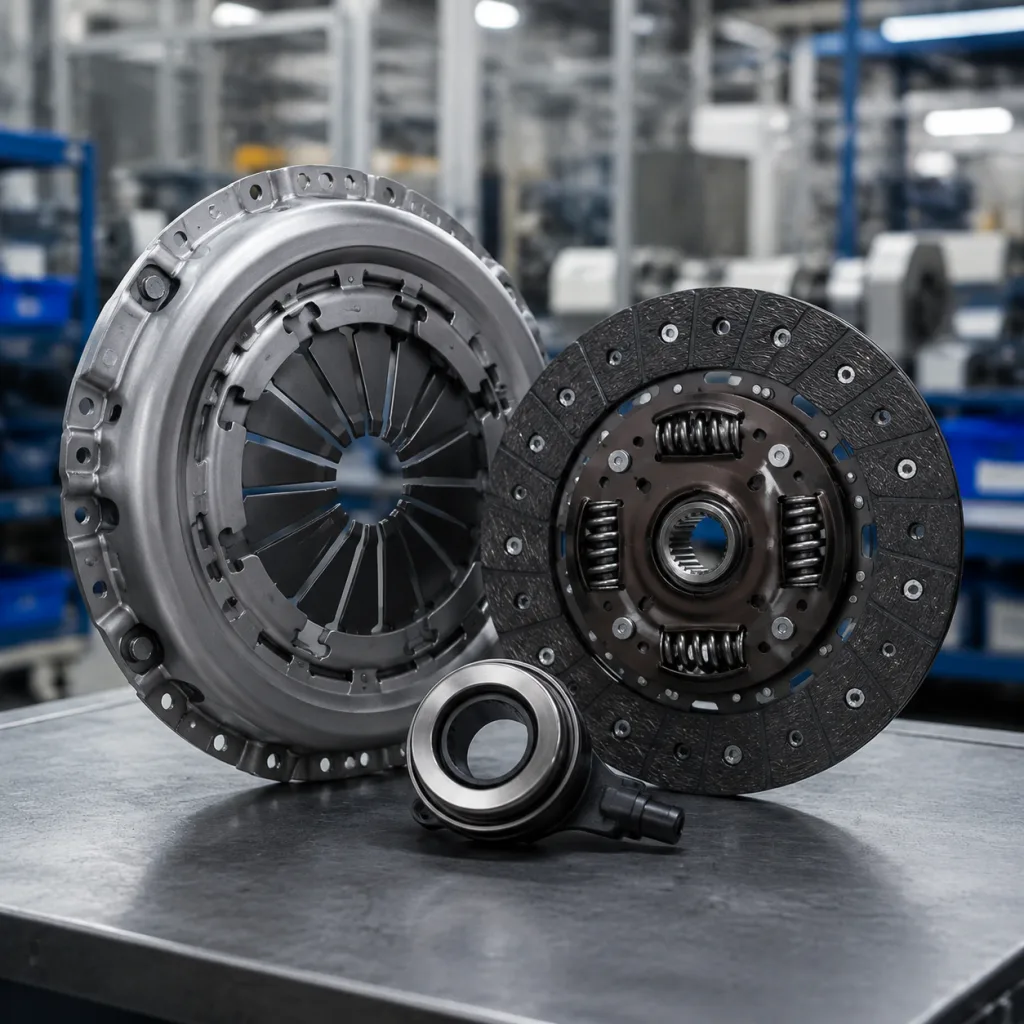
For an Audi clutch kit replacement, OE-equivalent supply starts with dimensional and functional equivalence across the driven plate, pressure plate, release bearing, and flywheel interface. The key is to validate the clutch system as a set, not as separate parts that only appear similar.
Before approval, confirm:
Driven plate outer diameter, lining thickness, and hub offset
Spline count plus major and minor spline diameter
Hub spring pack layout and torsional damper characteristics
Release bearing type, contact face, operating height, and travel range
Flywheel compatibility, including solid flywheel or dual-mass flywheel configuration
A part can be marketed as compatible and still cause complaints if the release point moves by only a few millimetres. That shift can affect pedal feel, gear engagement, take-up behaviour, and noise, especially on high-mileage vehicles where the hydraulic system, flywheel, and linkage may already have wear. For buyers, the useful question is not whether the kit fits one engine code in isolation. It is whether the kit matches the transmission, clutch actuation package, and build window used in the target vehicle population.
What is inside the kit
A complete replacement kit normally includes the driven plate, pressure plate, and release bearing. Depending on the application, the package may also need an alignment tool, cover bolts, flywheel bolts, pilot bearing, or concentric slave cylinder. Those items should be confirmed in the bill of materials before purchase rather than assumed from the product title.
Incomplete disengagement, heavy pedal, uneven wear
Release bearing
Height, contact profile, bearing type, noise class
Bearing noise, wear, travel issues, poor release
Fasteners
Thread pitch, length, grade, torque specification
Cover distortion, loosening, installation failure
Optional parts
Alignment tool, pilot component, CSC where applicable
Delayed installation, mismatch, repeat labour
</tr></thead><tbody> </tbody></table>For aftermarket supply, consistency matters more than an isolated peak torque figure. A batch may meet the torque target yet still create warranty exposure if release bearing height, plate runout, or cover flatness varies outside the approved range. Buyers should request lot traceability, incoming inspection records, and a documented control plan linked to our quality system.
Materials, tolerances, and standards
Clutch performance depends on friction chemistry, spring behaviour, and steelwork precision. The facing material must maintain a stable coefficient of friction under heat, while the cover stamping and pressure plate need controlled flatness, parallelism, and runout. Small tolerance drift can change disengagement quality, pedal effort, and lining wear even when the part still bolts into place.
Driventus aligns production with IATF 16949:2016 and ISO 9001:2015 quality processes. For material and compliance screening, buyers should request confirmation against REACH (EC) No 1907/2006 where applicable to the supplied material set. For validation, a competent supplier should be able to provide evidence for torque capacity, thermal fade resistance, burst safety, wear performance, and endurance results from controlled bench or vehicle testing.
Typical checks to request:
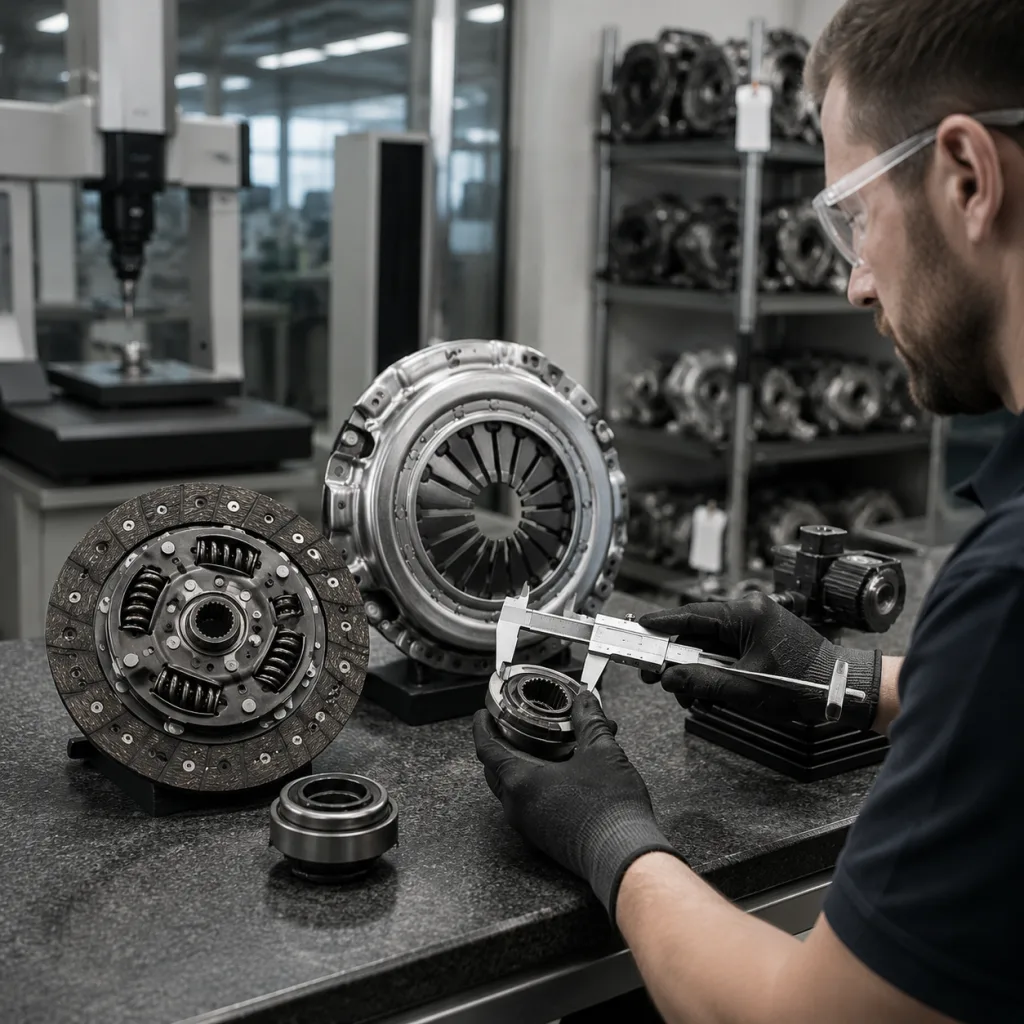
Cover runout, pressure plate flatness, and driven plate thickness records
Friction facing bond integrity, rivet retention, and lining wear data
Diaphragm spring rate and clamp-load verification by batch
Balance, burst, or rotational safety evidence where relevant to the application
Salt spray or corrosion resistance results for exposed metal parts
Packaging controls to protect splines, friction surfaces, and bearings during export transit
If the application uses a dual-mass flywheel, confirm that the replacement kit is validated for that interface. Diameter alone is not enough; damper behaviour, clamp load, and release travel must work with the flywheel and transmission combination.
Fitment control for distributors and repair chains
Fitment errors often come from catalogue noise rather than an obviously defective part. The same Audi model name can cover multiple engine outputs, gearbox codes, production dates, and clutch actuation systems. A distributor that relies only on model series may ship a kit that looks right in the warehouse but fails during installation.
Recommended control points:
1. Confirm gearbox type, gearbox code where available, and clutch actuation method. 2. Match engine code and production date, not just model series. 3. Verify whether the original vehicle uses a solid flywheel or dual-mass flywheel. 4. Check whether the release system uses a concentric slave cylinder or external release bearing. 5. Compare OE reference numbers and approved cross references against the application list. 6. Review packaging labels, barcodes, and kit contents before warehouse release.
For larger programmes, custom manufacturing can reduce catalogue overlap by aligning the clutch kit specification to a defined fleet, region, or repair-chain requirement. This is especially useful when one distributor serves several markets with different vehicle mixes, registration data quality, and installer expectations.
Buying criteria that reduce returns
When evaluating a clutch kit Audi replacement from any source, the commercial decision should be tied to measurable controls rather than unit price alone. Clutch returns are expensive because they can involve workshop labour, vehicle downtime, diagnosis disputes, and repeat shipping. Better specification control protects both margin and customer confidence.
Compare suppliers on these points:
Dimensional inspection frequency and documented acceptance criteria
Access to PPAP-style documentation or equivalent production control records
Batch traceability from friction facing and springs through final pack-out
Test reports for torque capacity, thermal behaviour, wear, and release performance
Application data quality, including engine code, gearbox, and flywheel notes
Lead-time stability, forecast handling, and minimum order quantity alignment
Packaging strength for export lanes, mixed-pallet distribution, and warehouse picking
Label clarity, multilingual content, and barcode compatibility for your channel
A low-cost kit with weak documentation can erase margin once returns, labour claims, and handling costs are counted. By contrast, a supplier that supports accurate application data, repeatable measurements, and export-ready labelling usually reduces downstream cost even when the purchase price is higher.
Browse our catalog for the current clutch and powertrain range, including related engine components here if you are consolidating suppliers.
Documentation to request before purchase
Before approving an order, ask for a compact technical file that allows category managers, quality teams, and sales staff to compare offers on the same basis. The file should be specific to the quoted kit or application family, not a generic capability presentation.
Request:
Application list with engine code, gearbox, production date, and flywheel coverage
Dimensional drawing or key dimensions sheet for the main kit components
Bill of materials showing included and excluded parts
Material declaration and compliance statement
Test summary covering clamp load, torque capacity, wear, and heat behaviour
Batch coding, traceability format, and inspection record sample
Packaging specification for export, warehouse handling, and label requirements
Warranty handling process and evidence needed for claim review
This is the fastest way to separate a validated replacement programme from a generic aftermarket listing. It also helps purchasing teams compare suppliers beyond headline price. If you need application-specific support, request a quote and ask for a quotation mapped to your market, shipment volume, target vehicle range, and preferred packaging format.
Frequently asked questions
Start with driven plate diameter, spline count, hub offset, release bearing height, pressure plate cover depth, and flywheel type. If any of these differ, the kit may install physically but still create release, noise, or drivability issues.
Yes, for controlled procurement. Model name alone is not enough because gearbox type, flywheel design, production date, and clutch actuation system can change the correct kit.
Ask for dimensional inspection data, material compliance information, batch traceability, and test results tied to IATF 16949:2016 or ISO 9001:2015 controls where applicable.
If you need an application-checked replacement programme or export-ready packaging, send your target model list and volume forecast through /contact.html.