Wholesale buyers sourcing an `egr valve jeep wholesale` programme need parts that match the original fitment, seal correctly, and withstand repeated thermal cycling. For procurement teams, the real question is not just what the part costs. It is whether the valve matches OE fitment, survives heat, and clears approval without avoidable rework. Driventus supplies engine and powertrain components from Taizhou, Zhejiang, with production controls aligned to `IATF 16949:2016` and `ISO 9001:2015`. Driventus is an independent aftermarket manufacturer; brand names are referenced for fitment only. This article focuses on the decisions buyers actually make: when to reject a sample, how to compare suppliers, which specs matter most, and where custom manufacturing reduces risk on Jeep EGR valve lines.
Decision checkpoints before you buy
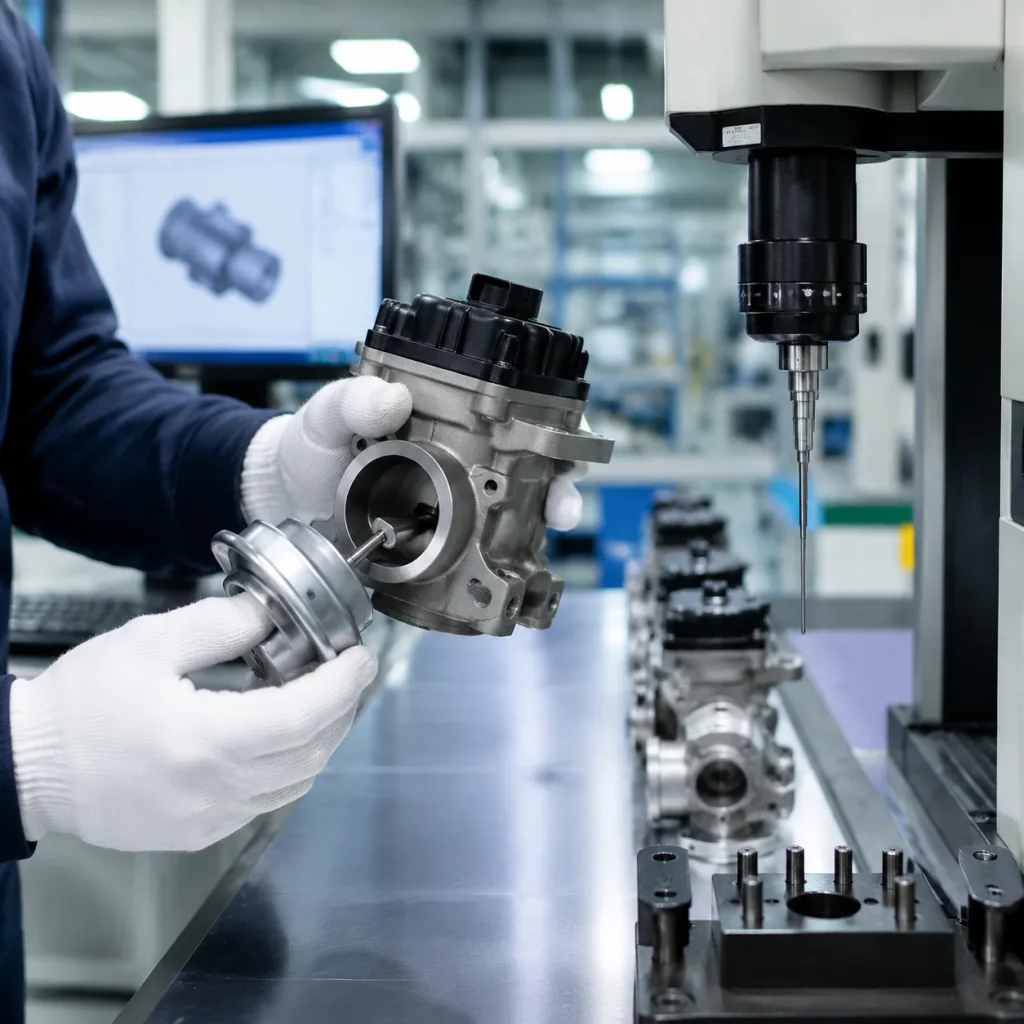
Start with fitment, not price. A cheaper valve is still expensive if it returns because the flange is wrong, the connector does not seat, or the body height interferes with the intake path.
Confirm the exact application by engine code, model year, displacement, and emission family.
Check OE cross-references only when the catalogue already lists them; use format such as `OE 06A107065` where relevant.
Verify valve type: vacuum, linear electronic, or integrated cooler assembly if applicable.
Ask for dimensional drawings with tolerances, connector photos, and installation orientation.
Request sample confirmation on gasket surface flatness, bolt-hole spacing, thread pitch, and port concentricity.
Validate operating voltage, connector pin count, and ECU compatibility before first order.
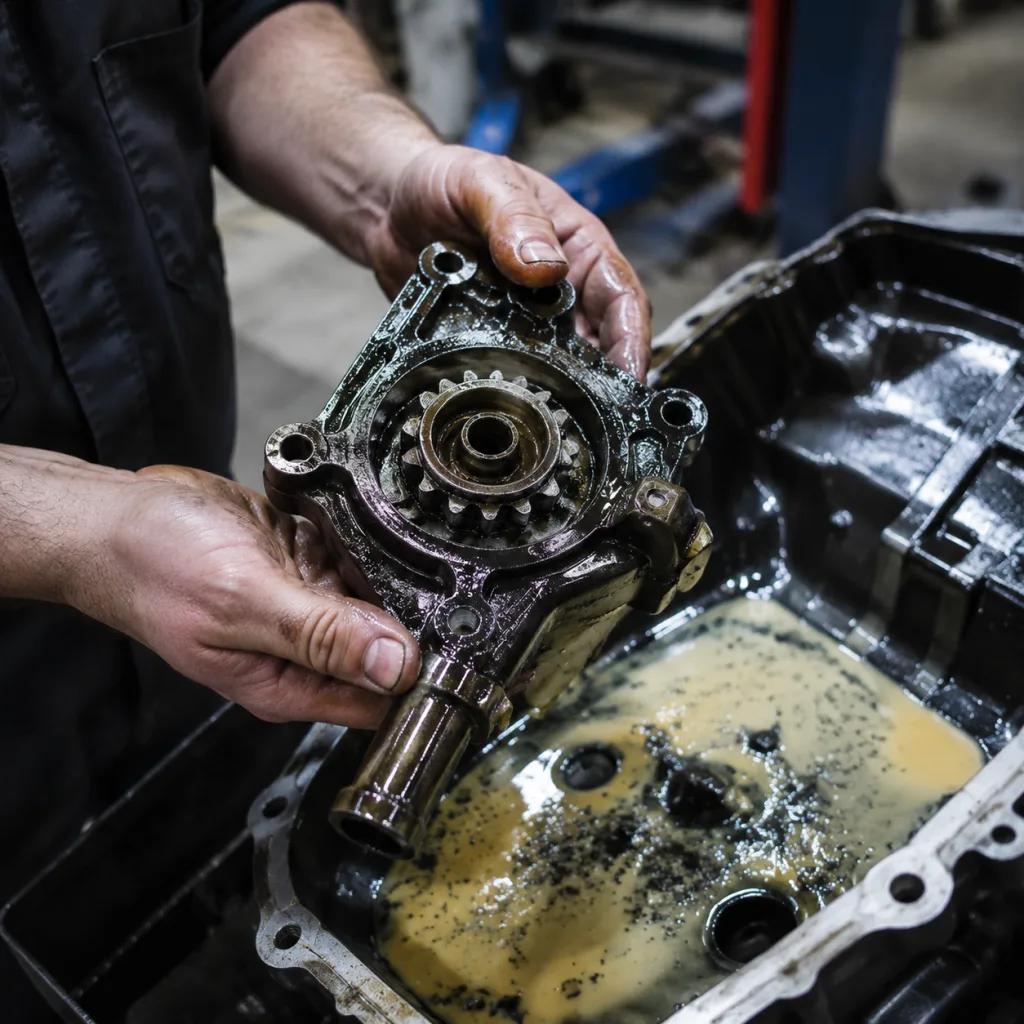
The most common failure modes are simple: connector mismatch, sealing-face leakage, and wrong actuation type. Those problems show up fast in warehouse returns and slower in warranty claims. If you are building an assortment, link the EGR range with our catalog and, when useful, the broader engine components page.
Specification deep-dive
A wholesale EGR valve should be judged by measurable details, not general resemblance. The table below highlights the checks that usually decide approval.
Check item
What to confirm
Why it matters
Flange pattern
Bolt-hole spacing, face profile, gasket land, and hole position tolerance
Prevents exhaust leakage
Electrical interface
Connector keying, pin count, terminal retention, and seal fit
Avoids harness mismatch
Actuation
Vacuum or electronic control type, plus stroke range
Ensures ECU compatibility
Flow behaviour
Open/close response, repeatability, and commanded vs actual movement
Supports stable emissions control
Housing material
Cast aluminium, stainless steel, or mixed assembly
Affects heat resistance
Surface finish
Machining quality on sealing faces and roughness on critical land areas
Reduces installation variation
Thermal durability
Cycle performance after hot-soak and cooldown testing
Helps prevent warpage and sticking
</tr></thead><tbody> </tbody></table>For procurement approval, ask suppliers to state the test method and acceptance criteria. A practical benchmark for fitment checks is bolt-hole positional tolerance within ±0.20 mm, gasket-face flatness within 0.10 mm across the sealing plane, and connector retention that survives repeated insertions without looseness. For electronic valves, buyers often request response time under 300 ms for initial movement and stable return-to-close behavior after thermal cycling. Driventus can support sample review, drawing confirmation, and programme-specific validation through custom manufacturing when the standard catalogue item is not enough.
Quality controls in export supply
Export buyers should expect documented controls, traceability, and stable packaging. In aftermarket supply, consistency matters as much as nominal design.
Driventus operates under `IATF 16949:2016` and `ISO 9001:2015` procedures. For regulated markets, buyers often also request material declarations and compliance support for `REACH (EC) No 1907/2006` where applicable to the finished article or supplied subcomponents.
A practical audit checklist includes:
Incoming material verification and lot traceability
Machining and assembly checks at defined control points
Leak testing on the finished valve at a documented pressure
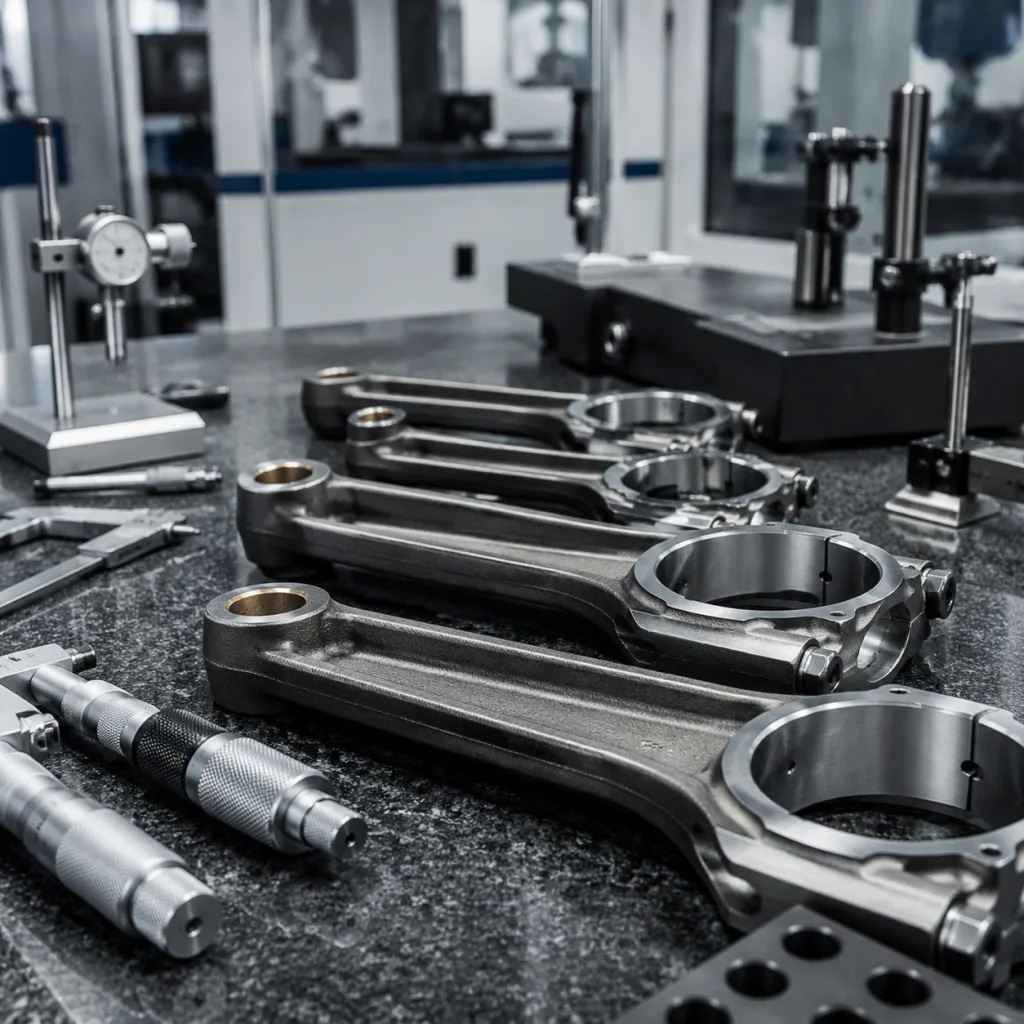
Dimensional inspection of critical features against the approved drawing
Export carton strength, drop resistance, and label accuracy
Retained sample and nonconformance handling records
Heat-cycle verification on pilot lots for new part numbers
For production sign-off, buyers commonly ask for a leak test target with zero visible leakage at the specified test pressure and a hold time defined in seconds rather than minutes. Where the design is electronic, request functional testing across the full operating range, plus a failure-rate limit for sample review. If your buying team audits factories, ask for the control plan, inspection records, and corrective-action process before approval. You can review our quality system to see how these controls are structured.
Lead time and MOQ planning
Wholesale EGR sourcing is usually driven by service-level targets. Distributors want short replenishment cycles, while repair chains need predictable availability for fast-moving applications.
Key procurement questions:
What is the normal production lead time for stock and made-to-order lines?
What is the MOQ by part number and by family?
Can mixed SKU cartons be supported for regional distribution?
What packing format is used for sea freight and air freight?
Are photo labels and barcode labels available for warehouse intake?
Can the supplier hold buffer stock for repeat releases?
As a commercial starting point, many programmes work best with a stock MOQ of 50-100 units per SKU for fast movers and 200+ units for made-to-order variants, though the final threshold depends on tooling status, packaging type, and demand history. Lead time is commonly 7-15 days for stocked references and 30-45 days for new production runs after sample approval and deposit, with longer windows for programme changes or special packaging. A stable programme usually performs better when parts are grouped by engine family and demand profile instead of by vehicle badge alone. That matters on Jeep applications, where one engine platform can span several model years and trims. For larger programmes, buyers can request a phased supply plan that covers pilot samples, first lot release, and steady-state replenishment, along with a reorder point based on average monthly demand plus safety stock.
How to compare supplier samples
Sample approval works best when every supplier is tested the same way. Use the same vehicle or engine code, the same gasket set, and the same installation procedure.
1. Check carton contents, labels, and part markings. 2. Compare all critical dimensions against the approved drawing. 3. Inspect sealing faces, connector fit, and fastener alignment. 4. Run a bench test for valve response and leakage. 5. Verify installation clearance and hot-start repeatability. 6. Record any ECU fault codes during road or dyno testing. 7. Repeat the test after heat soak, cool-down, and a second installation cycle.
This is where many programmes separate acceptable parts from field problems. A valve can fit on day one and still fail after heat soak, repeated cycling, or a second installation. In practical approval work, a sample should pass at least 3 install/remove cycles without thread damage, maintain sealing after thermal exposure, and show no abnormal noise or sticking at rest and under command. That is the point of controlled sample review: fewer surprises, fewer warranty claims, less back-and-forth with the supplier. If the test results are favourable, move directly into a commercial quotation through request a quote.
FAQ for sourcing teams
Do you supply Jeep EGR valves as wholesale stock or made to order? Both options are possible depending on demand and application coverage. Stock support suits fast-moving references, while made-to-order works better for lower-volume or variant-heavy programmes. Buyers can usually plan around a stock MOQ of 50-100 units or a higher MOQ for custom programs, with lead times depending on inventory and sample approval status.
Can you confirm OE cross-references before purchase? Yes, where the reference is already listed in our catalogue or approved data. We do not invent brand-owned numbers, and fitment is verified against application details and drawings. For approval, buyers should also confirm connector type, flange dimensions, and valve actuation before release.
What documents are available for buyer approval? Typical documents include dimensional data, inspection records, material declarations where applicable, and quality-system evidence aligned with `IATF 16949:2016` and `ISO 9001:2015`. Buyers can also request control plans, leak-test results, and sample photos tied to the pilot lot.
Frequently asked questions
Both options are possible depending on demand and application coverage. Stock support suits fast-moving references, while made-to-order works better for lower-volume or variant-heavy programmes. Buyers can usually plan around a stock MOQ of 50-100 units or a higher MOQ for custom programs, with lead times depending on inventory and sample approval status.
Yes, where the reference is already listed in our catalogue or approved data. We do not invent brand-owned numbers, and fitment is verified against application details and drawings. For approval, buyers should also confirm connector type, flange dimensions, and valve actuation before release.
Typical documents include dimensional data, inspection records, material declarations where applicable, and quality-system evidence aligned with `IATF 16949:2016` and `ISO 9001:2015`. Buyers can also request control plans, leak-test results, and sample photos tied to the pilot lot.
If you are building a Jeep EGR programme or need a sample comparison, send your target part list and application details through /contact.html.