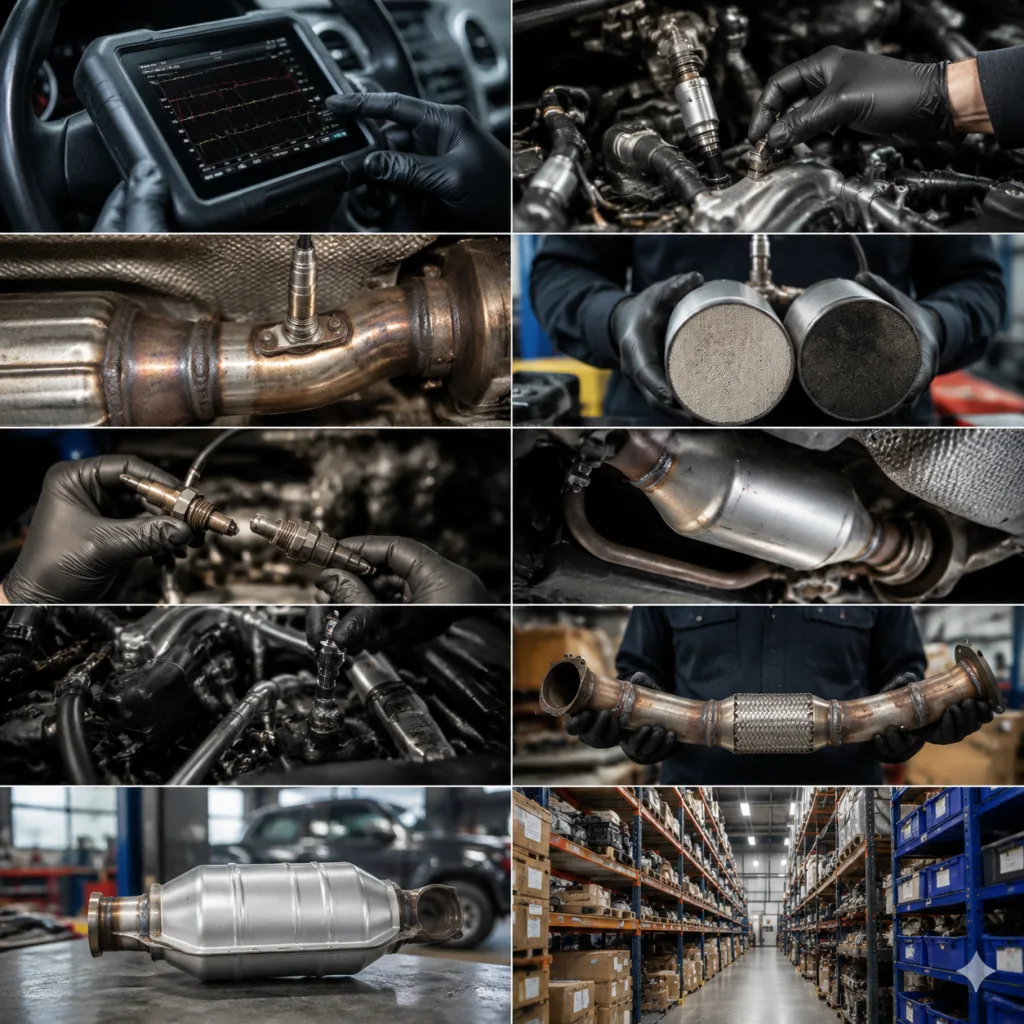
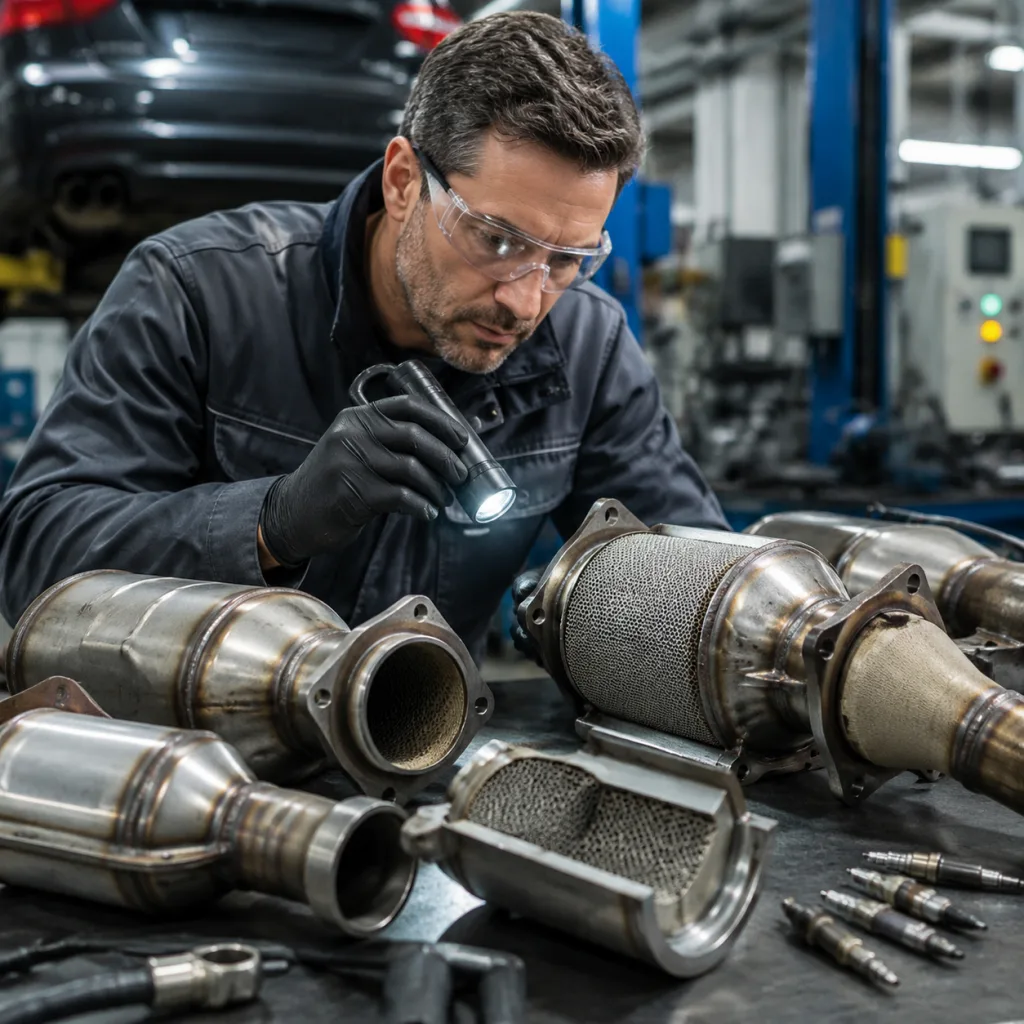
P0420 sounds specific, but it is not a purchase instruction. It means the ECU has judged catalyst efficiency below threshold, usually on Bank 1, after its monitor conditions were met. The failed part may be the catalytic converter. It may also be an exhaust leak, oxygen sensor mismatch, fuel-control fault, misfire history, oil ash, coolant contamination or an operating-temperature issue. For repair networks, distributors and sourcing teams, the cost of guessing is repeat labour, disputed warranty and slow-moving stock. This guide reframes check engine light P0420 causes and fixes as a procurement decision: what evidence to capture, when to release exhaust parts, when to investigate upstream engine damage and which supplier controls reduce avoidable returns. Driventus is an independent aftermarket manufacturer; brand names are referenced for fitment only.
Decision Point: Is P0420 a Converter Order or a Diagnostic Hold?
P0420 is usually defined as “catalyst system efficiency below threshold” for Bank 1. In practice, the ECU is comparing exhaust oxygen behaviour before and after the catalyst. Once coolant temperature, closed-loop fuel control and catalyst-monitor enable conditions are satisfied, many gasoline systems compare the upstream and downstream oxygen sensor patterns over a calibrated drive cycle. A healthy catalyst stores oxygen and smooths the downstream signal. A weak, overheated or contaminated catalyst lets the rear trace follow the front trace more closely.
That does not automatically make the converter defective. Treat the code as a decision gate:
Release path: P0420 is the only relevant code, fuel trims are stable, the engine reaches normal operating temperature, no exhaust leak is found and sensor data supports low oxygen storage.
Diagnostic hold: P0420 appears with P0300 misfire, P0171/P0172 fuel-trim faults, P013x oxygen-sensor faults, coolant-temperature faults, oil burning, coolant loss or recent engine repair.
Application review: a previous replacement is present, the part looks similar but the sensor boss, flange, pipe routing, substrate volume or emissions level may not match the vehicle.
The code is tied to emissions monitoring and readiness status under frameworks such as ECE R-83 in UN-regulated markets and OBD requirements in North America. Procurement teams do not need to recalibrate the ECU. They do need to prevent a technical warning from becoming a blind parts order.
Common field symptoms are often mild: the check engine light is on, the vehicle may drive normally and the catalyst monitor may fail readiness after battery disconnect or repair. More severe clues include sulphur smell, overheating smell, blueing on the converter shell, poor economy from continuous fuel correction or fast repeat P0420 after a new converter. Those clues should change the buying decision.
A B2B order should specify Bank 1 or Bank 2, front or rear position, pipe diameter, flange pattern, sensor boss count and angle, emissions level, engine code and model-year range. “Fits the vehicle name” is not enough for an emissions-related assembly.
Failure Modes That Mimic a Bad Catalyst
Start with freeze-frame data, full fault history and basic engine condition. A catalyst-efficiency code set during highway cruise after a misfire event is a different case from a clean, warm engine with stable fuel trims and no companion DTCs. Before releasing parts, require coolant temperature, engine load, RPM, vehicle speed, short-term fuel trim, long-term fuel trim, upstream/downstream sensor activity and all stored, pending and permanent codes.
Failure mode
How to check it
Action limit or warning sign
Sourcing consequence
Aged, overheated or contaminated converter
Compare upstream/downstream O2 activity after warm-up and confirm no active engine faults
Rear sensor closely mirrors front sensor after warm-up on many narrowband systems
Confirm emissions specification, substrate type, cell density, substrate volume and position
Exhaust leak near rear sensor
Smoke test or low-pressure test manifold, flex pipe, flanges, welds and gaskets
Even a pinhole upstream of the rear sensor can pull in oxygen and bias the monitor
Supply sealing kits, studs, nuts and spring bolts with converter orders
Slow, biased or wrong oxygen sensor
Check switching rate, heater circuit, signal range, connector and cable routing
Narrowband, wideband/AFR and connector-key differences are not interchangeable
LTFT beyond about ±10% needs diagnosis; ±15–20% usually indicates a fault
Do not process as a converter-only order
Misfire, oil burning or coolant entry
Review misfire counters, plugs, compression, PCV, coolant loss and tailpipe smoke
Unresolved fuel, oil or coolant contamination can destroy a new catalyst quickly
Engine and sealing parts may be required first
Incorrect previous replacement
Verify fitment, sensor boss location, flange geometry and emissions level
Small changes can alter monitor behaviour
Cross-reference by controlled application data, not dimensions alone
</tr></thead><tbody> </tbody></table>The check engine light P0420 causes and fixes process should eliminate obvious engine and exhaust faults before a converter is ordered. Unburned fuel from misfire can overheat the substrate. Coolant can poison the washcoat. Oil ash can reduce oxygen storage. If those inputs remain, the new part inherits the old failure.
Driventus supplies engine and powertrain components that support upstream repair work, including pistons, gaskets, water pumps and related engine parts. Buyers can review our catalog for available product families and fitment coverage.
A 10-Step Pre-Replacement Workflow for Repair Chains
Use one workflow across branches. It reduces unnecessary replacements and gives distributors better evidence when a claim is later reviewed. Add these steps to the repair authorization sheet before releasing a converter, oxygen sensor or engine sealing kit from stock.
1. Save freeze-frame data. Record coolant temperature, intake air temperature, vehicle speed, load, short-term fuel trim, long-term fuel trim and RPM at the time the code set. 2. Read all DTCs. Capture stored, pending and permanent codes. Resolve misfire, fuel-trim, oxygen-sensor heater, coolant-temperature, catalyst-temperature and EVAP purge faults first. 3. Pressure-check the exhaust. Inspect the manifold, flex pipe, flange gasket, welds and sensor bosses. Do not reuse crushed or offset gaskets. 4. Confirm operating temperature. The engine should reach its normal range, often around 85–105°C depending on application. A stuck-open thermostat can delay light-off and confuse monitor results. 5. Compare sensor behaviour. After warm-up at idle and about 2,000–2,500 rpm, the upstream sensor should be more active than the downstream sensor on many healthy narrowband systems. 6. Load-test fuel trims. Compare idle, steady cruise and moderate acceleration. High positive trim at idle often points to an air leak; positive trim under load may indicate fuel delivery limits. 7. Check mechanical condition. Use compression, leak-down, cooling-system pressure and PCV checks where symptoms justify them. Oil, coolant and misfire damage must be controlled first. 8. Lock the application data. Match engine code, model year, emissions level, body style, transmission where relevant, installation position and sensor count. 9. Control installation inputs. Verify flange flatness, thread condition, torque sequence, gasket orientation and wire routing before the road test. 10. Run readiness. Complete the manufacturer drive cycle or a controlled warm-up, cruise and deceleration route. Confirm pending codes do not return.
Most avoidable returns happen at step 8. Similar-looking parts can differ in substrate volume, ceramic or metallic substrate design, precious-metal loading strategy, port angle, flange geometry, pipe routing or connector layout. A converter is an emissions-related assembly, not a generic pipe.
Driventus operates under IATF 16949:2016 and ISO 9001:2015 aligned controls for process discipline, traceability and corrective action. Details of our quality system are available for buyers who require supplier qualification documentation.
Scenario: The Converter Failed Because the Engine Did
Picture a vehicle that returns three weeks after converter replacement with the same check engine light. The new part is blamed first. The work order then shows old misfire codes, rising oil consumption and a long-term fuel trim outside the normal range. In that scenario, the converter may be the reporting component, not the root cause.
Use a purchasing block on converter-only replacement when the repair record shows active misfire, unexplained coolant loss, visible oil smoke, abnormal fuel trims or oxygen-sensor heater faults. The upstream issue must be corrected before the emissions part is expected to survive.
Relevant repair-linked part families include:
Cylinder head gaskets and sealing kits: coolant entering the combustion chamber can contaminate the catalyst washcoat and reduce oxygen storage; request material type, fire-ring design, coating specification and thickness tolerance for critical applications.
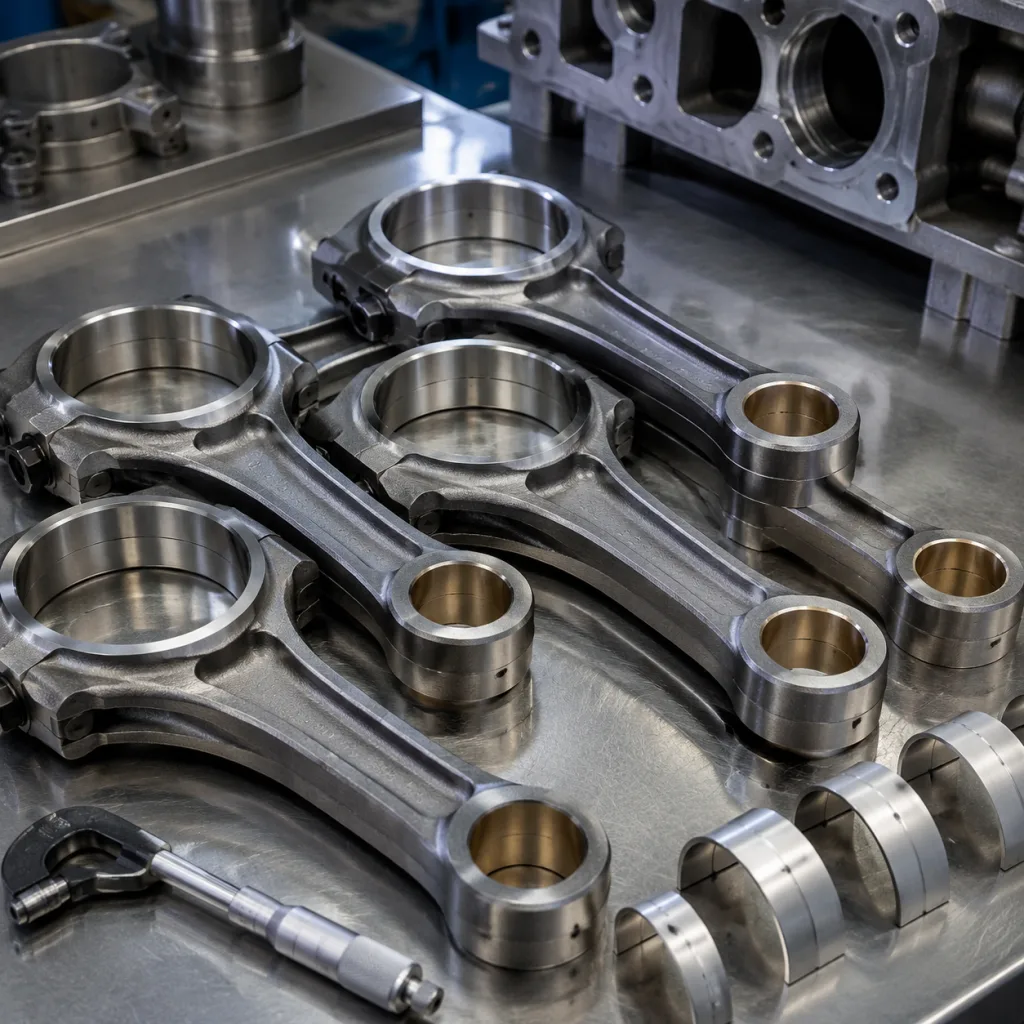
Pistons and piston rings: oil-control failure increases ash loading, raises exhaust temperature and shortens catalyst life; confirm bore size, oversize options such as +0.25 mm or +0.50 mm where applicable, ring pack dimensions and pin diameter.
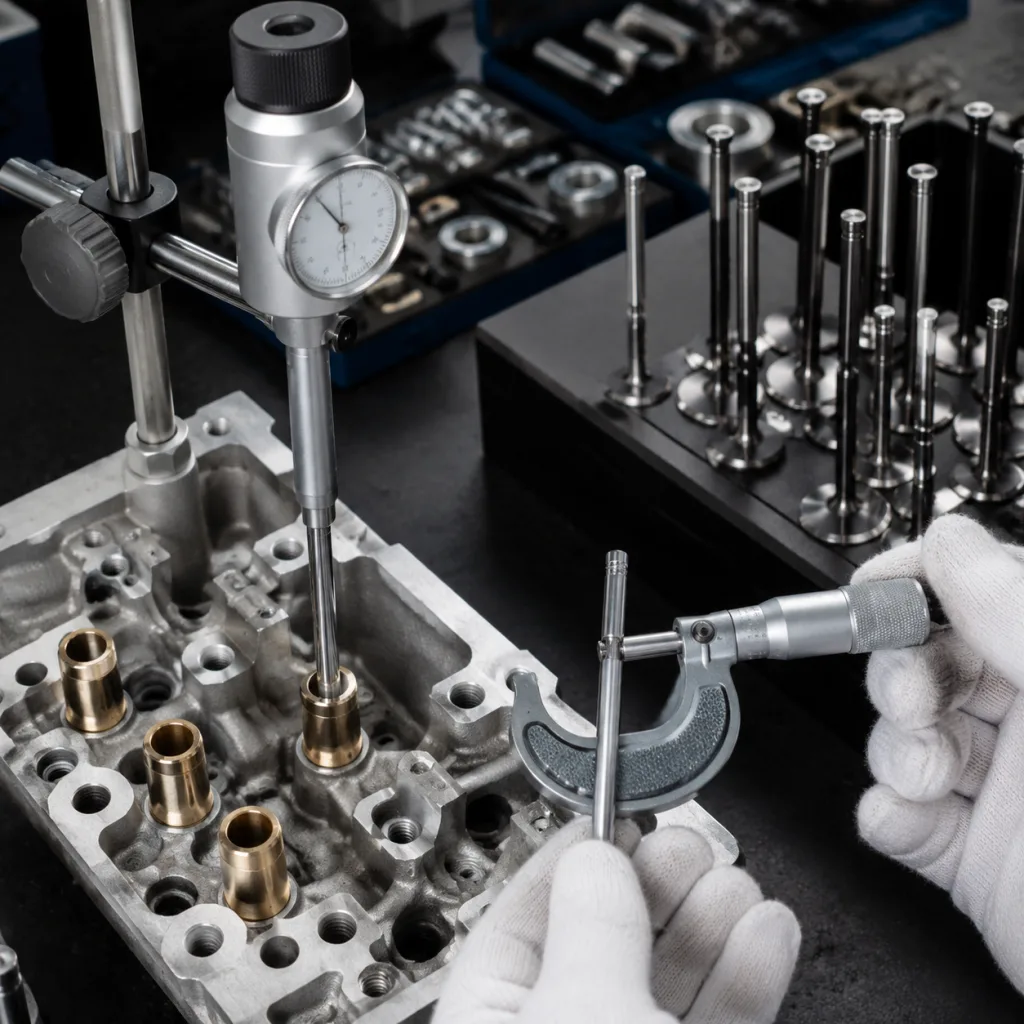
Water pumps and thermostatic systems: incorrect operating temperature affects closed-loop control, catalyst light-off and monitor completion; verify impeller material, thermostat opening temperature, gasket type and housing interface.
Turbochargers and oil-feed components: oil leakage into the exhaust stream can damage aftertreatment components and oxygen sensors; inspect oil-feed restriction, drain routing and shaft play before replacing exhaust parts.
Exhaust gaskets and fasteners: leaks near oxygen sensors can create false readings and lead to incorrect catalyst decisions; specify stainless, graphite, MLS or composite construction according to temperature and flange design.
Bundled repair programmes can cut repeat claims. A distributor supporting repair chains may pair the converter or oxygen sensor with front/rear gaskets, studs, nuts, approved anti-seize where permitted, routing clips and a diagnostic checklist. For high-moving applications, that kit is often cheaper than a second visit.
Driventus supports application-based sourcing and, where standard coverage is not sufficient, custom manufacturing for engine and powertrain components. Custom projects require drawings, samples or controlled application data, plus agreed validation criteria before production release.
Spec Deep-Dive: Quality Controls That Matter in P0420 Repairs
For P0420-related parts, visible fit is only one control point. Buyers should verify manufacturing controls, incoming material checks, dimensional inspection, functional validation and packaging protection. The same discipline applies to oxygen sensors, exhaust gaskets, engine gaskets and related components used during catalyst-efficiency repairs.
A practical supplier checklist includes:
IATF 16949:2016 and ISO 9001:2015 certification status, with certificate scope matching the purchased product family
Batch traceability for raw materials and finished goods, including heat number, production date, line number and packing lot where applicable
Dimensional inspection records for critical sealing, thread and mounting features, commonly using AQL sampling or customer-agreed control plans
Heat, pressure and chemical-resistance validation for gasket materials where applicable, including coolant, oil, fuel vapour and exhaust-temperature exposure
Connector, thread, sensor type and cable-routing verification for sensor-related parts, including M18 x 1.5 thread where applicable and correct keying to avoid mis-plugging
Packaging that prevents thread, flange, connector and sealing-surface damage in transit, using caps, separators, VCI bags or molded trays where needed
Compliance screening for restricted substances under REACH (EC) No 1907/2006 when supplying into the EU
IATF 16949:2016 and ISO 9001:2015 do not prove that a single part will fix P0420. They do help control variation, traceability and corrective action. For distributors and importers, that means cleaner incoming inspection, stronger claim reviews and lower field-failure exposure.
Separate replenishment orders from development orders. Standard catalog parts may support carton-level MOQ. Custom engine, gasket or sensor-related components usually require tooling review, sample approval and a production MOQ shaped by material, process and packaging. A strong RFQ states annual volume, first order quantity, target unit price range, target delivery window, Incoterms, destination port, labeling rules and whether PPAP, inspection reports or material certificates are required.
Use this planning logic: urgent replenishment favours validated catalog parts with shorter lead time; new applications require sample validation before volume pricing; low-volume custom parts need higher unit price or consolidated ordering to absorb tooling, setup and inspection cost.
When requesting a quotation, provide annual volume, target market, application list, drawings or samples where available, packaging requirements and inspection reports required by your customer. If an OE part-number cross-reference is used, provide it in a generic format such as OE 06A107065 only when it is part of your existing fitment data and not as evidence of vehicle manufacturer approval.
Q&A for Warranty and Claim Review Teams
What should a P0420 claim prove first? It should separate diagnostic error from product defect. A returned converter, gasket or oxygen sensor may show installation damage, oil contamination, overheating, exhaust leakage or incorrect application. Without diagnostic records, root-cause review becomes guesswork.
When should evidence be captured? Before parts are removed. Post-removal photos rarely show leak paths, wiring strain, heat-shield contact or flange misalignment clearly.
What documentation should the claim form require?
Vehicle identification data and engine code where legally shareable
Mileage at installation and mileage at failure, with date codes from the removed and replacement parts
All stored, pending and permanent DTCs, not only P0420
Freeze-frame data and fuel-trim readings at idle, 2,500 rpm and road load where available
Photos of installation position, gaskets, connectors, wire routing, flange faces and sealing surfaces
Evidence of exhaust leak testing or pressure testing before replacement authorization
Notes on oil consumption, coolant loss, misfire history, thermostat operation and previous repairs
Installation torque method, gasket replacement status and whether fasteners were renewed
How does this help commercial teams? It shows whether the repair was incomplete, the application was wrong or a manufacturing defect may exist. It also improves supplier scorecards, stocking rules and installer training.
Which KPIs are useful for distributors? Track return rate by part number, no-fault-found percentage, repeat-repair rate within 90 days, average claim value, top installer error modes and average days from claim opening to technical decision.
Driventus is an independent aftermarket manufacturer; brand names are referenced for fitment only. We do not claim approval or endorsement by any vehicle manufacturer. Our role is to support distributors, OEM/Tier-1 buyers and repair-chain procurement teams with controlled manufacturing, application review and consistent export supply.
Frequently asked questions
No. P0420 can be caused by an aged converter, but also by exhaust leaks, oxygen sensor faults, misfires, fuel trim problems, oil burning, coolant contamination or incorrect previous repairs. A scan-tool review, leak inspection and engine condition check should be completed before ordering replacement parts.
Stock depends on vehicle parc and repair strategy. Common supporting parts include oxygen sensors, exhaust gaskets, manifold gaskets, engine sealing kits, ignition-related parts, thermostatic components and selected engine parts that address oil or coolant contamination.
Provide application list, annual volume, target market, drawings or samples if available, packaging needs, certification requirements and any existing cross-reference data. This helps confirm fitment, inspection criteria, production feasibility and export packaging requirements.
If your team is sourcing components for diagnostic-related repair programmes, Driventus can review application data, quality requirements and export packaging needs. To discuss fitment coverage or request a quote, visit /contact.html