Camshaft for Vauxhall Astra OE Equivalent Sourcing
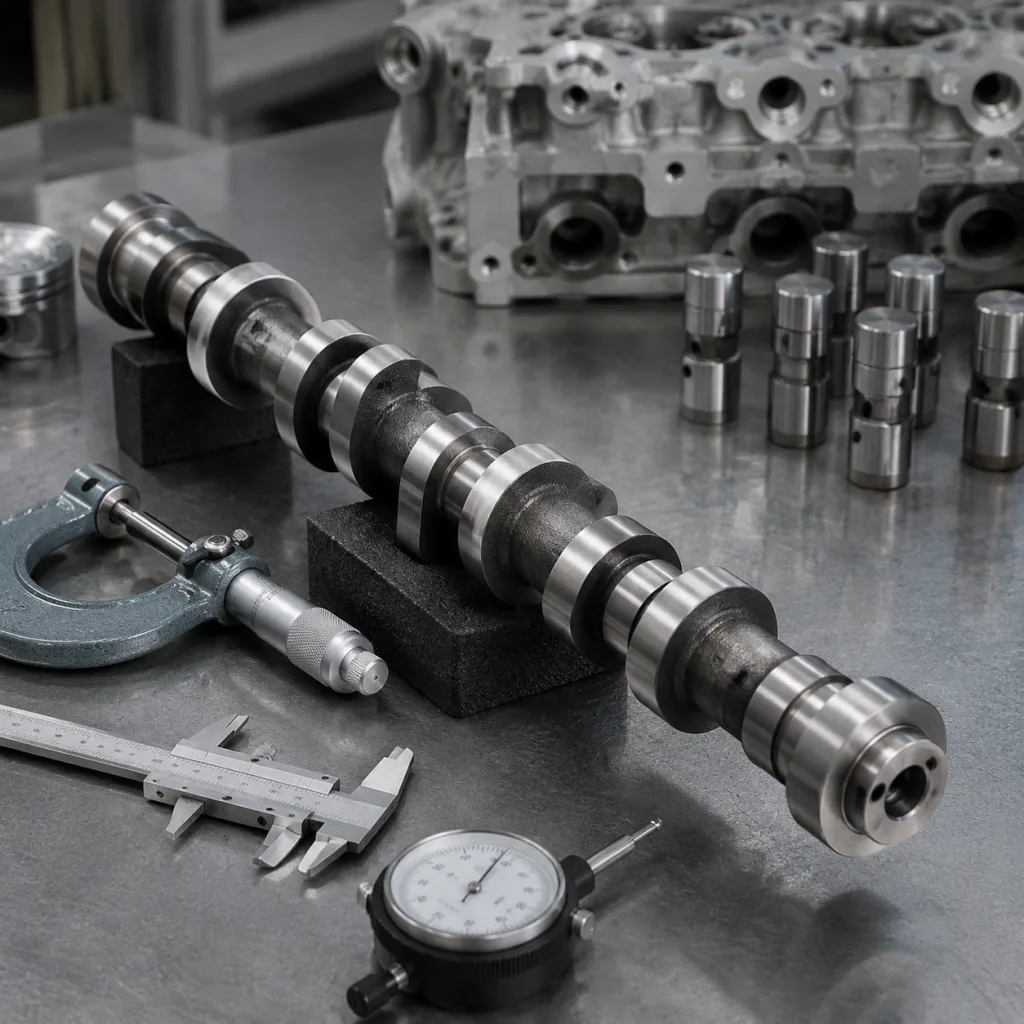
Buying a camshaft for vauxhall astra oe equivalent programs is not a catalogue-name exercise. The same Astra badge can point to different engine families, timing layouts, intake/exhaust positions, sensor triggers and valve-train designs. A low unit price is only useful after fitment, lobe geometry, journal durability, packaging protection and traceability are under control. For importers, distributors and repair-chain buyers, the practical question is simple: can this part install correctly, run quietly, survive normal service, arrive undamaged and be traced if a claim appears? Driventus manufactures aftermarket engine components in Taizhou, Zhejiang, with process controls aligned to IATF 16949:2016 and ISO 9001:2015. This guide reframes Astra camshaft sourcing around decisions buyers actually have to make: what to confirm before RFQ, which failure modes to block, what evidence to request, and how to move from sample review to repeat supply. Driventus is an independent aftermarket manufacturer; brand names are referenced for fitment identification only.
Decision Framework: When Is an Astra Camshaft Truly OE-Equivalent?
Treat OE-equivalence as an engineering decision, not a label on a quotation. The replacement camshaft must install and function against the same engine-interface requirements as the intended original-equipment part family. It does not imply approval, endorsement or supply status with the vehicle manufacturer.
Before negotiating price, lock down the application. Vehicle name is only the starting point.
Engine code, displacement and model-year range
Intake or exhaust camshaft position, especially on twin-cam engines
Timing drive interface, including belt, chain or gear-driven layouts
Sensor trigger geometry, phaser interface and oil-control features where applicable
Cam lobe count, journal count, thrust-control arrangement and end-stop design
Valve-train system, such as hydraulic tappet, roller follower or finger follower
OE part-number cross-reference format used in the buyer’s own fitment data
Critical datum convention, such as timing-end datum, thrust-face datum or first-journal datum
Supplied accessories, including dowel pin, trigger wheel, blanking plug or assembled phaser interface where required
A qualified supplier should connect these points to the replacement drawing, inspection plan and catalogue record. If the file cannot move beyond “fits Astra,” the sourcing risk is still open.
A practical release file includes a 2D drawing or controlled specification, an approved reference sample, a cross-reference table, a critical-characteristic list and a revision record. That prevents future batches from being built from catalogue text alone.
Failure Modes to Block Before the First Order
Most camshaft claims do not start with a dramatic breakage. They start with small misses: a journal slightly out of range, a lobe profile that is close but not close enough, a rough oil hole, an unprotected end feature, or a trigger detail that confuses installation.
Use the checks below to turn vague “quality” discussions into measurable controls.
Failure mode to prevent
Control point
Typical verification method
Practical sourcing target
Installation interference or cover-clearance issues
Overall length and journal positions
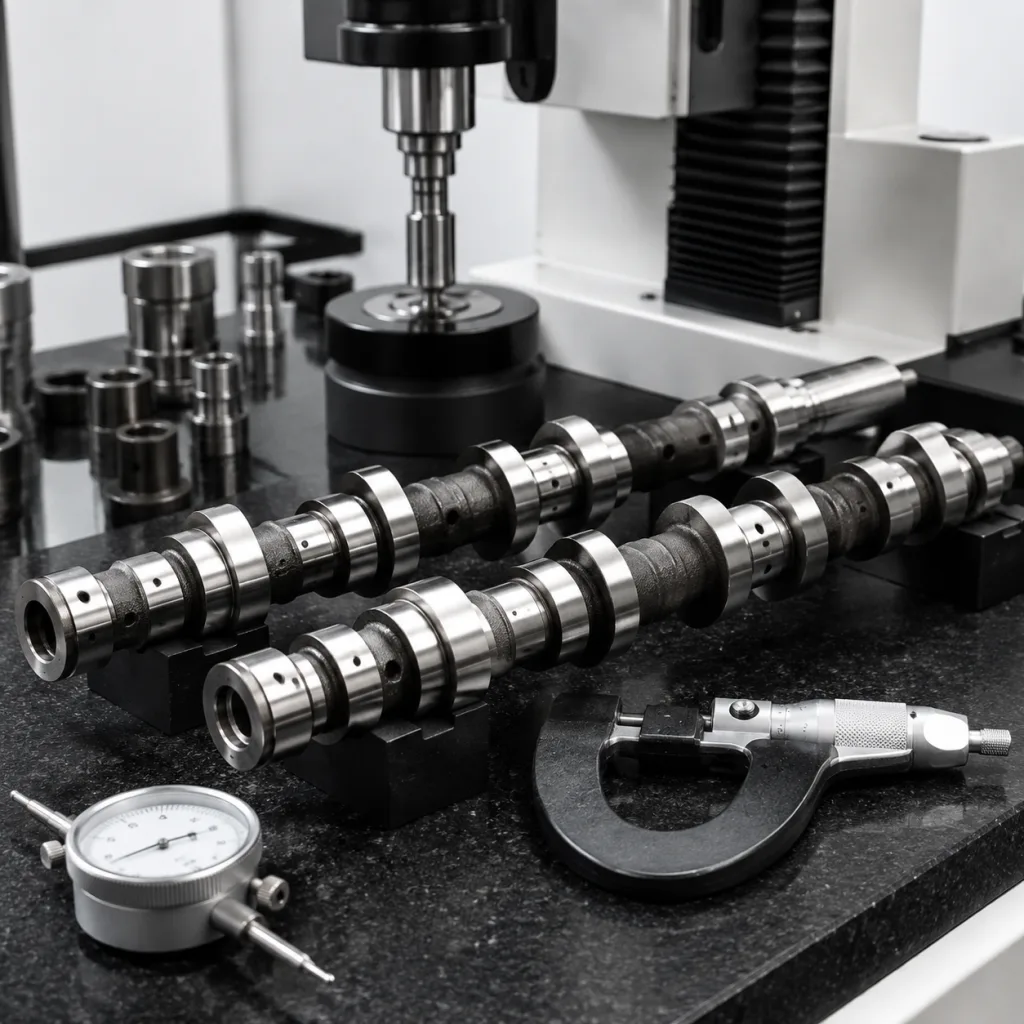
CMM or dedicated gauge
Drawing nominal, commonly ±0.05–0.15 mm by feature
Low oil-film stability or bearing wear
Journal diameter and roundness
Micrometer, air gauge or roundness tester
Diameter often within 0.01–0.03 mm; roundness checked separately
Poor idle quality or incorrect valve lift
Lobe lift and base-circle diameter
Cam profile measuring machine
Lift deviation often controlled within ±0.03–0.05 mm after approval
Timing complaints or rough running
Lobe phase angle
Profile and indexing inspection
Common review band ±0.5°–1.0° cam angle, subject to drawing
Premature lobe or follower wear
Surface hardness
Rockwell or equivalent hardness test
Chilled or hardened contact surfaces commonly reviewed around 50–60 HRC equivalent where applicable
Break-in noise or lubrication inconsistency
Surface roughness
Profilometer
Journals commonly near Ra 0.2–0.8 µm; lobes by drawing
Bearing load, seal stress or timing variation
Straightness and runout
V-block with dial indicator or CMM
Typical total runout review 0.03–0.08 mm depending on length and design
Lubrication starvation or contamination
Oil-feed hole position and burr condition
Pin gauge, borescope or visual standard
Hole alignment to drawing; no loose burrs or blocked passages
Poor claim containment
Material traceability
Heat number and batch record
Heat/batch linked to final lot and inspection file
</tr></thead><tbody> </tbody></table>Material choice matters because follower contact, lubrication and wear pattern differ by engine family. Common routes include chilled cast iron, ductile iron and forged or machined steel. Do not accept “cast” or “steel” as a complete specification. Ask for grade, heat-treatment route, surface-hardness range and contact-face finish requirement.
For EU and UK supply chains, buyers may also request chemical-substance declarations in line with REACH (EC) No 1907/2006 or customer-specific restricted-substance policies.
Evidence Checklist: What Validation Should Prove
Validation should answer three questions. Does the camshaft match the intended engine interface? Will the contact surfaces survive normal lubrication and load? Can the part reach the buyer without damage or identity loss?
Request evidence that combines component inspection with checks against surrounding engine-system features, especially where timing phasers, position sensors or application-specific ends are involved.
First article inspection report against the approved drawing or reference sample, with 5-piece or agreed sample-size results for critical dimensions
Material certificate, heat-treatment record and batch traceability record tied to heat number and production lot
Hardness map covering journals, lobes and follower-contact areas, with minimum, maximum and location data
Cam profile report for lift, base circle, duration-related geometry and phase indexing, not only a pass/fail statement
Surface roughness report for journals, lobes and thrust-contact zones, with Ra values and measurement direction where relevant
Straightness or runout inspection before corrosion protection and packing, with inspection fixture noted
Oil-hole cleanliness, chamfer and burr check, especially on hollow or pressure-fed designs
Bench-fit check with matching timing components, phaser or sensor interface where applicable
Endurance, wear or comparative inspection against an OE-equivalent reference sample, such as rig running, hardness-retention review or post-test profile comparison when required by the program
Packaging drop, corrosion-protection and label-legibility checks for export shipments, including a defined storage or salt-spray surrogate where the buyer requires it
A pilot lot is often the cleanest release gate. Use 10–30 pieces for warehouse handling, workshop feedback and documentation review, then release the first commercial order only after fitment, packaging and records are accepted.
Avoid broad vehicle-level compliance claims for a standalone camshaft. For example, ECE R-83 relates to vehicle emissions type approval and should not be presented as blanket compliance for an aftermarket component. Procurement teams should ask for part-level validation data, a clear replacement-fitment statement and records that can support claims investigation.
Step-by-Step RFQ Route for Importers and Repair Chains
Separate fitment validation from commercial comparison. If price, MOQ and lead time are discussed before the application is fixed, the quote may look attractive and still create returns.
Use this RFQ route:
1. Provide engine code, displacement, model-year range and destination market. 2. Identify intake or exhaust position and confirm single-cam or twin-cam layout. 3. Share available OE, OES or aftermarket cross-reference data. 4. Confirm variable valve timing, fixed sprocket or sensor-triggered end features. 5. Request a drawing comparison, critical-dimension checklist or sample-review report. 6. Ask for quotation logic by order band, such as sample lot, 100–300 pieces, 500–1,000 pieces and annual call-off volume. 7. Confirm MOQ by SKU and by shipment. Existing catalogue items may support lower MOQ; new or slow-moving camshafts may require higher MOQ to cover setup, tooling, heat treatment and inspection cost. 8. Review pilot-sample inspection reports before authorising bulk production. 9. Confirm packaging, labelling, barcode, palletisation and country-of-origin requirements. 10. Set acceptable quality limits, documentation requirements and claim-handling terms before shipment.
Compare the total sourcing model, not only the unit price. Camshaft cost is shaped by material route, machining time, hardening process, profile-grinding complexity, annual volume, inspection depth, packaging specification and private-label carton requirements.
Lead time should also be quoted by stage. Sample review often takes 2–4 weeks after receiving a usable sample or drawing. First production can require 45–75 days if tooling, gauges or heat-treatment validation are needed. Repeat orders of released catalogue items are usually shorter when raw material and semi-finished stock are available.
Driventus lists engine parts through our catalog, including related engine components. For non-standard programs, private-label lines or drawing-controlled camshafts, buyers can review custom manufacturing options. Our quality system is built around process traceability, incoming material control, in-process inspection, final release checks and corrective-action follow-up.
Scenario: The Part Passes Inspection but Fails in Transit
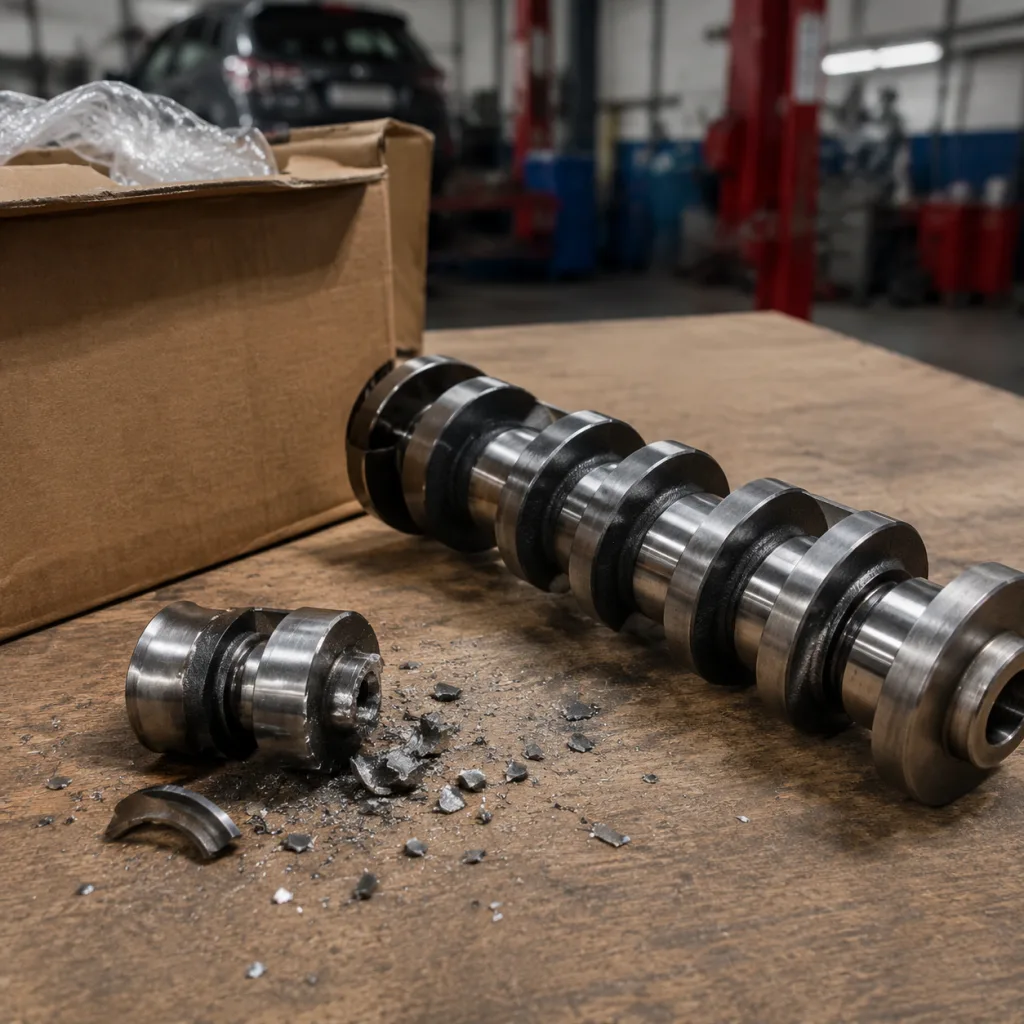
A camshaft can leave final inspection in specification and still become a warranty problem before it reaches the workshop. Long precision-machined parts are vulnerable to corrosion, impact marks, bending, mixed labels and lost batch identity. Packaging is therefore part of quality assurance, not a cosmetic purchasing detail.
Specify the packing system before mass production starts:
Anti-corrosion oil, VCI paper or sealed protection suitable for the shipping route and storage period, commonly defined for 6–12 months of warehouse protection depending on route and climate
Journal, lobe and end-feature protection to prevent metal-to-metal contact inside the carton
Rigid carton, tray or insert support to limit bending, point loading and impact damage
Individual carton, neutral box or private-label box dimensions and gross-weight limits for warehouse handling
Part number, batch number, production date and quantity on the label
Intake/exhaust position marking where the application requires clear separation
Barcode format compatible with warehouse and distributor systems, such as EAN-13, Code 128 or buyer-specific SKU barcode
Palletisation suitable for sea freight, air freight or mixed-container consolidation, with carton count, pallet height and stretch-wrap requirement agreed before mass packing
Packing list format that links carton, pallet and batch information
Export marks, country-of-origin statement and spare label policy for distributors that repack goods locally
Traceability should connect the finished camshaft to material heat, machining batch, heat-treatment batch where used, inspection record, packing date and shipment lot. The carton label and packing list need to preserve that link.
This does not eliminate every warranty claim. It does make containment faster. If a distributor reports noise, premature wear, installation mismatch or transport damage, the buyer can isolate the affected batch instead of freezing unrelated stock across multiple warehouses.
Q&A: How Driventus Handles Astra Camshaft Programs
What does Driventus supply? Driventus manufactures engine and powertrain components for aftermarket distributors, wholesalers, OEM/Tier-1 supply chains and repair networks in more than 60 countries. For camshaft programs, the focus is repeatable replacement supply supported by application review, process discipline, inspection records and export-ready documentation.
Which quality systems support the work? Production and quality controls are aligned with IATF 16949:2016 and ISO 9001:2015. For buyer audits, Driventus can discuss process flow, control plans, inspection equipment, batch traceability, packaging standards, corrective-action procedures and documentation expectations.
What happens when a buyer supplies a sample, drawing or reference number? Engineering review compares the reference part against manufacturable critical dimensions and known application requirements. For an existing catalogue camshaft, the route usually runs through fitment confirmation, quotation, sample order, sample inspection file, buyer approval, bulk production and pre-shipment release.
What changes for a new or drawing-controlled item? The program may add sample measurement, feasibility review, tooling or gauge planning, pilot production and an agreed PPAP-style or first-article documentation package.
What should be included in the RFQ? State target annual demand, first-order quantity, preferred MOQ, price target, Incoterms, destination port, packaging type and required documents. The more complete the RFQ, the less likely the quotation is to become a one-off spot price that fails in repeat supply.
A camshaft for vauxhall astra oe equivalent sourcing project should begin with accurate fitment data. If the buyer has a sample, drawing, OE cross-reference list, current aftermarket number or failed-field sample, Driventus can review the application and advise whether an existing part or a custom route is more appropriate. Driventus is an independent aftermarket manufacturer; brand names are referenced for fitment identification only.
Frequently asked questions
Provide engine code, displacement, model-year range, intake or exhaust position, timing system details, and any available OE or aftermarket cross-reference. Photos or samples help confirm sensor triggers, phaser interfaces, oil-feed features and journal layout. For quotation, also include target annual volume, first-order quantity, MOQ expectation, packaging type, destination market and required documents.
Yes. Driventus can review buyer-supplied samples or drawings for dimensional comparison, material route, machining feasibility, packaging needs and inspection planning. The review should define critical features such as journal diameter, lobe lift, phase angle, oil-hole position, hardness range and end-feature geometry. For drawing-controlled work, use the custom manufacturing route.
No. OE-equivalent refers to replacement fitment and functional matching against the intended application. It does not mean approval, endorsement or supply status with any vehicle manufacturer.
For fitment review, sample matching, MOQ planning or distributor pricing, contact Driventus to [request a quote](/contact.html).