camshaft · 2026-06-07

Camshaft Vauxhall Aftermarket Replacement Sourcing

A camshaft Vauxhall aftermarket replacement programme is more than a fitment-matching exercise. For importers, engine-parts distributors and repair-chain buyers, the main commercial risk comes from small technical errors: dimensional drift, incorrect lobe phasing, surface-hardness variation, oil-feed misalignment, packaging damage and weak batch traceability. Vauxhall applications span several petrol and diesel engine families, many of which share architecture and references with Opel applications in European markets. That makes controlled cross-reference management essential; engine size or model year alone is not enough. This guide explains how procurement teams can assess aftermarket camshafts for Vauxhall coverage, what evidence to request from a manufacturer, and which validation points reduce warranty exposure. Driventus supplies engine components for aftermarket and B2B programmes, including camshafts, pistons, crankshafts, gaskets, water pumps and turbochargers. Driventus is an independent aftermarket manufacturer; brand names are referenced for fitment only.

Fitment Scope and OE-Equivalent Requirements

For Vauxhall replacement camshafts, the first control point is application definition. Buyers should define the requirement by engine code, fuel type, valvetrain layout, camshaft position, timing-drive interface and sensor-trigger design. A minor change in lobe phasing, end-journal length or reluctor profile can create a part that installs physically but fails under diagnostic monitoring or develops premature wear.

A robust sourcing file should include:

  • Vehicle make and model coverage, including Opel-equivalent market references where applicable
  • Engine code, displacement, fuel type and emission generation
  • Intake or exhaust camshaft position, if the engine uses separate shafts
  • Timing interface type: sprocket, gear, chain drive or belt drive
  • Sensor target, reluctor or trigger-wheel design, where integrated
  • Journal count, thrust-control arrangement and oil-feed hole location
  • Existing aftermarket number and any customer-approved internal cross-reference

The term OE-equivalent should be treated as a measurable specification, not as a marketing shortcut. It does not mean approval by the vehicle manufacturer. It means the replacement part is designed to match the functional geometry, material properties and operating interfaces required for the intended engine application. Buyers can review relevant engine components in our catalog, including related valve-train and rotating assemblies.

Critical Dimensions for Replacement Approval

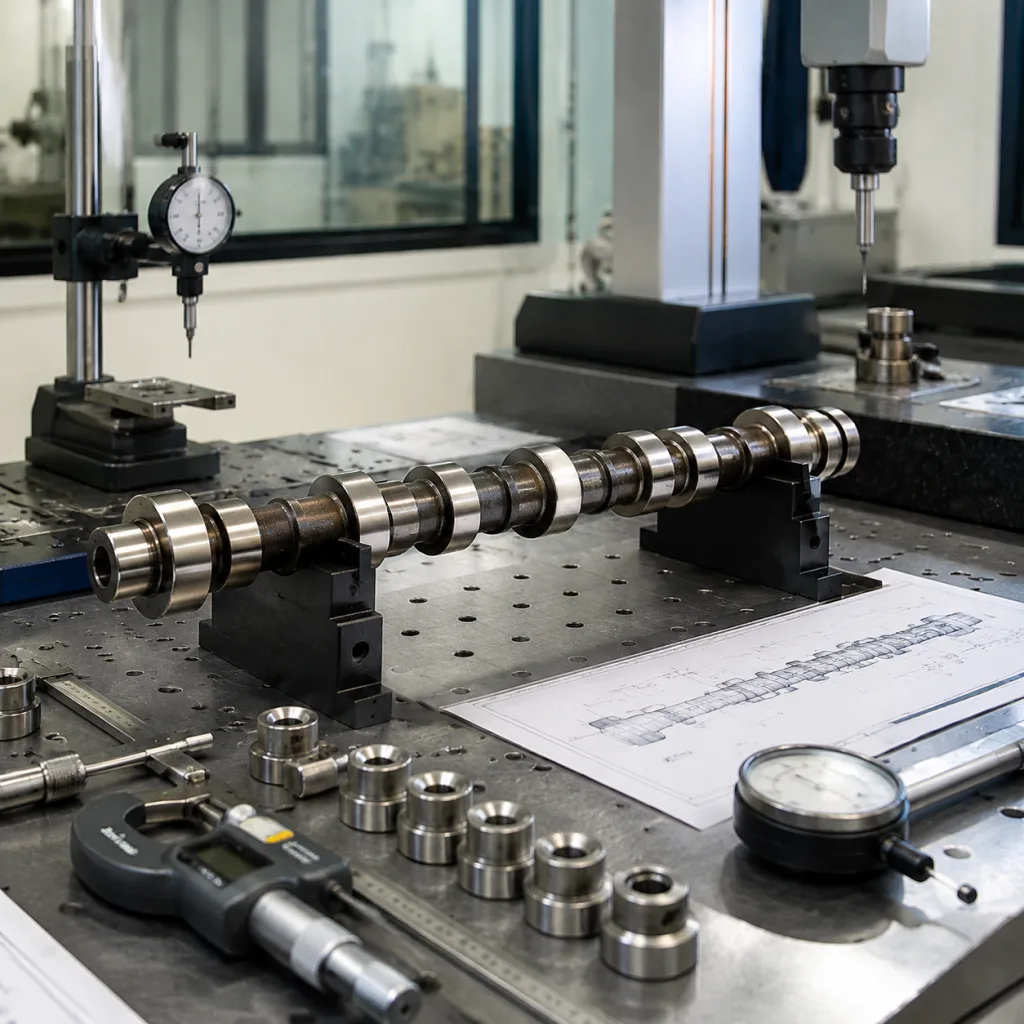
A camshaft is highly sensitive to small deviations because it controls valve timing, valve lift and contact stress. Procurement specifications should therefore include measurable inspection points instead of relying only on catalogue fitment data or broad engine descriptions.

</tr></thead><tbody> </tbody></table>For production supply, Driventus normally defines dimensions from validated samples, customer drawings or agreed technical data. Where the customer has no drawing, a reverse-engineering package can be created through custom manufacturing, subject to sample availability and confirmed application data.

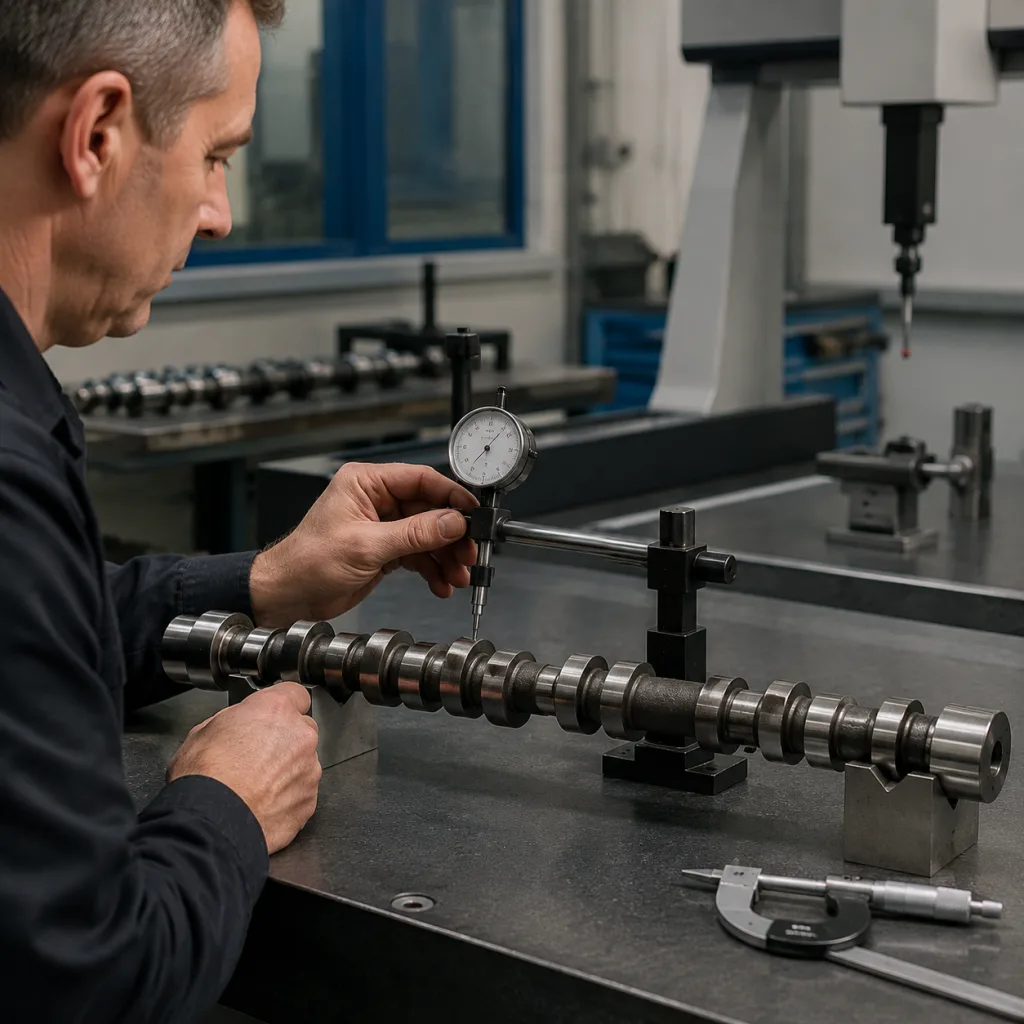
Tolerance expectations depend on the engine design, material and drawing requirement. Journal diameters are often controlled in micron-level bands, while lobe profile accuracy is checked against a master curve or approved drawing. Buyers should avoid accepting generic descriptions such as “fits Vauxhall 1.6” unless the supplier can provide a dimensional report for the exact camshaft type, position and engine code.

Material, Heat Treatment and Surface Finish

Aftermarket camshafts are commonly produced from chilled cast iron, ductile iron, forged steel or billet steel, depending on engine load, follower type and production economics. Material selection must match the cam follower interface because flat tappets, roller followers and hydraulic lifters create different contact-stress patterns.

Key manufacturing controls include:

  • Chemical composition verification by spectrometer
  • Casting or forging inspection before machining
  • CNC turning and grinding of journals and lobes
  • Induction hardening, carburising, nitriding or chilled-layer control where specified
  • Straightening and runout inspection after heat treatment
  • Final washing to remove abrasive residue from oil passages
  • Anti-corrosion coating and VCI packaging for sea freight

Hardness alone is not enough to validate durability. A lobe can meet surface-hardness targets but still fail if the hardened layer is too shallow, if the transition zone is brittle, or if the surface roughness is unsuitable for the follower. Procurement teams should request hardness-depth data, metallographic evidence from initial approval, and surface-finish records for journals and lobes.

For Vauxhall applications using hydraulic followers, cleanliness and oil-hole alignment are especially important. Blocked or misaligned oil passages can cause cold-start noise, follower collapse or accelerated lobe wear. These failures are often misassigned to installation error, so supplier process evidence and batch-level inspection records matter.

Validation Tests Buyers Should Request

For a camshaft Vauxhall aftermarket replacement line, validation should combine dimensional inspection, material confirmation and functional durability evidence. Not every aftermarket programme requires a full engine dynamometer campaign, but the supplier should be able to show a documented control plan, repeatable inspection methods and traceability from raw material to finished stock.

Recommended approval package:

  • Initial sample inspection report with all critical dimensions
  • Material certificate and chemical composition report
  • Heat-treatment record, including hardness and case-depth data where applicable
  • Cam profile graph against master sample or agreed drawing
  • Runout and straightness report after final grinding
  • Surface roughness data for journals and lobes
  • Packaging drop or transport-simulation evidence for export cartons
  • Batch traceability record linked to casting, machining and heat-treatment lots

Relevant management-system standards include IATF 16949:2016 and ISO 9001:2015. These standards do not certify a specific camshaft application, but they do support disciplined process control, corrective action and traceability. For EU and UK importers, material and chemical compliance should also consider REACH (EC) No 1907/2006 where applicable to substances in coatings, packaging and supplied components.

Driventus operates under IATF 16949 and ISO 9001 controls, with incoming material inspection, in-process checks and final inspection. Buyers can review the quality system before supplier onboarding or factory-audit planning.

Replacement Risk Controls for Distributors

Distributors often carry the warranty cost when engine parts are miscatalogued, poorly labelled or inconsistent between batches. A good sourcing plan therefore connects technical approval with catalogue governance, warehouse control and claim-handling rules.

Before purchase order release, verify these points:

  • Cross-reference list is locked by engine code, not only vehicle model year
  • Intake and exhaust camshafts are clearly separated in SKU naming
  • Photographs show timing end, sensor end and oil-feed details
  • Carton labels include part number, batch number and quantity
  • Mixed-model pallets have outer labels and packing lists by SKU
  • Installation notes flag replacement of followers, seals, bolts or timing components where required by the repair procedure
  • Claims process requires photos, mileage, oil condition evidence and diagnostic codes

For multi-location repair chains, repeatability matters more than the lowest unit cost. If technicians receive camshafts with inconsistent packaging, unclear position marking or variable surface protection, installation errors and returns increase. A capable supplier should support stable batch labelling, consistent part presentation and export packaging that protects machined surfaces during long-distance transport.

The phrase camshaft Vauxhall aftermarket replacement should also be mapped carefully in digital catalogue data. Over-broad keyword mapping can generate sales, but it can also create avoidable returns. Procurement teams should align e-commerce listings, TecDoc-style attributes, internal ERP numbers and warehouse labels before launch.

Sourcing from Driventus

Driventus is based in Taizhou, Zhejiang and manufactures engine and powertrain components for B2B customers in more than 60 countries. For camshaft programmes, the usual sourcing route starts with fitment confirmation, sample review or drawing review, then moves through quotation, tooling or fixture assessment, initial sample inspection and batch production.

Typical commercial and technical documents can include:

  • Application list and customer cross-reference file
  • Drawing review or reverse-engineering feasibility report
  • Quotation by SKU, annual volume and packaging requirement
  • PPAP-style sample package where agreed by contract
  • Final inspection report per batch
  • Export packaging specification
  • Certificate of origin and standard shipping documents

Driventus can supply aftermarket distributors, OEM and Tier-1 sourcing teams, and repair-chain private-label programmes. We do not claim endorsement or approval by Vauxhall or any vehicle manufacturer. Brand names are used only to identify intended vehicle fitment.

For buyers building a camshaft Vauxhall aftermarket replacement range, early technical clarification reduces launch delays. Share the target engine codes, current reference numbers, annual demand and market region so the engineering team can check feasibility, inspection requirements and packaging scope. For broader engine coverage, see our catalog or engine-component options at /products/engine-components.html.

Frequently asked questions

Yes, where the sample is complete and clearly identified. Driventus can review geometry, material, hardness, oil-feed layout and surface features, then confirm whether reverse engineering or drawing-based production is suitable. Application data is still required to avoid incorrect cross-references.

Request an initial sample inspection report, material and heat-treatment records, cam profile data, runout inspection, packaging specification and batch traceability method. For supplier qualification, review IATF 16949:2016 and ISO 9001:2015 system evidence.

No. Aftermarket fitment means the part is designed for functional compatibility with the stated application. Driventus does not claim approval or endorsement by any vehicle manufacturer. Driventus is an independent aftermarket manufacturer; brand names are referenced for fitment only.

If you are sourcing Vauxhall camshafts or building a private-label engine parts range, share your application list, volume forecast and inspection requirements. You can [request a quote](/contact.html).

Request a Quote
Control item Typical inspection method Procurement relevance
Overall lengthVernier, CMM or fixture gaugeConfirms end float and timing alignment
Journal diameter and roundnessMicrometer and roundness testerControls oil-film stability and bearing noise
Lobe lift and base-circle diameterCMM or cam profile machineConfirms valve lift and ECU-expected airflow
Lobe phase angleCam analyser or timing fixturePrevents timing deviation and fault codes
Surface hardnessRockwell or Vickers testReduces lobe and follower wear risk
Oil-feed hole positionOptical or CMM inspectionPrevents lubrication starvation
RunoutDial gauge or CMMControls vibration and bearing load