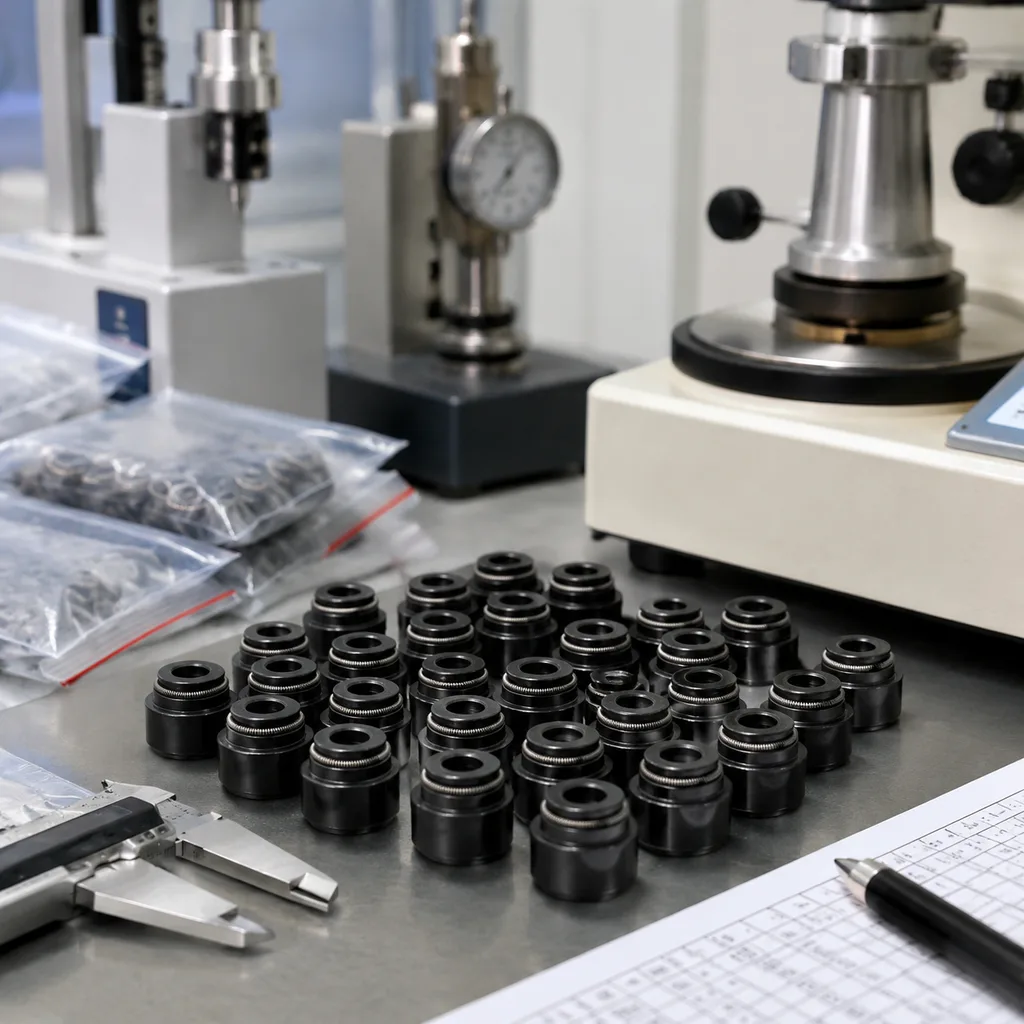
A camshaft for Renault Clio aftermarket replacement has to reproduce the original valve-timing geometry, journal dimensions, lobe profile, surface hardness and drive-end interface closely enough to prevent noise, oil-pressure loss, misfire codes, emissions readiness issues and premature follower wear. For B2B buyers, the sourcing question extends beyond basic fitment: the supplier must be able to control metallurgy, machining, heat treatment, inspection records and batch traceability across repeat orders. This article outlines practical procurement checks for Renault Clio replacement camshafts used by aftermarket distributors, wholesalers and repair-chain supply programmes. It covers application matching, dimensional control, material selection, validation testing, packaging, documentation and supplier audit points for EU, UK, North American, Australian and Brazilian import channels. Driventus is an independent aftermarket manufacturer; vehicle brand names are referenced for fitment identification only.
Fitment scope and OE-equivalence priorities
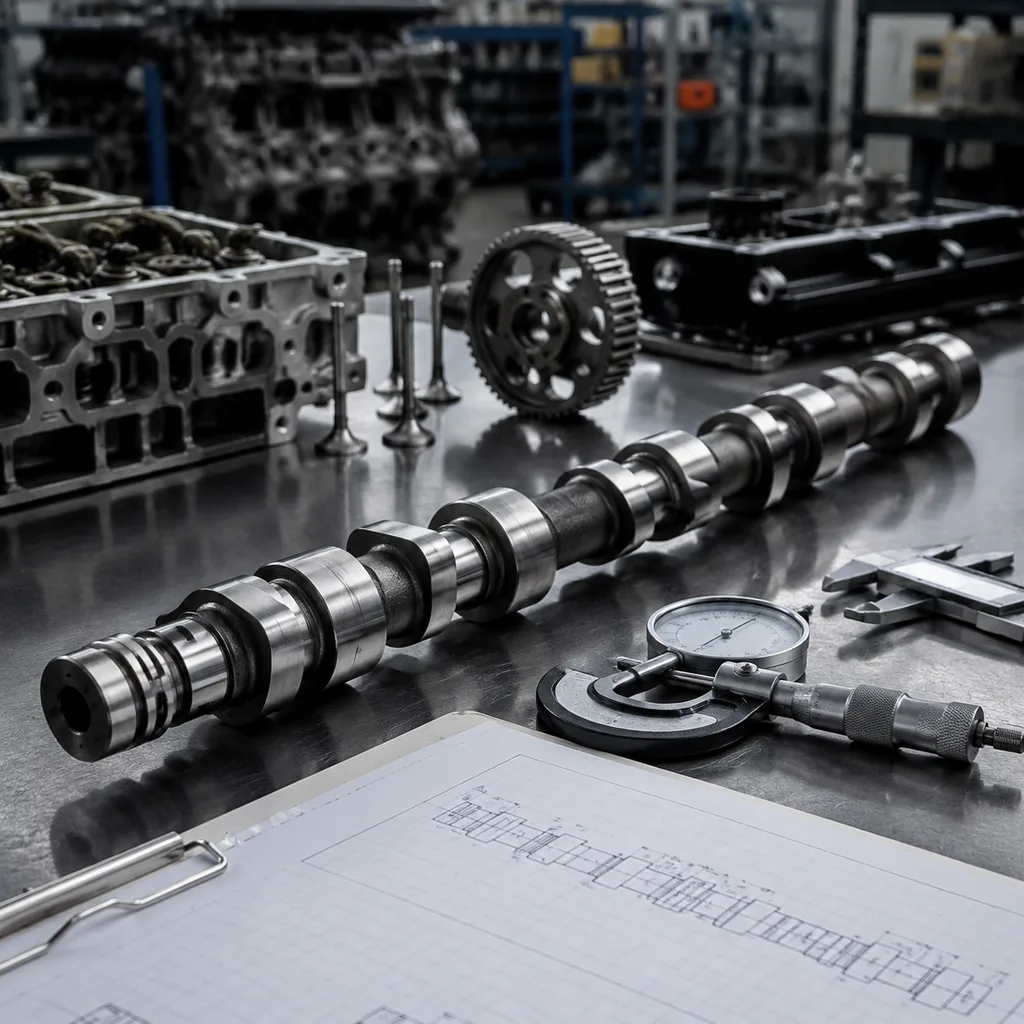
Renault Clio camshaft applications differ by generation, engine code, displacement, fuel system, cylinder-head design and valvetrain layout. A replacement camshaft should therefore be sourced by engine code and original functional geometry, not by model name alone. Buyers typically confirm intake or exhaust position, number of lobes, journal count, sensor-trigger features, sprocket or pulley mounting, oil-feed configuration and any variable valve timing interface.
For aftermarket programmes, OE-equivalence means the component is engineered to match the functional requirements of the original part for specified applications. It does not imply approval, sponsorship or endorsement by the vehicle manufacturer.
Key fitment checks include:
Engine family, displacement and market application for the target Clio version
Intake, exhaust or single-cam configuration
Camshaft overall length and journal centre positions
Journal diameter, bearing surface width and oil groove layout
Lobe lift, base circle, flank profile and phase angle
Drive-end interface for pulley, sprocket or variable valve timing unit
Sensor target, slot or trigger-wheel geometry where applicable
Surface hardness and case depth matched to the follower type
Part marking, handedness and installation orientation where relevant
Where buyers maintain a wider range across French and European compact vehicles, camshafts can be reviewed with other engine components in our catalog and the engine range page at /products/engine-components.html.
Dimensional and material controls for replacement camshafts
The most common procurement risk is a part that looks correct but falls outside tolerance at one or more functional surfaces. Small deviations in lobe lift, journal runout, base-circle consistency or phase relationship can affect idle quality, diagnostic monitors, emissions performance and valve-train durability.
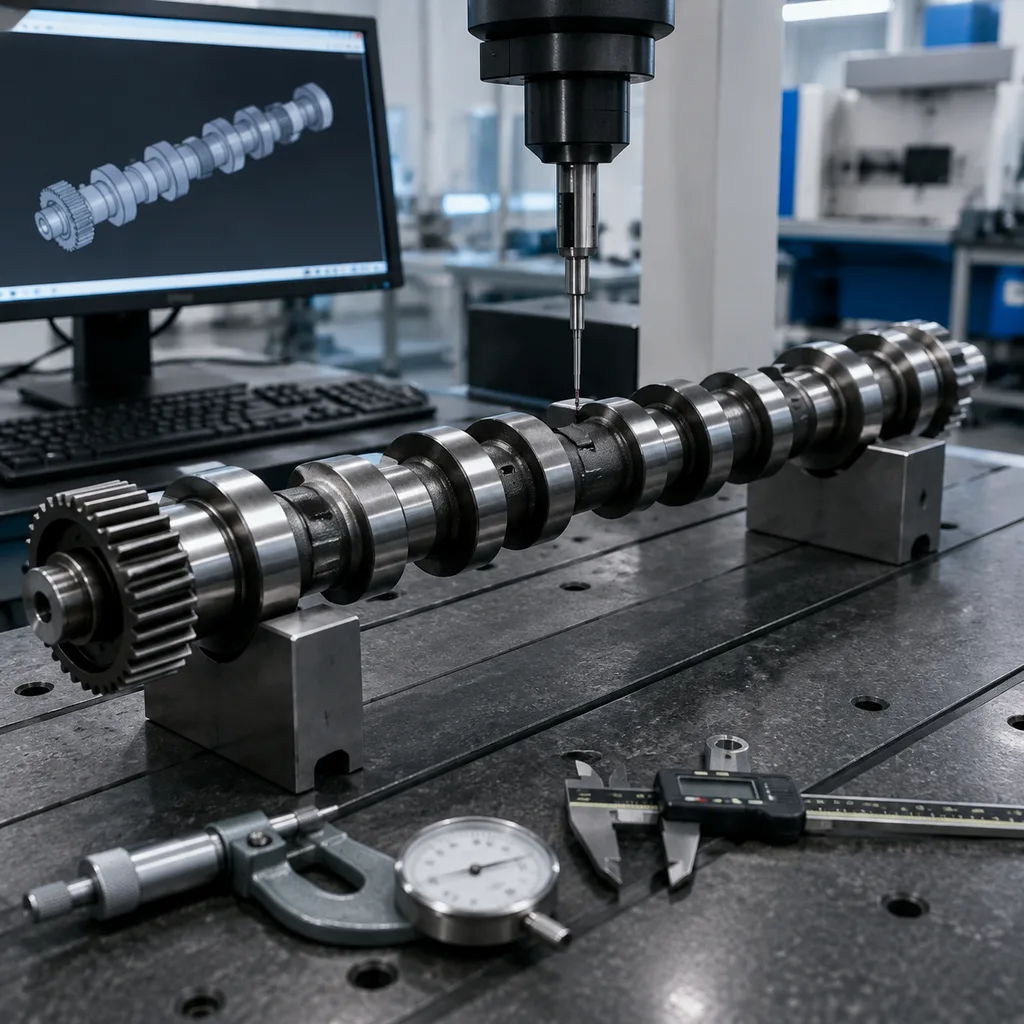
A typical inspection plan for a camshaft for Renault Clio aftermarket replacement should include these controls:
Control point
Typical verification method
Procurement relevance
Overall length and shoulder positions
CMM or calibrated gauge
Confirms housing fit and end-float control
Journal diameter and roundness
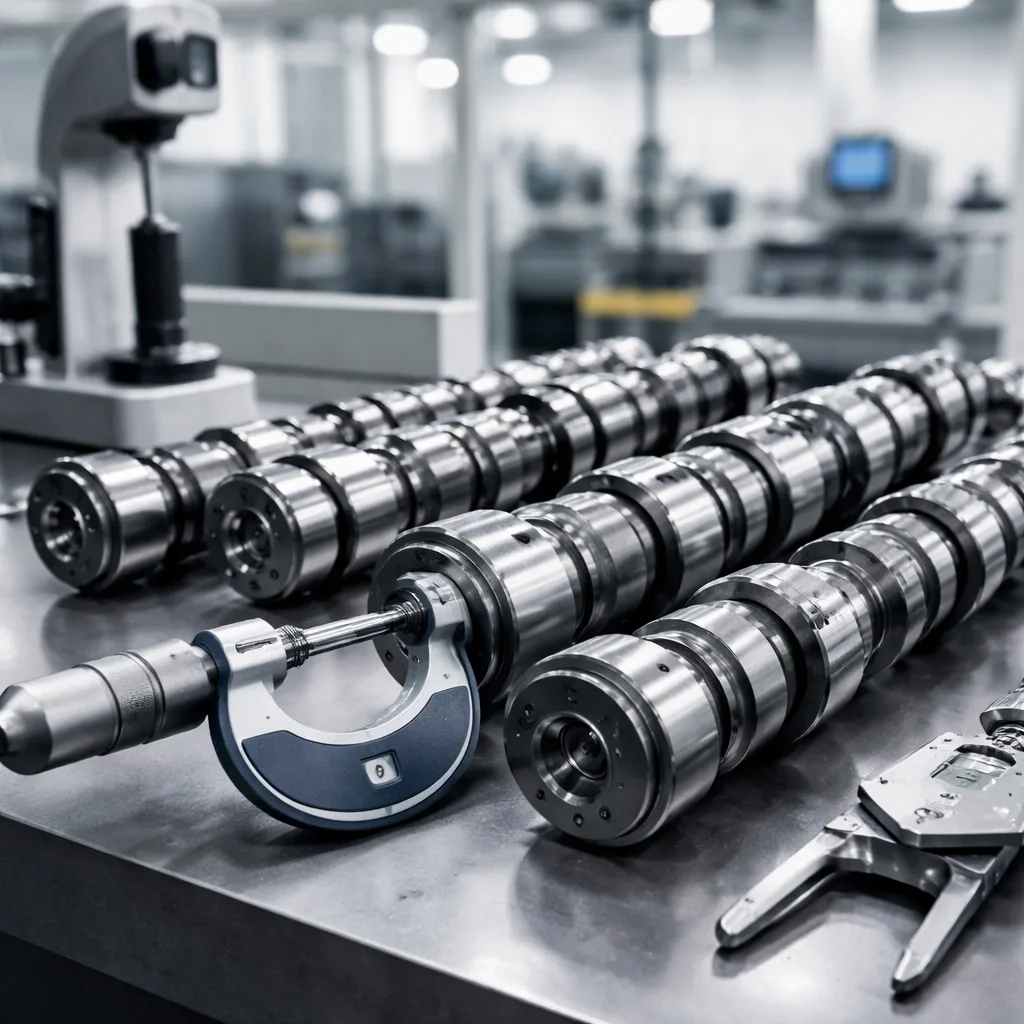
Micrometer and roundness tester
Protects oil film and bearing clearance
Lobe lift and base circle
Profile measuring equipment
Maintains valve event consistency
Lobe phase angle
Camshaft measuring bench
Controls timing relationship between cylinders
Straightness and runout
V-block and dial indicator
Reduces noise and uneven bearing load
Surface roughness on journals
Profilometer
Supports oil retention and bearing life
Hardness and case depth
Rockwell or Vickers testing
Reduces lobe and follower wear
Visual and magnetic particle checks
Surface inspection
Screens cracks, laps and handling damage
</tr></thead><tbody> </tbody></table>Material selection depends on engine design, follower contact type, target service life and annual volume. Chilled cast iron is common for many replacement camshafts because it provides a hard, wear-resistant lobe surface with efficient production economics. Steel billets or forged blanks may be selected where the application requires higher fatigue strength, a specific heat-treatment route or tighter control for low-volume specialty programmes.
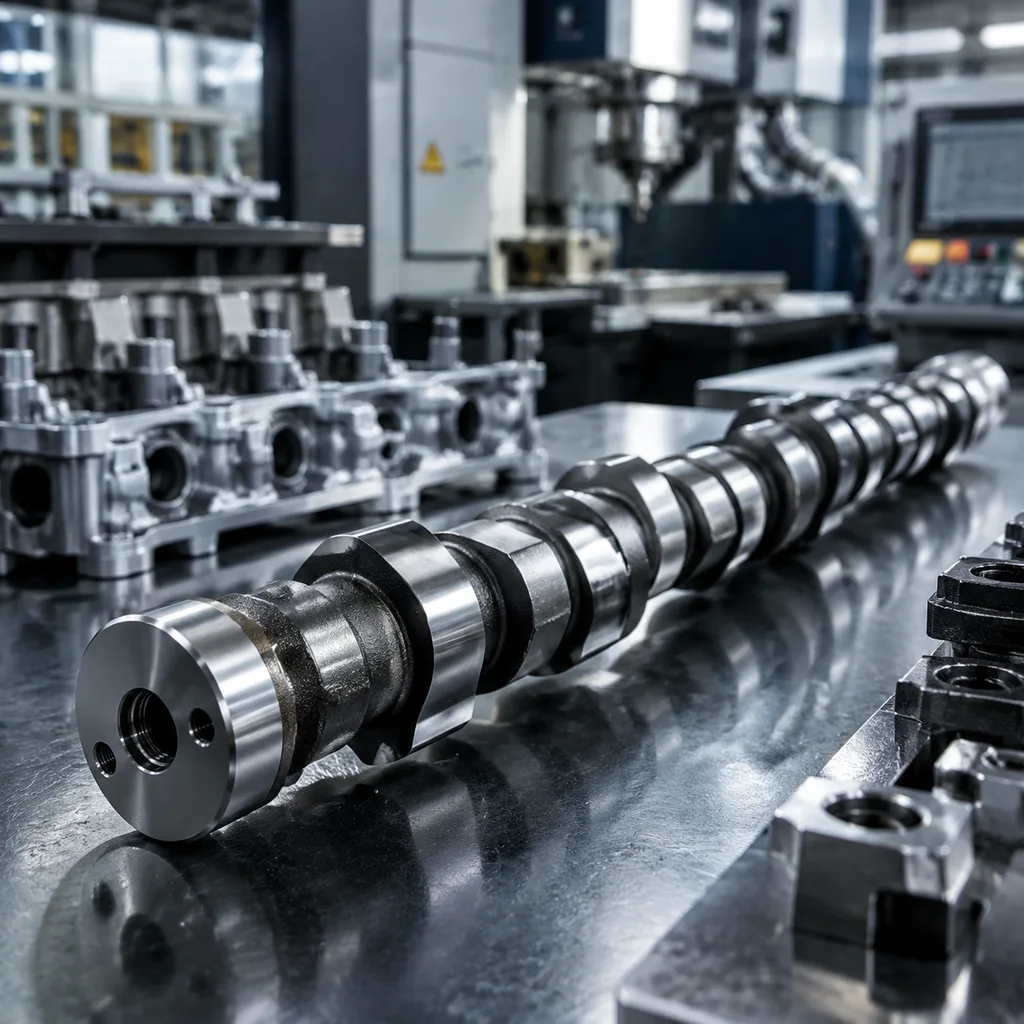
Driventus controls camshaft production through turning, grinding, heat-treatment coordination and final inspection under its certified quality system. Batch records should identify material heat, process route, inspection status, operator or line records where applicable, and packaging lot.
Validation testing before market release
A replacement camshaft should be validated before it enters distributor stock, especially when one programme covers several engine codes or serves high-volume fleet repair demand. Effective validation combines dimensional measurement, metallurgical review, installation checks and export-packaging verification.
Recommended validation steps include:
Sample-to-OE comparison using a retained benchmark part or approved drawing
Full profile measurement for each lobe, including lift curve and angular position
Journal oil-clearance simulation against nominal housing and bearing data
Hardness mapping on nose, flank, base circle and journals
Metallographic review for chilled depth or heat-treated layer consistency
Dynamic runout check after heat treatment and final grinding
Trial installation on representative cylinder-head assemblies where available
Timing alignment check with the intended sprocket, pulley or VVT unit
Packaging drop and corrosion-resistance checks for export shipments
For production quality management, IATF 16949:2016 and ISO 9001:2015 are the relevant management-system standards. They do not define every camshaft dimension, but they provide a framework for process control, traceability, corrective action, change control and supplier management. Material and chemical compliance may also need review under REACH (EC) No 1907/2006 for EU importers, especially for coatings, rust preventives and packaging materials.
Repair-chain buyers should also consider how installation instructions and service bulletins are handled. Incorrect timing alignment, inadequate lubrication during first start, reused worn followers, contaminated oil or blocked oilways can cause failure even when the camshaft itself is dimensionally correct.
Sourcing comparison: distributor stock, direct factory, custom programme
Procurement teams normally choose among existing aftermarket stock, direct factory supply and a tailored manufacturing programme. The right route depends on forecast accuracy, SKU complexity, warranty exposure, packaging needs and the level of validation required.
Sourcing route
Typical advantage
Main limitation
Best suited for
Distributor spot buy
Fast availability
Limited control over batch data
Urgent replenishment
Direct catalogue supply
Better cost and traceability
MOQ and lead-time planning required
Repeat aftermarket demand
Custom manufacturing
Geometry, marking and packaging can be specified
Requires sample, drawing or development lead time
Private-label or gap-coverage programmes
</tr></thead><tbody> </tbody></table>For a camshaft for Renault Clio aftermarket replacement, direct factory supply is often practical when buyers can consolidate demand by engine family and forecast quarterly volumes. Custom manufacturing is more suitable where the market has limited availability, recurring warranty concerns from existing sources, private-label requirements or demand for a camshaft variant not covered reliably by standard catalogue stock.
Driventus supports catalogue supply and custom manufacturing for engine and powertrain components. For custom camshaft work, buyers should provide the target application list, engine codes, sample parts where drawings are unavailable, annual volume estimate, required markings, packaging requirements and any local regulatory or labelling rules.
Packaging, documentation and import readiness
Camshafts are vulnerable to corrosion, edge damage and bending loads during long-distance transport. Export packaging should prevent contact between lobes, protect journals, support the part along its length and maintain rust prevention throughout sea or air freight. For B2B shipments, packaging also needs to support warehouse scanning, lot rotation, warranty analysis and efficient returns handling.
A practical export specification should include:
VCI bag or approved anti-rust oil, depending on destination and storage time
Rigid internal support to prevent impact on lobes, journals and drive-end features
Individual carton labelling with part number, batch number and camshaft position where relevant
Master carton strength suitable for pallet stacking and mixed-SKU handling
Pallet wrapping, corner protection and moisture controls for sea freight
Barcode or QR data format agreed before production where required
Batch inspection report and packing list linked to shipment references
Clear separation of samples, first-article parts and series-production stock
Buyers importing into the EU or UK may request declarations related to REACH (EC) No 1907/2006 and packaging material requirements. North American and Australian buyers usually place more emphasis on batch traceability, warranty return handling, carton durability and consistency between production lots. Brazilian importers may require additional attention to commercial documentation, customs descriptions, tax classification support and label format.
Before purchase order release, align the drawing revision, approved sample status, inspection criteria, acceptable quality limit, carton markings, Incoterms, payment terms, claim process and documentation language. These details reduce disputes after goods arrive and make repeat shipments easier to control.
Supplier audit points for replacement camshaft programmes
A camshaft supplier should be assessed on process capability, measurement discipline and corrective-action culture rather than catalogue breadth alone. The audit should confirm whether the factory can reproduce lobe geometry, maintain surface finish, control heat-treatment variation and segregate nonconforming batches before shipment.
Useful audit questions include:
Are machining, grinding and final inspection performed in-house or subcontracted?
How are master samples, drawings and measurement programmes controlled?
What gauges are used for lobe profile, journal runout and phase angle?
Is hardness testing performed by batch, by shift or by heat-treatment lot?
How are engineering changes reviewed, approved and communicated to customers?
Can the supplier provide PPAP-style documentation when required by the buyer?
What is the normal warranty analysis process for returned parts?
How are mixed batches, rework parts and customer-specific packaging segregated?
Driventus manufactures engine and powertrain components in Taizhou, Zhejiang, and exports to more than 60 countries. The company operates under IATF 16949:2016 and ISO 9001:2015 systems and supplies aftermarket distributors, wholesalers, OEM/Tier-1 projects and multi-location repair chains. For Renault Clio camshaft replacement sourcing, buyers can request sample evaluation, dimensional reports, batch inspection records and packaging options before committing to series orders.
Frequently asked questions
Confirm fitment by engine code, camshaft position, drive-end interface, journal layout, oil-feed design and lobe profile. Model year alone is not sufficient because Clio applications vary by engine family and market. Sample comparison or drawing review is recommended before volume orders.
Yes. Driventus can support neutral or buyer-specified packaging for approved B2B programmes, subject to artwork, labelling, carton strength, barcode format and compliance review. Packaging requirements should be confirmed before sample approval and purchase order release.
No. OE-equivalent means the part is designed to match the functional dimensions and performance requirements for the specified application. Driventus does not claim approval, sponsorship or endorsement by any vehicle manufacturer.
For fitment review, sample evaluation or batch pricing on Renault Clio camshaft programmes, contact Driventus to [request a quote](/contact.html).