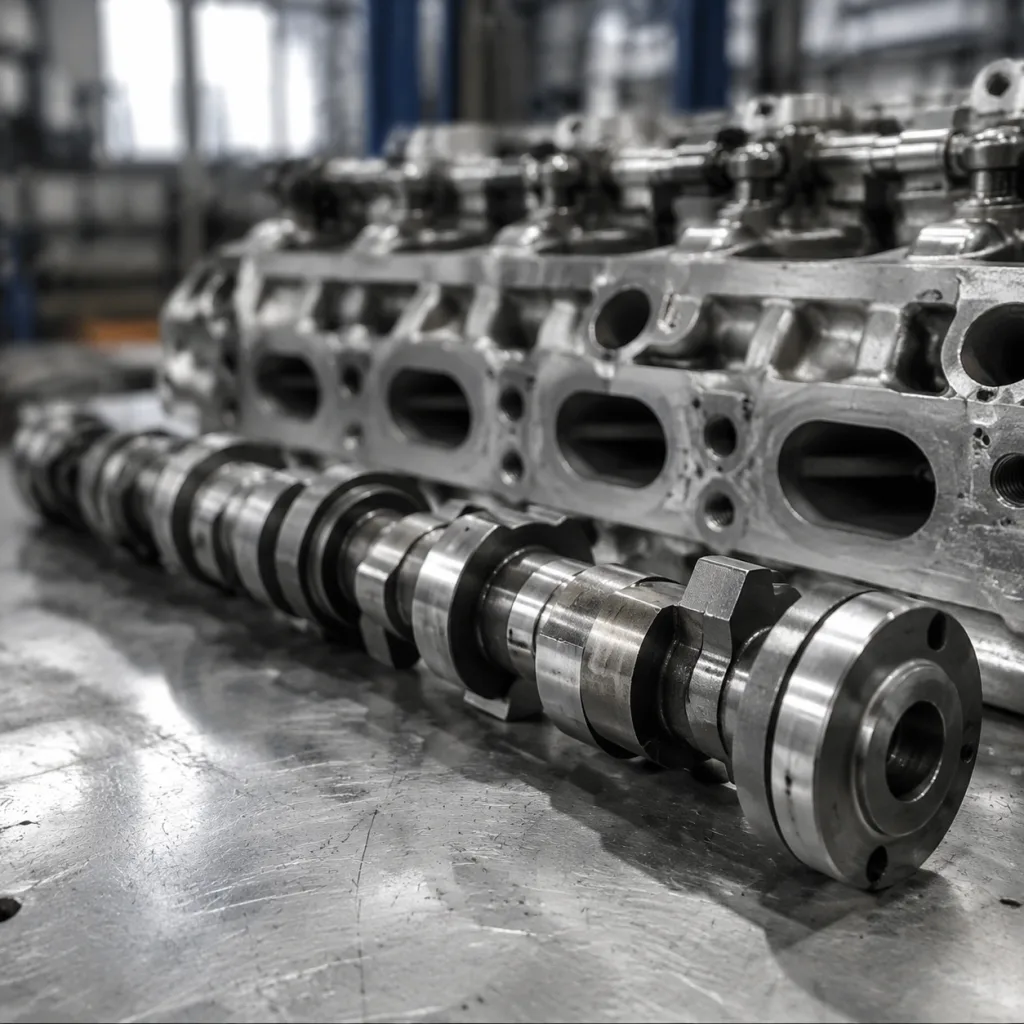
Camshaft for Porsche Cayenne Aftermarket Replacement
A camshaft for Porsche Cayenne aftermarket replacement is not a catalogue shortcut. It is a fitment-controlled engine part sourced when a rebuild, timing repair, oil-starvation recovery, or high-mileage valve-train service makes the original shaft too risky to reuse. For distributors, repair networks, and engine rebuilders, the buying question is simple: will the replacement match the OE cam profile, journal layout, timing interface, trigger features, and surface durability without implying vehicle manufacturer approval?
Driventus supplies aftermarket engine components for B2B buyers that need accurate fitment data, batch traceability, controlled inspection, and export-ready documentation. This article takes a procurement-first view: how to confirm the engine code, where camshaft programmes fail, which tolerances matter, what approval evidence to request, and how to prepare MOQ, lead-time, packaging, and compliance requirements before release. Driventus is an independent aftermarket manufacturer; brand names are used only to identify vehicle fitment.
Start With the Cayenne Engine, Not the Model Name
A Porsche Cayenne model label is too broad for camshaft sourcing. Engine family, displacement, cylinder-head layout, market configuration, model year, and emissions package can all change the correct shaft. One buying programme may need separate SKUs for intake and exhaust positions, bank 1 and bank 2, or left/right cylinder-bank orientation.
The decision gate is fitment evidence. Before an RFQ becomes a purchase order, confirm the engine code, VIN range or market application, valve-train type, sensor-wheel configuration, and camshaft position. If any of those items are missing, treat the request as incomplete rather than “close enough.”
For aftermarket supply, the target is OE-equivalent fit and function. The camshaft should install into the cylinder head without machining, maintain the required valve timing, and work with the original followers, phasers, seals, and position sensors where applicable. This is dimensional and functional equivalence, not approval or endorsement from the vehicle manufacturer.
Check these features before release:
Intake or exhaust position, shown on the drawing and carton label
Cylinder-bank orientation on V-type engines, including bank 1/bank 2 or left/right convention
Journal diameter and journal spacing, controlled to drawing-level tolerances rather than catalogue wording
Overall length and thrust-face location, including the axial end-float control surface
Lobe count, lobe centreline, base circle, nose radius, ramp shape, and valve-lift profile
Timing-drive interface, keyway or dowel position, sprocket seat, and locating features
Oil-feed holes, annular grooves, and phaser interface, where fitted
For RFQ release, provide the OE reference, sample photos, measured overall length, journal count, lobe count, and cam position. A strong internal acceptance file records nominal dimensions plus critical tolerances such as lobe lift deviation, journal diameter, runout, trigger angle, and phaser oil-feed alignment. Where buyers use OE part-number cross-references, Driventus can map those references in controlled fitment files. Any buyer-supplied internal reference, such as OE 06A… or OE 11251…, should still be verified against engine application data before order confirmation. For wider engine coverage, buyers can review our catalog and the engine range at /products/engine-components.html.
What Separates a Durable Camshaft From a Cheap Copy
Two camshafts can look identical in a photo and behave very differently after installation. The difference usually sits in the production route: base material, lobe hardening, journal finish, straightness control, cleaning, and lubrication compatibility. For Cayenne replacement programmes, ask for the manufacturing method, material grade range, heat-treatment route, and inspection plan. Do not accept “hardened steel” as a specification.
Common routes include chilled cast iron, forged steel, and assembled steel designs. The right choice depends on the original engine design, follower type, contact stress, and thermal load. Driventus aligns material selection with the validated reference sample and application requirements, with batch records tied to incoming material lot, heat-treatment lot, grinding lot, and final inspection lot.
Control item
Typical procurement requirement
Why it matters
Lobe profile deviation
Profile scan against master curve, commonly controlled within ±0.02–0.05 mm where the drawing defines it
Maintains valve lift and timing
Journal diameter
100% or AQL-based inspection against drawing tolerance, often in the 0.01–0.03 mm range for precision journals
Supports oil clearance and bearing life
Journal roundness
Micron-level inspection by batch, typically ≤0.005–0.010 mm when specified
Supports stable oil-film formation
Surface roughness
Ra target on journals and lobes, commonly Ra 0.2–0.4 µm for journals and Ra 0.4–0.8 µm for lobes depending on design
Reduces run-in wear and scuffing risk
Heat-treatment depth
Verified by process records and sampling, such as induction-hardened or chilled layer depth agreed by drawing
Helps prevent lobe pitting and surface fatigue
Surface hardness
Hardness test on sampled lobes/journals, with range agreed by material route, often around 50–60 HRC for hardened steel surfaces
Confirms wear resistance without excessive brittleness
Straightness/runout
Checked after heat treatment and finish grinding, commonly ≤0.03–0.05 mm TIR depending on shaft length
Reduces bearing load, friction, and noise
Trigger-feature position
Inspected against datum scheme with angular tolerance agreed before tooling release
Prevents cam/crank correlation faults
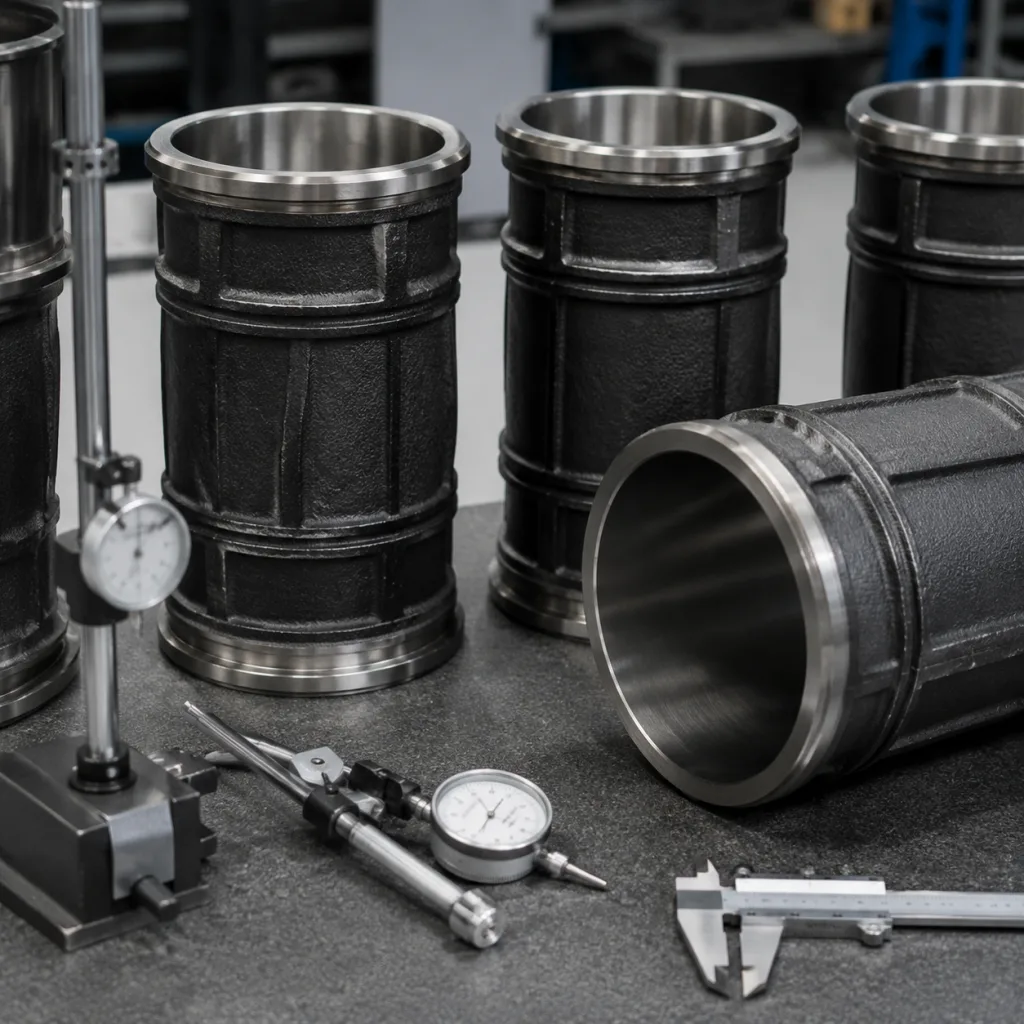
</tr></thead><tbody> </tbody></table>A credible control plan should cover CNC turning, oil-passage drilling, controlled heat treatment, stress relief where required, precision grinding, polishing, deburring, ultrasonic or high-pressure cleaning, crack checks where applicable, and final anti-corrosion protection. Measurement should use calibrated micrometers, air gauges, height gauges, CMM or contour equipment, hardness testers, roughness testers, and V-block runout inspection. Gauge calibration should be managed under ISO 9001:2015, while automotive production discipline should align with IATF 16949:2016.
Approval Route: Sample, Pilot Lot, Then Mass Release
For a camshaft for Porsche Cayenne aftermarket replacement, validation must prove more than sample appearance. It should prove installation fit, timing accuracy, durability, cleanliness, and compatibility with the surrounding valve train. The supplier should provide evidence from production part approval activity and repeatable batch controls, not only from a hand-selected pre-production piece.
Use a staged approval route:
1. Confirm the reference part, drawing, OE cross-reference, and engine application. 2. Approve 2–5 samples for dimensional inspection and trial fit. 3. Release a pilot lot, often 50–200 pieces, to verify repeatability. 4. Review inspection records, packing performance, and field feedback. 5. Move to container, quarterly, or annual-contract orders only after the pilot lot is stable.
A practical validation file includes:
First-article dimensional report against approved drawing or reverse-engineered reference, with critical dimensions highlighted
Material certificate for each production batch, including heat number or material lot reference
Hardness and case-depth records where applicable, with sample quantity stated
Lobe-profile measurement report showing lift curve, base circle, nose radius, and phase angle versus master data
Journal runout, straightness, roundness, and diameter report before packing release
Surface-roughness report for lobes, journals, thrust faces, and seal surfaces where applicable
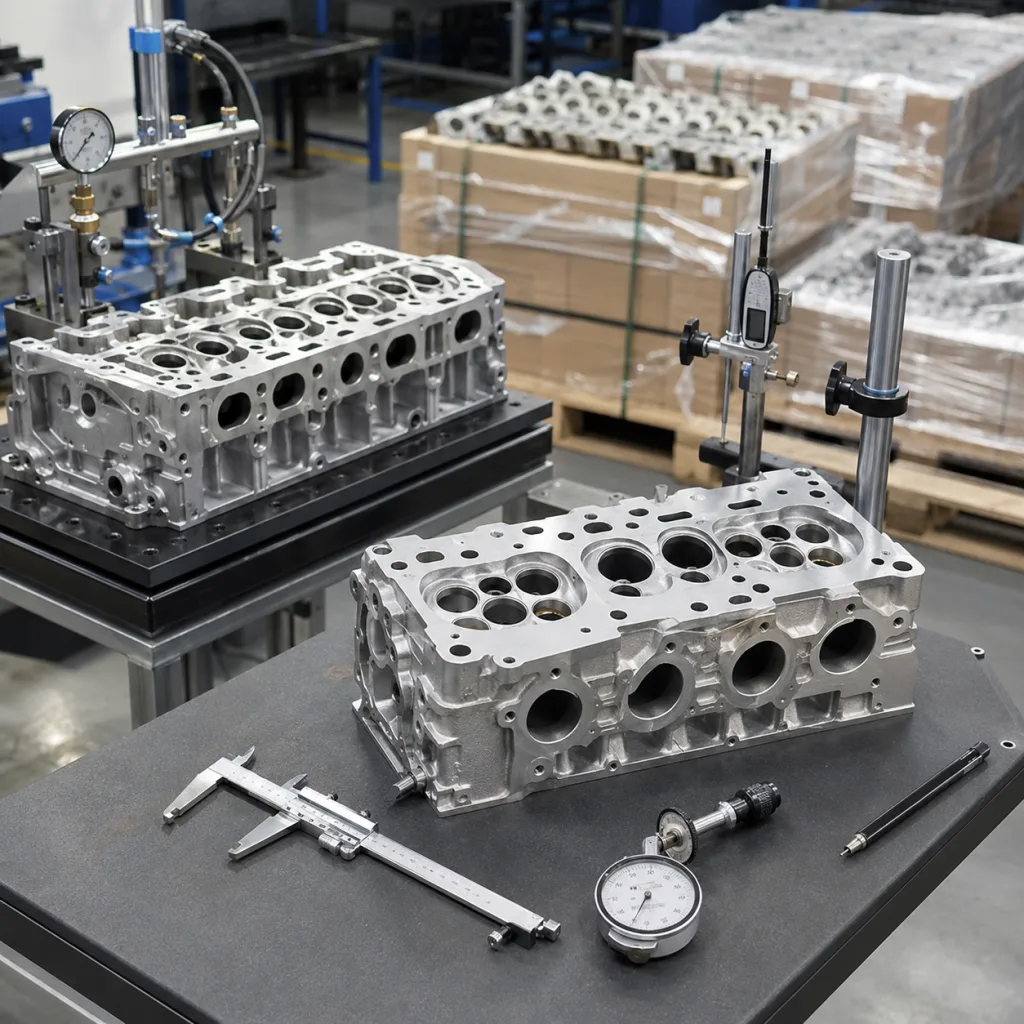
Trial assembly in a representative cylinder head or fixture to confirm journal seating, thrust clearance, phaser fit, and sensor trigger clearance
Oil-hole and gallery-cleanliness check, including visual borescope or air-flow confirmation for drilled passages
Salt-spray, humidity, or VCI-bag retention check when sea freight or long warehouse storage is expected
Packaging vibration, drop, and corrosion-resistance checks for export shipments
Variable valve timing raises the risk. Incorrect dowel location, oil-feed alignment, actuator interface geometry, trigger positioning, or end-float control can cause timing deviation, diagnostic trouble codes, rough idle, weak performance, start-up rattle, or chain-tension complaints. Buyers serving repair chains should also request installation notes covering pre-lubrication, follower inspection, timing-tool use, oil-system cleaning, oil-pressure verification, and checks after a prior engine failure.
Driventus manages these controls through its documented quality system, including incoming material inspection, in-process control, final inspection, non-conforming product handling, corrective action, and batch traceability.
Build the RFQ Like a Specification, Not a Price Check
A vague RFQ creates slow quoting and weak accountability. A complete purchasing specification reduces fitment disputes, separates engineering cost from unit price, and gives both buyer and supplier a clear approval route before production. This matters most when the programme includes private label packaging, multi-market distribution, or several Cayenne engine variants in one buying cycle.
Include these RFQ fields:
Vehicle application range, market, model years, and engine codes
Intake, exhaust, left-bank, right-bank, bank 1, or bank 2 position
OE cross-reference supplied by the buyer, plus supersession history if available
Annual demand forecast, first order quantity, and reorder cadence
Target unit price range or landed-cost target, separated from tooling, sample, and packaging costs
Labelling fields: part number, batch number, country of origin, barcode, QR code, and application note
Inspection documents required with shipment, such as dimensional report, material certificate, hardness report, and packing photos
Destination market, Incoterms, port or warehouse destination, and compliance expectations
Target delivery schedule, safety-stock requirement, and acceptable split-shipment plan
MOQ and price should be agreed before engineering work starts. Standard catalogue camshafts can often be quoted with lower MOQs because tooling, fixtures, and packaging files already exist. Custom drawing-controlled production, new trigger geometry, or buyer-brand packaging usually requires higher MOQ to absorb setup, validation, printing, and inspection-report costs.
Compare price by annual volume bracket, not only by the first order. Sample cost, 100-piece pilot pricing, 300–500-piece replenishment pricing, and 1,000-piece annual-contract pricing may differ because grinding setup, heat-treatment batch size, and carton printing are spread over more parts.
Lead time should also be separated by stage. Typical planning logic is 7–15 days for sample or reference review when data is complete, 20–35 days for pilot production after sample approval, and 30–60 days for mass production depending on material availability, heat-treatment queue, packaging artwork approval, and inspection-document requirements. Add sea freight, destination customs, and buyer-side warehouse booking separately to calculate real replenishment timing.
For EU and UK markets, buyers often request declarations related to REACH (EC) No 1907/2006. Packaging may also need to meet customer-specific recycling, language, barcode, GS1, carton-strength, or labelling rules. Driventus can support export documentation, batch traceability, and customer-specific packaging artwork for wholesale and repair-chain channels.
For private-label programmes or modified fitment coverage, buyers can discuss custom manufacturing. Customisation can include packaging, labelling, inspection-report format, drawing-controlled production, trigger-feature verification, and application-file support where tooling, validation, MOQ, and lead-time requirements are agreed in advance.
When a New Camshaft Fails: Usually the Cause Was Already There
A camshaft should not be replaced in isolation. If the original part wore, seized, or broke because of oil starvation, blocked galleries, incorrect oil grade, contaminated oil, damaged followers, timing-system failure, or overheating-related sludge, the replacement may fail early even when the part is dimensionally correct.
Common triggers for inspection include:
Ticking or tapping noise from the valve-cover area, especially after cold start
Misfire on one bank or specific cylinders under idle or load
Camshaft/crankshaft correlation fault codes or variable-valve-timing performance codes
Metal particles in the oil filter, sump, or valve-cover area
Uneven lobe wear, pitting, scoring, or blue heat marks during cylinder-head service
Low oil-pressure history after overheating, sludge formation, long oil-change intervals, or oil-pump wear
Excessive end float, damaged thrust face, or abnormal sensor trigger contact marks
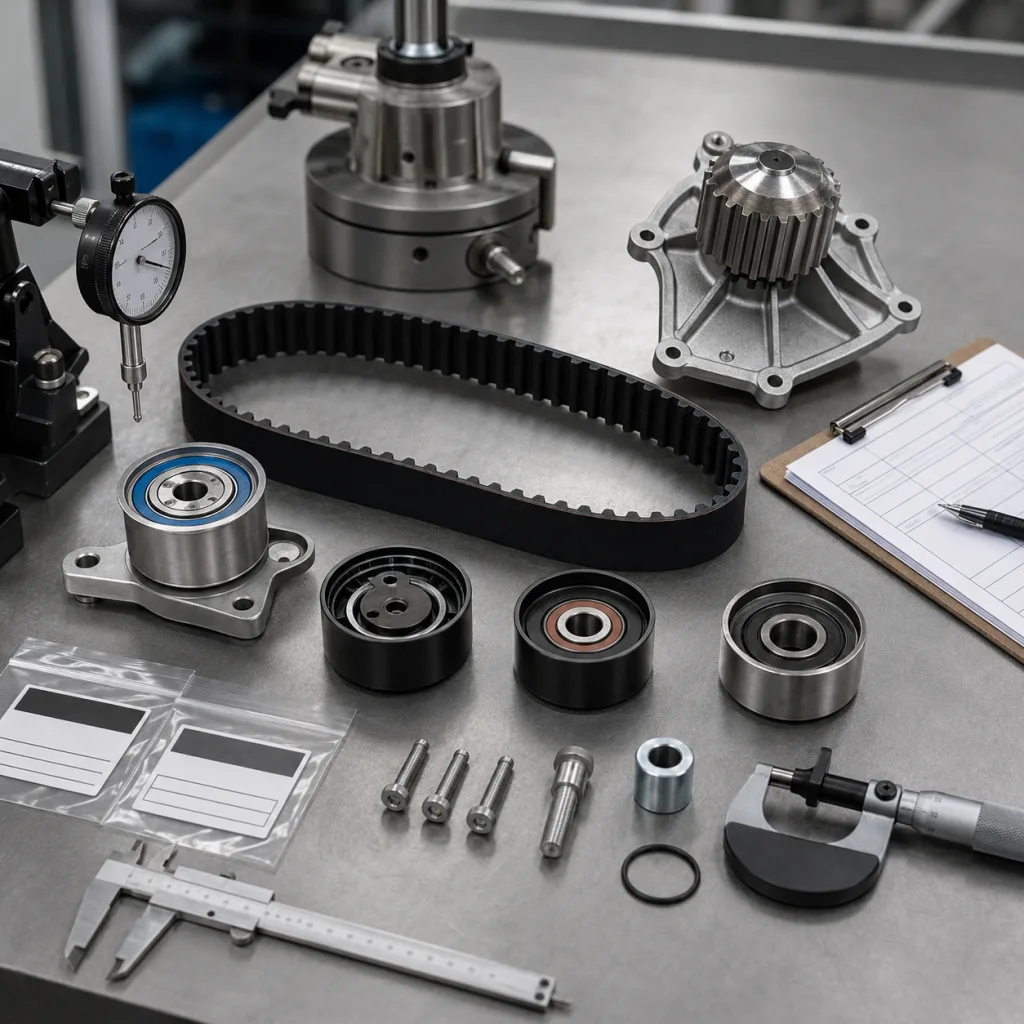
A repair network should inspect cam followers, hydraulic lifters, rocker arms, oil-control valves, timing chains, tensioners, guides, phasers, sprockets, oil pump condition, and cylinder-head oil passages before releasing the vehicle. The workshop checklist should include flushing or mechanically cleaning oil galleries, replacing contaminated oil and filter, priming the lubrication system, applying assembly lube to lobes and journals, verifying timing marks with locking tools, rotating the engine by hand before start-up, and checking oil pressure and fault codes after initial run-in.
For wholesalers, this is a warranty-control issue. Technical bulletins and installation notes reduce claim noise and help separate manufacturing defects from installation-related or system-related failures. Good return analysis asks for installation mileage, oil grade, oil-pressure record, fault codes, photos of lobe and journal damage, follower condition, timing-system photos, and batch number. Without those details, many field claims cannot be separated from oil starvation, contamination, or timing-service errors.
Order Readiness Checklist for Distributor Programmes
First-article approval is only the start. A replacement camshaft programme should also be judged by factory capability, repeatability, documentation quality, packing reliability, and speed of response when fitment questions appear.
Driventus manufactures engine and powertrain components in Taizhou, Zhejiang, and exports to more than 60 countries. The company operates under IATF 16949:2016 and ISO 9001:2015 certification frameworks for automotive production and quality management. These certifications do not replace part-specific validation, but they provide a recognised structure for process control, corrective action, traceability, supplier management, gauge calibration, and non-conforming product handling.
Before mass release, confirm:
Approved sample or pilot-batch sign-off, with signed drawing or inspection report revision
Control plan for critical dimensions, including lobe profile, journal diameter, runout, hardness, trigger position, and oil-hole location
Inspection-report format agreed in advance, including AQL level or 100% checks for safety-critical or fitment-critical features
Batch marking and traceability method on part, bag, inner box, and master carton
Packaging drop or transport-validation approach, including VCI bag, anti-rust oil, end protection, separator, and carton strength
Warranty return analysis procedure, including required photos, mileage, fault codes, and installation evidence
Lead-time, MOQ, reorder point, safety stock, and annual-volume price-break terms
For multi-country distribution, check that carton strength, rust prevention, barcode quality, and application labelling remain suitable for sea freight, warehouse storage, and onward parcel shipment. Heavy camshafts should be immobilised in the inner pack so lobes and trigger wheels cannot strike the carton or another metal part during transport. A typical export pack uses anti-rust oil or VCI protection, sealed polybag, formed foam or divider support, individual carton, master carton, pallet wrap, and moisture control where storage time is long.
Order readiness also needs commercial triggers. Define the reorder point from monthly sales, production lead time, freight lead time, and safety stock. If monthly demand is 80 pieces and total replenishment time is 60 days, a reorder point below 180–200 pieces may expose the distributor to stockouts after claims, promotions, or repair-chain demand spikes. A technically correct camshaft can still create avoidable cost if corrosion protection, scan data, carton strength, or fitment labelling is weak.
Frequently asked questions
Yes. Buyers can provide a sample, drawing, OE cross-reference, or fitment reference for evaluation. Driventus checks dimensional features, material route, lobe profile, journal layout, trigger geometry, oil-feed positions, and related timing interfaces before confirming whether standard catalogue supply or custom manufacturing is suitable.
No vehicle manufacturer approval is claimed or implied. The procurement target is OE-equivalent fit and function based on dimensional matching, material control, validation testing, and batch inspection. Driventus is an independent aftermarket manufacturer; brand names are referenced for fitment only.
Typical documents include commercial invoice, packing list, certificate of origin when required, inspection report, material certificate, hardness or case-depth record when specified, and compliance declarations requested by the destination market. Batch traceability, packaging specification, barcode data, and agreed labelling fields should be confirmed before production.
If you are sourcing Cayenne camshafts for distribution, repair-chain supply, or private-label replacement programmes, share the engine code, camshaft position, OE reference or sample data, target quantity, price target, packaging preference, lead-time requirement, and documentation needs. You can [request a quote](/contact.html).