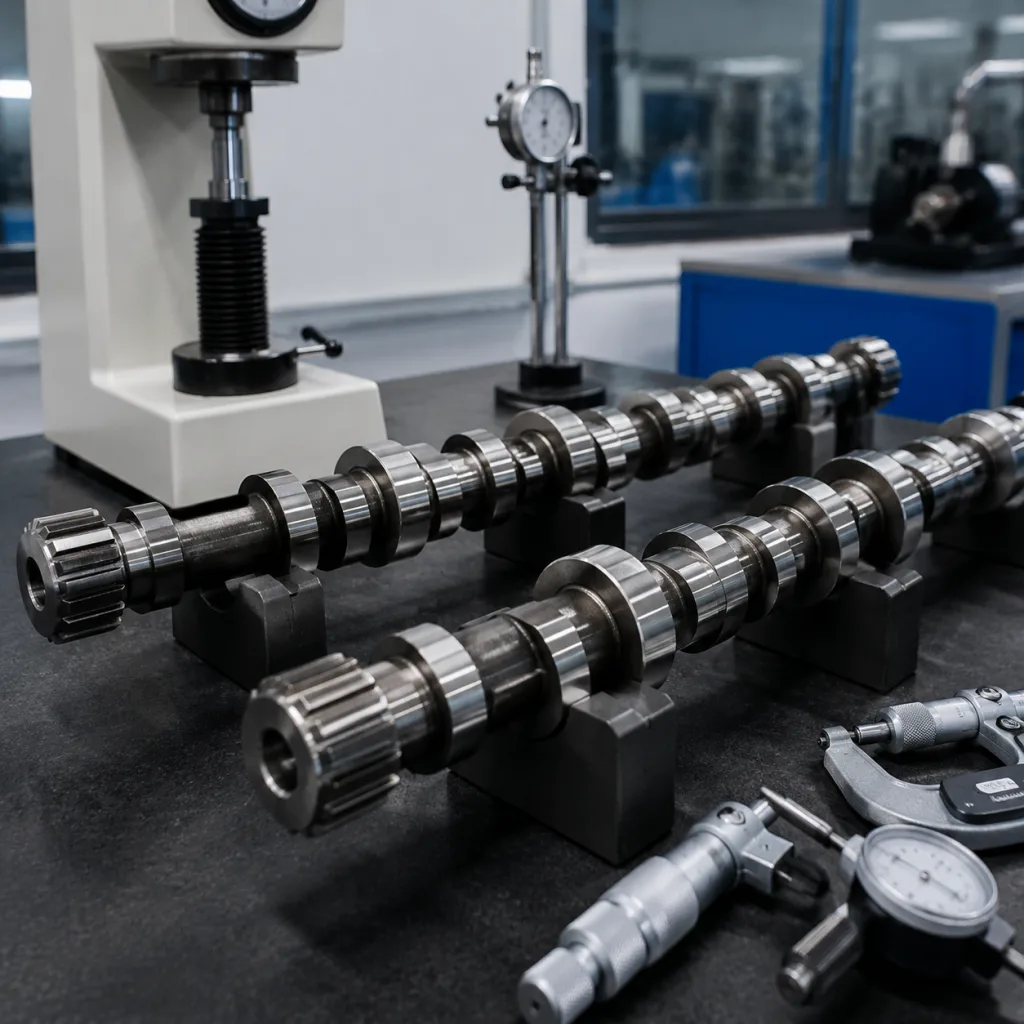
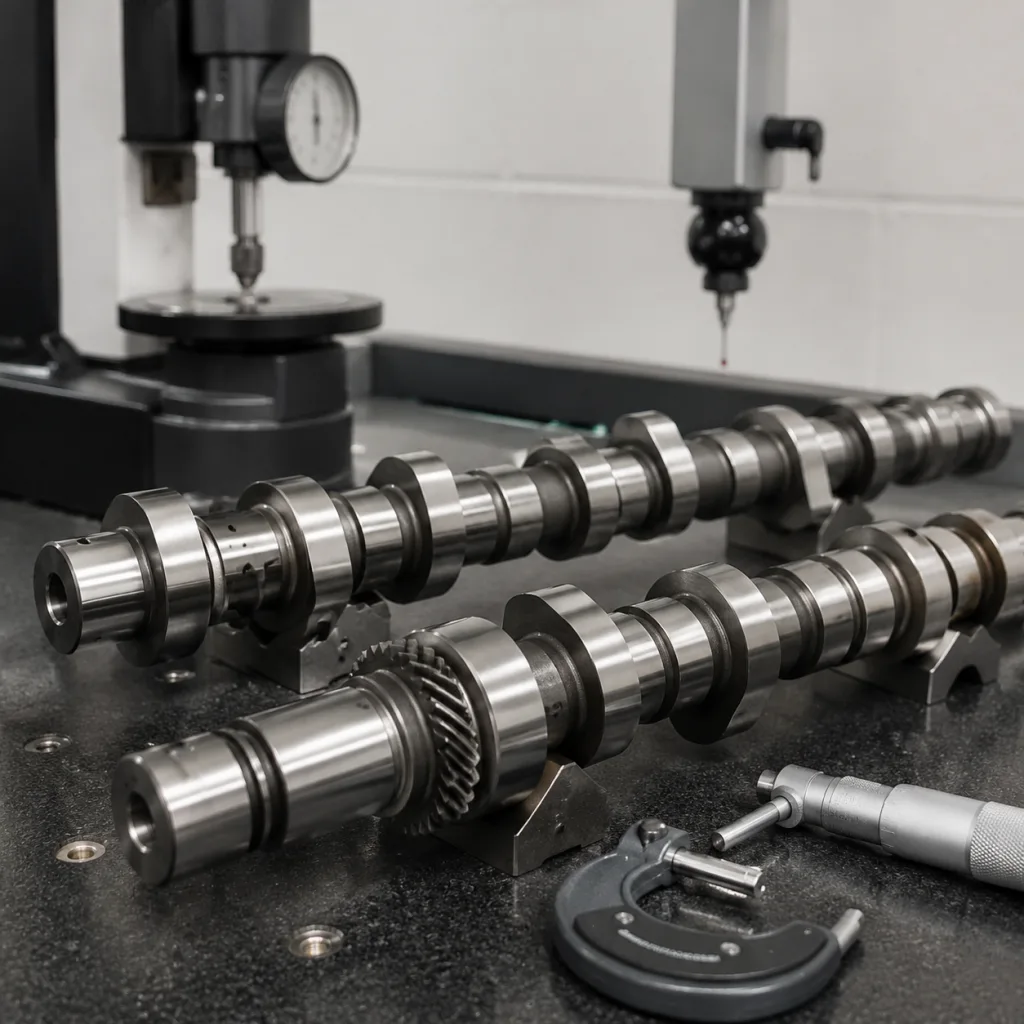
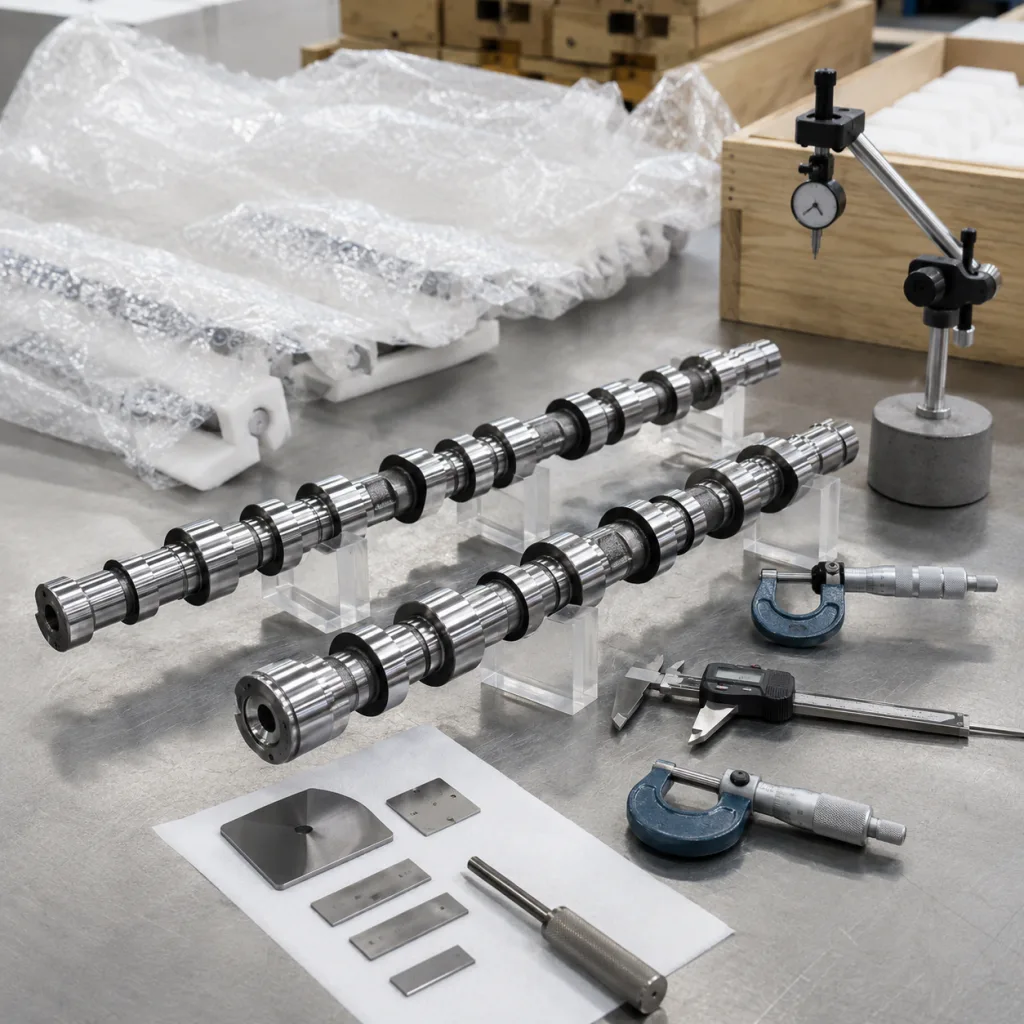
Sourcing camshaft phaser Subaru wholesale programmes requires more than matching a part number to a vehicle list. These precision variable valve timing components must hold consistent vane geometry, oil-control response, locking position, leakage performance, and timing accuracy across repeated production lots. For distributors, repair-chain buyers, and Tier-1 sourcing teams, the biggest risks are mixed engine-family fitment errors, start-up noise complaints, diagnostic trouble codes, warranty exposure, and incomplete documentation during customs clearance or customer audits. Driventus manufactures engine and powertrain components in Taizhou, Zhejiang, supplying export markets in more than 60 countries. Our production and inspection workflows follow IATF 16949:2016 and ISO 9001:2015 quality-management principles, with incoming material checks, traceable lots, dimensional inspection records, and controlled packaging. This guide explains how B2B buyers can evaluate Subaru-fit camshaft phaser supply, prepare a reliable qualification file, and structure wholesale orders from sample validation through replenishment.
Wholesale Fitment Scope and Buyer Requirements
Subaru-fit camshaft phasers are typically sourced for horizontally opposed petrol engines using variable valve timing on intake camshafts and, in some engine families, exhaust camshafts. Approval should not rely on a sales vehicle list alone. A stronger sourcing file uses engineering cross-reference data that confirms application range, timing mark position, bolt pattern, oil gallery layout, tooth profile, bank position, and control angle range.
For wholesale programmes, Driventus can support distributor and repair-chain demand through our catalog, including related engine components used in timing system service kits. If the buyer needs a modified design, private-label specification, or special packaging format, custom manufacturing can be assessed after drawing review, sample comparison, and annual volume confirmation.
A practical sourcing file should include:
Target engine families and model-year coverage by market.
Buyer-supplied OE part-number cross-references, avoiding unrelated references that can confuse validation.
Required position: intake, exhaust, left bank, or right bank.
Timing system context, including chain, sprocket, actuator, and oil-control valve references where relevant.
Packaging rules for single-unit, kit, or master-carton shipment.
Warranty return process and failure evidence requirements.
Import compliance documents requested for the EU, UK, US, Canada, Australia, Brazil, or other destination markets.
Driventus is an independent aftermarket manufacturer; Subaru and other brand names are referenced for fitment identification only.
Manufacturing Controls for Camshaft Phaser Stability
A camshaft phaser must react predictably to oil pressure and electronic control commands while maintaining its mechanical park position when required. Small deviations in the rotor, housing, locking pin, return spring, internal oil passages, or sealing surfaces can lead to start-up rattle, delayed actuation, unstable idle, phase-angle errors, or diagnostic trouble codes. For Subaru-fit wholesale supply, the control plan should focus on machining accuracy, surface finish, cleanliness, leakage performance, and repeatable end-of-line checks.
Key process controls normally reviewed during supplier approval include:
Control item
Procurement relevance
Typical evidence to request
Housing and rotor machining
Controls vane clearance and oil leakage
Dimensional inspection report by lot
Locking pin function
Helps prevent start-up noise and incorrect park position
Functional test record
Oil passage cleanliness
Reduces risk of spool valve restriction and slow response
Cleanliness inspection summary
Heat treatment or surface process
Supports wear resistance at contact faces
Material and process certificate
Timing mark and dowel location
Helps prevent installation error and phase offset
Fixture inspection result
End-of-line actuation test
Confirms response before packing
Test bench data or sampling plan
</tr></thead><tbody> </tbody></table>Supplier audits should verify calibrated gauges, fixture control, nonconforming-material segregation, documented inspection frequency, and operator training. A low unit price does not protect the buyer if the phaser cannot maintain consistent locking angle, leakage rate, and actuation response across several production lots.
Certification, Traceability, and Compliance Documents
For importers and Tier-1 purchasing teams, certification and traceability are part of commercial risk control. Driventus operates under a quality system aligned with IATF 16949:2016 and ISO 9001:2015. These standards do not certify a single camshaft phaser design on their own; they define the production management framework for process control, corrective action, document control, supplier management, and continuous improvement.
For each wholesale programme, buyers may request documentation according to order size, destination market, and contract terms:
Certificate of conformity for shipped goods.
Lot traceability linked to production date, inspection batch, and packaging label.
Material declaration where applicable to REACH (EC) No 1907/2006 requirements.
PPAP-style documentation for higher-volume or engineered programmes, if agreed before order release.
Control plan, process flow, and inspection criteria for audit review.
Corrective action report format for warranty or field return analysis.
Packing list, commercial invoice, and export carton details aligned with buyer import requirements.
Vehicle emissions rules such as ECE R-83 may be relevant to complete vehicle compliance, but they do not replace component-level validation for an aftermarket camshaft phaser. A responsible supplier should clearly distinguish between fitment suitability, buyer-approved specifications, and vehicle manufacturer endorsement. Driventus does not claim approval, sponsorship, or endorsement by any vehicle manufacturer.
MOQ, Lead Time, and Export Packaging
Wholesale buyers usually need two supply modes: initial validation quantities and recurring replenishment. The first order should be large enough to check fitment coverage, installation feedback, packaging durability, documentation flow, and market response, while still limiting inventory risk on unverified references. After approval, forecast-based production helps reduce unit cost, reserve machining capacity, and improve shipment planning.
Typical commercial planning points for a Subaru-fit camshaft phaser programme include:
MOQ: depends on reference mix, packaging format, active tooling, and whether private-label cartons are required.
Sample lead time: usually shorter for active catalog references than for drawing-based development.
Production lead time: affected by machining capacity, surface treatment queue, inspection load, carton preparation, and export booking.
Packaging: neutral, Driventus-branded, or buyer-specified private label when agreed before production.
Incoterms: commonly FOB, CIF, or EXW depending on buyer logistics control and destination requirements.
Shipment: sea freight for replenishment stock; air freight for urgent validation, backorder support, or small mixed-reference orders.
A complete purchase order should identify the reference, quantity, packaging format, inspection documents, destination market, shipping mark, and barcode or label rules. For distributors serving several countries, carton artwork, language requirements, and master-carton configuration should be confirmed before mass packing, not after goods are ready for dispatch.
Supplier Evaluation Checklist for Import Buyers
The search term camshaft phaser subaru wholesale often leads buyers to price lists, but supplier approval should begin with technical and operational questions. The component works inside the timing system and is exposed to heat, oil contamination, repeated duty cycles, and customer complaints that can be expensive to diagnose after installation. A sourcing decision should therefore balance cost with validation depth, response time, documentation quality, and the supplier's ability to manage repeat orders.
Use this checklist before approving a new source:
Can the supplier define intake, exhaust, left-bank, and right-bank references without relying only on vehicle names?
Are drawings, samples, or measured OE-equivalent benchmarks used during development?
Is vane clearance controlled by machining inspection rather than final assembly judgement alone?
Does the supplier test lock position, oil leakage, and actuation response?
Can lot traceability connect finished goods to inspection records and material batches?
Are packing tests or carton specifications available for export shipment?
Is the warranty process based on returned-part analysis, installation evidence, and corrective action records?
Can the supplier support mixed-container shipments with related timing, valve-train, and engine parts?
For larger programmes, buyers may request a remote or on-site factory audit. The audit should review machining equipment, inspection fixtures, calibration records, document control, warehouse segregation, nonconforming-material handling, and corrective action history. A supplier that can answer these points clearly is easier to manage over multiple ordering cycles and less likely to create hidden costs after the first shipment.
How Driventus Supports Wholesale Programmes
Driventus supplies B2B customers that need stable production, export documentation, and engineering communication rather than consumer retail support. For Subaru-fit camshaft phaser wholesale enquiries, we review the buyer's fitment table, target annual volume, packaging requirement, destination market, and any OE cross-reference data supplied by the customer. When a catalog match is available, quotation and sample review can move quickly. When a modified specification is required, engineering assessment is needed before price, tooling status, MOQ, and lead time are confirmed.
Our sourcing support normally covers:
Fitment and reference confirmation against buyer-supplied data.
Quotation by quantity tier and packaging option.
Sample supply for dimensional, fitment, and functional checks.
Production inspection records linked to order lots.
Export packing suitable for sea or air shipment.
Coordination for related engine parts in the same shipment.
Communication support for audit questions, documentation requests, and corrective action follow-up.
Buyers can request a quote with target references, annual demand, destination country, packaging preference, and any required compliance documents. Clear technical data at the start reduces quotation revisions and helps both sides confirm whether a standard catalog item or engineered programme is the right route.
Frequently asked questions
Yes. Private-label packaging can be reviewed for wholesale orders when volume, artwork requirements, carton rules, barcode needs, and destination-market labelling are confirmed before production. MOQ and lead time depend on the reference mix and packaging complexity.
Depending on the order and agreement, Driventus can provide certificate of conformity, inspection records, lot traceability, quality system information, and material declarations where applicable. PPAP-style documentation can be discussed for engineered or high-volume programmes before order release.
No. Driventus is an independent aftermarket manufacturer; Subaru and other brand names are referenced for fitment only. Product approval is based on buyer validation, agreed specifications, and documented production controls, not vehicle manufacturer endorsement.
For wholesale pricing, sample review, or factory audit documentation, send your target references, annual demand, destination country, and packaging requirements to Driventus. Start the sourcing review at /contact.html