A camshaft phaser for Peugeot applications is a precision timing component, not a cosmetic replacement part. For distributors, importers and repair-chain buyers, the real sourcing question is whether the replacement unit matches the OE interface, oil-control behavior and durability targets closely enough to deliver stable field performance. Driventus manufactures camshaft phasers and related engine timing components for independent aftermarket supply, with production controls aligned to IATF 16949:2016 and ISO 9001:2015. This article explains how procurement teams should evaluate a camshaft phaser Peugeot OE equivalent, what evidence to request from a supplier, and which validation steps reduce warranty exposure. It is written for B2B sourcing teams comparing equivalent parts, private-label programs or engineered-to-sample production. Driventus is an independent aftermarket manufacturer; brand names are referenced for fitment only.
What OE Equivalence Means for Peugeot Phaser Replacement
OE equivalence does not mean vehicle manufacturer approval. It means the aftermarket component is engineered to match the original installation envelope and functional requirements for the specified engine family. For a camshaft phaser, that includes the sprocket profile, mounting face, central bolt interface, locking pin behavior, vane geometry, oil passages and angular adjustment range.
For Peugeot applications, buyers usually work from an OE reference, sample part, engine code, TecDoc data, or an internal distributor cross-reference. Where a generic reference is used, it should only be stated in the buyer's own documentation when that exact reference already appears in the procurement file. Driventus can support equivalence reviews using customer drawings, used OE samples, 3D scans and benchmark components.
A credible replacement program should define:
Fitment scope by engine code, displacement and model year range
Intake or exhaust side position, where applicable
Adjustment angle range and lock position
Oil feed hole location and sealing surface requirements
Chain or belt interface dimensions
Required packaging, labeling and traceability format
Driventus is an independent aftermarket manufacturer; brand names are referenced for fitment only.
Dimensional and Functional Checks Buyers Should Require
The camshaft phaser sits inside the timing system, so small dimensional errors can create noise, delayed actuation, diagnostic trouble codes or premature wear. Procurement teams should ask suppliers to separate static dimensions from dynamic function tests. A part can pass a visual inspection and still fail oil-pressure response or lock-pin release timing.
Check area
Typical requirement
Procurement evidence to request
Mounting face flatness
Controlled per drawing or sample benchmark
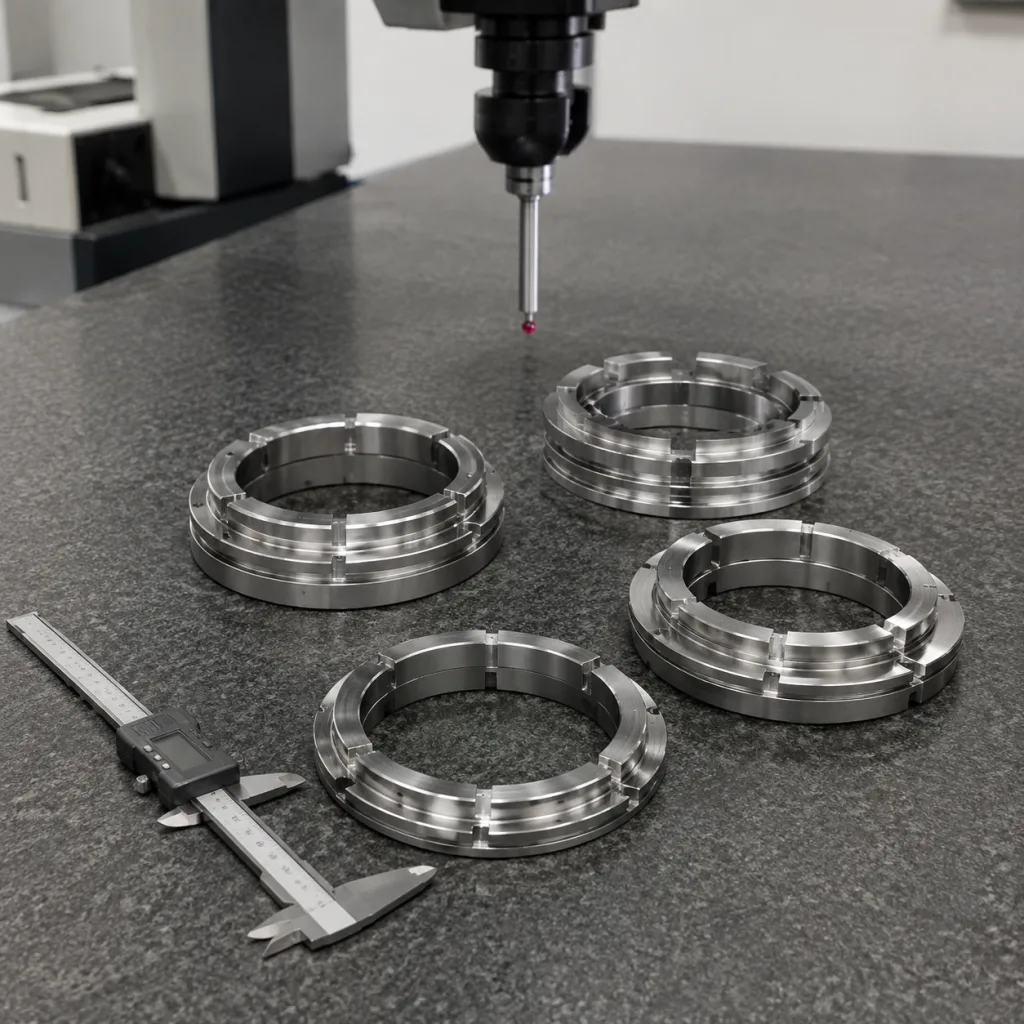
CMM or surface inspection report
Sprocket tooth profile
Match to chain or belt interface
Profile comparison and gauge record
Oil passage alignment
No blockage or burrs
Section review or flow inspection record
Angular phasing range
Match specified intake/exhaust range
End-stop measurement report
Lock pin engagement
Secure at rest, releases under oil pressure
Bench functional test result
Balance and runout
Controlled to reduce NVH risk
Runout and rotational inspection data
Surface cleanliness
No machining chips, abrasive media or oil sludge
Cleanliness inspection record
</tr></thead><tbody> </tbody></table>For replacement programs, Driventus normally recommends pre-shipment inspection using AQL sampling agreed with the buyer, plus initial sample inspection reports for new references. For higher-risk programs, PPAP-style documentation can be prepared when requested, although the exact submission level should be agreed before tooling or mass production.
Materials, Machining and Assembly Control
A camshaft phaser combines sintered, forged, cast or machined components depending on the design. The housing, rotor, sprocket, spring, locking pin and sealing elements must work as a controlled assembly. Incorrect heat treatment, rough oil channels or poor deburring can affect response even when the outside dimensions are correct.
Driventus production control for camshaft phasers focuses on four areas:
Incoming material verification, including steel grade or sintered blank checks where applicable
CNC machining control for concentricity, oil passage geometry and mounting interfaces
Heat treatment and surface condition control for wear-loaded areas
Assembly torque, spring preload, lock-pin movement and leakage checks
The supplier's quality system should be reviewed before a buyer commits to a program. Relevant management standards include IATF 16949:2016 for automotive quality management and ISO 9001:2015 for quality management systems. These standards do not certify the performance of an individual part number, but they provide a framework for traceability, corrective action, process control and customer-specific requirements.
For EU and UK importers, material declarations may also need to consider REACH (EC) No 1907/2006 depending on the supply contract and downstream compliance obligations.
Validation Testing for Replacement Confidence
A camshaft phaser Peugeot OE equivalent should be validated beyond fitment. The main risk is not only whether the component installs, but whether it maintains stable valve timing over the expected operating range. Buyers should define validation requirements before confirming mass production, especially for private-label or high-volume repair-chain supply.
Recommended validation evidence includes:
Dimensional first article inspection against drawing, sample or agreed specification
Oil-pressure actuation test at defined pressure and temperature points
Lock-pin release and return testing after repeated cycles
Leakage check across internal chambers and sealing interfaces
Endurance cycling to assess wear, sticking and response drift
Noise review for abnormal rattle at start-up and low oil pressure conditions
Packaging drop or vibration checks for export shipments
Where emissions-related timing behavior is affected, the part should be treated with additional caution. Vehicle emissions regulations such as ECE R-83 define type-approval requirements at vehicle level; they should not be misused as a claim that an aftermarket phaser is vehicle-approved. A supplier can state that testing is designed to support stable timing performance, but should not claim endorsement by Peugeot or any vehicle manufacturer.
Buyers can review related engine components and our catalog when building a complete timing or top-end repair range.
Sourcing Options: Standard Range or Custom Manufacturing
For distributors and importers, the sourcing route depends on annual volume, reference maturity and brand strategy. A standard replacement phaser is usually the fastest route when the part is already in production. Custom development is more suitable when a buyer has a sample, an underserved reference, or specific packaging and traceability requirements.
Sourcing route
Best fit
Main buyer input
Typical control focus
Existing Driventus reference
Regular aftermarket demand
OE cross-reference, engine application, forecast
Fitment confirmation and batch inspection
Private-label supply
Distributor brand program
Label, packaging, barcode and inspection level
Traceability, carton durability, artwork control
Engineered-to-sample
Low-coverage or regional application
Sample part, engine data, target annual volume
Reverse engineering and validation plan
Drawing-based production
OEM/Tier-1 or specialist buyer
Technical drawing, tolerances, material callouts
Process capability and submission documents
</tr></thead><tbody> </tbody></table>Driventus supports custom manufacturing where the buyer can provide samples, drawings or confirmed fitment data. For new Peugeot-related references, the procurement file should include the target market, annual demand, warranty expectation, preferred Incoterms, packaging standard and any restricted substance declaration needs.
Commercial and Documentation Points for Importers
Before awarding a camshaft phaser program, procurement teams should align the commercial terms with the technical risk level. A low unit price is not useful if the supplier cannot control oil-path cleanliness, lock-pin function or batch traceability. Buyers should request enough documentation to support internal approval, but avoid paperwork that does not match the order size or risk profile.
A practical sourcing checklist includes:
Confirm application data, side position and OE reference format
Agree inspection standard, sampling level and critical characteristics
Request first article inspection for new or revised references
Define packaging strength for sea freight, air freight or mixed pallet shipment
Confirm laser marking, batch code or carton traceability requirements
Review warranty return handling and corrective action process
Check whether REACH (EC) No 1907/2006 declarations are required by the importer
For large programs, buyers may request control plans, process flow charts and capability data for key dimensions. For smaller distributor orders, a focused inspection report and retained golden sample may be more efficient. The goal is the same: a repeatable replacement component that matches the agreed Peugeot fitment data and can be traced if a field issue occurs.
Frequently asked questions
No. OE-equivalent means the part is designed to match the fitment and functional requirements of the original component for the stated application. It does not mean approval, endorsement or supply by Peugeot. Driventus is an independent aftermarket manufacturer; brand names are referenced for fitment only.
Useful data includes the OE reference format, engine code, intake or exhaust position, sample photos, annual volume, target market, packaging needs and any inspection requirements. For uncertain applications, a physical sample or drawing helps reduce cross-reference risk.
Yes, sample-based development is possible when the buyer can provide a usable reference part and fitment information. The process normally includes measurement, material review, functional benchmarking, prototype sampling and validation before mass production.
For Peugeot camshaft phaser sourcing, replacement validation or private-label supply discussions, share the target reference, annual demand and market requirements to [request a quote](/contact.html).