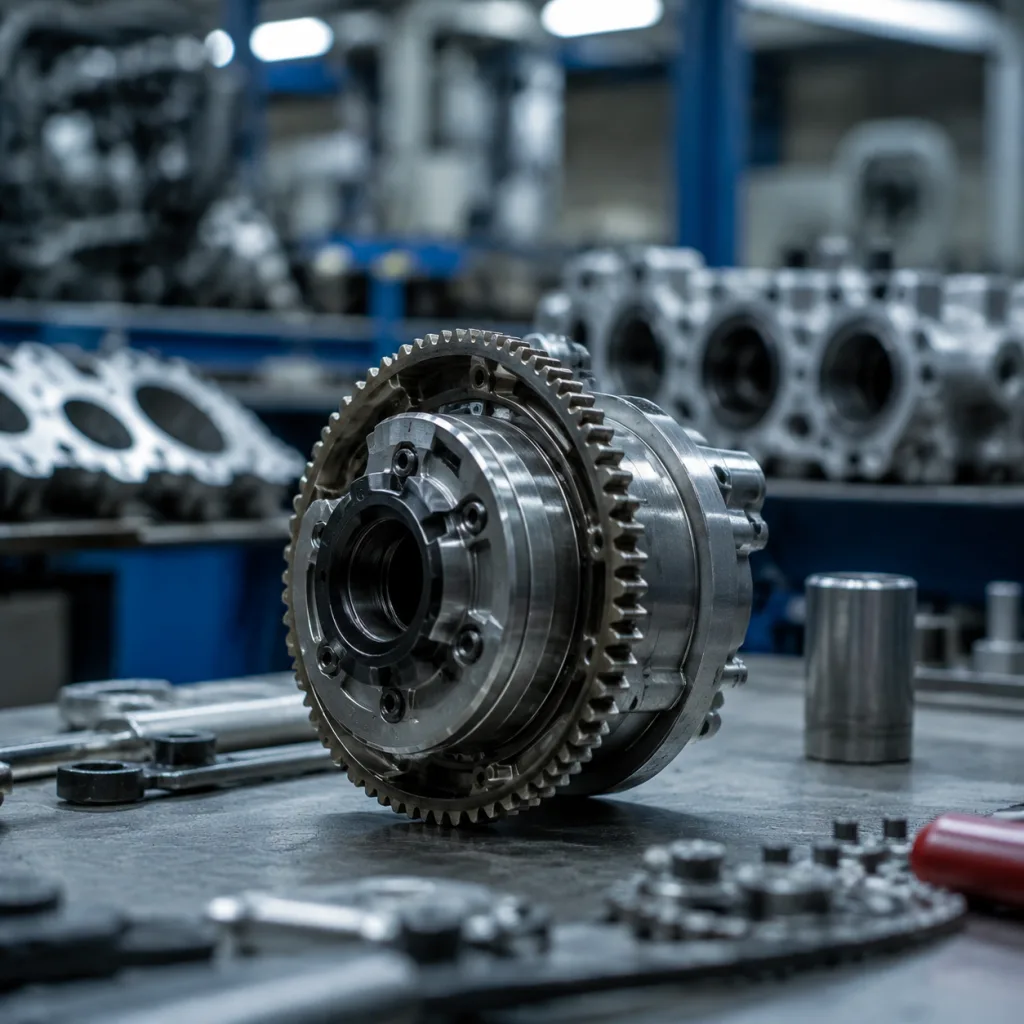
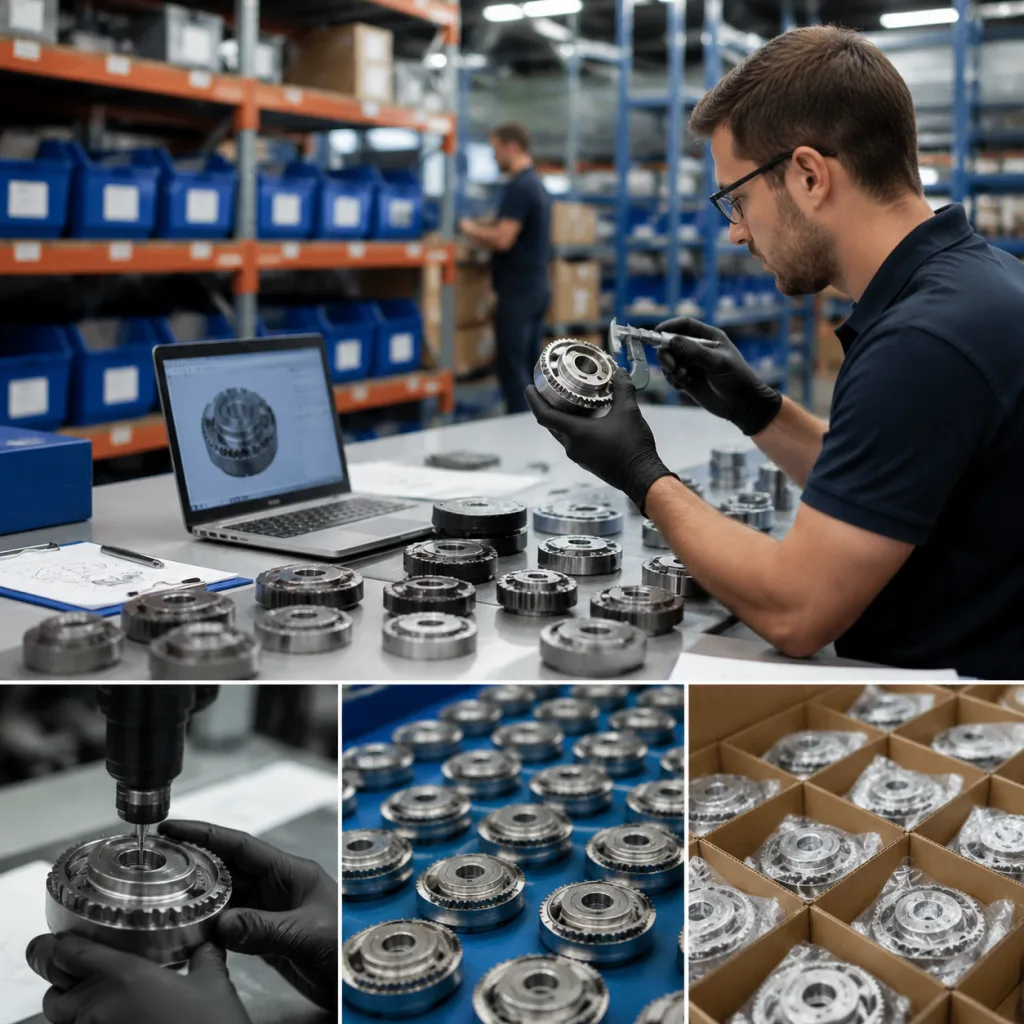
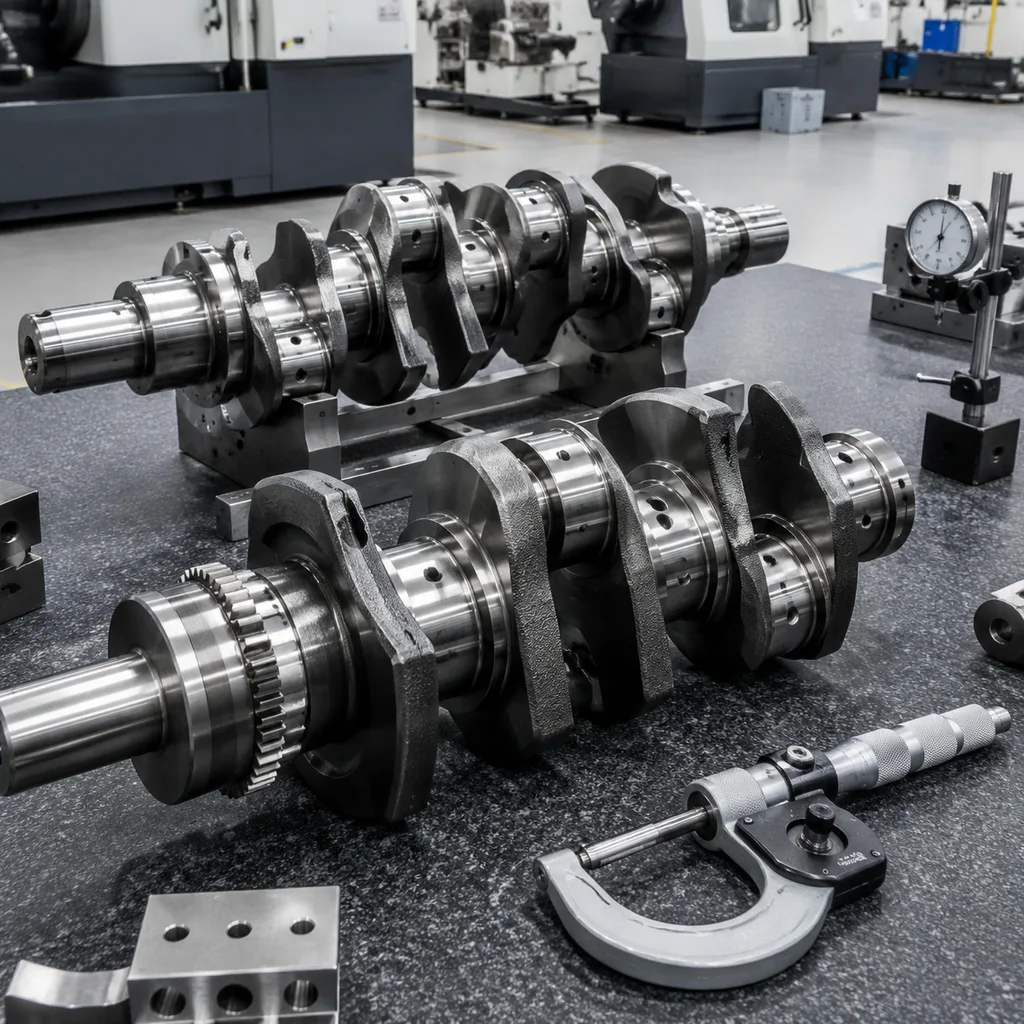
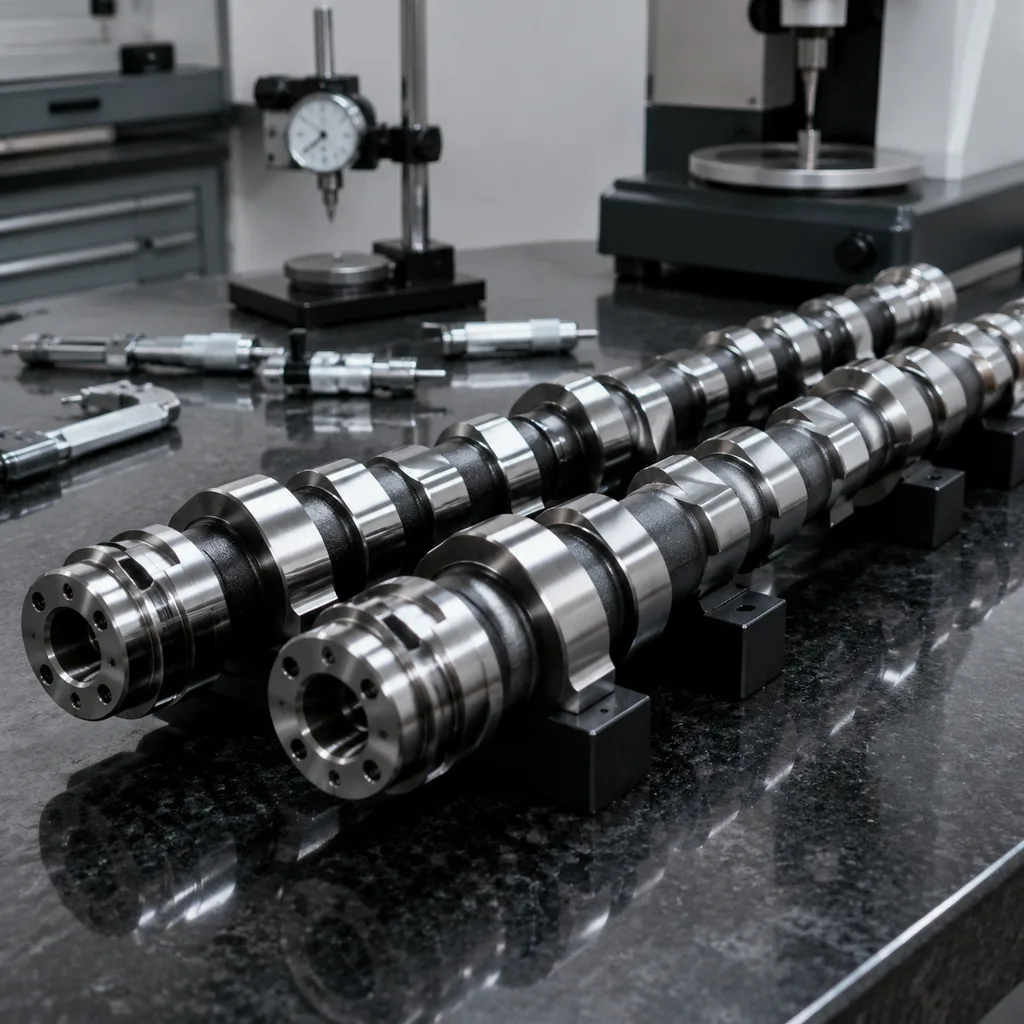
A camshaft phaser OE equivalent is not a “close enough” timing part. It must install like the original unit, control oil flow in the same working window, hold the correct phase angle, and avoid the rattle, leakage, or delayed response that quickly turns into warranty cost. For B2B buyers, the decision is less about the box label and more about whether the supplier can prove dimensional fit, lock-pin behavior, vane sealing, sprocket hardness, cleanliness, packaging accuracy, MOQ, price tiers, and repeatable lot quality. Driventus is an independent aftermarket manufacturer based in Taizhou, Zhejiang. Brand names and OE-style references are used only for fitment identification, not to claim vehicle-maker approval. We manufacture engine and powertrain components under IATF 16949:2016 and ISO 9001:2015 systems and supply B2B customers in more than 60 countries. Use this article as a procurement framework for comparing camshaft phaser replacement sources without relying on catalog claims alone.
Decision framework: when a phaser is truly OE equivalent
Treat “OE equivalent” as a pass/fail engineering claim, not a marketing phrase. A camshaft phaser OE equivalent should match the original application at every interface that affects installation, oil actuation, timing control, and service life. The critical points are bolt pattern, sprocket geometry, vane count, oil passage position, connector fit where applicable, controlled angular travel, lock-pin behavior, and the pressure window that moves the rotor without chatter.
A practical buyer definition looks like this:
Check item
Why it matters
Buyer target
Mounting dimensions
Prevents misfit, timing stack-up, and installer rework
Match OE drawing; typical critical dimensions held to ±0.02–0.05 mm where specified
Phase range
Preserves the engine timing strategy
Match OE functional range, commonly 20–60 crank degrees depending on engine family
Oil control
Affects response speed, lock release, noise, and fault-code risk
Stable actuation at specified oil temperature and pressure; no abnormal internal leakage
Material and heat treatment
Supports tooth durability, vane wear resistance, and long service life
Specified alloy, case depth, and hardness; hardened sprocket teeth often checked around HRC 50–60
Traceability
Makes warranty containment possible
Lot ID, date code, operator/process record, and inspection batch link
</tr></thead><tbody> </tbody></table>Driventus supplies replacement phasers against application data and, where available, OE 06A107065-style cross-reference formats. We do not claim original-equipment approval. The goal is dimensional and functional equivalence for aftermarket replacement, proven through controlled drawings, sample approval, inspection records, and repeatable production controls.
Failure modes to eliminate before you place the order
Most phaser sourcing problems show up after installation, when the buyer has already paid for freight, warehousing, and customer handling. The safest approach is to ask for data that targets known failure modes.
Common risks to screen out:
Misfit at assembly: outer diameter, bore size, spline or key geometry, bolt-hole pitch circle diameter, thread depth, sprocket tooth profile, and oil-port position must match the application. For timing-critical surfaces, buyers often review face runout in the 0.03–0.08 mm range.
Cold-start rattle: lock-pin engagement, release pressure, return spring behavior, and oil drain-down performance need verification. A sample that is quiet on one bench test may still rattle if the lock system is inconsistent.
Slow or unstable phase response: phase angle tolerance should be checked at specified oil pressure, temperature, and viscosity grade, not only at room temperature.
Internal leakage: excessive vane or seal leakage reduces control authority and may trigger timing deviation complaints.
Premature wear: material grade, hardening depth, sprocket hardness, surface finish, and cleanliness all affect service life.
Electrical mismatch: if the solenoid interface is integrated, confirm connector fit, resistance, terminal retention, and mating geometry.
NVH complaints: mass balance and noise signature matter on platforms already known for phaser rattle or chain-drive sensitivity.
A buyer-ready RFQ should include OE number, engine code, model year range, intake/exhaust or left/right position, target annual volume, sample quantity, preferred packaging, certification requirements, and acceptance criteria for PPAP or sample approval. For example, a distributor may request 5–10 initial samples per part number, 100% functional testing for the pilot lot, and AQL-based dimensional inspection for mass production.
If a supplier cannot provide a controlled drawing, inspection report, oil-pressure test condition, or defect response process, the risk has not been priced into the offer. A low unit cost becomes expensive when the same issue repeats across several lots.
Validation test menu: what to request and what each test proves
Replacement quality depends on proof under controlled conditions. For camshaft phasers, the useful validation package usually covers response, leakage, endurance, cleanliness, lock function, and corrosion protection. Ask the supplier to state oil grade, oil temperature, pressure points, cycle count, measurement method, and pass/fail limit. Without those details, a “tested” claim is difficult to audit.
Core validation set
Functional phase response: verifies movement across low, medium, and high oil-pressure points at controlled oil temperature.
Oil leakage and pressure retention: reports leakage in ml/min or pressure decay over a fixed time, helping predict control stability.
Endurance cycling: checks wear, vane sealing, lock behavior, and sprocket durability under repeated actuation. Cycle count should follow the customer requirement rather than a generic claim.
Dimensional inspection: uses calibrated gauges, CMM, tooth-profile gauges, and go/no-go fixtures for mounting and timing-critical features.
Lock-pin release and re-lock test: confirms behavior after heat soak and simulated oil drain-down, especially for cold-start noise prevention.
Cleanliness verification: controls particle count or residue weight before packaging; this is critical for oil-controlled components.
Corrosion screening: protects stored inventory and shipments to humid or harsh markets through salt-spray or cyclic corrosion exposure where required.
Relevant references include IATF 16949:2016 for automotive quality management, ISO 9001:2015 for process control, REACH (EC) No 1907/2006 for substance compliance, and customer-specific endurance methods where applicable. For environmental exposure, buyers may reference SAE J2527 when it fits the storage or service requirement.
Do not use the same test plan for every engine family. A turbocharged direct-injection platform may need tighter cleanliness and response limits than a low-output fleet engine. High-return applications should also receive stricter pilot-lot controls before mass release.
Scenario: how Driventus handles a multi-part-number sourcing program
A typical distributor does not buy one isolated phaser. The program may include several engine families, mixed intake and exhaust positions, different label formats, and staged replenishment. Driventus is set up for that type of technical B2B supply rather than retail spot sales.
A practical workflow is:
1. Application review. The buyer sends OE numbers, engine codes, model years, regional fitment differences, and any required cross-reference format. 2. Drawing and sample confirmation. Critical-to-function dimensions are separated from general tolerances. Mounting, oil passages, sprocket geometry, lock system, and phase range are reviewed before release. 3. Process planning. Material checks, machining, hardening, surface finishing, sealing selection, oil-passage cleanliness, assembly, and functional testing are aligned to the part family. 4. Pilot-lot control. Initial samples or pilot quantities are inspected and tested before mass-production scheduling. 5. Packaging and documentation. Neutral, Driventus, or private-label packaging can be planned with carton labels, barcode format, pallet layout, and inspection documents. 6. Replenishment planning. MOQ and lead time are tied to casting or forging availability, machining setup, testing load, packaging type, and export consolidation.
Driventus manufactures under IATF 16949:2016 and ISO 9001:2015 controls with incoming material checks, in-process inspection, final inspection, and lot traceability. For private-label or buyer-specific documentation, see custom manufacturing. Buyers can also review related sourcing categories through our catalog and engine components.
Commercial quotes are normally built by part number, volume tier, packaging requirement, and inspection level. If a platform needs revised tolerances, a special surface treatment, carton drop-test requirement, barcode rules, or a customer technical file, those items should be defined before artwork approval and mass production.
Procurement checklist: from RFQ to repeat replenishment
Use a short, strict checklist. It reduces returns, avoids catalog confusion, and keeps commercial assumptions visible.
1. Confirm OE and aftermarket cross-reference data, including engine code, production date split, intake/exhaust or left/right position, and regional differences. 2. Verify mounting geometry, tooth count, oil-port position, lock-pin function, and phase range against a drawing or approved sample. 3. Request material grade, heat-treatment method, hardness range, surface finish, and critical dimension report. 4. Review sample test reports, leakage limits, response test conditions, cleanliness records, and traceability format. 5. Confirm packaging, label, barcode, carton quantity, pallet plan, and country-specific compliance statements. 6. Align MOQ, target price tier, payment term, lead time, and replenishment cadence before approving artwork or mass production.
Quote at least three volume bands: sample order, first production lot, and repeat replenishment. Unit price usually changes with annual volume, packaging complexity, inspection level, and tooling or fixture availability. Lead time should be separated into sample approval, production, final inspection, and freight. A single ship date is not enough for stock planning.
For repair chains, consistency often matters more than the lowest unit price because installation time and comebacks affect branch-level performance. For distributors, carton accuracy and part-number labeling are just as important because mislabelled phasers create avoidable returns and warranty handling. If you need a sourcing review, request a quote and include application details, annual volume, desired MOQ, target landed cost, preferred incoterm, and any required OE 06A… or 11251… cross-reference format.
Frequently asked questions
No. OE equivalent means the part is designed to match fit and function for aftermarket replacement. It does not mean vehicle-maker approval or endorsement.
Ask for dimensional data, material specification, hardness range, inspection records, functional test conditions, leakage limits, traceability format, packaging specification, and compliance statements for REACH and quality systems.
Yes. Send your application data, target annual volume, required MOQ, packaging or label format, and target lead time. Driventus can review fitment and supply options through a technical quotation.
If you need a technical replacement source for a camshaft phaser OE equivalent, send your application details, target volume, MOQ expectation, and lead-time requirement through /contact.html.