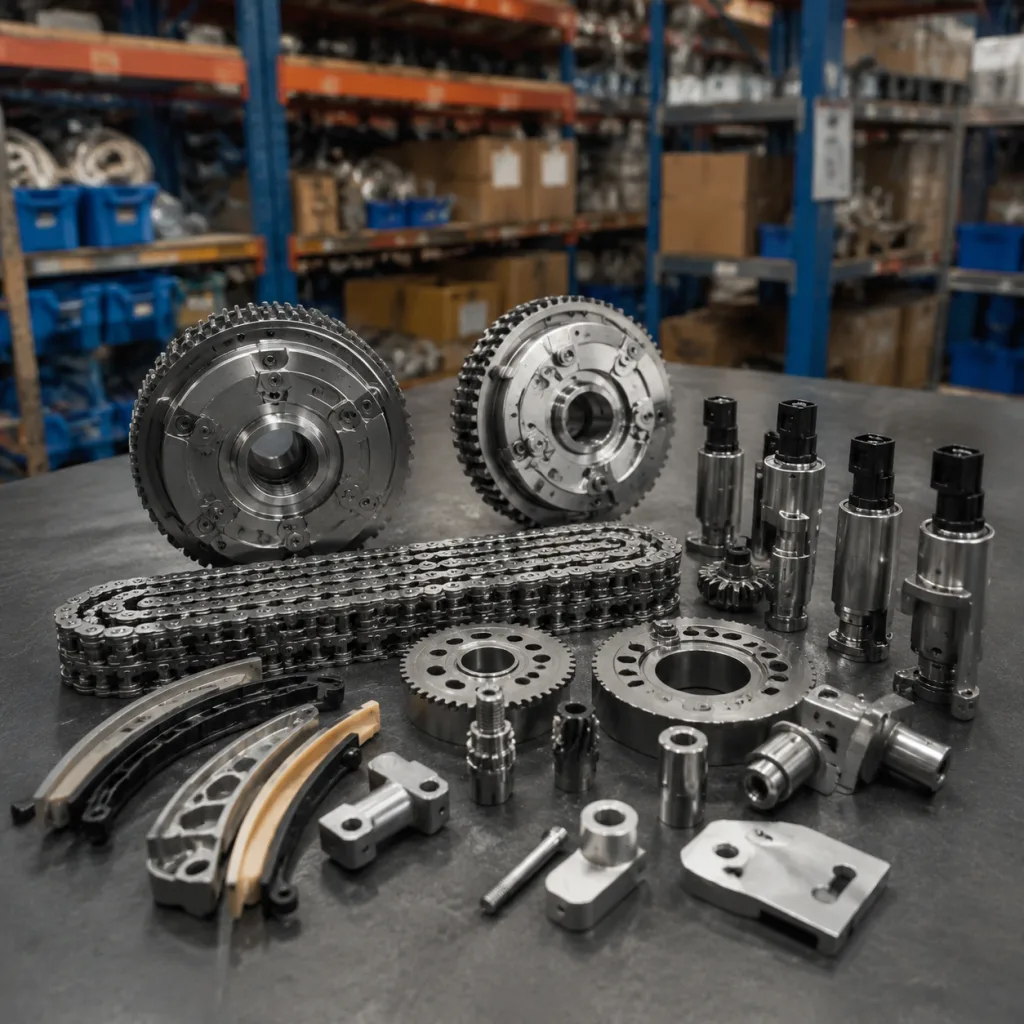
Buyers sourcing camshaft phaser Infiniti wholesale parts need more than a part number and a price. They need dimensional consistency, dependable supply, traceable materials, and test data that supports incoming inspection. In engine timing systems, small deviations in vane clearance, locking pin travel, or oil-control response can create noise, fault codes, and warranty returns. Driventus supplies camshaft phasers as an independent aftermarket manufacturer; brand names are referenced for fitment only. Production is aligned with `IATF 16949:2016` and `ISO 9001:2015`, with export documentation prepared for multi-market procurement in the EU, UK, US, Canada, Australia, and Brazil. This guide explains what to verify when sourcing, how wholesale terms are usually structured, and when custom manufacturing can reduce risk on high-volume programs.
What wholesale buyers should verify first
When you source a camshaft phaser for Infiniti applications, start with fitment data, not catalog descriptions. The same engine family can use different phaser housings, vane angles, oil passages, connector interfaces, and lock positions across model years, emissions packages, and intake/exhaust positions. A valid source package should identify the exact engine code, timing side, and OE reference, then back that up with dimensional evidence.
Check these points before RFQ release:
Engine code, displacement, and application range
Intake or exhaust position, plus left/right bank if applicable
OE cross-reference, if available, such as `OE 06A107065` style references only when already provided by your source data
Sprocket tooth count, bolt circle, center bore, and indexing features
Connector type, solenoid interface, and oil port layout
Critical dimensions with stated tolerances, such as bore diameter, face runout, vane clearance, and locking-pin travel
Sample condition, revision level, and whether the part is new tooling, carry-over, or supersession
For procurement teams, the most useful first filter is verified interchange data. If that is incomplete, ask for 2D drawings, sample inspection photos, and a measurement report before confirming volume. A practical pre-quote pack should include at least one physical sample, one dimensional report against the drawing revision, and a clear statement of what is accepted as a match.
Driventus is an independent aftermarket manufacturer; brand names are referenced for fitment only.
Wholesale supply terms that affect landed cost
Wholesale pricing for timing components is rarely driven by unit price alone. Freight method, packaging density, inspection scope, payment timing, and defect risk all affect landed cost. A quote that looks low on paper can become expensive if it requires repacking, extra verification, or repeated expedites.
Factor
What to confirm
Procurement impact
MOQ
Per part number, per finish, per packing spec
Affects cash flow, SKU consolidation, and inventory turns
Price breaks
100, 300, 500, 1,000+ unit bands or your supplier's actual bands
Clarifies whether volume offsets tooling or setup cost
Sample fee
Free, refundable, or charged against first order
Affects launch cost and approval speed
Lead time
Sample, pilot, and production lead times in calendar days
Affects launch timing and safety stock
Packaging
Individual bag, tray, or bulk pack; carton count and gross weight
Impacts damage rate, warehouse handling, and freight cube
Documentation
COO, packing list, test report, HS code support
Affects customs clearance and brokerage time
Traceability
Batch code, lot record, and retained sample policy
Supports warranty analysis and recall containment
Audit support
Factory audit, process flow, control plan, and PFMEA summary
Supports vendor approval and SOP release
</tr></thead><tbody> </tbody></table>For repeat-purchase programs, request annual volume bands and call-off options. That gives you a clearer view of buffer stock, raw-material planning, and price stability. If your forecast is uneven, ask for split shipments and reserve-stock terms tied to your release schedule. The most useful commercial structure is usually a pilot order, a first production lot, then a blanket PO or rolling forecast once the part is validated.
As a working benchmark, many B2B buyers request 50 to 100 units for first-pass sample validation, 200 to 500 units for pilot release, and tiered pricing at 500, 1,000, and 3,000 units, but the right structure depends on the actual machining setup and packaging method. Ask the supplier to quote separately for EXW, FOB, and DDP so you can compare both part cost and logistics cost on the same basis.
Quality controls for timing accuracy
Camshaft phasers are sensitive to machining accuracy and oil-control performance. Buyers should ask for measurable evidence, not general quality claims. The right control plan should show how the part is checked before shipment and which features are monitored during production.
Relevant controls include:
Housing concentricity and face runout checks
Vane clearance measurement, typically controlled to the drawing requirement and recorded in the inspection report
Locking pin engagement verification and release travel validation
Response testing under oil pressure at defined test pressure and temperature
Surface finish control on wear faces and control surfaces
Dimensional inspection against drawing revision
Balance or rotational smoothness checks where the design requires them
For RFQs, ask suppliers to state the actual measurement method and tolerance basis. For example, a buyer may require bore size held to the print tolerance, face runout verified on a dial indicator or CMM, vane clearance checked with feeler or metrology gauges, and functional response tested under a defined oil-pressure window. If the supplier cannot name the method, the result is hard to audit later.
Driventus manufactures under a documented quality system aligned with `IATF 16949:2016` and `ISO 9001:2015`. For export programs, we can support material declarations and compliance documentation relevant to `REACH (EC) No 1907/2006` where applicable. For OE-equivalent sourcing, ask for validation data from bench testing, in-process inspection records, and retained samples from the production lot.
If your team needs a tighter control plan, compare incoming inspection checks with the supplier’s final inspection list. A close match reduces duplicate testing and shortens receiving time. For high-risk programs, define an AQL level for appearance, critical dimensions, and function so rejection decisions are consistent across warehouses.
When custom manufacturing is the better option
Standard catalog fitment works for many buyers, but custom manufacturing becomes practical when the program has high annual volume, repeated part supersessions, packaging and branding requirements across regions, or a specific control requirement that the catalog part does not meet.
Use custom manufacturing when you need:
A controlled dimensional update for a known engine platform
A revised finish or corrosion-protection requirement
Private-label packaging for regional distribution
Barcode, lot, or carton labeling aligned to your ERP
Consolidation of multiple supplier sources into one controlled spec
A target PPAP-style approval package with defined sample size and approval gate
Our custom manufacturing process is suited to buyers who need drawing-based production, sample approval, and production traceability. A typical development flow is inquiry review, feasibility check, drawing or sample confirmation, prototype or first-article submission, pilot approval, then mass production with lot traceability. For broader engine timing sourcing, review our catalog and the engine component range in engine components. If your team is auditing suppliers, the quality system page outlines the documentation structure used for manufacturing control.
For sourcing teams, the key question is whether the part is truly a catalog match or a controlled-spec program. If the application carries high warranty exposure, custom manufacturing often reduces risk because the buyer can lock the tolerance stack, packaging spec, and test plan before the first production shipment.
How to structure an RFQ for Infiniti timing parts
A complete RFQ lowers clarification cycles and helps you compare suppliers on the same basis. Include the model, engine code, OE reference if known, annual usage, target price band, and required documents. You should also define what counts as an acceptable sample and what happens if the first lot is outside spec.
Recommended RFQ fields: 1. Vehicle model and year range 2. Engine code or displacement 3. Intake or exhaust phaser position 4. OE cross-reference or sample number 5. Required quantity by quarter and annual forecast 6. Target MOQ, sample quantity, and pilot lot size 7. Packaging and labeling needs 8. Required certificates, inspection report format, and test reports 9. Destination market and Incoterms 10. Required lead time for samples, pilot, and mass production
If you are benchmarking multiple suppliers, ask each one to quote the same Incoterm and packing spec. That avoids hidden cost differences. For larger programs, request a pilot batch before full release and define acceptance criteria for dimensional checks, visual defects, and functional response. Also ask whether the supplier’s quoted lead time starts at PO receipt, deposit receipt, or drawing approval; that single detail often changes the true launch date by a week or more.
A good RFQ should make pricing comparable. For example, request unit price by volume tier, sample pricing, tooling amortization if applicable, and separate freight assumptions. If one vendor includes export cartons and another does not, the apparent unit price will not reflect the real landed cost.
Practical sourcing note for procurement teams
The most reliable camshaft phaser suppliers combine stable machining, test discipline, and export-ready paperwork. For Infiniti wholesale buyers, that usually matters more than a low opening price because timing parts sit directly in the engine-control chain and can trigger expensive warranty claims if the control response is inconsistent.
A practical supplier review should cover:
Process capability on critical dimensions, ideally with stated Cp/Cpk evidence for the key features
Batch traceability and retained samples
Sample approval record and revision control
Lead-time consistency across replenishment cycles
Support for factory audit or virtual audit
On-time delivery history and corrective-action response time
If you are building a supplier shortlist, separate commercial scoring from technical scoring. That makes it easier to compare risk, not just quotation levels. Driventus supports B2B buyers with direct factory supply, documented quality control, and export coordination for repeat-order programs. For urgent programs, confirm whether the supplier can hold safety stock, how long it is reserved, and whether the reserve is charged or included in the piece price. The best sourcing result is usually a supplier that can quote clearly, ship on a defined calendar, and support a measurable control plan after launch.
Frequently asked questions
Yes. We support B2B wholesale sourcing with MOQ guidance, sample approval, and production lead times based on the part number and order volume. We can also quote pilot lots, production lots, and repeat-order programs with volume-based pricing.
Yes. We can work from OE cross-references, drawings, or physical samples. Brand names are referenced for fitment only, and final verification should be done against your application data. If needed, we can review critical dimensions and confirm the acceptance basis before production starts.
We can provide inspection records, traceability details, and export documents aligned with `IATF 16949:2016` and `ISO 9001:2015` workflows, plus applicable compliance declarations. Depending on the program, we can also support sample reports, lot traceability, and functional test data.
If you need a priced quote, sample, or technical review for a sourcing project, send the application data and target volume through `/contact.html`.