Camshaft Phaser BMW Manufacturer China: Sourcing Guide
For procurement teams searching for a camshaft phaser BMW manufacturer China, the main issue is not finding a part. It is finding a supplier that can hold timing accuracy, confirm fitment, and repeat that result across batches without surprise. The part has to control cam timing across the full duty cycle and still match the target BMW engine family cleanly at receiving.
Driventus supplies camshaft phaser assemblies for B2B channels from Taizhou, Zhejiang, with production aligned to IATF 16949:2016 and ISO 9001:2015. We support aftermarket distributors, OEM and Tier-1 buyers, and multi-location repair networks that need documented inspection, practical lead times, and stable revision control. Driventus is an independent aftermarket manufacturer; brand names are referenced for fitment only.
If you are comparing suppliers for a BMW application, use this guide as a decision filter: what to verify first, where phaser programs fail, which specs matter, and how to validate before release.
Where BMW phaser sourcing usually breaks down
A camshaft phaser is a precision hydraulic or electro-hydraulic timing device. It is not enough for it to look similar to the OE part. It must hold phase accuracy, oil control, and response rate inside the engine calibration window.
For BMW fitment programmes, the most common failure points are simple:
OE reference matched, but engine code missed
Intake and exhaust variants confused
Connector, sprocket interface, or installation depth not confirmed
Phase travel verified, but lock position ignored
Sample passes visually, then fails once oil pressure or temperature changes
Quick buyer check
Item
Why it matters
Typical buyer risk
OE cross-reference
Prevents incorrect fitment by engine family
Returns and warranty claims
Engine code and build range
Confirms the exact application
Wrong-SKU replenishment
Actuation type
Intake/exhaust and hydraulic/electro-hydraulic differences
Non-functioning installation
Timing travel and lock position
Confirms response behavior
NVH or drivability complaints
Batch traceability
Supports receiving inspection
Weak claim handling
</tr></thead><tbody> </tbody></table>If your team manages multiple SKUs, the fastest route is to align the part against our catalog and confirm the exact engine application before sample approval. For adjacent timing or rotating parts, see our catalog and engine components.
How Driventus controls the build, not just the label
Driventus is set up as a vertically integrated parts manufacturer, which keeps machining, cleaning, assembly, and final inspection under one quality flow. That matters for phasers because performance depends on rotor-to-housing clearance, vane geometry, and oil gallery cleanliness.
Our production system follows IATF 16949:2016 and ISO 9001:2015. In practical sourcing terms, buyers can expect:
Incoming material verification for alloy and seal components
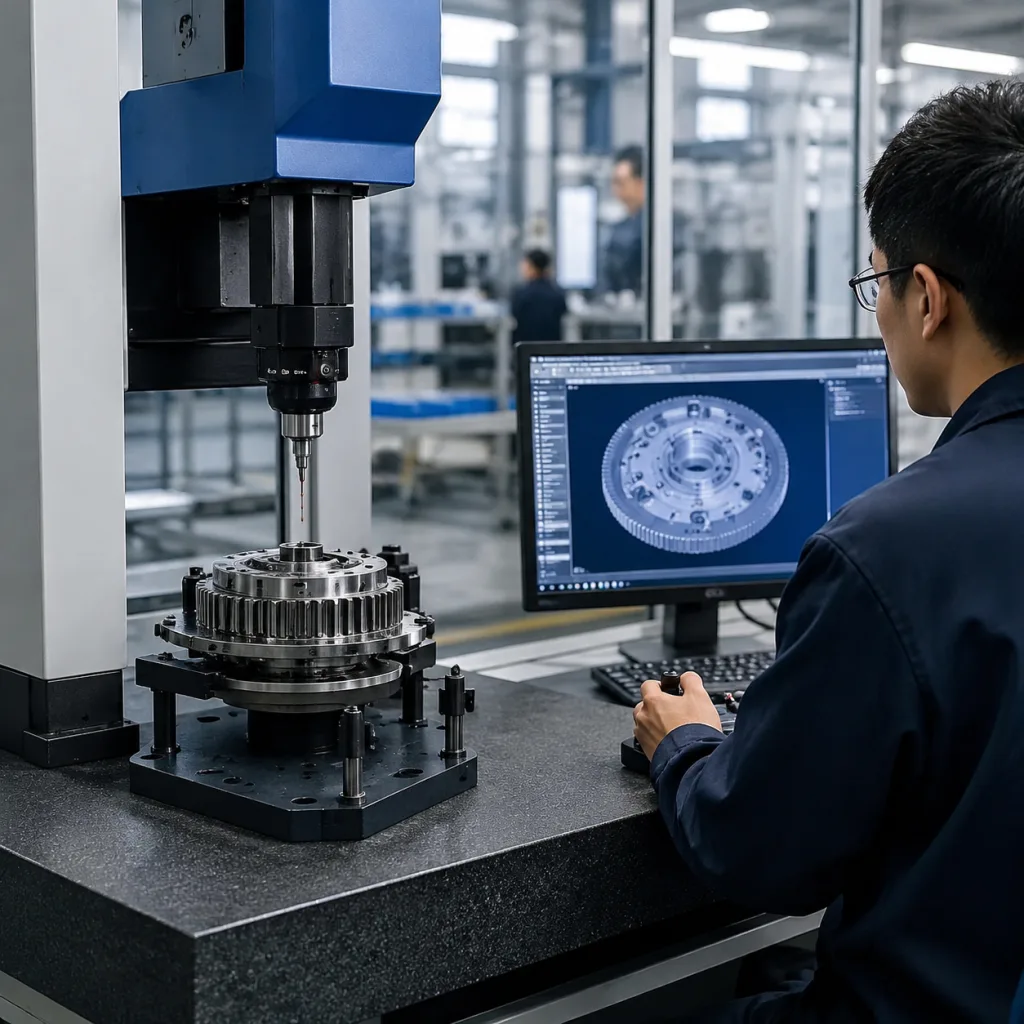
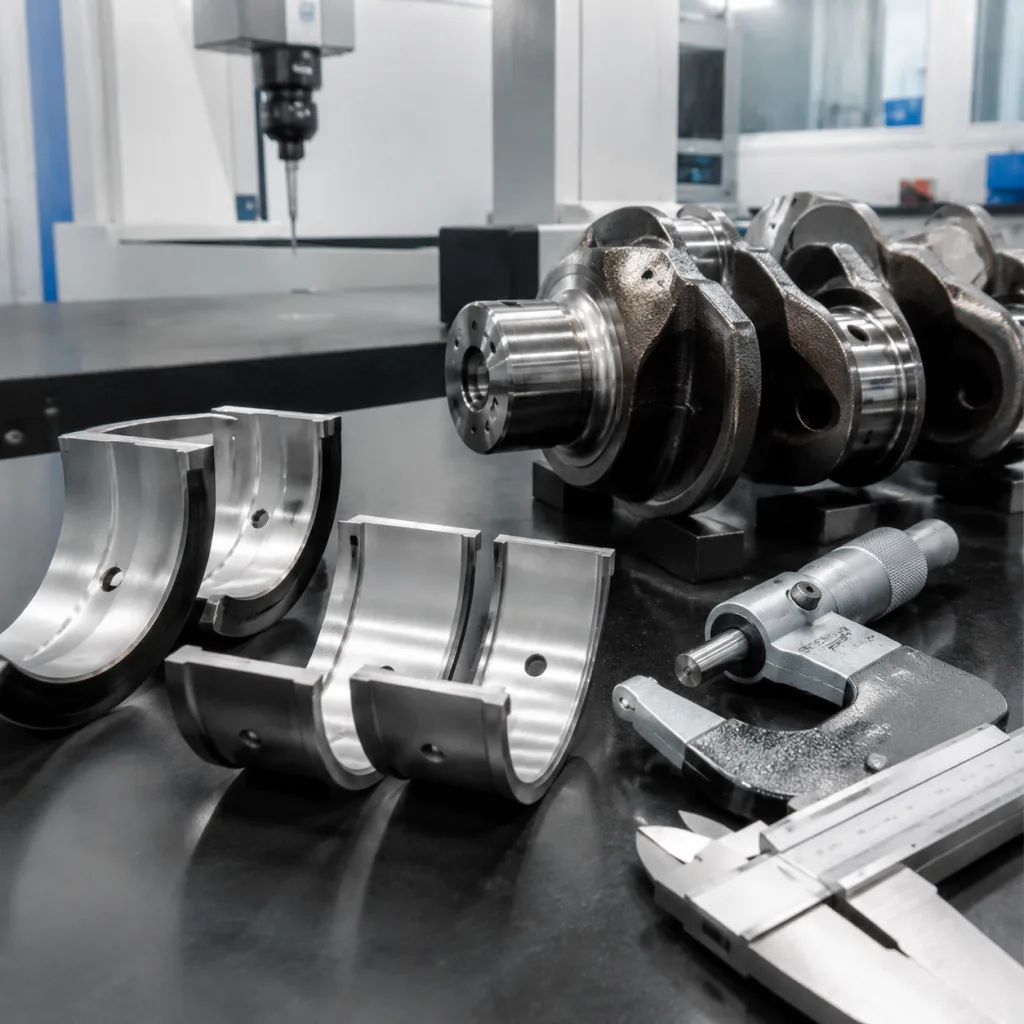
Dimensional inspection on critical diameters, spline features, and mounting faces
Assembly cleanliness controls to reduce internal sticking or delayed actuation
Functional testing of movement, lock/unlock behavior, and leakage performance
Lot identification for traceability through packing and dispatch
The useful question is not whether a supplier says it has quality control. It is whether it can show how phase travel is measured, what final test rejects a unit, and which revision level is tied to the control plan. If that answer is vague, purchasing risk rises quickly.
Specification sheet items worth demanding
Before sampling, request a spec sheet with the exact values for your part number. A useful sheet is specific, not promotional.
Request these points at minimum:
Housing material and rotor material
Surface treatment or corrosion protection
Target clearance range and allowable runout
Phase angle travel and response time
Oil pressure and oil temperature test condition
Seal compatibility with engine oil specification
Specification checklist
Parameter
Buyer should request
Material
Aluminium alloy or steel grade used in body and rotor
Critical dimensions
OD, bore, spline, bolt circle, face runout
Phase travel
Degree range and lock position tolerance
Leak test
Test medium, pressure, duration, acceptance limit
Functional test
Response time, cycle count, and repeatability
Packaging
Anti-corrosion protection and carton traceability
</tr></thead><tbody> </tbody></table>For EU and UK programmes, it is reasonable to ask whether supplied materials and coatings support REACH (EC) No 1907/2006 compliance where applicable. If the application sits inside an emissions-sensitive system, buyers may also want supporting references relevant to engine calibration, such as ECE R-83, where the overall vehicle system is being assessed by the end customer. Driventus can support documentation requests and OEM-style control plans through custom manufacturing.
Commercial terms that decide whether supply is usable
Supplier selection for a camshaft phaser BMW manufacturer China should not stop at unit price. Buyers usually need stable repeats, variant control, and export-ready paperwork.
Confirm these points during sourcing:
1. MOQ by part number and by annual forecast 2. Sample lead time and mass-production lead time 3. Packing standard for sea freight or air freight 4. Document set for import and receiving inspection 5. Warranty handling and non-conformance response time
The right supplier changes by channel. Distributors need the same revision level across replenishment cycles. OEM and Tier-1 buyers care more about PPAP-style evidence, change control, and traceable process documentation. Multi-location repair chains usually prioritize fill rate, carton labeling, and low return rates.
Our export structure is built for those requirements. If you want a direct commercial review, use request a quote and include the OE reference, annual volume, and target market.
A practical approval path before purchase order release
A short validation flow reduces risk and avoids expensive rework. For this part family, Driventus recommends three steps:
Dimensional check against the target drawing or OE sample
Bench test for phase movement, lock function, and leakage
Vehicle or engine rig confirmation where the application is high volume
Inspection focus points
Check bolt-hole alignment and mounting depth
Verify oil feed passage and filter screen condition
Confirm no binding through full phase travel
Inspect packing for corrosion control and transit damage
If possible, keep a retained sample from the approved batch and record the revision level, carton label, and test date. That makes later claims easier to resolve. It also helps when one buyer manages multiple brands or local market labels under a single internal SKU system. Apply the same discipline to related timing parts, not only the phaser itself.
Frequently asked questions
Yes. We supply B2B aftermarket and export buyers. Brand names are referenced for fitment only, and every order should be matched to the exact OE reference and engine code before confirmation.
Production is managed under IATF 16949:2016 and ISO 9001:2015, with dimensional inspection, functional testing, and batch traceability used to control consistency.
Send the OE reference, engine model or code, annual volume, target market, and packaging requirements. If available, include an old sample or drawing so we can confirm fitment faster.
If you are sourcing a phaser programme for BMW applications, send your OE reference and volume target for review. Start here: /contact.html