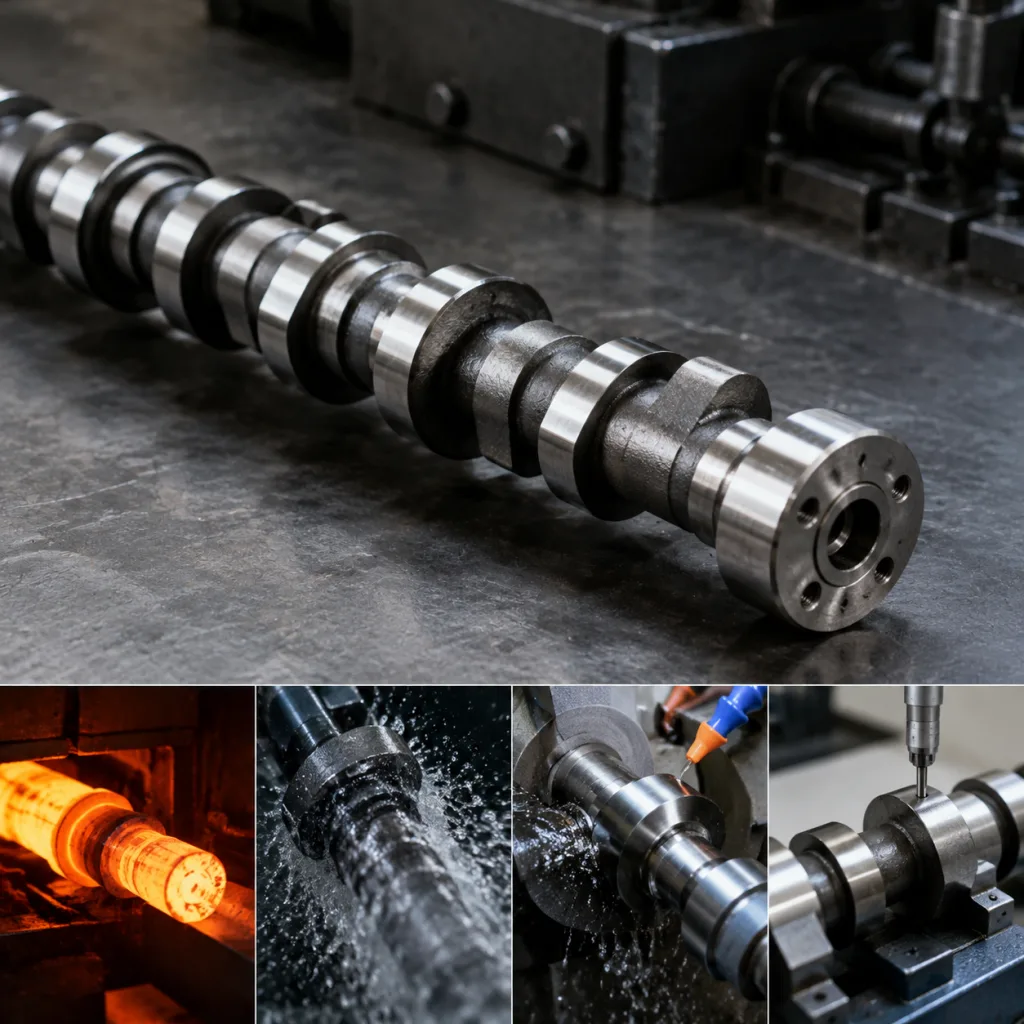
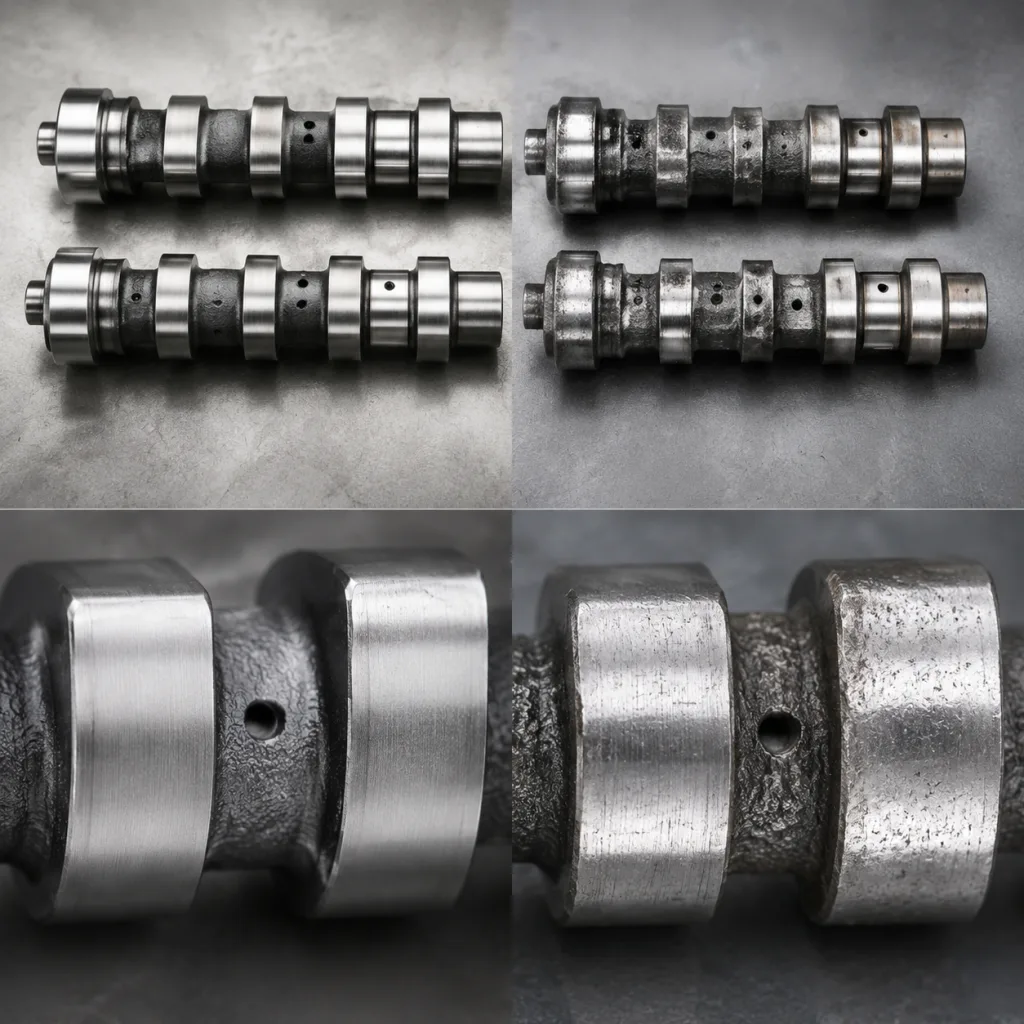
Sourcing a camshaft for Opel Insignia OE equivalent replacement programs is not simply a matter of matching the outside shape. The part must align with the engine code, cam position, journal diameters, lobe profile, timing interface, sensor reference features, oil-feed geometry, surface hardness, and export packaging requirements expected by professional rebuilders and repair networks. For distributors and import managers, an incorrect camshaft can create more than an isolated warranty claim: it can trigger catalog returns, labour-cost disputes, delayed stock rotation, and application confusion across model-year variants. This guide outlines the engineering and procurement checks that matter when buying OE-equivalent replacement camshafts for Opel Insignia applications, including fitment confirmation, dimensional tolerances, material and heat-treatment requirements, validation evidence, MOQ and lead-time logic, and supplier documentation. Driventus manufactures camshafts and related engine components in Taizhou, Zhejiang for B2B aftermarket and OEM/Tier-1 supply programs. Driventus is an independent aftermarket manufacturer; Opel and other brand names are referenced for fitment identification only.
What OE-equivalent means for this camshaft application
For replacement procurement, OE-equivalence means a controlled match to the functional design requirements of the original application. It does not mean vehicle manufacturer approval, endorsement, or supply through the vehicle maker’s service network. For an Opel Insignia camshaft, the purchasing file should identify the application by engine code, fuel type, cylinder head layout, cam position, valve timing system, production-year range, and market emission level. A listing based only on the vehicle model name is not reliable enough because Insignia coverage can vary by engine family, market, emissions level, and model year.
A buyer’s interchange file should normally separate references by at least these data points: intake or exhaust position, engine code, displacement, fuel type, cam phaser or fixed sprocket design, sensor trigger layout, and cylinder-head casting family where known. If the program covers multiple Insignia engines, do not approve one part number against several applications until timing-end photos, journal count, lobe count, trigger feature, and oil-feed pattern have been checked against the approved sample.
Key equivalence points normally include:
Camshaft position: intake, exhaust, or supplied as a matched set where applicable.
Valve actuation type: direct bucket, finger follower, or roller follower depending on engine family.
Sensor reference: trigger wheel, machined flats, reference slots, or other position features where fitted.
Oil-feed and groove design: matched to the cylinder head, bearing caps, and lubrication path.
Functional dimensions: journal diameter, lobe lift, base circle, axial location, end float control, and seal diameter.
Heat treatment and surface finish: selected to resist scuffing, pitting, and abnormal wear during break-in.
Packaging and labelling: clear reference control to prevent mixed stock in distributor warehouses.
When buyers request a camshaft for Opel Insignia OE equivalent supply, Driventus reviews the customer sample, drawing, engine code, existing catalog reference, and target annual volume before confirming interchange. Replacement camshaft families can be reviewed through our catalog and the engine component range at /products/engine-components.html.
Dimensional controls that reduce fitment returns
Many camshaft returns begin with small dimensional differences that are difficult to detect during a quick receiving inspection. A replacement camshaft may look correct in a carton or on a bench, yet still create abnormal valve lift, incorrect cam timing, poor oil retention, seal leakage, or sensor-related faults after installation.
For Opel Insignia replacement camshaft programs, buyers should define measurement requirements before production and agree on the inspection method, sampling plan, and reference drawing or golden sample. For active production, a practical approach is 100% visual and oil-hole inspection, first-article dimensional approval, and batch sampling under AQL 1.0–2.5 depending on order size and buyer risk tolerance. Critical-to-function dimensions should be reported with actual values, not only “pass/fail.”
Control item
Practical RFQ target
Inspection method
Overall length
Drawing value, typically controlled within ±0.10 mm unless otherwise agreed
Vernier, height gauge, CMM
Journal diameter
Drawing value, commonly within ±0.010–0.020 mm for bearing clearance control
Micrometer and roundness check
Journal roundness
Usually ≤0.005–0.010 mm for stable oil film
Roundness tester or micrometer sweep
Lobe lift
Drawing value, commonly within ±0.03 mm for valve lift consistency
Cam profile measuring machine
Base circle
Consistent across all lobes, commonly within ±0.02–0.04 mm
Profile scan
Angular phasing
Checked against datum, commonly within ±0.5°–1.0° where specified
Cam profile machine or CMM fixture
Runout
Commonly ≤0.03–0.05 mm to reduce bearing load and timing variation
V-block and dial indicator
Seal diameter
Drawing value with surface finish suitable for oil-seal contact
Micrometer and roughness tester
End-face feature
Correct phaser, sprocket, gear, drive slot, dowel, or bolt interface
Fixture and CMM
Sensor feature
Correct angular position and geometry against datum
CMM or optical check
Oil holes and grooves
Clean, deburred, correctly positioned; no blocked cross-drilling
Visual, pin gauge, airflow or oil-flow check
</tr></thead><tbody> </tbody></table>Tolerances must always follow the approved drawing or sample-control plan, but quoting with target ranges prevents vague offers. A supplier who cannot confirm lobe lift, journal diameter, runout, and sensor-feature position before mass production is not yet ready for a distributor program.
For larger import programs, Driventus recommends a pre-shipment inspection plan that combines first-article measurement, batch sampling, hardness testing, oil-hole cleanliness checks, and packaging verification. This approach helps wholesalers prevent mixed references, identify process drift before shipment, and reduce disputes after parts have already entered the local distribution network.
Material, heat treatment, and surface finish requirements
The correct camshaft manufacturing route depends on the engine design and the target program cost. Common replacement camshaft processes include chilled cast iron, forged or machined steel, and assembled camshaft structures. Selection should be based on lobe loading, follower type, lubrication conditions, timing system design, and the original engineering intent for that engine family.
A procurement specification should request clear technical data instead of relying on broad terms such as “standard quality” or “OE quality.” Useful requirements include:
Material grade or agreed equivalent material declaration, such as chilled cast iron or alloy steel according to the approved design route.
Heat-treatment method and target hardness range for lobes and journals.
Case depth or hardened layer requirement where applicable.
Surface roughness target for journals, lobes, thrust faces, and seal-contact areas.
Straightness or runout limit after final machining and heat treatment.
Cleanliness control for oil holes, internal passages, grooves, and machined edges.
Anti-corrosion protection suitable for 30–90 days of sea freight, customs storage, and distributor warehousing.
As a practical RFQ baseline, buyers can request lobe hardness reporting in HRC or HV, journal hardness reporting where journals are separately treated, metallographic confirmation for chilled or hardened zones, and surface roughness records. Typical buyer targets may include lobe surface roughness around Ra 0.2–0.4 μm, journal roughness around Ra 0.2–0.6 μm, and no burrs or raised edges around oil-feed holes. Exact values should be finalized against the drawing, material route, and follower design.
Surface finish is especially important where the camshaft operates under high unit contact stress. Rough lobes can damage followers during the first operating hours, while inadequate hardness can lead to visible wear lines, engine noise, metal contamination, and gradual valve timing drift. Overly aggressive grinding or poor deburring can also create local stress points or oil-flow restrictions.
For export stock, specify rust prevention by process, not by promise: VCI bag or oil paper, anti-rust oil compatible with downstream cleaning, individual sleeve or tray separation, desiccant where needed, and carton strength suitable for stacked pallets. Driventus applies controlled machining, heat-treatment verification, and final inspection under an IATF 16949:2016 and ISO 9001:2015-aligned quality system. Environmental and substance declarations can be prepared for markets where REACH (EC) No 1907/2006 compliance documentation is required.
Validation testing before release to distributors
Replacement camshafts should be released only after the main dimensional, material, and functional risks have been checked. The validation plan depends on application volume, buyer requirements, and whether the part is an active catalog item or a new development, but it normally includes sample approval, laboratory review, and controlled fitment confirmation.
A practical release checklist includes:
1. Drawing or sample confirmation: confirm engine family, cam position, timing interface, sensor features, journal count, lobe count, and any market-specific variation. 2. Material verification: check chemistry, certificate, or material declaration against the agreed specification. 3. Hardness and microstructure review: verify lobe and journal treatment consistency and confirm the hardened layer where required. 4. Profile measurement: confirm lift, base circle, duration-related geometry, angular phasing, and runout with actual measured values. 5. Trial assembly: confirm fit in a representative cylinder head with bearing caps, seals, followers, and the sprocket, gear, or phaser. 6. Lubrication path inspection: confirm oil holes and grooves are open, clean, correctly positioned, and properly deburred. 7. Rotation and end-float check: verify free rotation after cap installation and confirm axial clearance against the service target where data is available. 8. Packaging drop and corrosion review: confirm export packaging can withstand ocean freight, inland transport, and warehouse handling. 9. Label and traceability check: verify part number, batch number, barcode, country-of-origin details where required, and carton consistency.
For a new Opel Insignia camshaft reference, a buyer can request 3–5 first-article samples for dimensional approval before pilot order release. For a pilot batch, common practice is to inspect a higher sample rate than normal production, hold a retention sample from the same lot, and compare the shipped label, inner bag, and master carton against the approved packaging file. For repeat orders, the control plan can move to routine batch reporting if the first two or three shipments are stable.
For procurement teams, the most useful evidence is not a single photograph of the part. It is a repeatable inspection report tied to lot number, drawing revision, approved sample, measuring fixture, inspector date, and packaging label. Driventus can provide PPAP-style documentation when required for OEM or Tier-1 projects, without implying vehicle manufacturer endorsement.
Procurement comparison: OE-equivalent versus low-cost copy
Price-only purchasing can become expensive because the camshaft is installed deep inside the engine and often requires significant labour to replace. A low-cost visual copy may pass a basic appearance check but fail on hardness, lobe profile, runout, sensor orientation, or oil-hole positioning. For repair chains, that can produce repeat labour claims and dissatisfied workshops. For distributors, it can create disputed stock, frozen inventory, and pressure to discount slow-moving references.
Item
OE-equivalent replacement program
Low-cost visual copy
Application data
Engine code, cam position, year range, sample or drawing
Model name only
Profile control
Measured lift, base circle, phasing, and runout
Limited or no profile scan
Material evidence
Declared material and heat treatment records
Generic material claim
Lubrication features
Oil holes, grooves, and deburring checked against specification
Often checked visually only
Traceability
Lot number and inspection record
Minimal batch control
Packaging
Export corrosion protection and labelled references
Basic carton or mixed labelling
Warranty risk
Lower, if installed with correct lubrication, timing parts, and break-in procedure
Higher risk of early wear or fitment complaint
Landed-cost control
Higher unit price but fewer claims, returns, and rework costs
Lower unit price but higher hidden failure cost
</tr></thead><tbody> </tbody></table>For commercial comparison, importers should calculate landed cost per sellable unit rather than ex-works price only. Include tooling or fixture amortization, MOQ, inner and master carton cost, pallet volume, sea-freight cube, inspection charges, customs duty, expected warranty allowance, and the cost of frozen stock if interchange data is wrong. A 5–8% cheaper camshaft can become more expensive if it raises return rates, consumes workshop goodwill, or requires local sorting before sale.
Distributors building Opel Insignia coverage should also review related timing, gasket, sealing, and lubrication components to reduce incomplete-order risk. Camshaft complaints are sometimes linked to worn followers, blocked oil passages, incorrect timing service parts, dirty oil, poor lubrication at first start, or poor installation practices, so a complete program view is useful. If a buyer needs a non-catalog camshaft, modified packaging, private label, or application extension, Driventus can assess custom manufacturing based on sample parts, drawings, or target technical files.
Information to send when requesting a quote
A clear request shortens interchange confirmation and reduces the risk of an incorrect offer. For a camshaft for Opel Insignia OE equivalent project, procurement teams should provide as many of the following items as possible:
Vehicle application: Opel Insignia, model year range, body generation if relevant, and market region.
Engine information: engine code, displacement, fuel type, emission level if known, and turbo/non-turbo status.
Camshaft position: intake, exhaust, or matched set.
Cylinder head and valve train details if available, including follower type and variable valve timing system.
Existing aftermarket reference or buyer internal part number.
OE-format reference if already used in your system, verified against the buyer’s catalog data.
Sample part, technical drawing, photos of timing end and sensor features, or measurement report if available.
Annual volume estimate, first order quantity, and acceptable MOQ range.
Target price basis: EXW, FOB Ningbo/Shanghai, CIF destination port, or DDP if required through the buyer’s forwarder.
Required documents: inspection report, material certificate, REACH declaration, PPAP-style file, or other market-specific compliance documents.
Destination port, delivery terms, booking window, and target shipment schedule for freight planning.
MOQ and lead time depend on the program type. Active catalog references usually have the lowest MOQ and shortest response time, especially when neutral packaging is acceptable. Private-label orders need extra time for artwork approval, barcode verification, carton printing, and pre-production packaging confirmation. New development or non-catalog references require sample review, drawing release, fixture or tooling assessment, first-article inspection, and buyer approval before mass production.
As a planning guide, buyers should allow 2–5 working days for interchange review when the engine code, photos, and reference data are complete; 15–35 days for repeat production depending on stock and batch schedule; and 45–90 days for new development where tooling, profiling, sample approval, and packaging setup are required. MOQ may be quoted per part number or per camshaft position, and it can change with material route, packaging type, and whether intake and exhaust shafts are ordered as a set. Consolidating several engine-component references in one shipment can improve carton utilization and freight cost per unit.
Driventus exports to more than 60 countries and supports aftermarket distributors, wholesalers, repair-chain supply programs, and OEM/Tier-1 projects. Lead time depends on whether the camshaft is an active catalog item, a tooling item, or a new development based on customer samples. For open RFQs, buyers can request a quote with application data, target annual volume, first-order quantity, target delivery term, and documentation requirements.
Frequently asked questions
No. OE-equivalent means the part is engineered to match the required fit and function for the replacement application. Driventus is an independent aftermarket manufacturer; brand names are referenced for fitment identification only.
Request lobe profile measurement, journal diameter, journal roundness, runout, hardness, material declaration, oil-hole inspection, surface-finish checks, and batch traceability. For larger programs, first-article reports and periodic batch inspection reports with actual measured values are recommended.
Yes. Private-label cartons, barcodes, neutral export packaging, and pallet specifications can be reviewed during quotation. Requirements should be provided with artwork, label data, carton rules, MOQ expectations, and destination market requirements.
For Opel Insignia camshaft sourcing, send the engine code, cam position, target annual volume, first order quantity, delivery term, and any existing reference data for review. Driventus can confirm catalog availability or development options at /contact.html