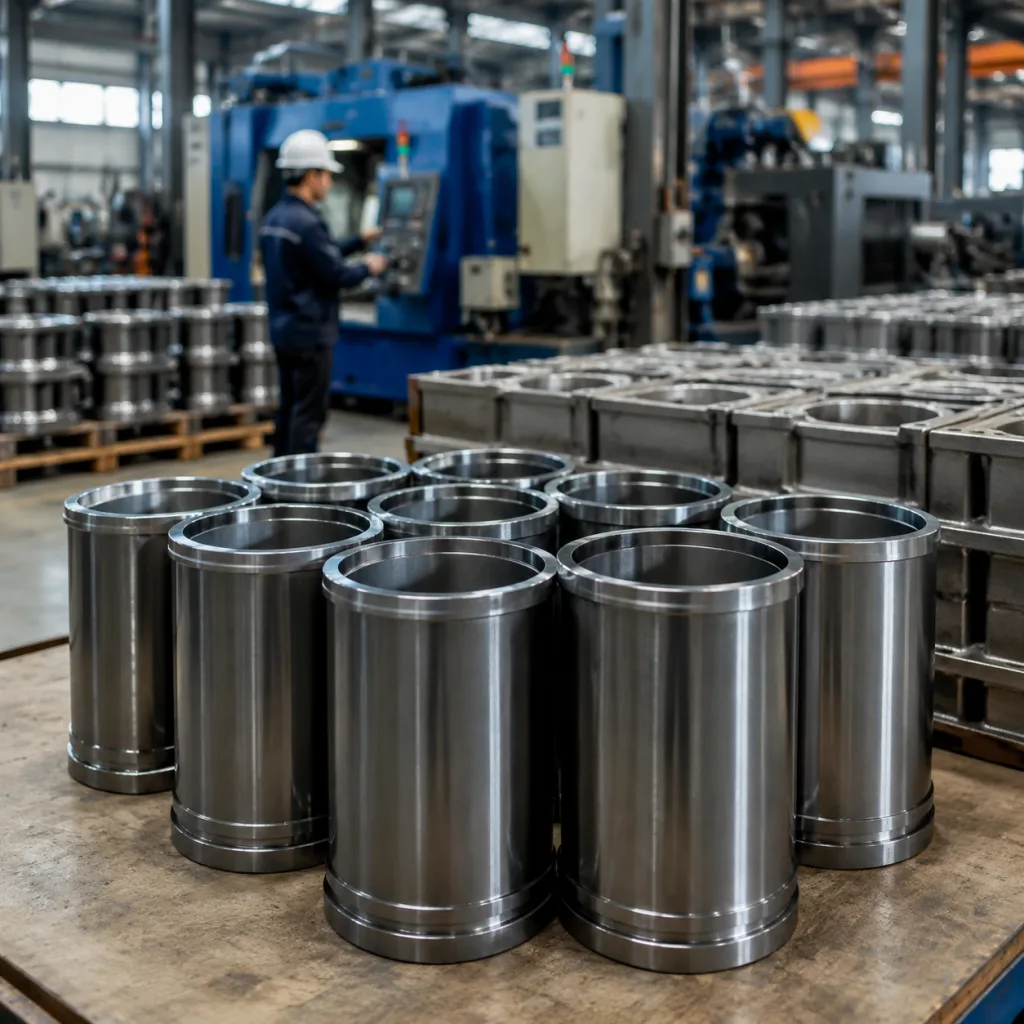
A GMC-fit cylinder liner program fails when buyers treat the part as a simple tube with a familiar reference number. It is not. The liner carries wear, heat transfer, compression sealing, oil retention, and rebuild-shop reputation in one machined casting. Procurement teams need answers on casting chemistry, bore finish, flange control, hardness, traceability, packaging, and repeat supply before the first carton ships. Driventus manufactures wet and dry cylinder liners for gasoline and diesel engine platforms, including GMC-fit aftermarket references, at its engine component facility in Taizhou, Zhejiang. We support distributors, engine rebuilders, and multi-location repair chains that need repeatable packaging, batch records, and commercial terms that work beyond the sample order. Driventus is an independent aftermarket manufacturer; GMC and other brand names are used only for fitment identification and do not imply approval, authorisation, or endorsement by any vehicle manufacturer.
Start with the Decision: Stock SKU, Modified Part, or New Liner?
The first sourcing decision is not price. It is program type.
For GMC-fit applications, buyers usually fall into one of three routes: an existing aftermarket SKU, a modified service part, or a new liner built from a drawing or sample. Each route changes the RFQ, MOQ, sample timing, inspection burden, and launch risk.
Existing aftermarket SKU: fastest route when tooling, blanks, machining programs, and packaging are already validated.
Modified part: useful when a known liner needs a changed bore condition, flange detail, packaging format, or private-label setup.
New development: required when the buyer has a drawing, discontinued service part, regional repair requirement, or reverse-engineered sample.
A strong RFQ defines the liner before it asks for a quote. State engine family, nominal bore, finished height, flange outside diameter, flange thickness, liner outside diameter, wall thickness, sealing-groove geometry, surface finish target, and whether the part must ship finished, semi-finished, or rough-machined.
Use tolerances, not only nominal dimensions. Many replacement programs specify bore and OD controls around ±0.01–0.03 mm, total height and flange-thickness controls around ±0.02–0.05 mm where sealing is critical, and finished-bore roughness such as Ra 0.4–0.8 µm with an agreed cross-hatch angle, often 30–45°. Final values must follow the engine drawing, ring pack, gasket design, and any final honing plan.
Separate the buying brief into three tests:
Can the factory make it? Casting control, heat treatment or stress relief if specified, CNC turning, boring, plateau honing, deburring, washing, oiling, VCI protection, and carton packing.
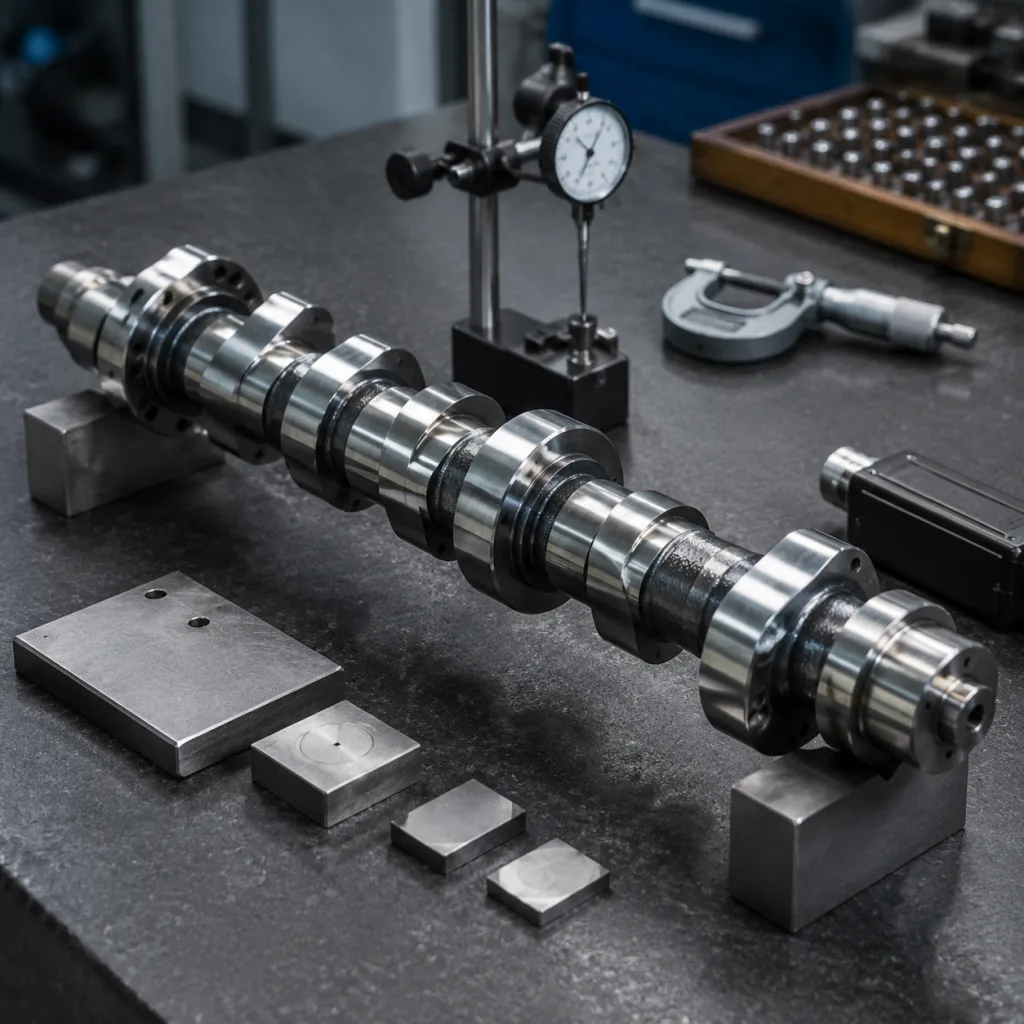
Can the factory prove it? Dimensional inspection, material reports, hardness readings, roughness checks, microstructure review, and traceability from casting lot to export carton.
Can the factory support the business model? MOQ, price breaks, sample charges, tooling amortisation, packaging, private label, mixed-SKU consolidation, Incoterms, and repeat-order lead time.
Driventus supplies engine component programs through our catalog and can review drawings, samples, or buyer-supplied OE-style cross-references such as OE 06A… or OE 11251…. These references identify fitment only; they are not claims of vehicle-maker approval.
Spec Deep-Dive: The Controls That Decide Liner Life
Cylinder liner performance is decided in the casting and confirmed at the bore. A low-cost liner can look correct on a packing bench and still fail through poor graphite structure, unstable hardness, inconsistent honing, or flange variation.
Driventus generally manufactures liners from alloy grey cast iron grades selected for wear resistance, machinability, and thermal stability. Heavy-duty or high-load diesel programs may require a tighter hardness band, adjusted alloy content, pearlitic matrix control, or specific graphite morphology. The final specification should be locked by drawing, validated sample, or confirmed application requirement.
Parameter
Typical buyer requirement
Procurement note
Material
Alloy grey cast iron, commonly HT250/HT300-equivalent or buyer grade
Confirm chemistry, graphite form, pearlite content, and whether Cu/Cr/Mo alloying is required
Hardness
Commonly 200–260 HB, or 220–280 HB for heavier-duty programs
Control by heat/casting batch, not only by first article
Bore condition
Finished honed or semi-finished
Define allowance clearly; semi-finished bores often need 0.20–0.50 mm stock depending on local machining plan
Bore tolerance
Drawing-specific, often ±0.01–0.03 mm for finished bores
Confirm measurement temperature, gauge type, and inspection depth positions
Surface roughness
Often Ra 0.4–0.8 µm for finished honed bores; Rz/Rpk/Rk/Rvk by agreement
State ring pack and lubrication requirements if known
Cross-hatch angle
Commonly 30–45° for finished honing
Must match oil retention and ring seating requirement
Flange thickness
Controlled to drawing tolerance, often ±0.02–0.05 mm where sealing is critical
Critical for protrusion and head gasket sealing
OD and height
CNC-machined to drawing
Verify wet-liner sealing groove width, depth, radius, and chamfer dimensions
Cleaning
Washed, dried, rust protected, and capped or wrapped where required
Important for rebuild shops and direct assembly programs
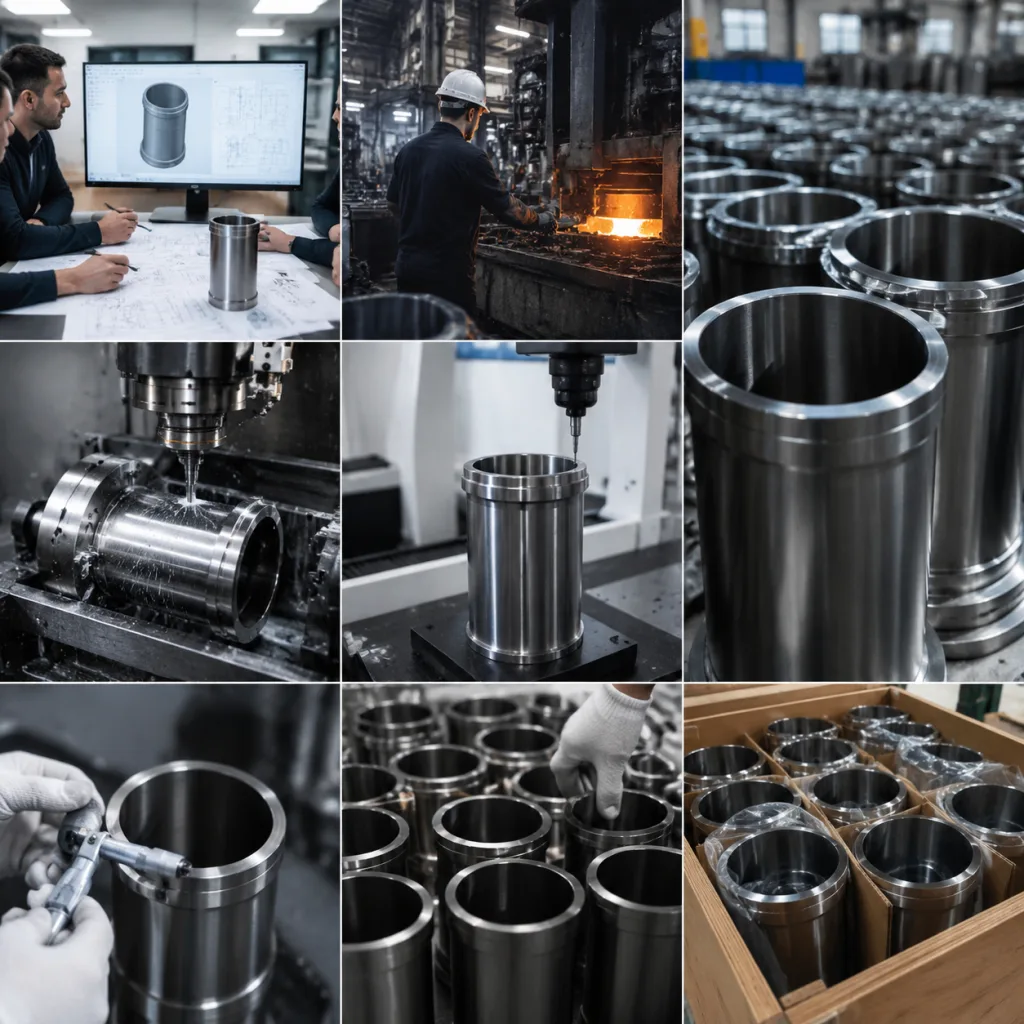
</tr></thead><tbody> </tbody></table>The control plan should follow the part through melt or casting lot identification, chemical verification, controlled cooling, rough machining, ageing or stress relief where required, finish turning, boring, honing, washing, anti-rust treatment, and final inspection. Ask which characteristics are checked 100%, which are sampled by AQL or batch frequency, and which gauges are used.
Quality management is operated under IATF 16949:2016 and ISO 9001:2015. EU importers may request environmental and chemical documentation against REACH (EC) No 1907/2006. Application-specific emissions rules such as ECE R-83 apply to complete vehicles rather than loose cylinder liners, but component traceability can still support internal compliance files.
Scenario Planning: MOQ and Lead Time by Buying Model
A cylinder liner GMC OEM supplier program should be planned around how the buyer sells the part. A distributor stocking fast-moving SKUs needs different terms from a private-label importer or an OEM/Tier-1 development team.
For established SKUs with available tooling and validated process sheets, Driventus can usually quote lower MOQ than for a new drawing. As a planning range, mature liner references may start from carton-based quantities such as 50–200 pieces per SKU. New or low-volume castings may require 300–500 pieces per SKU because casting setup, machining fixtures, inspection time, and packaging preparation must be absorbed. Exact MOQ depends on liner size, tooling status, material grade, drawing risk, and whether the order can be consolidated with other engine components.
Lead time should be split into sample, approval, and repeat production. Existing references may need about 7–15 days for samples if stock or semi-finished blanks exist. New drawings often require 25–45 days for tooling review, sample casting, machining, and first-article inspection. After buyer approval, repeat production is commonly planned around 30–60 days depending on casting schedule, CNC capacity, packaging artwork, inspection reporting, and export booking.
Price should show its assumptions. Unit cost normally drops as quantities move from sample lots to MOQ, then to carton, pallet, LCL, and container volumes because setup, inspection, packaging, and export documentation are spread across more parts. Request two or three volume points: launch quantity, quarterly replenishment, and annual forecast volume. Separate tooling, sample, private-label artwork, inspection report, and freight charges.
Typical sourcing routes:
Aftermarket stocking: existing references, MOQ by SKU or carton quantity, standard export packing, and repeat replenishment planning.
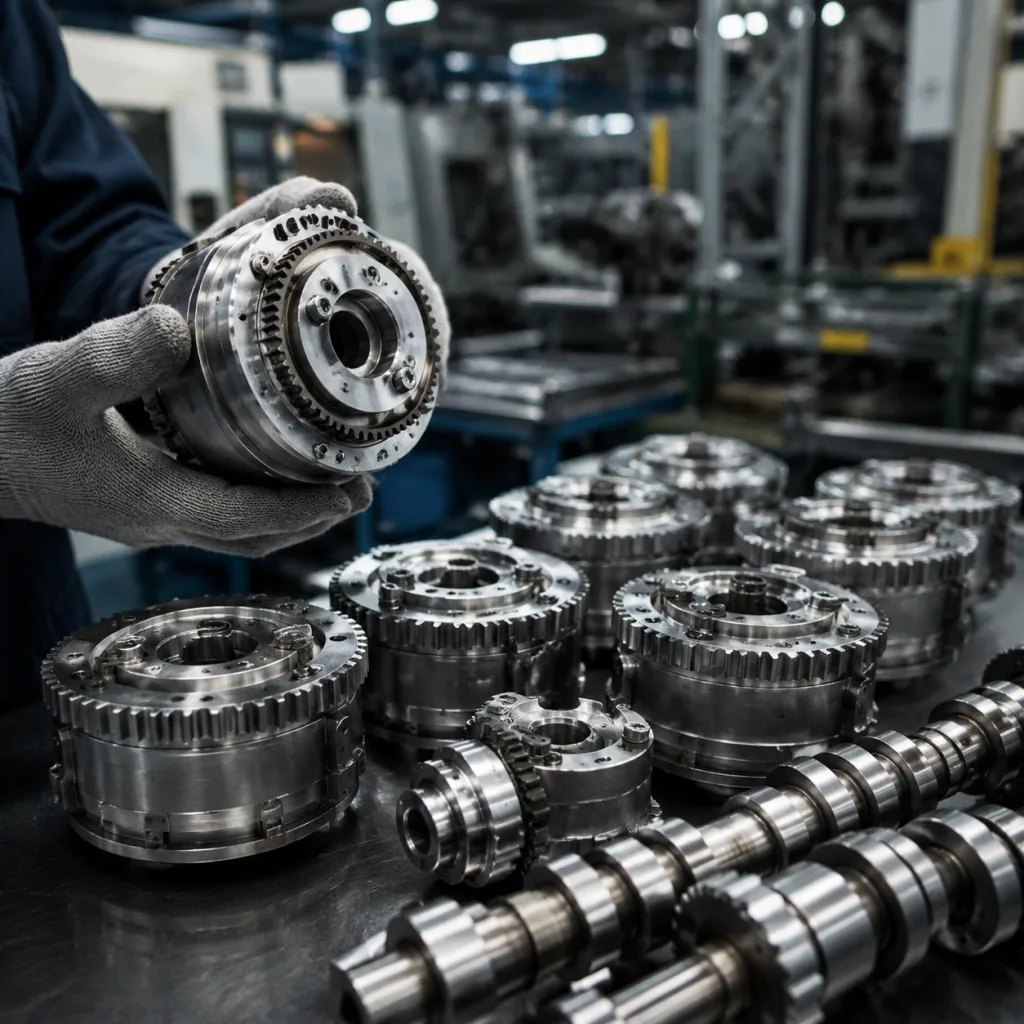
Mixed engine component orders: consolidation with pistons, rings, gaskets, water pumps, and other parts from our catalog to improve freight efficiency.
Private-label distribution: artwork approval, barcode confirmation, label control, master-carton specification, and carton drop-test review where required.
New development: drawing review, feasibility check, tooling quotation, sample build, first-article inspection, buyer approval, and controlled production release.
Repeat supply: planning tied to casting availability, machining capacity, packaging readiness, inspection report scope, and vessel or airfreight schedule.
Import managers should provide annual forecast, initial order quantity, target delivery window, destination port, and preferred Incoterms such as FOB Ningbo/Shanghai, CIF destination port, or EXW factory. Clear inputs reduce quotation padding and keep production planning realistic.
Failure Modes an Audit Should Catch Before Shipment
For OEM/Tier-1 and large distributor accounts, a certificate is only the opening page. The audit should find weak points before they become warranty claims: mixed lots, uncontrolled rework, expired gauges, missing roughness records, unstable flange measurement, poor rust prevention, or packaging that cannot survive sea freight.
Driventus supports document review and factory audit preparation through its quality system. A practical audit checklist for cylinder liners should include:
IATF 16949:2016 and ISO 9001:2015 certificate review, including scope, expiry date, and certification body.
Control plan and process flow for casting, heat treatment or ageing where used, rough machining, finish machining, honing, cleaning, rust prevention, and packing.
Incoming material and casting-lot inspection records.
Spectrometer or chemical composition verification, where applicable.
Hardness testing method, location, and batch sampling frequency.
Microstructure evidence, including graphite form and matrix requirement when specified.
CMM, bore gauge, air gauge, micrometer, height gauge, and roughness tester calibration status.
Gauge R&R or measurement-system evidence for critical dimensions if the program is OEM/Tier-1 controlled.
Engineering change and production change control, including material, tooling, process, and sub-supplier changes.
Traceability from finished liner carton to production batch, casting lot, inspection report, and packing date.
Packaging validation for sea freight and warehouse handling, including VCI bag, oil protection, separator, carton strength, palletisation, and moisture control.
For higher-risk launches, request a PPAP-style file or a reduced submission package: drawing ballooning, process flow, control plan, FAI report, material certificate, hardness readings, roughness readings, capability data for key dimensions, and packaging photos. Capability targets such as Cpk ≥1.33 for critical dimensions may be appropriate when volume and measurement data support statistical review.
Regulated markets may also require declarations related to REACH (EC) No 1907/2006 and packaging material restrictions. Driventus can provide available documentation during supplier qualification, subject to the final part specification, order scope, and destination market.
Step-by-Step: Building a Custom GMC-Related Liner Program
Custom work is where many sourcing projects drift. Price is requested before feasibility is known, samples are measured after wear has changed the reference dimensions, and mass production starts before the approval file is clear.
Driventus supports custom manufacturing for engine rebuilding programs, discontinued service parts, regional repair solutions, and private distribution ranges when the buyer can supply a drawing, sample, or verified technical file.
A disciplined custom program should move in this order:
1. Confirm the application. Identify engine family, liner type, bore condition, and whether the part is dry, wet, flanged, or non-flanged. 2. Review manufacturability. Check casting method, minimum wall thickness, machining datum strategy, flange and groove manufacturability, honing allowance, hardness target, distortion risk, and gauge access. 3. Define the commercial basis. Identify tooling cost, sample cost, sample quantity, first-article inspection scope, MOQ, and whether tooling is charged separately or amortised into unit price. 4. Build and inspect samples. Machine pilot parts, complete agreed inspection reports, and compare results against drawing or approved reference dimensions. 5. Approve production release. Freeze the drawing, sample status, packaging, control plan, and any buyer-specific inspection documents before mass production.
Information needed for a custom liner quote
To reduce engineering back-and-forth, include the following in the RFQ:
Application and engine family, if known.
Liner type: dry, wet, flanged, or non-flanged.
Finished bore, outside diameter, height, wall thickness, and flange dimensions with tolerances.
Groove locations, groove width/depth, radius, chamfer, and sealing interface details for wet liners.
Required machining allowance if semi-finished, including stock on bore, OD, height, and flange face.
Material grade, hardness range, chemical limits, and microstructure requirement.
Surface finish specification, honing pattern, and whether plateau honing is required.
Critical characteristics for inspection, such as flange thickness, flange parallelism, bore roundness, cylindricity, and groove depth.
Annual volume, launch quantity, target MOQ, and requested price-break quantities.
Packaging requirement: neutral, Driventus, or buyer private label, including carton quantity and barcode format.
Required inspection reports, sample quantity, approval samples, and whether PPAP-style documents are needed.
If the buyer only has a physical sample, Driventus can review reverse-engineering feasibility. A sample-based project should include 3D measurement or drawing creation, buyer confirmation of wear-compensated dimensions, pilot samples, and written approval before mass production. Production release should still rely on confirmed dimensions and buyer-approved samples; that is what reduces fitment disputes after import.
Quote Comparison: Find the Real Cost per Accepted Liner
Unit price is the easiest number to compare and the easiest one to misread. A low quote may exclude inspection reporting, export packaging, private-label artwork, tooling amortisation, sample freight, or documentation the buyer expects later. Compare each cylinder liner GMC OEM supplier quotation on the same technical and commercial basis.
Quotation item
What to compare
Why it matters
Part status
Existing SKU, modified SKU, or new development
Affects MOQ, sample cost, tooling, and lead time
Drawing basis
OE-style reference, buyer drawing, reverse-engineered sample, or supplier drawing
Defines responsibility for fitment and tolerance approval
Material
Grade, hardness, chemistry, graphite structure, and matrix control
Directly affects wear, heat transfer, and machining stability
Machining level
Finished, semi-finished, or rough
Determines downstream cost for rebuilders and whether final honing is needed
Tolerances
Bore, OD, height, flange, groove, roundness, and cylindricity
Prevents hidden differences between quotes with the same nominal size
Inspection
Basic dimensions, full FAI, batch report, or PPAP-style package
Needed for incoming QC and controlled customer files
MOQ and price breaks
Sample lot, MOQ, pallet quantity, and annual-volume pricing
Shows whether the supplier’s price is realistic for replenishment
Lead time
Sample time, approval time, repeat production, and shipping cut-off
Certificates, declarations, traceability, material reports, and inspection records
Required by many EU, UK, US, Canada, Australia, and Brazil buyers
Logistics
EXW, FOB, CIF, DAP, or buyer forwarder
Changes landed cost, insurance responsibility, and customs coordination
</tr></thead><tbody> </tbody></table>Before award, request representative samples and confirm that production parts will follow the approved control plan. The better comparison is landed cost per accepted part: tooling, sample freight, inspection fees, packaging, ocean or air freight, duty, brokerage, expected reject rate, and the cost of emergency replenishment if lead time slips.
If the program requires full development support, submit technical files, annual volume expectations, packaging needs, target commercial terms, and required approval documents before asking suppliers to hold fixed pricing. That gives both sides a clear basis for quotation validity, MOQ, payment terms, and production release.
Frequently asked questions
Yes. Driventus can supply GMC-fit aftermarket cylinder liners where application data, samples, or drawings are available. Fitment references are used only to identify application compatibility, not to imply vehicle-maker approval.
Driventus operates under IATF 16949:2016 and ISO 9001:2015 quality management systems. Depending on destination market and part specification, buyers may also request material, inspection, traceability, first-article, and REACH (EC) No 1907/2006 documentation.
Provide liner type, dimensions with tolerances, material or hardness requirement, finished or semi-finished condition, annual volume, launch quantity, target MOQ, packaging needs, destination market, and preferred Incoterms. A drawing or approved sample improves quotation accuracy.
For GMC-fit cylinder liner sourcing, send your drawing, sample details, target MOQ, annual volume, delivery market, required inspection documents, and preferred Incoterms to [request a quote](/contact.html). Driventus can review technical feasibility and commercial terms through /contact.html.