Camshaft Opel Aftermarket Replacement: Buyer Checks
For Opel and Vauxhall passenger-car engines, replacing a camshaft is not a simple catalogue exercise. It is a dimensional and metallurgical decision that starts with the right engine code, production date, valve-train layout, and any variable timing details. Small differences in lobe phase angle, trigger geometry, or journal finish can affect idle quality, cold-start noise, wear rate, and emissions behaviour. That has real consequences for distributors trying to control returns and for repair networks that need repeatable results across multiple workshops. A dependable **camshaft Opel aftermarket replacement** programme should therefore be judged on OE-equivalent geometry, controlled hardness, traceable batches, and clear fitment data rather than price alone. This article covers the checks procurement teams should ask for when sourcing a replacement camshaft for Opel applications, including validation methods, material choices, and documentation that helps reduce warranty exposure. Driventus is an independent aftermarket manufacturer; brand names are referenced for fitment only.
What Must Match Before Release
Catalogue accuracy matters because Opel engine families can share similar overall dimensions while still differing in valve timing, cam sensor target features, thrust control, or VVT/phaser interface. A camshaft that is only close enough may slide into the head, yet still trigger DTCs, unstable idle, excessive end float, abnormal follower wear, or start-up noise. For a camshaft Opel aftermarket replacement, release should come only after the mechanical design, timing geometry, and identification data all match the intended engine variant.
Before approving a part number, buyers should confirm fitment at engine-code level rather than relying on vehicle model name alone. Opel and Vauxhall applications often overlap across model years, power ratings, and emissions revisions, and the camshaft may change even when the cylinder head casting looks similar from the outside.
Key checks before release:
Engine code, displacement, fuel type, power output, and emission stage
SOHC versus DOHC layout, and whether fixed timing or variable valve timing is used
Intake versus exhaust cam designation where separate shafts are used
Overall length, journal diameters, journal spacing, thrust face width, and end-float control surfaces
Base circle, net lobe lift, lobe separation/phase relationship, and cylinder-to-cylinder indexing
Dowel, keyway, trigger wheel, reluctor, or machined sensor target geometry for cam position sensing
Sprocket or phaser mounting interface, including pilot diameter, bolt pattern, face runout, and seating flatness
In day-to-day sourcing, many common failures come back to incomplete matching. A trigger feature offset by even around 1 crank degree can be enough to create crank/cam correlation faults on sensitive engine management systems. Too much camshaft end float can upset phaser control or speed up thrust-face wear. And a lobe profile that looks similar on paper can still change hydraulic lash adjuster behaviour, overlap, and cold-start acoustics.
Buyers should ask for three layers of confirmation before release: 1. Catalogue confirmation: engine code, OE reference, supersession mapping, and production-date coverage 2. Drawing confirmation: critical dimensions, timing values, and sensor-related geometry 3. Batch confirmation: actual inspection evidence from the production lot to be shipped
For vehicles calibrated to European emissions requirements such as ECE R-83 or later Euro-stage implementations, valve timing stability is not just a performance topic. It can also influence idle HC/CO stability, catalyst light-off, and OBD fault sensitivity. The safest path is to approve by drawing, engine code, and revision history rather than by model name alone. That is especially important in regional aftermarket distribution, where one bad supersession decision can lead to repeated returns across multiple customer accounts.
How to Judge OE-Equivalent Performance
OE-equivalent replacement means the supplied part reproduces the functional geometry, material condition, and surface integrity required by the original application. In practice, that means asking for inspection records, not just accepting catalogue claims. A buyer assessing a camshaft Opel aftermarket replacement should look for evidence that the part will install correctly, run within bearing clearance targets, maintain timing correlation, and deliver acceptable durability in aftermarket service.
One point is worth keeping in mind: OE-equivalent does not mean visually similar. Camshafts are performance-defining components, so small deviations in lobe form, phase angle, runout, or surface finish can alter oil-film behaviour, follower contact stress, and ECU response.
Procurement checkpoint
Typical aftermarket control range*
Common verification method
Journal diameter
often within +/-0.01 to +/-0.015 mm
Air gauge, micrometer, or CMM
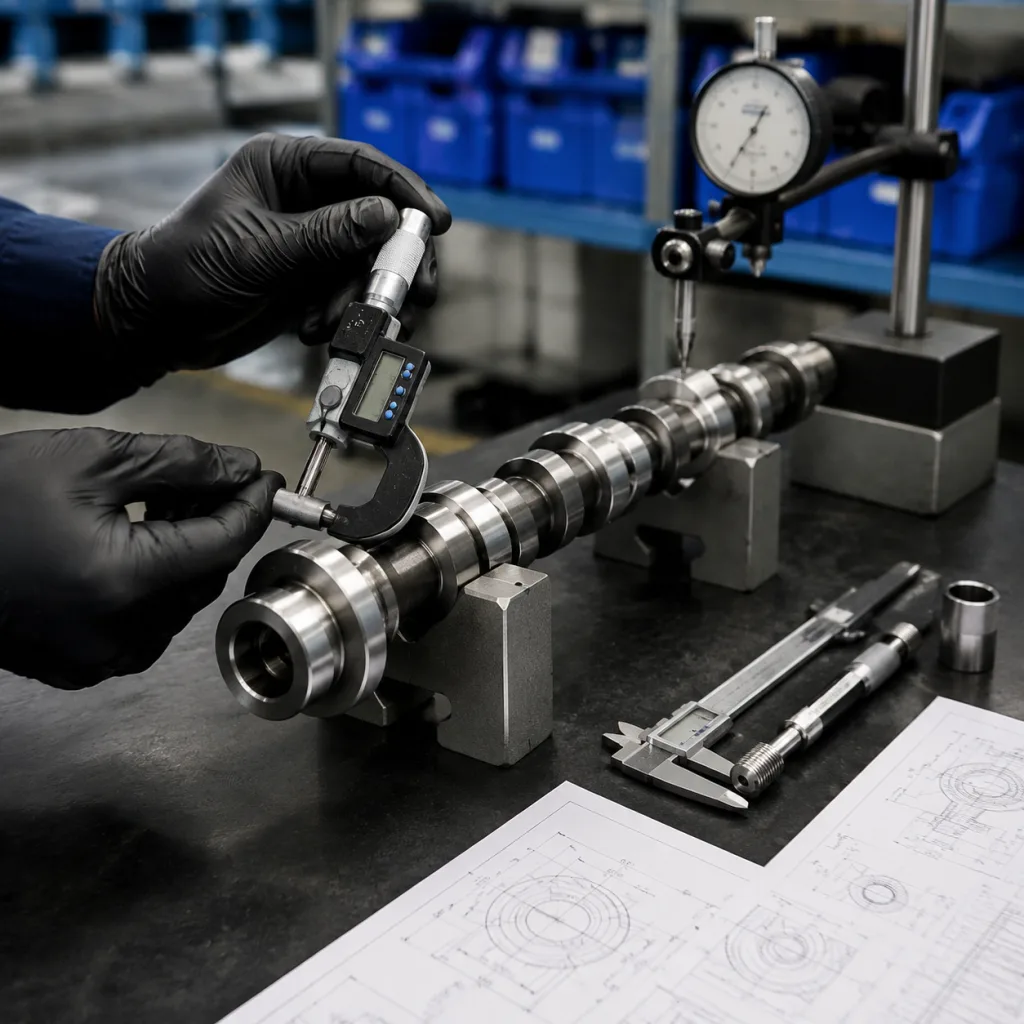
Total indicated runout
typically <=0.02-0.04 mm
Between-centres inspection with dial indicator
Lobe lift deviation
typically <=0.02-0.03 mm
Cam profile measuring machine
Lobe phase angle
commonly within +/-0.25 degrees to +/-0.5 degrees cam angle
Optical or contact profile scan
Journal roughness
often Ra 0.2-0.4 um
Profilometer per ISO 4287/4288
Lobe roughness after grinding/superfinish
often Ra 0.2-0.6 um depending on design
Profilometer per ISO 4287/4288
Lobe hardness
commonly about 55-62 HRC where hardened steel/cast-iron lobe surfaces apply
Hardness test, often per ISO 6508-1
</tr></thead><tbody> </tbody></table>*Values vary by engine family, base material, and drawing issue level. Final acceptance must follow the approved drawing or validated reverse-engineered specification.
These figures are best treated as realistic control examples, not universal release limits. What matters is whether the supplier can show how each critical characteristic is defined, measured, and controlled.
What buyers should request as proof
First-article inspection report with ballooned drawing references
Cam profile measurement output showing lift curve and phasing for representative intake/exhaust lobes
Runout report taken between centres or by an equivalent validated method
Surface roughness report for journals, lobes, and thrust surfaces where specified
Hardness report with test method and test location clearly stated
Metallographic evidence of case depth, chilled layer, or induction pattern where relevant
Batch traceability linking finished part to raw material, heat-treatment lot, and final grinding records
Why these checks matter in service
Journal size and finish influence oil-film thickness, head-bore compatibility, and seizure risk during poor lubrication events
Runout affects rotational stability and can create uneven loading across lobes and journals
Lobe lift and flank form directly affect valve motion, breathing, tappet velocity, and contact stress
Hardness and case condition influence wear resistance during boundary lubrication, especially at cold start
Surface integrity matters because grinding burn, tensile residual stress, or smeared material can shorten fatigue life even if dimensions pass inspection
A capable supplier should also be able to explain its control plan clearly. For repeat orders, many buyers request periodic capability data on critical characteristics such as lobe phase, runout, and journal diameter because those features are closely tied to installation success and field durability. On stable programmes, critical dimensions are often monitored to Cp/Cpk targets agreed between buyer and supplier, commonly with Cpk >=1.33 for routine process release where volumes justify it.
In short, OE-equivalent performance for aftermarket camshafts should be judged by measurable functional output: correct geometry, repeatable metallurgy, and stable process control across production batches.
Material and Follower Compatibility
Passenger-car camshafts in this segment are typically produced either from chilled cast iron or from alloy steel, depending on contact load, follower type, torsional requirements, and the chosen hardening route. The correct choice depends on the original design and the expected duty cycle. When sourcing a camshaft Opel aftermarket replacement, buyers should look at the material system together with the mating valve-train components, not as an isolated part decision.
Chilled cast iron is common where the lobe surface needs a hard wear layer formed during casting, usually with a comparatively tough core underneath. Alloy steel is more common where induction hardening or other controlled heat-treatment routes are used, especially in designs that demand tighter control of hardened depth and torsional strength. In both cases, buyers should verify more than surface hardness. Core properties and microstructure matter too, because excessive brittleness raises fracture risk, while insufficient hardening can speed up lobe and follower wear.
Material questions to raise with the supplier
Is the supplied part cast iron or steel, and does that match the original design intent?
What grade or chemistry family is used, and is there incoming material verification?
What hardening route is used: chilled structure, induction hardening, or another controlled process?
What hardness range applies to lobes, journals, and thrust surfaces where specified?
If induction hardened, what is the effective case depth at the defined hardness threshold?
Is there metallographic verification of the chilled layer, case depth, or microstructure?
What controls are used to prevent decarburisation, grinding burn, hardness taper, or excessive retained austenite where relevant?
For hardened lobe surfaces, many buyers expect explicit hardness and depth data rather than a simple pass/fail statement. Depending on design, the hardened zone may be checked by microhardness traverse or metallographic sectioning. The exact criterion is drawing-specific, but the basic point is straightforward: a lobe can meet nominal surface hardness and still fail early if the hardened layer is too shallow or structurally inconsistent.
Why follower compatibility matters
Valve-train compatibility is part of the replacement decision because the camshaft never works alone. Contact stress, lubrication regime, and wear behaviour depend on the mating follower style and condition. Flat tappet, roller follower, finger follower, and hydraulic lash-adjusted systems all place different demands on lobe taper, crown, surface finish, and material pairings.
Common aftermarket risk points include:
Reusing worn followers or tappets against a new camshaft
Installing a correct camshaft with incompatible or poor-quality lifters
Surface finish mismatch that delays bedding-in or increases start-up scuffing
Ignoring known engine-family wear patterns in hydraulic lash adjusters or rocker hardware
Failing to replace associated bolts, seals, or phaser fasteners where single-use hardware applies
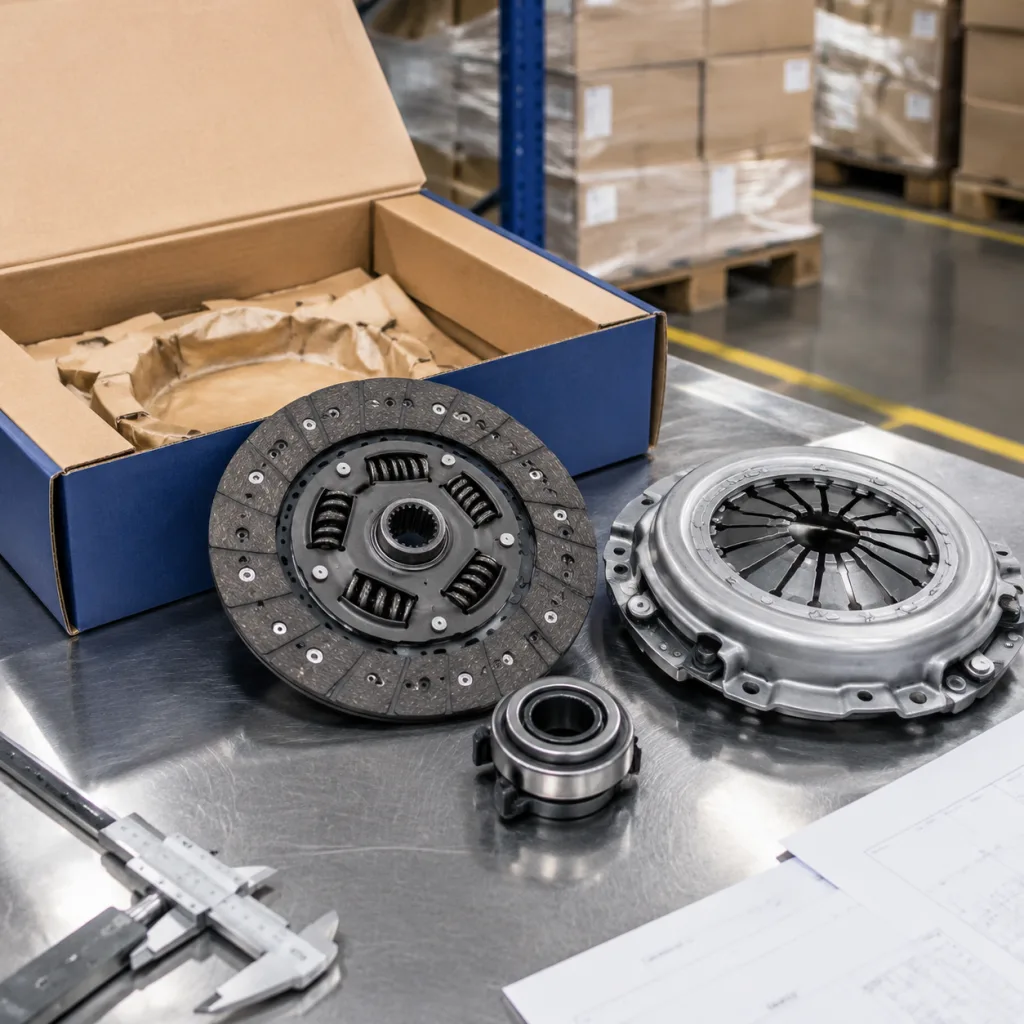
If the engine family has known follower or hydraulic lifter wear patterns, sourcing a matched service kit can reduce scuffing and early warranty claims. This is especially relevant where workshops replace only the visibly damaged part and leave compromised mating components in service. From a buyer's perspective, a bundled service solution often produces better field results than a single-component sale, even if the unit cost is higher.
For that reason, procurement teams should review whether the aftermarket programme includes related components such as followers, hydraulic lifters, seals, or fitting hardware where needed. Relevant product groupings can be reviewed in our catalog and the broader engine components range.
Documents That Matter to Import Buyers
Certification alone does not prove that a camshaft matches the application, but it does indicate whether the supplier works within a structured process-control system. For import buyers, the practical baseline is a documented system aligned with ISO 9001:2015 and, where relevant, an automotive-oriented system such as IATF 16949 somewhere in the manufacturing chain. For a camshaft Opel aftermarket replacement programme, documentation is what turns a product claim into a controlled purchasing decision.
Importers, distributors, and private-label brand owners usually need more than a generic certificate of conformity. They need records that support customs clearance, internal quality approval, warranty investigation, and complaint containment. Without that paper trail, it becomes much harder to isolate a suspect batch or show that the supplied part met the agreed specification at the time of shipment.
Document pack to request
Material certificate, cast number, heat number, or equivalent raw-material traceability for each batch
Heat-treatment or hardening records linked to finished batch ID
Dimensional report on critical characteristics from first article or pilot run
Surface finish and hardness data for journals and lobes
Metallographic report where chilled layer or induction case confirmation is part of approval
REACH (EC) No 1907/2006 declaration where required for the destination market
Packaging specification covering VCI or oil protection, separators, end caps, and outer-carton labelling
Part marking format, including laser mark, date code, lot code, or label content for warehouse traceability
Nonconformance and corrective-action procedure for field issues, including containment timing and 8D response expectations
What each document helps control
Material and heat records support trace-back if wear, fracture, or hardness variation is reported
Dimensional reports confirm that the approved sample actually matches the quoted specification
Hardness and metallographic data validate wear-critical surfaces and hardened-zone consistency
Packaging specifications reduce corrosion and impact damage during sea freight, storage, and cross-docking
Marking and label standards support FIFO, lot segregation, and claim isolation in importer warehouses
Where regional catalogues differ, buyers often need tailored packing, laser marking, or kit composition. That is typically handled through custom manufacturing. One market may require multilingual labels and a specific internal barcode structure, while another may prioritise stronger corrosion protection for longer storage cycles or humid transit lanes. These are not trivial administrative details; they affect stock accuracy, claims handling, and resale efficiency.
Process and audit details should also be reviewed against the supplier's quality system before nomination. A strong supplier should be able to show more than certificates. It should also explain record-retention periods, batch-definition logic, quarantine procedure, and how customer-specific requirements are built into routine production and shipment release.
Sample Approval and Pilot-Order Controls
Sample approval should cover both dimensional evidence and a physical receiving inspection. Returns on camshaft programmes are often traced back to avoidable basics: burrs at oil holes, weak preservative coverage, mixed intake/exhaust batches, or lobe-edge damage from poor packaging. A structured pilot process is especially important for a camshaft Opel aftermarket replacement line because early field failures may first be blamed on fitment when the real cause is transit damage, batch mix-up, or incomplete application control.
At the sample stage, buyers should answer two questions at once: 1. Does the camshaft match the approved technical specification? 2. Can the supplier deliver that same condition consistently through normal packaging, shipping, and handling?
Incoming sample checklist
Verify engine-code mapping, OE cross-reference, and revision status on the packing list and label
Check corrosion protection, end-cap retention, separator strength, and carton integrity after handling simulation
Inspect lobes and journals for chatter marks, scoring, burn discoloration, denting, or edge damage
Confirm sensor-trigger features, keyway orientation, thrust faces, and mounting interfaces against the approved drawing
Review lot-code and traceability label format so warehouse staff can segregate batches correctly
Confirm that intake and exhaust parts are unmistakably differentiated where both are supplied
Check preservative cleanliness so parts do not arrive dry, contaminated, or excessively oiled
Measure a reduced set of incoming criticals such as overall length, key journals, and obvious sensor-related geometry
Recommended pilot-order controls
Limit the first order to a manageable quantity tied to known customer accounts or selected workshops
Track installation feedback by engine code, workshop location, and any related replaced components such as lifters
Retain one sealed reference unit from the delivered batch for future comparison
Record fitment questions, DTC reports, oil-pressure concerns, and early noise complaints within the first service window
Review carton durability after actual transport, warehousing, and picking activity
Confirm replenishment lead time, batch consistency, and document completeness before range expansion
For distributors and repair chains, a controlled pilot order is usually the right first step. It gives the buyer time to gather fitment feedback, monitor warranty signals, and assess packaging performance before a full-range rollout. This matters because some issues only show up after the part has moved through the whole supply chain: export packing, container transit, warehouse decanting, workshop handling, and installation on engines with very different service histories.
A good pilot programme should also define acceptance rules in advance. Buyers should know what counts as cosmetic only, what triggers containment, and what evidence is required if a claim is raised. In many programmes, that includes photo standards, retained-sample rules, and a requirement to report suspected defects by lot code rather than by sales invoice alone. That discipline helps prevent disputes later, especially when the buyer is building a private-label or multi-country aftermarket range.
Once the sample and pilot stages show stable results, the buyer can move to broader release with more confidence in fitment accuracy, packaging robustness, and batch traceability. Buyers who need private label supply or a drawing review can request a quote once the target engine codes and annual volumes are defined.
Frequently asked questions
Use engine code first, then confirm displacement, power output, build date, fuel type, valve-train layout, and any variable timing features. Model name alone is not precise enough for release approval because timing geometry and sensor-target details can change within the same vehicle line.
Usually not. A shared overall size does not guarantee identical lobe timing, trigger geometry, thrust design, or phaser interface. Consolidation is only safe when the drawing, revision level, and validation records are identical.
At minimum, request a dimensional report, hardness results, batch traceability, material or heat-number records, and a REACH declaration where needed. For hardened camshafts, metallographic or case/chilled-layer evidence is also useful. Packaging specifications are important as well for transit protection and warehouse control.
If you are evaluating a replacement camshaft programme for Opel or Vauxhall applications, send the engine code, target volumes, and document requirements to [request a quote](/contact.html)