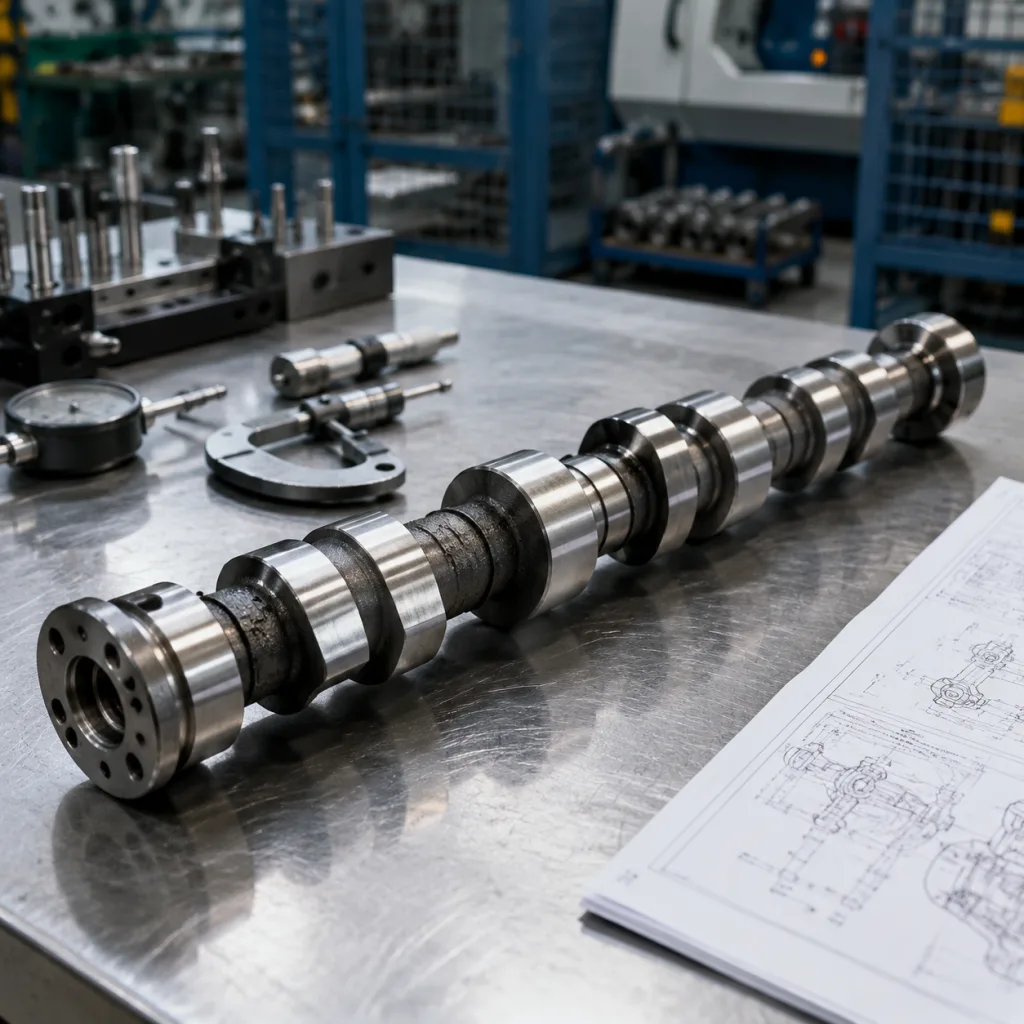
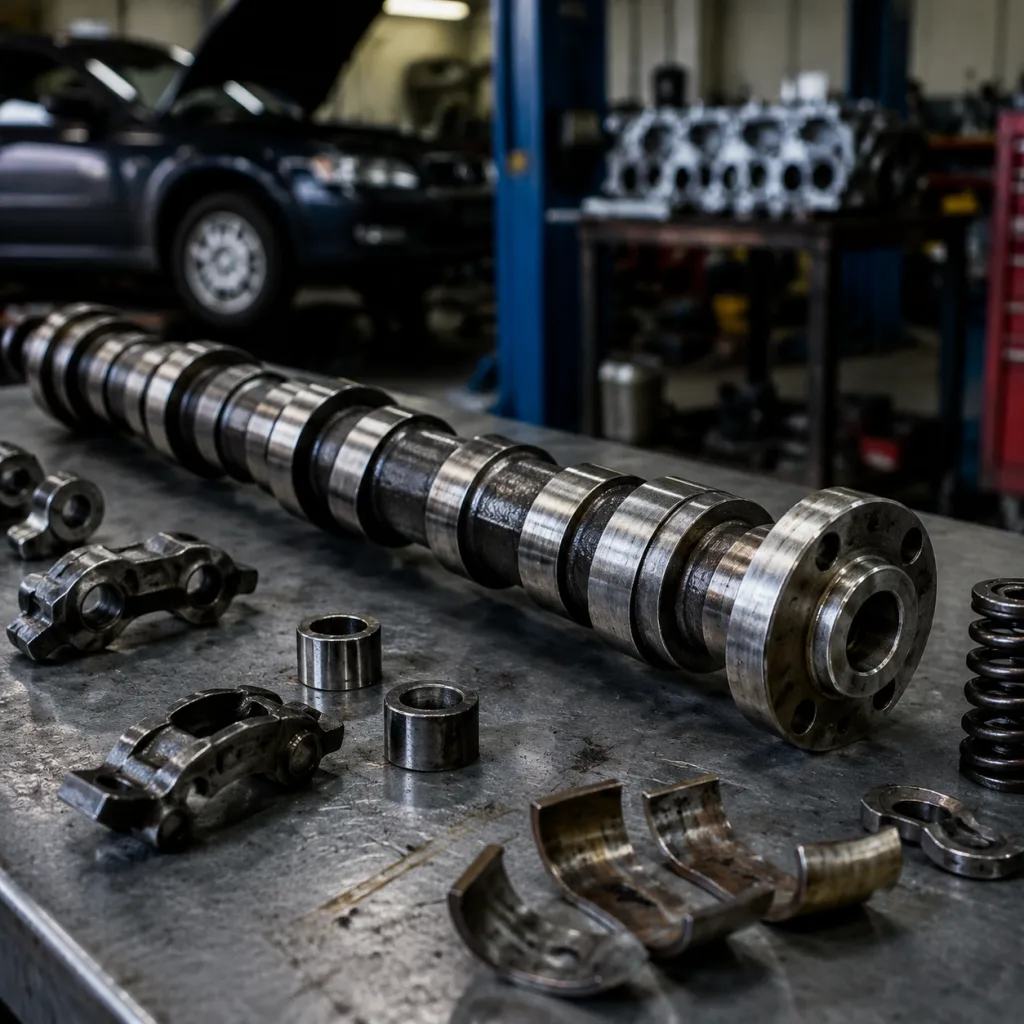
Camshaft for Nissan Sentra Replacement Sourcing Guide
A camshaft for Nissan Sentra replacement programme should not start with a catalogue photo. It should start with the engine code, cam position, timing interface, lobe geometry and the commercial reality of how the SKU will be stocked, labelled and warranted. For distributors, repair chains and engine rebuild suppliers, the risk is simple: a part can look correct and still create noise, cam/crank correlation faults, oil leaks, rapid follower wear or repeat returns.
Camshafts work under repeated load. Lobe profile controls valve lift and timing; journal size and finish control oil film; runout and phase angle affect installation and engine behaviour. This guide gives B2B buyers a practical sourcing framework for replacement camshafts for Nissan Sentra applications: what to confirm first, which tolerances matter, where failures usually start, how to validate a new SKU, and how to structure RFQs without inviting mixed fitment or undocumented substitutions.
Driventus manufactures engine and powertrain components in Taizhou, Zhejiang, under IATF 16949:2016 and ISO 9001:2015 controls for B2B aftermarket and OEM-service buyers. Driventus is an independent aftermarket manufacturer; brand names are referenced for fitment only.
Start With the Fitment Decision, Not the Vehicle Name
“Nissan Sentra” is not enough information for a controlled sourcing decision. Sentra applications vary by market, production year, engine family and valve-train layout. Before quoting or sampling a camshaft for Nissan Sentra replacement, the buyer should separate confirmed applications from assumptions.
The first decision is whether the programme is replacing one high-runner SKU, an intake/exhaust pair, or a wider catalogue range. That choice affects sample approval, MOQ, packaging artwork, stock control and warranty exposure.
Use this fitment decision path before releasing an RFQ:
1. Confirm the destination market and production-year range, such as 2007–2012, 2013–2019 or 2020+ Sentra coverage by local catalogue. 2. Match the engine displacement and engine code, supported by VIN sample, OE reference, TecDoc-style cross-reference or an approved physical sample. 3. Identify the camshaft position: intake, exhaust, paired set, left/right or bank position if the buyer’s catalogue uses that logic. 4. Check the timing drive interface: chain sprocket, gear, dowel, keyway, phaser connection, bolt thread and tightening face. 5. Verify the cam position sensor trigger: tooth count, angular orientation, profile and inspection datum. 6. Decide the commercial launch scope: core high-runner SKUs first, slower references later, or a full range launch only after sample validation.
For replacement programmes, the commercial objective is OE-equivalent function, not vehicle-maker approval. Driventus does not claim approval or endorsement by any vehicle manufacturer. Fitment references are used only to identify dimensional and functional compatibility.
A practical launch often starts with 2–5 core SKUs, approved through samples and first-lot inspection. Slower references can follow after 3–6 months of sell-through and return data. MOQ is usually shaped by casting or forging batch size, machining fixture setup, heat-treatment lot size and packaging print run, so buyers should ask whether MOQ is per SKU, per position, or combined across an intake/exhaust set.
Procurement teams can start from our catalog and the engine component range at /products/engine-components.html, then request dimensional confirmation against their sample, drawing or approved reference.
The Dimensions That Decide Fit, Timing and Warranty Risk
Most camshaft sourcing mistakes are small on paper and expensive in the field. A slight journal deviation can change oil clearance. A sensor trigger error can set a cam/crank correlation code. A lobe profile mismatch can create rough running even when the part installs without resistance.
Before approving a new SKU, request a drawing, sample comparison or first-article inspection report covering the features that control installation, timing and lubrication.
Feature
Procurement check
Practical target to confirm
Overall length
Match reference sample or drawing
Common tolerance ±0.10–0.20 mm, depending on end-thrust design
Journal diameter
Control to drawing tolerance
Usually held within ±0.01–0.02 mm; confirm oil-clearance calculation with bearing bore
Lobe lift
Verify by profile inspection
Lift deviation commonly controlled within ±0.03–0.05 mm from approved master
Base circle
Match to follower system
Confirm diameter and roundness to prevent lash or hydraulic adjuster issues
Lobe phase angle
Check against datum
Ask for angular tolerance, commonly ±0.5°–1.0° cam angle for replacement programmes
Sprocket or phaser interface
Inspect tooth, dowel and bolt features
Confirm dowel diameter, bolt thread, face flatness and phaser seating surface
Sensor trigger feature
Verify position and profile
Confirm tooth width, height and angular datum to avoid cam/crank correlation faults
Runout
Measure on journals
Specify total indicated runout, often ≤0.03–0.05 mm depending on shaft length
Seal journal
Measure diameter and finish
Confirm size, lead-in chamfer and Ra target to prevent oil leakage
Thrust face or end groove
Inspect width and location
Controls end-float, cover clearance and axial oil control
</tr></thead><tbody> </tbody></table>Do not accept inspection records that show only “OK” or “pass.” A useful report should list the drawing revision, measuring equipment, measured values and sampling basis. For first article approval, request 3–5 pieces measured fully. For mass production, agree AQL or control-plan frequency, such as 5 pieces per lot for full dimensional inspection and 100% visual inspection for handling damage, burrs and rust.
For aftermarket programmes, Driventus can work from buyer drawings, samples or validated reference parts. Where private-label or non-standard packing is required, custom manufacturing can include drawing review, PPAP-style documentation by agreement, and production part approval within the customer’s quality process.
Material and Surface Spec: Where Cheap Parts Usually Fail
A replacement camshaft can be chilled cast iron, ductile iron, forged steel or an assembled steel design. The correct route depends on the original engine design, follower contact system and load case. Flat tappets, roller followers and direct-acting buckets do not stress the lobe surface in the same way.
This is where low-cost sourcing often hides risk. A supplier may quote the right shape but not the right surface durability. Ask for measurable limits, not broad claims.
Key specification points include:
Material grade: matched to the engine family’s load, lubrication and wear requirements, with mill certificate or foundry batch record available by lot.
Surface hardness: specified at lobes and journals, with test method and inspection frequency defined in the control plan; common replacement targets may sit around 50–60 HRC for hardened steel lobes or equivalent chilled-iron hardness by the agreed scale.
Case depth or chilled layer: controlled where applicable to reduce early lobe wear after break-in; buyers should request minimum effective depth, not only surface hardness.
Surface roughness: managed on journals and lobes to support stable oil-film formation; practical RFQ targets often include journal Ra ≤0.4 µm and lobe working surface Ra ≤0.8 µm, subject to drawing confirmation.
Straightness and runout: inspected after machining and heat treatment, because heat distortion can move an otherwise correct profile outside the assembly envelope.
Cleanliness: controlled before packing to reduce abrasive contamination in the engine oil system; parts should be dry, burr-free and protected with compatible anti-rust oil or VCI packing.
The drawing or inspection plan should also state rework rules. If the supplier changes casting source, steel grade, heat-treatment route or grinding process, that should trigger customer notification before shipment. Silent process changes create warranty risk because the next batch may no longer behave like the approved sample.
Driventus applies process controls within its quality system, aligned with IATF 16949:2016 and ISO 9001:2015. Material compliance requirements such as REACH (EC) No 1907/2006 can be addressed for EU-bound shipments when specified in the purchase contract.
Three Approval Gates Before Mass Shipment
A replacement camshaft should be approved in stages. One good sample is not enough. The buyer needs proof that the supplier can repeat the geometry, surface condition and packaging protection over a production lot.
Use three gates for a new camshaft for Nissan Sentra replacement SKU:
Gate 1: engineering sample. Confirm fitment, dimensions, lobe profile, journal size, phase angle, sensor trigger position, seal surface and timing interface. This gate answers one question: is the design correct?
Gate 2: pilot lot. Run 20–50 pieces or one machining batch where practical. Check repeatability, visual quality, corrosion protection and packing method. This gate answers a different question: can the process repeat the approved sample?
Gate 3: first mass-production shipment. Require batch inspection records, material traceability and carton photos before loading. This gate confirms that the approved process was used for saleable stock.
Typical validation and production checks include:
Incoming material certificate review, with heat number or foundry lot linked to production batch
Chemical composition or material grade confirmation, either by certificate or periodic spectrometer check
Dimensional inspection against drawing, including journals, lobes, thrust features, seal area and timing interfaces
Lobe profile measurement using cam profile equipment or an equivalent fixture, reported against a master curve or approved reference sample
Surface hardness testing at defined locations, with indentation placed outside critical running tracks where possible
Runout inspection between centres or on a V-block fixture, with fixture method stated on the report
Surface roughness inspection on journals, lobes and seal diameter using calibrated equipment
Visual inspection for casting defects, machining marks, burrs, dents, rust and handling damage
Salt-spray or corrosion-protection verification where the logistics route requires it, especially for ocean freight longer than 30 days
Packaging drop or transport evaluation for long export shipments, including inner protection against lobe-to-lobe contact
For engine components, production discipline matters as much as the first-article result. A capable supplier should explain the control plan, inspection frequency, nonconforming product handling and traceability method for the specific part family. Under IATF 16949:2016, special characteristics and process controls should be defined where the customer or application requires them. ISO 9001:2015 supports documented quality management, corrective action and continual improvement, but buyers should still audit inspection records for the relevant camshaft programme.
If Returns Start, Check These Failure Modes First
When a camshaft replacement programme generates field returns, the camshaft is not always the root cause. Oil starvation, blocked galleries, worn followers, timing-chain wear, incorrect installation and poor break-in can damage a new part quickly. Procurement can still reduce risk by buying parts with verified geometry, controlled surface condition and clear application data.
Use the return pattern to guide the investigation:
Pair technical bulletin with inspection of followers, oil pressure and oil supply before warranty approval
Misfire or cam correlation fault
Sensor trigger mismatch or timing interface deviation
Verify trigger feature, datum relationship and phaser seating before launch
Rapid lobe wear
Material, hardness, lubrication, follower mismatch or break-in problem
Confirm hardness data, surface roughness and installation guidance; recommend follower inspection or replacement where required
Oil leakage at cam seal
Seal journal diameter, chamfer or surface finish mismatch
Inspect seal journal size, Ra and lead-in chamfer on first article and batch reports
Timing cover interference
Overall length, thrust face or phaser interface mismatch
Measure full assembly envelope against reference, including bolt head and phaser position
Repeat returns from one workshop
Installation process, oil grade or cleaning issue
Use batch code review to separate product issue from service process issue
</tr></thead><tbody> </tbody></table>Warranty control should be designed before the first shipment. Define the return evidence package: photos of the part, engine code, mileage after installation, oil condition, related replaced parts, fault codes and batch label. Without that data, suppliers and distributors cannot separate a dimensional defect from installation contamination or a worn follower reused with a new camshaft.
For multi-location repair chains, each part should ship with clear application data and handling instructions. For importers and wholesalers, the priority is to prevent mixed stock, uncontrolled substitutions and undocumented supplier changes. Barcode labels, batch codes and carton-level identification help isolate suspect stock quickly if return analysis is required.
RFQ Checklist: What to Lock Before Price Negotiation
Price is only useful after the technical and commercial package is clear. If the RFQ is vague, suppliers may quote different assumptions: different material routes, inspection levels, packing formats, MOQ logic or SKU combinations.
Lock these items before comparing offers:
Confirm engine code, market and production-year range, supported by OE reference, TecDoc-style cross-reference or sample.
Identify intake, exhaust or paired-set requirement, and avoid combining positions under one SKU unless the parts are physically identical.
Request drawing, sample comparison or dimensional report, including lobe lift, journal size, phase angle, runout, seal diameter and sensor trigger data.
Review lobe profile, journal size, runout and sensor trigger controls, with numeric tolerances shown on the drawing or control plan.
Define inspection records required with each batch, such as material certificate, dimensional report, hardness report and packing photos.
Confirm neutral or private-label packaging specification, including box size, label format, barcode, country-of-origin marking and language requirements.
Check export carton strength, corrosion protection, palletisation, maximum carton weight and mixed-SKU packing rules.
Agree MOQ, lead time, payment terms and forecast review process before tooling, sample or artwork work begins.
Confirm destination-market compliance needs, including REACH (EC) No 1907/2006 where applicable.
Treat MOQ, price and lead time as connected variables. A low MOQ may use existing raw material and standard neutral packing but carry a higher unit cost. A lower unit price usually needs a larger machining batch, stable quarterly forecast and simplified SKU mix. Private-label packaging can add 2–4 weeks for artwork approval, box printing and pre-shipment confirmation if the packing is new.
A practical RFQ table should ask suppliers to quote at several volume breaks, for example 100, 300, 500 and 1,000 pieces per SKU or per intake/exhaust set. Ask for separate pricing for tooling or fixture cost, sample cost, production unit price, neutral packing, private-label packing and spare packaging labels. For planning, many buyers use 30–45 days for sample preparation after data confirmation and 45–60 days for first mass production after sample approval, subject to material route and order size.
Driventus exports engine and powertrain components to more than 60 countries. For camshaft programmes, sourcing discussions usually start with application data, target volume, sample availability and documentation expectations. Buyers can use request a quote to share the application list and packaging requirement for review.
Frequently asked questions
Provide engine code, model-year range, destination market, intake or exhaust position, OE reference or cross-reference, sample or drawing if available, annual volume, first order quantity and packaging requirement. If the programme includes multiple SKUs, include the full application list and forecast split.
Yes. Private-label packing can be reviewed for B2B programmes, subject to MOQ, artwork requirements and destination-market rules. Buyers should allow extra lead time for artwork approval, label confirmation and first-article packing review. Driventus is an independent aftermarket manufacturer; brand names are referenced for fitment only.
No. OE-equivalent means the replacement part is designed to match the relevant functional and dimensional requirements for the stated application. It does not mean approval, endorsement or supply status from any vehicle manufacturer.
For camshaft sourcing, send the application list, samples or drawings, target volume, target MOQ, required inspection records and packing requirement. Driventus will review feasibility and documentation needs at /contact.html