Camshaft Mini OEM Supplier: What Buyers Should Verify
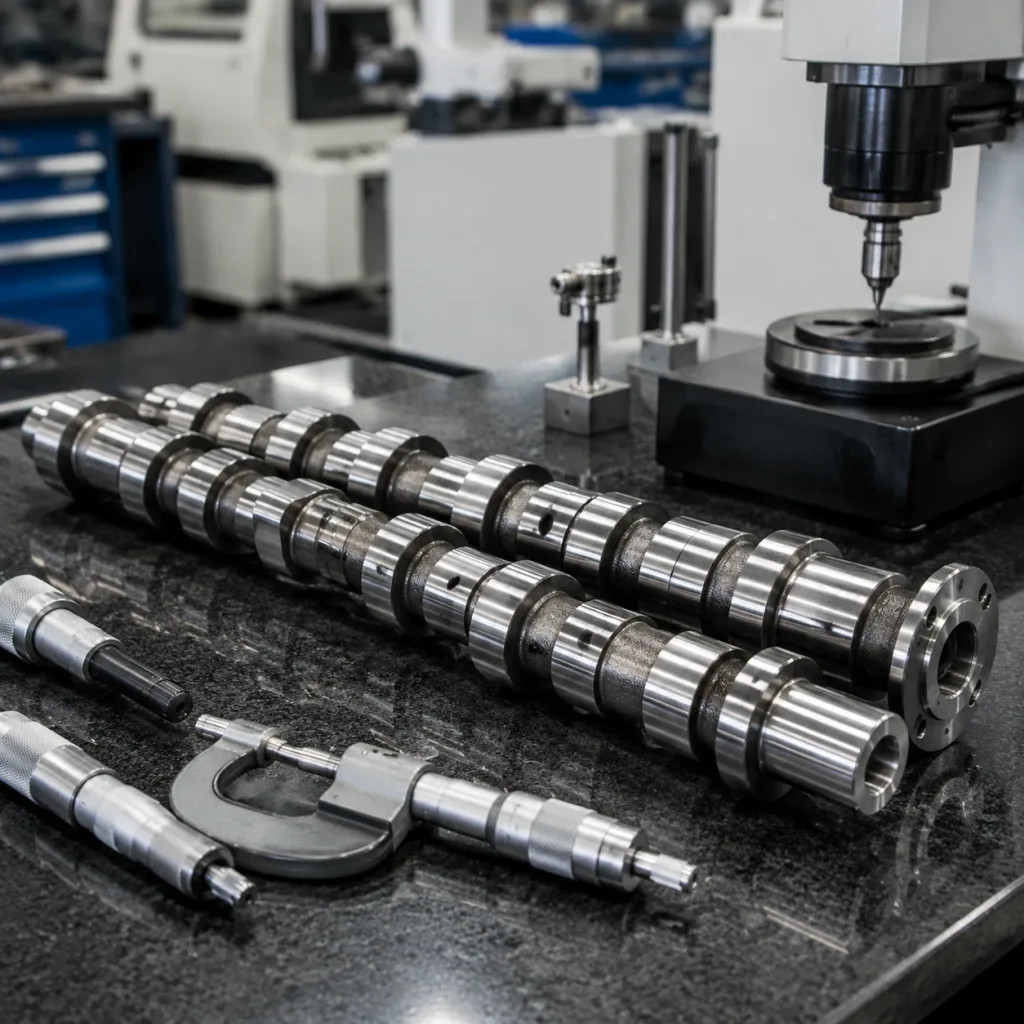
For procurement teams, choosing a camshaft mini OEM supplier is a manufacturing-risk decision, not a simple parts purchase. The supplier must hold lobe geometry, journal size, surface finish, heat treatment, and material consistency across repeat batches. Mini camshafts are commonly used in compact engines, small-displacement platforms, specialist equipment, and niche rebuild programmes, where buyers often need practical MOQ, responsive sampling, and documented process control rather than opportunistic stock supply. The central question is whether the factory can manufacture to drawing, validate critical characteristics, and support repeat orders without drift in lobe profile, runout, hardness, or packaging quality. Driventus is an independent aftermarket manufacturer; brand names are referenced for fitment only. The sections below outline what sourcing managers should verify before approving a supplier for OEM-style or aftermarket supply, including certification, inspection discipline, traceability, and commercial terms suited to international procurement.
What buyers should mean by mini camshaft supply
A mini camshaft programme normally sits between standard aftermarket replacement and fully bespoke OEM development. The part may be shorter in overall length, use smaller journal diameters, carry a narrow lobe arrangement, or serve an engine family with limited annual demand. Those details change the sourcing logic: the winning supplier is usually the one that can combine precision manufacturing with stable small-to-medium batch support.
For procurement, the first filter is whether the factory can control the dimensions and features that affect valve timing, oil-film stability, and wear life. Typical control points include lobe lift, base circle, journal diameter, lobe separation, runout, surface roughness, and hardness. A supplier that can only quote a nominal size or provide a generic stock photo is not ready for controlled OEM-style purchasing.
Buyers should also define what “mini” means in the RFQ. Include the drawing revision, material requirement, heat-treatment specification, tolerance class, expected annual volume, packing standard, and any fitment or validation constraints. Clear input reduces sample loops and helps the supplier quote tooling, inspection, and lead time accurately.
Typical sourcing requirements
- Drawing-based manufacture with revision control
- Material certificate by heat or batch
- Hardness and case-depth records where applicable
- Lobe profile, journal, and runout inspection data
- First article approval before repeat production
- Packaging that prevents corrosion and impact damage
- Stable repeat-order capacity for small to medium MOQ
For a broader view of related engine parts, see our catalog and engine components.
Technical controls that matter in production
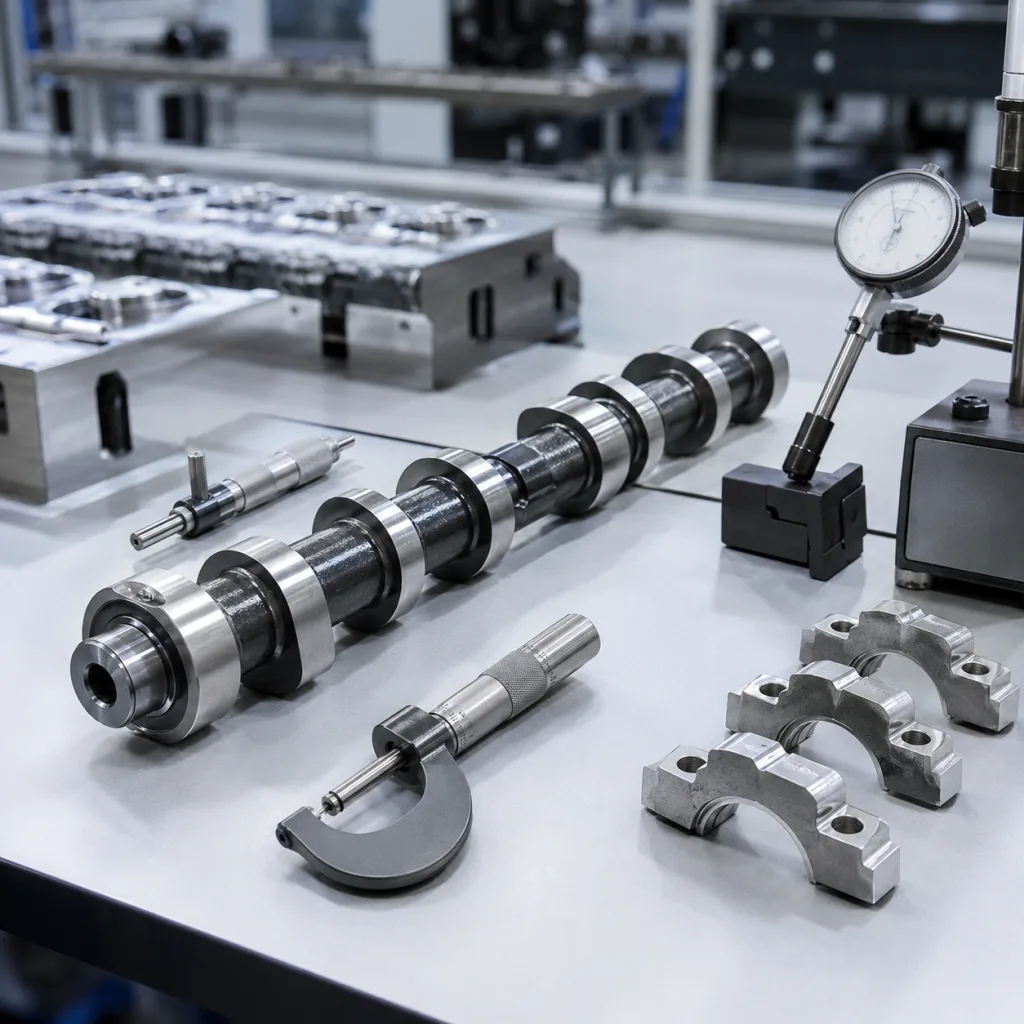
Mini camshafts are sensitive to small deviations because lobe geometry directly changes lift, duration, valve events, and engine behaviour. A part can look visually correct and still fail functional checks if the grind, datum control, or final inspection process is weak. That is why a qualified camshaft mini OEM supplier should be able to explain not only the finished dimensions, but also how those dimensions are controlled during production.
A credible supplier should describe the full route from raw bar, forging, or casting to finished shaft. That route may include rough machining, stress relief where required, heat treatment or surface hardening, straightening, finish grinding, washing, anti-corrosion protection, and final inspection. Quality-system evidence matters here. Ask for current ISO 9001:2015 documentation at minimum, and IATF 16949:2016 where the supplier operates under automotive production requirements. For EU-facing programmes, material and chemical compliance may also need to reference REACH (EC) No 1907/2006, depending on the part, coating, and customer documentation package.
Core technical checks
| Item | What to verify | Why it matters |
|---|---|---|
| Material | Alloy grade, melt route, and batch traceability | Affects fatigue strength, machinability, and wear life |
| Heat treatment | Surface hardness, core hardness, and case depth where specified | Protects lobes and journals under repeated contact stress |
| Runout | Measurement against agreed datum surfaces | Supports timing stability, bearing life, and NVH control |
| Lobe profile | Lift, flank shape, nose radius, base circle, and angular position | Determines valve motion accuracy and engine response |
| Journal finish | Diameter, cylindricity, and surface roughness | Helps maintain oil film and reduce start-up wear |
| Cleanliness | Residual abrasive, chips, oil, or washing residue | Prevents early engine damage and assembly contamination |
| Protection | Anti-rust oil, VCI packing, caps, or separators as needed | Reduces corrosion and transit damage during export |