Camshaft Renault Aftermarket Replacement: OE-Match Checks
Buying a camshaft for Renault applications is a fitment and validation problem, not just a catalogue search. The part has to match the engine code, valve timing events, journal geometry, thrust control, and any sensor-trigger feature that the ECU depends on. If those details drift, the engine may still assemble, but idle quality, emissions performance, oil clearance, and durability can move outside target. For procurement teams, the useful question is whether the replacement is functionally equivalent to the OE part and whether the supplier can prove it with measured data and traceability. Driventus is an independent aftermarket manufacturer; brand names are referenced for fitment only. We focus on dimensional match, controlled heat treatment, and documentation that supports warehouse, workshop, distributor, and remanufacturing use.
What an OE-match replacement must cover
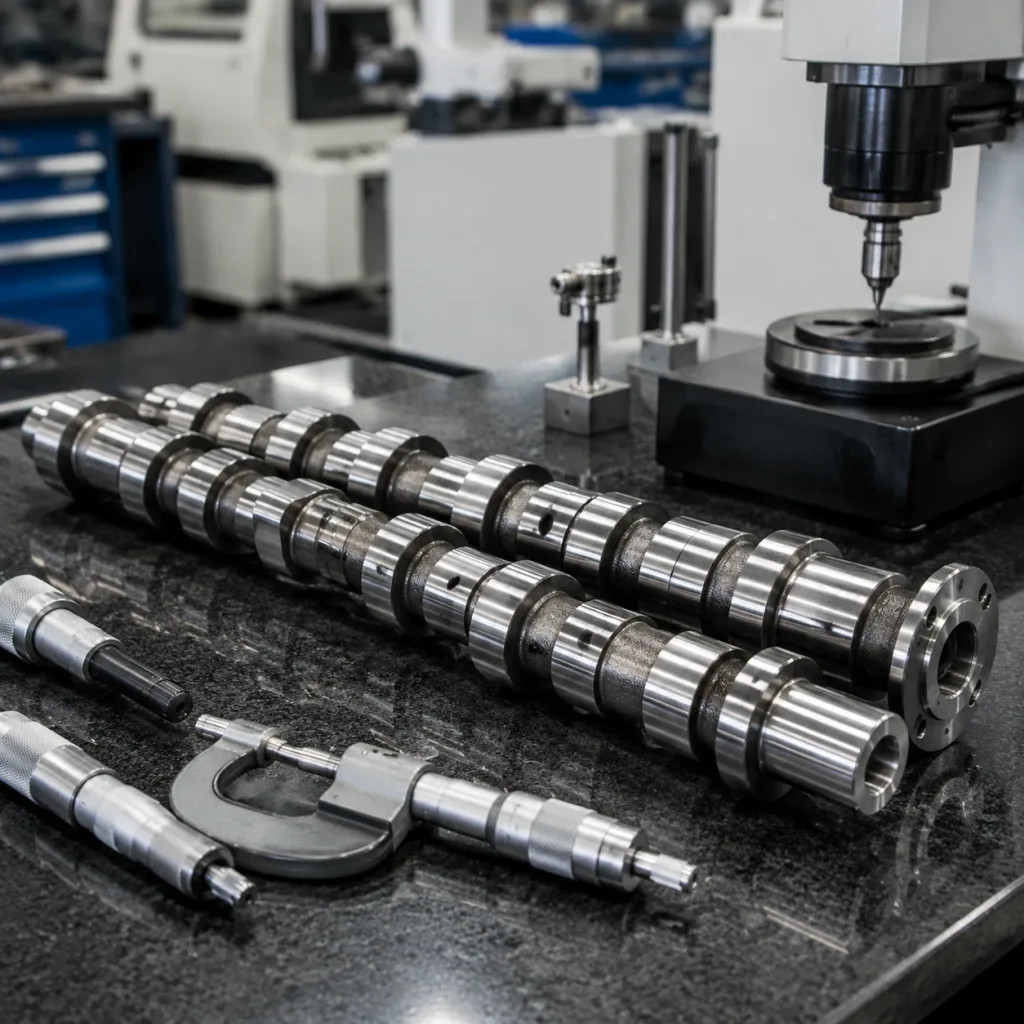
For Renault programmes, the engine family is usually a better filter than the model name. Two vehicles with the same badge can use different camshafts depending on displacement, cylinder head revision, emissions package, or variable valve timing hardware. An OE-match camshaft aftermarket replacement should be checked against the exact engine code, not just the vehicle listing. The critical comparison points are base circle, lobe lift, lobe separation, journal diameter, overall length, thrust surface location, and any drive or trigger feature on the shaft. Those details determine whether valve timing, sensor phasing, and mechanical clearances stay within the intended window.
Buyers should also treat end use as part of the fitment check. A unit destined for workshop stocking can tolerate a broader application note than a part being supplied into a reman line or a regulated distributor network. In practice, the safest sourcing process starts with the OE reference, engine code, and a verified sample or drawing set, then closes the gap with measurement rather than catalogue description alone.
Dimensions and material controls
A camshaft can look correct and still fail the job if its geometry or metallurgy is inconsistent. Dimension control starts with the hard points: journal sizes, runout, concentricity, lobe indexing, thrust location, and surface finish on the bearing and contact zones. If the engine uses hydraulic lifters, roller followers, or a variable valve timing actuator, the profile tolerance becomes even more important because small deviations can change effective valve events and noise characteristics.
Material control matters just as much. Aftermarket camshafts commonly use alloy steel or chilled/cast alternatives depending on the design and production route, but the final requirement is the same: the part must carry the expected core strength and surface hardness for the duty cycle. Buyers should request heat-treatment records, hardness readings, and, where relevant, case-depth or microstructure confirmation. That documentation helps separate a controlled replacement part from a visually similar component that may not hold up under sustained load.
Packaging and preservation are part of material control too. A machined shaft with inadequate corrosion protection can suffer scoring or pitting before it reaches the workshop, which turns a good part into a warranty risk. For distribution, the supplier should specify protective oil, wrap, carton strength, and labeling that preserves lot identity through storage and transit.
Validation and documentation
Technical validation is what turns a claimed fitment into a releaseable part. A credible camshaft programme should include dimensional inspection on key features, material certification or mill traceability where applicable, hardness testing on the finished component, and a clear lot-control system that ties the finished part back to the production batch. For camshaft Renault aftermarket replacement supply, it is also useful to confirm the sample against the intended OE reference with a comparative report rather than relying on visual match.
Documentation should be practical for the buyer, not just complete in theory. At minimum, ask for a dimensional report, material certificate, hardness data, lot traceability, packaging specification, and the revision level of the drawing or technical file that governs production. If the part is being sold into a market with compliance requirements, the supplier should also confirm the applicable regulatory declarations and keep them aligned with the shipment destination.
For larger programmes, first-article approval and periodic revalidation are the right controls. They let the buyer catch drift in tooling, heat treatment, or subcontracted finishing before the issue becomes a field failure. A supplier that can present measured data without delay usually has the process discipline needed for ongoing supply.
Sourcing routes for distributors and repair networks
Different channels need different levels of control, but the sourcing logic is the same: identify the exact engine family, confirm the OE reference or sample, and decide whether the part is stocked, built to print, or manufactured from an approved technical file. Distributors usually need stable packaging, consistent labeling, and predictable lead times. Workshops need application clarity and dependable fitment. Remanufacturers need repeatable geometry and batch-level traceability so rebuilt units remain consistent across production runs.
For network buyers, it is worth separating catalog breadth from technical depth. A wide listing can support sales coverage, but a camshaft only becomes a reliable stock item when the supplier can sustain the same dimensions, hardness, and surface quality across replenishment cycles. That is where an independent aftermarket manufacturer can add value: by producing against the needed technical target rather than merely cross-referencing a part number.
When the programme is specific to Renault, the best input package is simple: engine code, OE number if available, annual volume, destination market, and any special requirements such as sensor indexing or packaging format. With that information, the supplier can decide whether the part is suitable for standard replacement supply or whether it needs a drawing-led or sample-led manufacturing route.
Common buying mistakes
The most common mistake is treating all parts for the same model as interchangeable. Renault applications often vary by engine code, emission level, and cylinder head revision, so a camshaft that fits one version can be wrong for another. Another frequent error is buying only from a catalogue description and skipping measured confirmation. On a rotating component, a small deviation in lobe profile or thrust location can create noise, poor idle quality, or accelerated wear even if the shaft installs without issue.
A second mistake is ignoring traceability. If the supplier cannot identify the batch, the heat-treatment record, or the revision control behind the part, the buyer has limited leverage if a field issue appears later. The same applies to packaging and storage. A part that leaves the factory in good condition can still be compromised by weak corrosion protection, poor carton design, or loose labeling.
Finally, buyers sometimes under-specify the commercial side of the programme. If annual demand, destination market, and acceptance criteria are unclear, the quote may look attractive but not be usable at scale. Clear technical and logistical inputs reduce risk and shorten the path from sample to stocked item.
Frequently asked questions
It needs to be functionally and dimensionally equivalent for the target engine. Confirm lobe profile, journal geometry, thrust control, trigger indexing, and hardness before release. The manufacturing route can differ if the final fitment and performance match.
Ask for a dimensional report, material certificate, hardness data, lot traceability, and packaging specification. For regulated supply chains, also confirm REACH (EC) No 1907/2006 compliance and the agreed quality file.
Yes. Send the engine code, OE reference if available, annual volume, and destination market. We can review standard replacement supply or custom manufacturing depending on the technical file and programme size.
If you need a fitment review, sample, or volume quotation for a Renault camshaft programme, send the engine code and target annual demand through [request a quote](/contact.html).
Request a Quote