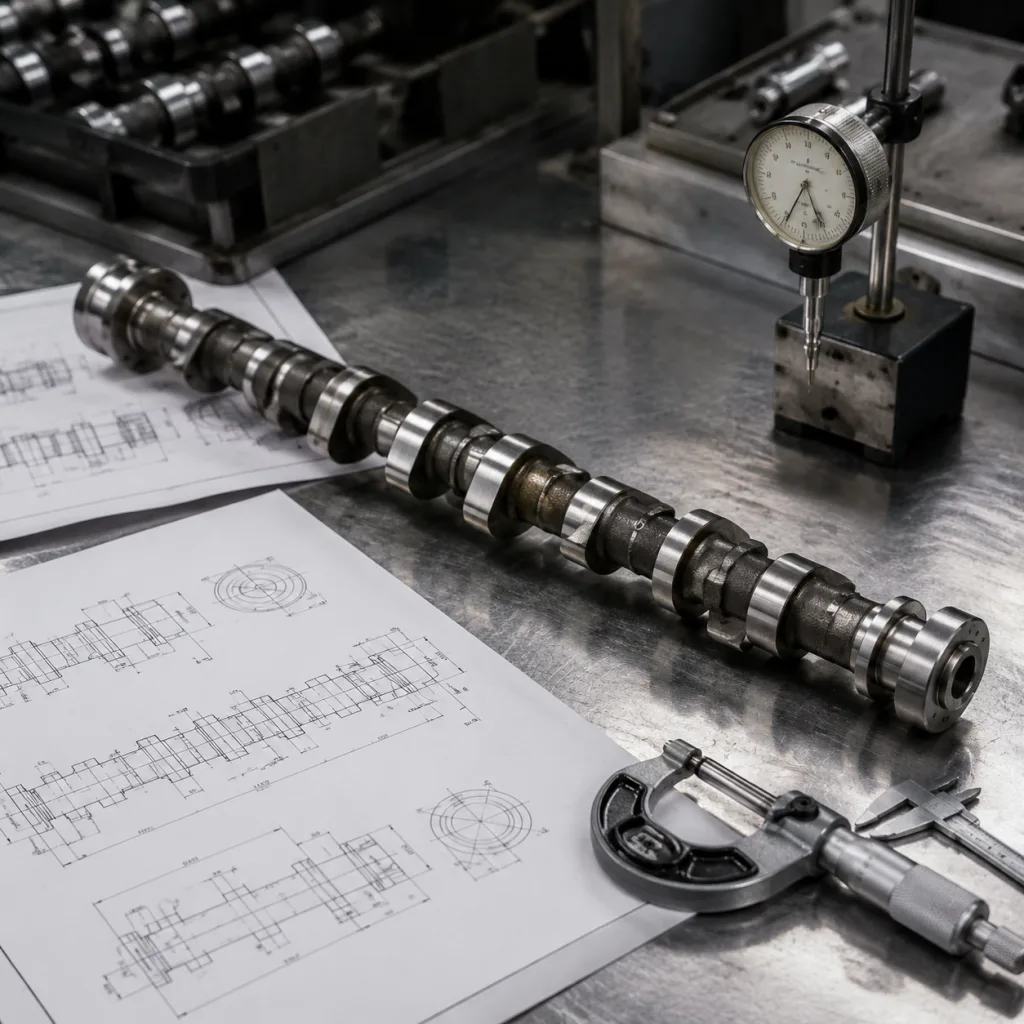
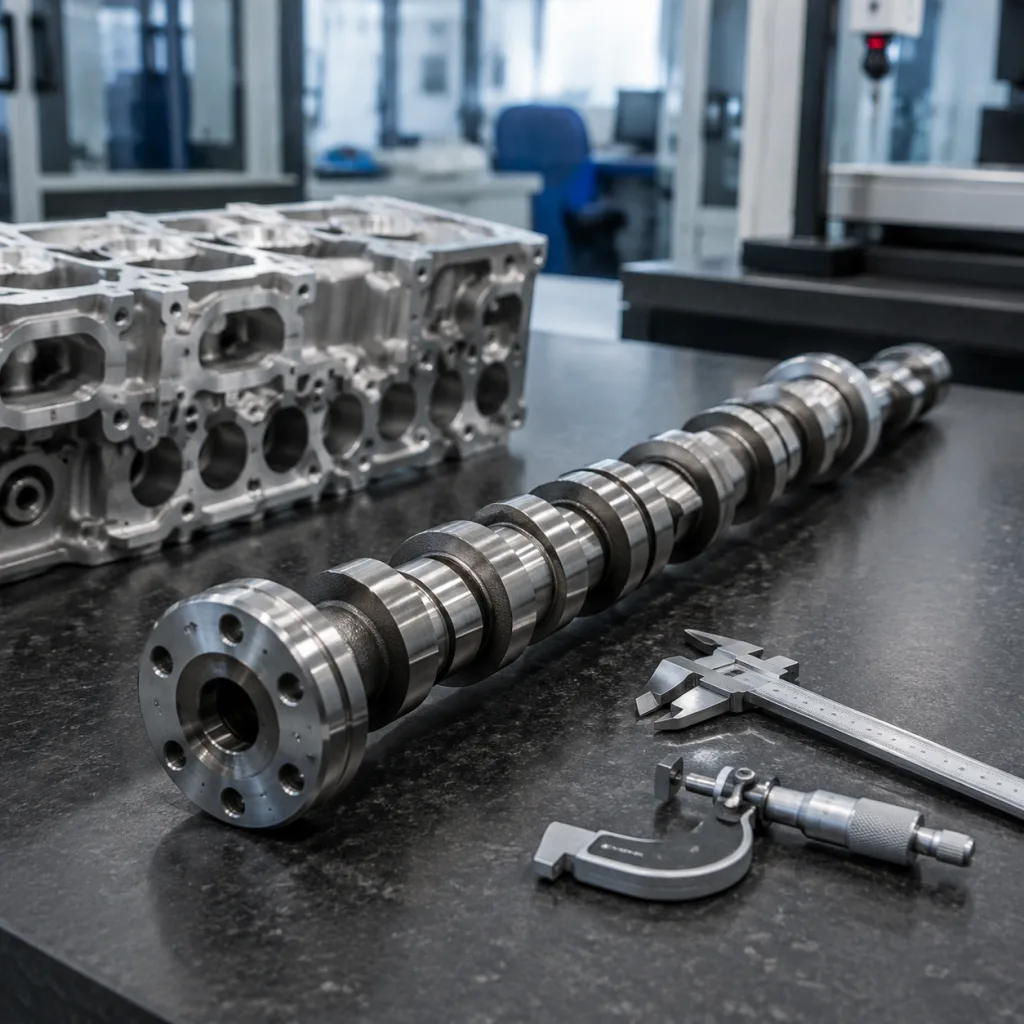
A camshaft for Toyota RAV4 aftermarket replacement must do more than fit the cylinder head. For distributors, repair-chain buyers and import managers, the part has to match OE timing geometry, journal dimensions, lobe profile, material hardness and packaging requirements expected in repeat service. Small dimensional errors can affect valve timing, oil film stability, idle quality and engine fault codes after installation. This article outlines the sourcing criteria Driventus uses when manufacturing replacement camshafts for Toyota RAV4 engine applications, including dimensional matching, metallurgy, surface treatment, validation testing and documentation. It is written for B2B buyers comparing suppliers, not for retail consumers. Driventus is an independent aftermarket manufacturer; brand names are referenced for fitment only.
Replacement Requirements for RAV4 Camshafts
A replacement camshaft should be selected by engine code, production year, valve train configuration and OE part-number cross-reference where available. For procurement teams, the first step is to confirm whether the program covers intake camshafts, exhaust camshafts, or matched sets. Variable valve timing hardware, sensor trigger geometry and thrust-face design must also be checked before purchase.
RAV4 engines have used different petrol and hybrid powertrain families across export markets. A camshaft for Toyota RAV4 aftermarket replacement cannot be treated as a single universal item. Buyers should build the sourcing file around application data and sample comparison, not model name alone.
Key matching points include:
Engine code and displacement
Intake or exhaust position
Overall length and journal count
Journal outside diameter and width
Lobe lift, base circle and phase angle
Sensor reluctor or trigger feature geometry
Thrust plate or end-face configuration
Oil feed groove and drilling location
Heat treatment method and surface hardness
Packaging protection for machined lobes and journals
Driventus supports replacement camshaft programs through sample measurement, drawing review and fitment data mapping. Related engine components are listed in our catalog and the engine range overview at /products/engine-components.html.
Dimensional Match and Material Control
Camshaft performance depends on repeatable geometry. Even when a casting or forging appears visually correct, small differences in lobe profile, journal roundness or trigger position can produce noise, accelerated wear, low oil pressure at the bearing surface, or timing correlation faults.
For aftermarket replacement supply, Driventus checks production parts against approved samples and inspection drawings. Critical-to-function dimensions are controlled during machining, grinding, heat treatment and final inspection.
Inspection item
Procurement relevance
Typical control method
Journal diameter and roundness
Oil film stability and bearing fit
Micrometer, roundness gauge, SPC sampling
Lobe lift and profile
Valve opening duration and lift
Cam profile measuring equipment
Base circle consistency
Valve clearance and idle quality
Profile measurement and grinding checks
Runout
Noise, wear and timing stability
Dial indicator or runout fixture
Surface hardness
Wear resistance at lobes and journals
Hardness testing after heat treatment
Sensor trigger position
ECU timing recognition
Fixture check against master sample
Oil passage position
Lubrication reliability
Visual and dimensional inspection
</tr></thead><tbody> </tbody></table>Material selection depends on the OE design and target engine family. Camshafts may be produced from chilled cast iron, alloy cast iron, forged steel, or assembled tube-and-lobe designs depending on load, valve train type and cost target. The selected route must support stable hardness, machinability and fatigue resistance.
Where buyers provide an OE cross-reference such as OE 06A107065 or OE 11251..., Driventus treats it as a fitment reference for comparison only, not as a claim of vehicle manufacturer approval.
Validation Testing for Aftermarket Supply
Replacement camshafts require validation beyond dimensional inspection. For B2B programs, the validation plan should reflect application risk, annual volume, warranty exposure and market requirements. A low-volume repair-chain item may need a different approval route from a distributor program covering multiple regions.
Driventus uses a staged validation approach for camshaft programs:
Incoming raw material or casting verification
Chemical composition check where required
Heat treatment confirmation
Lobe and journal hardness testing
Surface roughness measurement on contact areas
Runout and straightness inspection
Profile comparison against approved master samples
Batch traceability through machining, grinding and packing
Salt spray or corrosion-resistance checks for packed parts where needed
Packaging drop and vibration review for export shipments
For quality management, Driventus operates under IATF 16949:2016 and ISO 9001:2015 frameworks. These standards do not certify an individual camshaft as approved by a vehicle manufacturer, but they define controls for process management, traceability, nonconforming product handling and continuous improvement. Buyers can review our quality system when building supplier approval files.
Regulatory requirements may also affect packaging, coatings and declarations. For EU import programs, REACH (EC) No 1907/2006 should be considered for substances in articles and packaging materials. Driventus can support material declarations according to customer format when the commercial and technical scope is agreed.
Sourcing Notes for Distributors and Repair Chains
For distributors, the risk is rarely one part number alone. The challenge is building a range that covers fast-moving RAV4 applications while avoiding duplicated SKUs, incorrect cross-references and unstable supply. A sourcing file should combine application tables, OE-reference mapping, sample inspection records and packing specifications.
For multi-location repair chains, consistency is equally important. A camshaft replacement may be installed alongside timing chains, phasers, followers, seals, gaskets and oil-control components. If a repair chain receives mixed camshaft revisions under one SKU, installation time and warranty review become harder to control.
A practical sourcing checklist includes:
Confirm target engine codes by market: EU, UK, US, Canada, Australia or Brazil
Separate intake and exhaust camshaft SKUs where designs differ
Verify VVT compatibility and trigger geometry
Confirm minimum order quantity by SKU and mixed-model shipment options
Define carton labelling, barcode format and country-of-origin marking
Request production inspection reports for first orders
Set warranty return analysis rules before launch
Agree acceptable packaging oil, rust protection and shelf-life target
Keep cross-reference data under revision control
Driventus supplies camshafts as part of a broader engine and powertrain component range, including pistons, crankshafts, gaskets, water pumps and turbochargers. For private-label or specification-led projects, buyers can discuss custom manufacturing based on samples, drawings, annual demand and target market.
Common Failure Modes and Replacement Triggers
A camshaft is usually replaced because another condition has already caused wear, timing deviation or mechanical damage. Procurement teams should understand these causes because they affect warranty rates and technical documentation.
Common replacement triggers include abnormal lobe wear, scoring on journals, seizure from poor lubrication, timing correlation faults, broken dowel or trigger features, and damage during timing system failure. In engines with variable valve timing, a technician may also inspect phasers, oil-control valves, chain stretch and oil sludge before replacing the camshaft.
Typical workshop observations are:
Ticking or tapping from the cylinder head
Misfire or unstable idle after timing work
Low power at specific engine speeds
Diagnostic trouble codes related to cam/crank correlation
Visible pitting, galling or scoring on lobes
Excessive journal wear or discoloration
Metal debris in oil or filter inspection
A replacement camshaft will not correct root causes such as blocked oil passages, contaminated oil, incorrect timing installation or worn followers. For this reason, Driventus recommends that B2B customers provide installation notes covering lubrication, timing alignment, companion-part inspection and oil-change requirements. Clear technical notes reduce avoidable returns and make warranty review more objective.
Documentation Buyers Should Request
For international purchasing teams, technical documentation is part of the product. A supplier that can ship parts but cannot support inspection, traceability and fitment records creates additional work for importers and category managers.
For a camshaft for Toyota RAV4 aftermarket replacement, buyers should request the following documents before scaling orders:
Application list by model year, market and engine code
OE-reference comparison sheet using generic format where needed, such as OE 06A... or OE 11251...
Critical dimension report from approved samples
Material and heat treatment summary
Surface hardness and roughness inspection records
Packaging specification with corrosion-protection method
Batch traceability format
Quality certificate references for IATF 16949:2016 and ISO 9001:2015
REACH (EC) No 1907/2006 declaration support when applicable
First-article inspection report for new SKUs
Buyers should also confirm how engineering changes are controlled. A supplier should not alter lobe grinding, casting source, heat treatment route, trigger geometry or packaging method without customer notification when those details form part of the approved specification.
Driventus is an independent aftermarket manufacturer; brand names are referenced for fitment only. The company does not claim approval, endorsement or sponsorship by any vehicle manufacturer.
Frequently asked questions
Specify engine code, model year range, intake or exhaust position, market, sample or drawing reference, and any OE cross-reference provided by the customer. Model name alone is not enough because RAV4 applications differ by engine family and region.
Yes. Driventus can discuss private-label supply, packaging, inspection reports and application data for distributors and repair-chain buyers. Requirements should include expected annual volume, target markets, SKU list and documentation needs.
No. IATF 16949:2016 is a quality management system standard. It supports process control and traceability, but it does not mean a replacement camshaft is approved or endorsed by any vehicle manufacturer.
For RAV4 camshaft sourcing, sample review or a cross-reference discussion, send your SKU list and target markets to Driventus. You can [request a quote](/contact.html).