Camshaft for Mercedes-Benz A-Class Aftermarket Replacement Guide
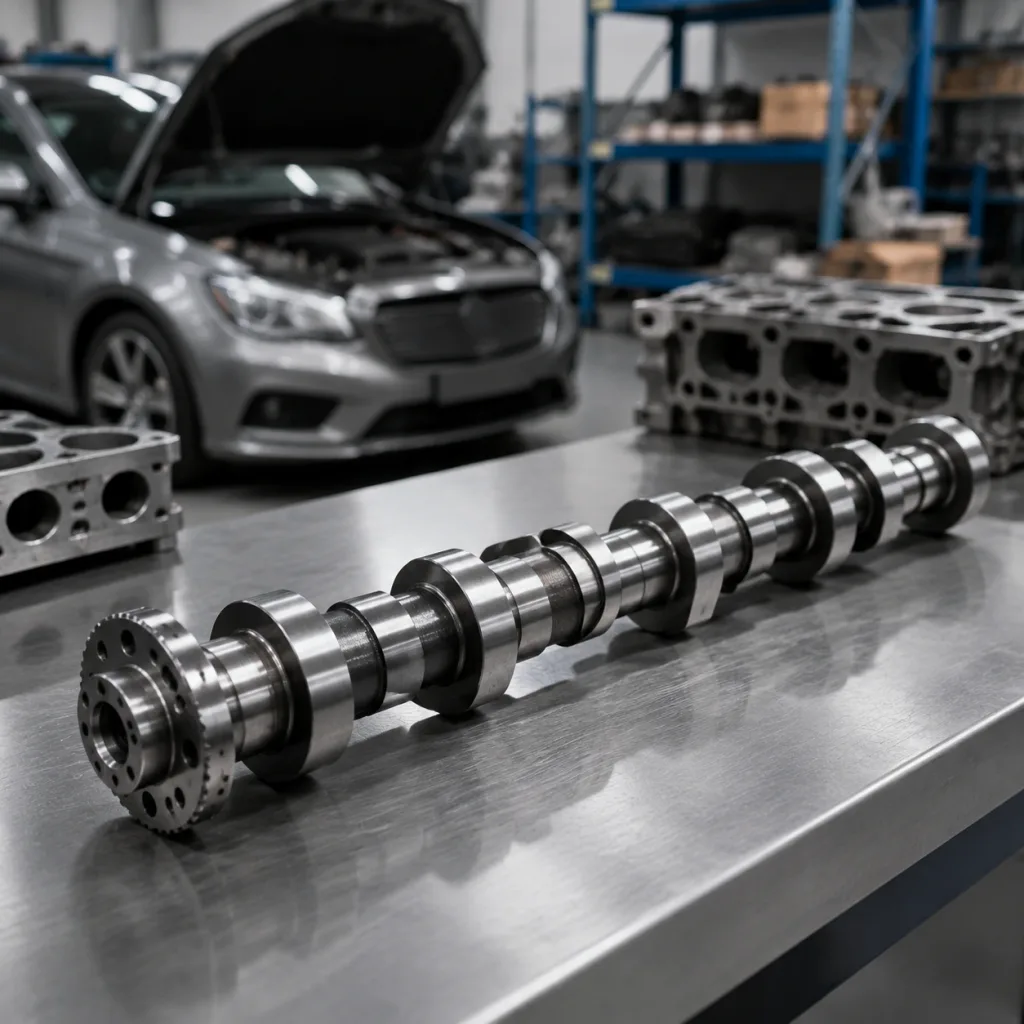
A camshaft for Mercedes-Benz A-Class aftermarket replacement has to match the original profile, journal geometry, and timing phasing, not just the vehicle badge or engine family name. For procurement teams, the main risk is ordering a part that fits physically but changes valve timing, lift, or durability under load. Driventus supplies aftermarket camshafts for B2B replacement programmes with controlled dimensional checks, material traceability, and lot-level inspection. Driventus is an independent aftermarket manufacturer; brand names are referenced for fitment only. For buyers comparing suppliers, the key question is whether the part can be validated against OE dimensions, hardness, runout, and surface finish before shipment. This matters for distributors, repair networks, and importers that need stable fitment across multiple engine codes and service markets. The guidance below covers what to verify, which specifications matter, and how to source a replacement that supports repeatable installation and predictable commercial terms.
Start with engine code, not the badge
For a camshaft for Mercedes-Benz A-Class aftermarket replacement, the badge tells you almost nothing. The engine code, valve train layout, and OE cross-reference do the real work.
A part can bolt in and still be wrong. That happens when the lobe lift changes, the base circle shifts, the journal geometry differs, or the trigger wheel lands in the wrong clocking position. Variable valve timing adds another failure point: the phaser face, bolt pattern, and datum surface must all line up.
Use this as the first decision filter:
Match the OE part number before you compare pricing.
Confirm the engine code and variant, not just displacement.
Verify journal count, journal diameter, and overall shaft length.
Check lobe lift and lobe phasing against the approval drawing.
Validate sensor windows, flats, and keying features.
Confirm the drive-end geometry and any VVT interface.
If the supplier cannot tie the part to a drawing or sample with measurable features, it is not ready for batch buying. The safest procurement path is OE cross-reference first, then dimensional validation, then volume release.
Spec check: the measurements that actually control fitment
The technical data sheet should be specific enough to prevent interpretation. If it is vague, the risk moves downstream to the workshop.
Spec item
What to verify
Why it matters
Material
Alloy steel or chilled cast iron, confirmed by certificate
Drives strength and wear resistance
Hardness
Surface or case hardness per drawing
Protects lobes and journals in service
Runout
Journal and lobe runout
Limits vibration and timing scatter
Journal diameter
Diameter, width, concentricity
Must match head bearing bores
Lobe lift
Intake and exhaust lift
Affects valve timing and engine behaviour
Base circle
Diameter and roundness
Controls follower contact geometry
Lobe indexing
Angular relationship to drive features
Keeps valve events on target
Surface finish
Journal and lobe Ra values
Influences break-in and wear
Drive-end features
Sprocket, gear, or phaser interface
Ensures correct timing assembly
Trigger features
Slots, windows, flats
Needed for sensor synchronisation
Straightness
Full-shaft straightness
Prevents assembly interference
Coating / treatment
Nitriding, phosphate, anti-corrosion finish
Supports handling and service life
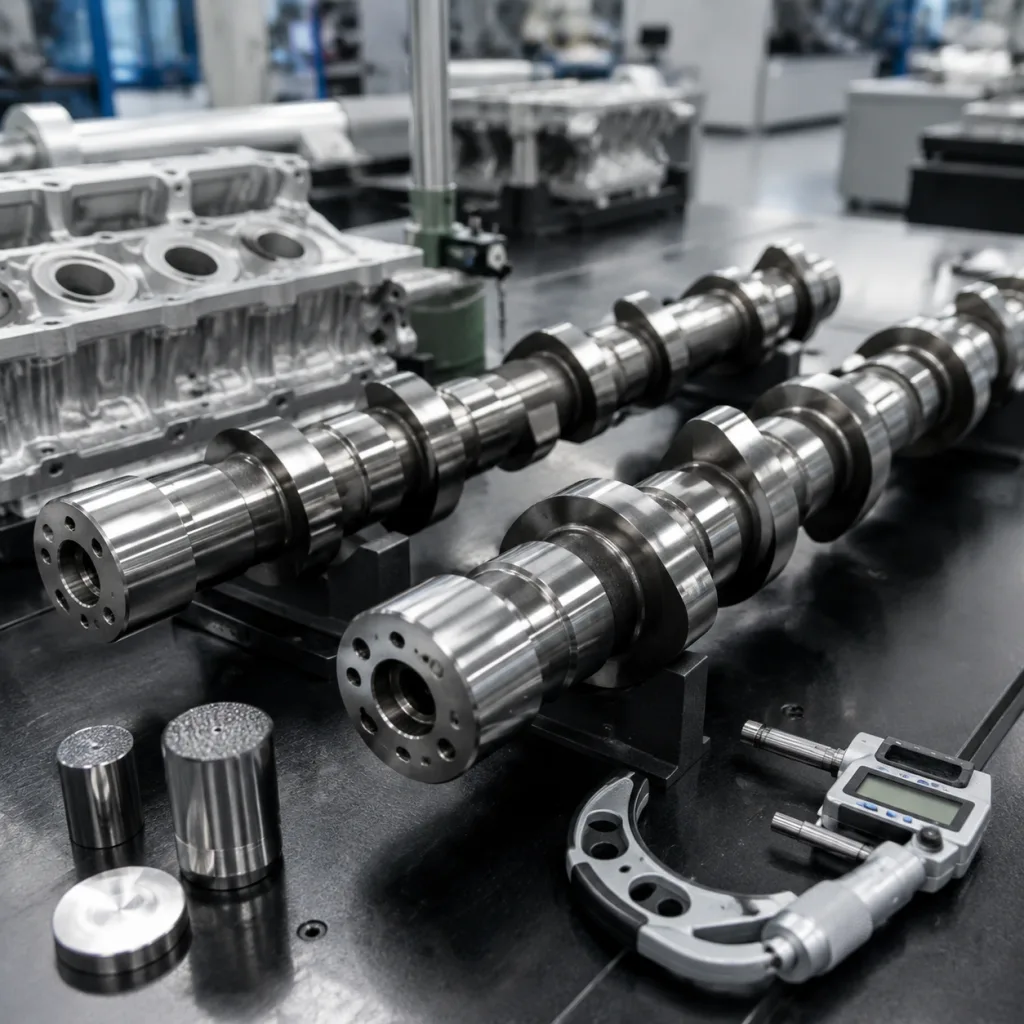
</tr></thead><tbody> </tbody></table>A useful buying rule: if the supplier will not state nominal values, tolerance bands, and datums for the controlled features, stop the order. For production sourcing, retain the inspection record in the purchase file and compare every controlled dimension against the OE reference or approved sample.
Where camshaft replacements fail in the real world
Most camshaft returns are not caused by bad packaging. They come from missed technical details.
Common failure modes include:
The shaft fits the head but shifts valve timing.
A trigger feature is clocked incorrectly, causing correlation faults.
Journal dimensions are within sight, but outside tolerance.
Surface finish is rough enough to accelerate break-in wear.
Hardness is inconsistent across the batch.
The cam works with the wrong follower set and fails early.
VVT hardware is present, but the interface geometry is not correct.
The failure pattern matters. If wear is already visible on the old part, replacing the camshaft alone may not solve the issue. Oil starvation, contaminated oil, damaged followers, or timing-set wear can destroy a new part quickly. That is why the replacement scope should be written before release: camshaft, followers, seals, timing hardware, and any related wear items should be treated as one repair package when the root cause points to system damage.
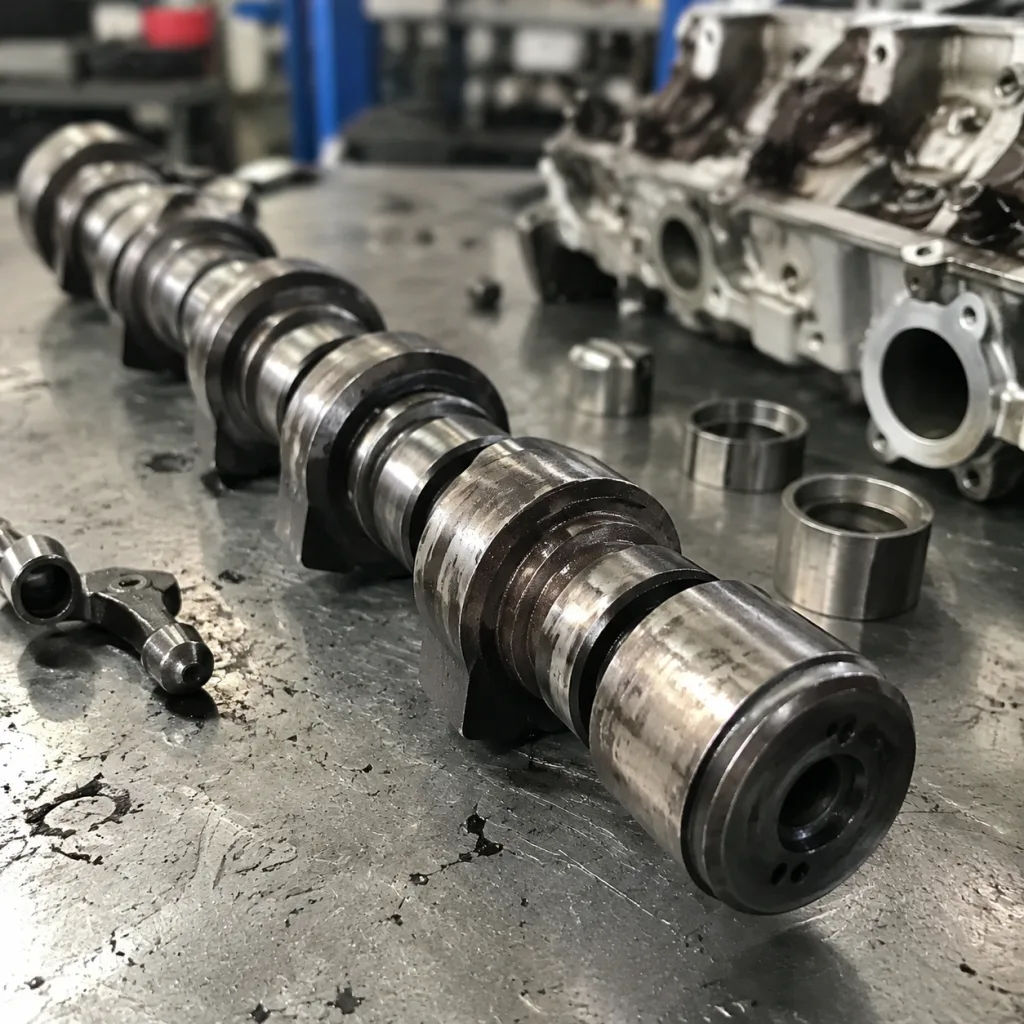
For high-mileage engines, look for lobe nose pitting, journal scoring, blueing, end-play movement outside the manual limit, and abnormal polish patterns. If the lobe pattern is no longer symmetrical across the nose and flank, replace rather than reuse.
How to validate a sample before bulk purchase
Validation is where the purchase either becomes repeatable or becomes expensive. Driventus aligns production and inspection with IATF 16949:2016 and ISO 9001:2015 quality controls, and material or process checks can be aligned to customer requirements.
A practical first-article flow:
1. Confirm the OE cross-reference and engine code. 2. Measure the master sample against the drawing. 3. Check hardness and microstructure. 4. Record runout, straightness, and lobe indexing. 5. Inspect surface roughness on journals and lobes. 6. Verify fit with the timing set, followers, and sensors. 7. Run an installation trial on the target engine family. 8. Recheck valve timing correlation after warm-up. 9. Capture teardown notes after a short durability cycle if the programme is high risk.
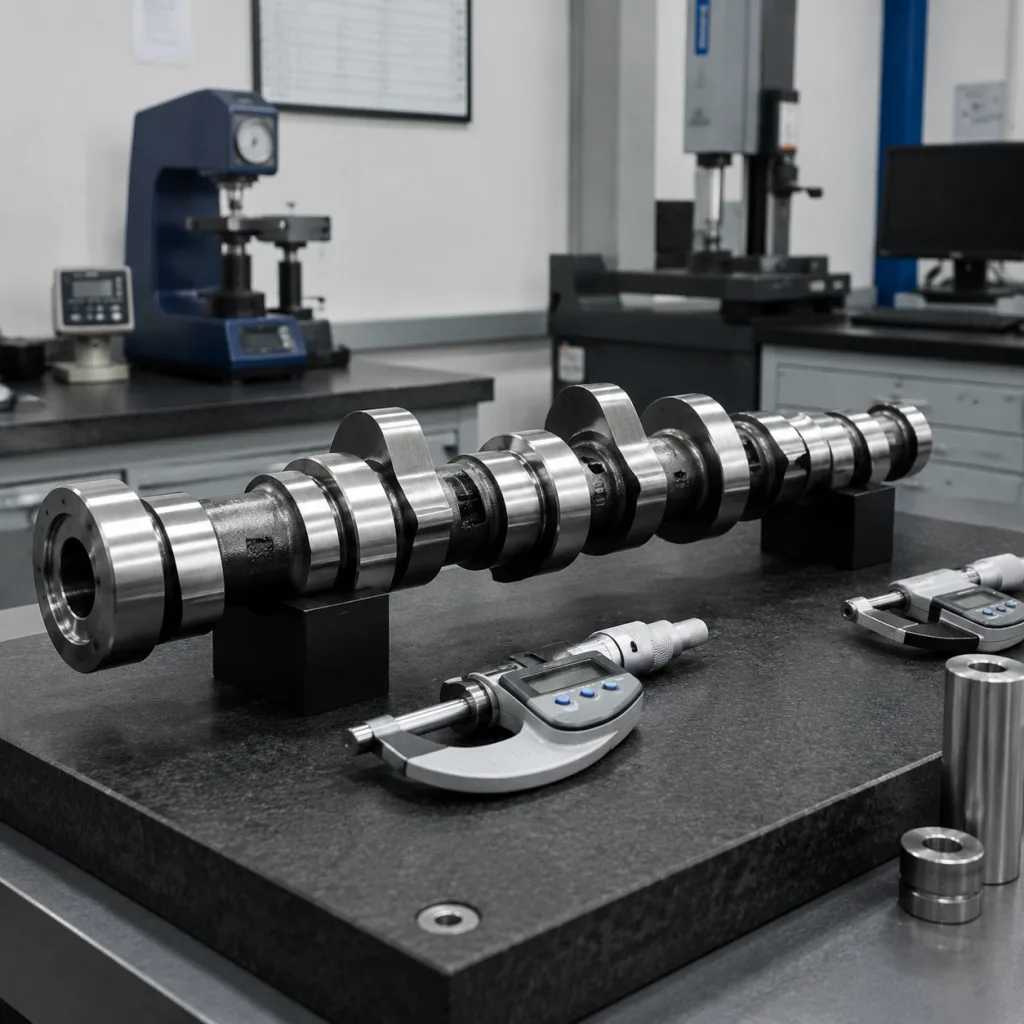
The first-article package should include a dimensional report, hardness result, material certificate, surface roughness record, and photos of the drive-end and trigger features. For European programmes, buyers should also consider REACH (EC) No 1907/2006 compliance where coatings, cleaning agents, or packaging materials are controlled. If the application is emissions-sensitive or high-temperature, write the acceptance limits before the first shipment, including acceptable runout, acceptable lift variation, and any packaging damage threshold.
Choose the right supply model for your programme
Not every buyer needs the same sourcing setup. For aftermarket camshafts, the right model depends on demand stability, technical control, and how often the specification changes.
Standard stock fits fast-moving A-Class engine codes with steady demand.
Private label suits distributors that need their own packaging and SKU control.
Custom manufacturing fits drawing-based specifications, special coatings, or revised sensor windows.
Standard stock is the fastest route when the demand pattern is stable and the engine-code mix is narrow. Private label makes sense when you need barcode rules, market-specific carton text, and controlled brand presentation. Custom production is the better option when the part must follow a revised drawing, an altered lobe profile, or a non-standard finish.
Driventus supports catalog, quality system, and custom manufacturing workflows when buyers need technical documentation, batch traceability, or drawing-based sourcing. For wider engine programmes, the engine components range can help consolidate timing-related parts with other service items.
Procurement controls that prevent avoidable claims
Camshafts should be bought as controlled technical items, not as generic commodity stock. The commercial problems are usually predictable: weak paperwork, unclear revision control, and inconsistent packaging.
Use this checklist at RFQ stage:
State the engine code and OE reference on the PO.
Require first-article approval before mass shipment.
Ask for batch traceability and inspection reports.
Define corrosion protection and labelling rules.
Confirm MOQ, lead time, and replenishment terms.
Lock revision control so any geometry change triggers reapproval.
Define claim handling for nonconformance, coating damage, and missing paperwork.
Record workshop feedback after installation.
Typical operating logic is straightforward. A first launch or low-volume programme may need a pilot lot and longer lead time. A reorder on an unchanged spec is usually quicker. A drawing change, special coating, or new carton format adds time because the process has to be revalidated.
When the programme needs a tighter commercial structure, ask for target annual volume, first order quantity, safety stock, required label language, and whether mixed-lot packing is acceptable. That information shortens quotation cycles and reduces back-and-forth later.
When should an A-Class camshaft be replaced?
Replace the camshaft when the wear pattern says the part has reached its limit, not when the engine simply sounds rough.
Typical warning signs include:
Noisy valve train operation
Misfire codes tied to timing correlation
Poor idle quality after long service
Lobe nose wear or pitting
Journal scoring or blueing
Trigger feature damage
Contamination from oil starvation or debris
Uneven polish that points to follower mismatch
If wear exceeds the manual limit, or if the lobe profile is no longer consistent across the nose and flank, the camshaft should come out. Cleaning it and reinstalling it is false economy. If the root cause is oil supply, contamination, or follower wear, replace the related parts as a set. That approach reduces comeback risk and is usually cheaper than doing the job twice.
Frequently asked questions
Yes, if the OE number and engine code are clear. We still recommend verifying journal dimensions, lobe profile, lift, and trigger features against a sample before volume purchase, and confirming the tolerance band on the approval drawing.
Yes. Private-label packing can be arranged for distributors and repair-chain programmes, with batch identification and document control included. Buyers can also specify carton quantity, barcode format, corrosion protection, and master carton artwork rules.
Production and inspection are aligned with IATF 16949:2016 and ISO 9001:2015. Material compliance requests can also be handled under REACH (EC) No 1907/2006 where required, and inspection records can be supplied with lot traceability on request.
If you are sourcing a camshaft for Mercedes-Benz A-Class aftermarket replacement, send the OE reference, engine code, target annual volume, required MOQ, and requested lead time. [Request a quote](/contact.html) and we will confirm fitment, inspection scope, and supply options.