Camshaft for Hyundai Santa Fe Replacement: Fitment Guide
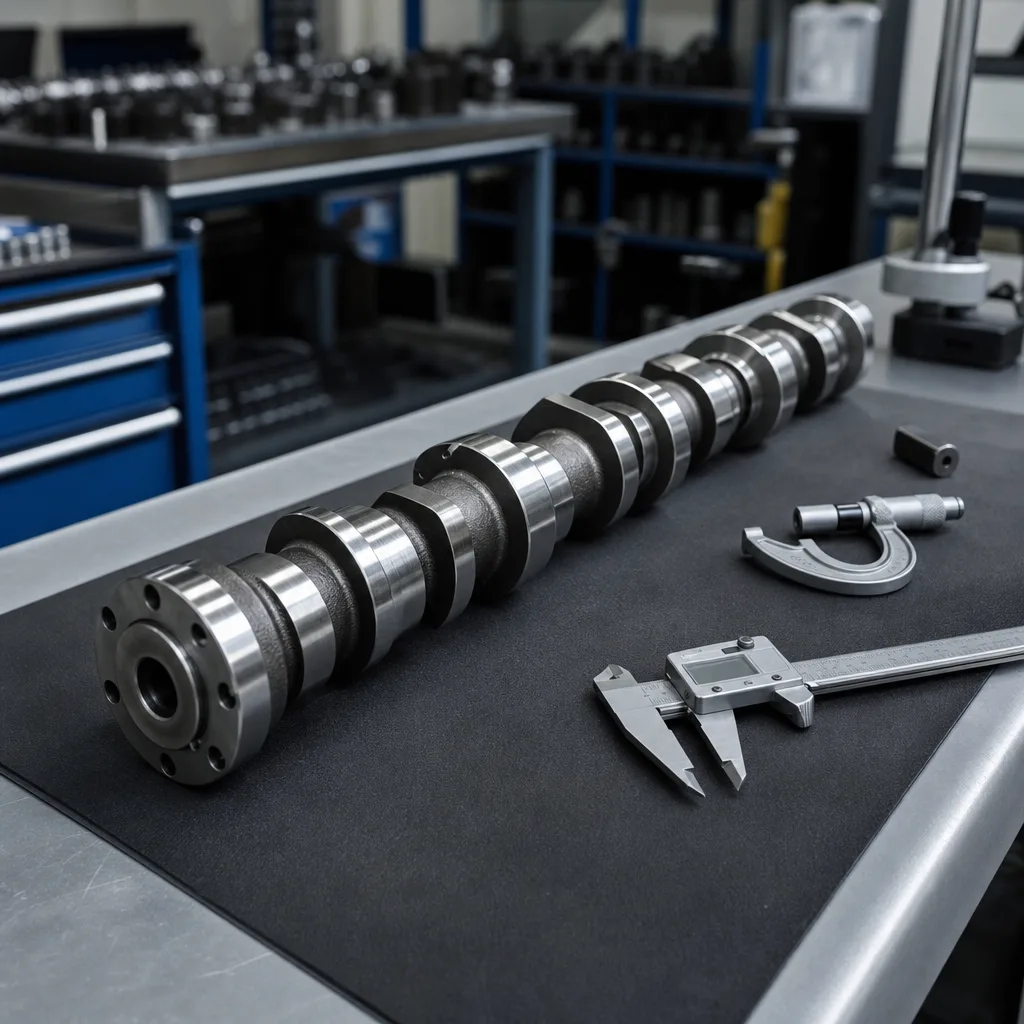
A replacement camshaft for Hyundai Santa Fe applications has to do more than spin and open valves. Buyers need the correct engine family, lobe profile, journal dimensions, trigger wheel design, and valve train layout. A mismatch can change valve timing, generate noise, or damage the head and timing set even when the part looks similar on the shelf. For procurement teams, the practical test is simple: does the part match the drawing, the engine code, and the validation record for the exact application? This guide focuses on replacement sourcing for the Santa Fe platform, with notes on dimensional control, material checks, and supplier documentation. Driventus is an independent aftermarket manufacturer; brand names are referenced for fitment only.
Start With Engine Code, Not Model Name
Santa Fe fitment changes across engine families, emissions packages, and regional markets. Model year alone is not enough. Procurement teams should lock the part to the engine code, cam count, drive type, and sensor strategy before buying. For a replacement camshaft, confirm:
Intake or exhaust position
SOHC or DOHC layout
VVT or phaser compatibility
Trigger wheel pattern and sensor gap
Bearing journal count, diameter, and thrust control
Oil feed holes and groove locations
If the supplier cannot map these details to the drawing, the part is not ready for purchase. The lowest-risk order is the one built from the removed part, the engine code, and a verified dimensional record.
Dimensional Checks That Decide Fit
A camshaft can look correct and still fail in service if the geometry is off by a small amount. The buyer should focus on the features that govern timing, clearance, and signal generation.
Check
Why it matters
What the buyer should request
Lobe profile
Controls valve lift and duration
Cam card or dimensional drawing
Base circle
Affects lash and valve clearance
Master measurements
Journal geometry
Determines block and head fit
Journal diameters and runout data
Trigger wheel
Drives ECU signal accuracy
Tooth count, phasing, and position
End thrust
Prevents axial wear
Thrust face spec and endplay limit
</tr></thead><tbody> </tbody></table>The same Santa Fe nameplate may use different camshaft designs across petrol and diesel engines. Do not approve a substitute unless the supplier can document dimensional equivalence to the specific engine code. That is the difference between a usable replacement and a return claim.
Material and Surface Requirements
Material selection depends on application duty and production volume. Common routes include chilled cast iron for cost-sensitive programs and forged or alloy steel for higher-load applications. The key point is not the manufacturing label. It is whether hardness, microstructure, and surface finish match the target duty cycle.
For a credible replacement part, ask for:
Heat-treatment route and hardness report
Lobe and journal surface finish values
Straightness and concentricity checks
Nondestructive inspection where specified
Corrosion-control packaging for export shipment
For export programs, substance control and traceability should be documented under REACH (EC) No 1907/2006. Buyers that run recurring programs should also expect batch-level traceability and a process control file aligned with IATF 16949:2016 and ISO 9001:2015.
Validation Data Buyers Should Request
Replacement sourcing fails when the supplier provides a part number but not the evidence behind it. Validation is the point where small geometry errors, poor heat treatment, and inconsistent finishing are exposed.
Request a file that includes:
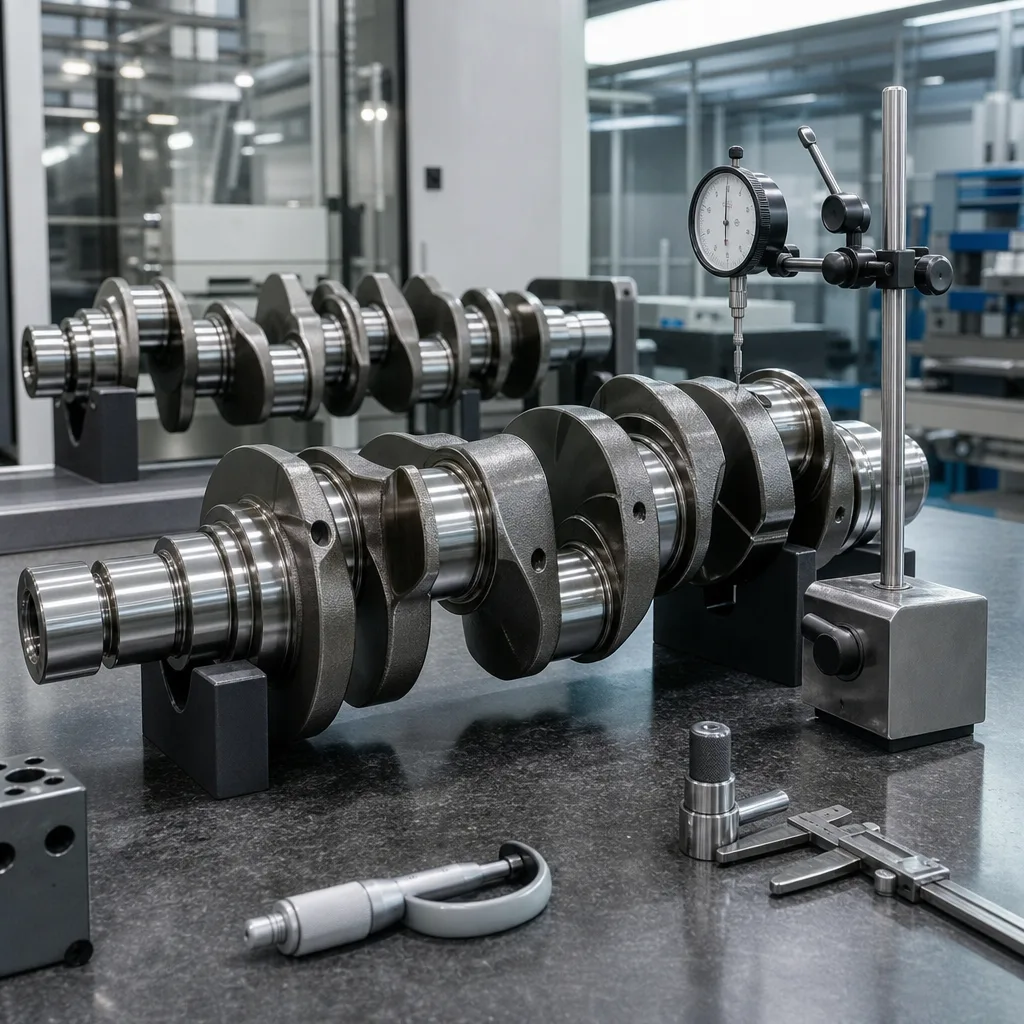
CMM or gauge inspection of journals and lobe positions
Runout and concentricity records
Hardness checks by lot
First article sample approval before mass shipment
Lot traceability linked to raw material heat numbers
A supplier with an IATF 16949:2016 and ISO 9001:2015 system should be able to show process control, nonconformance handling, and final inspection records. Review our quality system if you need a documented control structure for recurring orders. If the supplier cannot produce these records, the risk moves from technical to commercial very quickly.
Where Procurement Teams Source Safely
Procurement teams usually need one of three paths: standard stock, mixed-market substitution, or custom production. Start with the standard item in our catalog or the broader engine components range. If the engine code is unusual, the vehicle is from a regional market, or the buyer wants branded packaging, custom manufacturing is the better route. That path supports drawing review, sample confirmation, and controlled release for repeat orders.
For a clean sourcing file, include:
Engine code and valve train layout
Photos of the old part and any sensor features
Target annual quantity and forecast window
Packaging, labelling, and pallet requirements
Required documents for import and compliance
If you need a replacement camshaft for a Santa Fe program, this documentation set lets the supplier quote the correct part without guessing. It also shortens approval time when multiple depots or repair chains are buying against the same specification.
Frequently asked questions
Engine code, model year, intake or exhaust position, VVT hardware, trigger wheel design, and a measurement of the removed part. VIN decoding helps, but it does not replace physical verification.
Yes, if the dimensions, material, hardening, and signal geometry match the target engine and the supplier can document the control plan and inspection data.
Drawing, material certificate, hardness report, dimensional inspection sheet, batch traceability, and quality-system evidence from IATF 16949:2016 and ISO 9001:2015 production.
For drawings, sample requests, or recurring supply plans, review [our catalog](/products.html) and [request a quote](/contact.html).