Camshaft Honda Wholesale: Sourcing Guide for Buyers
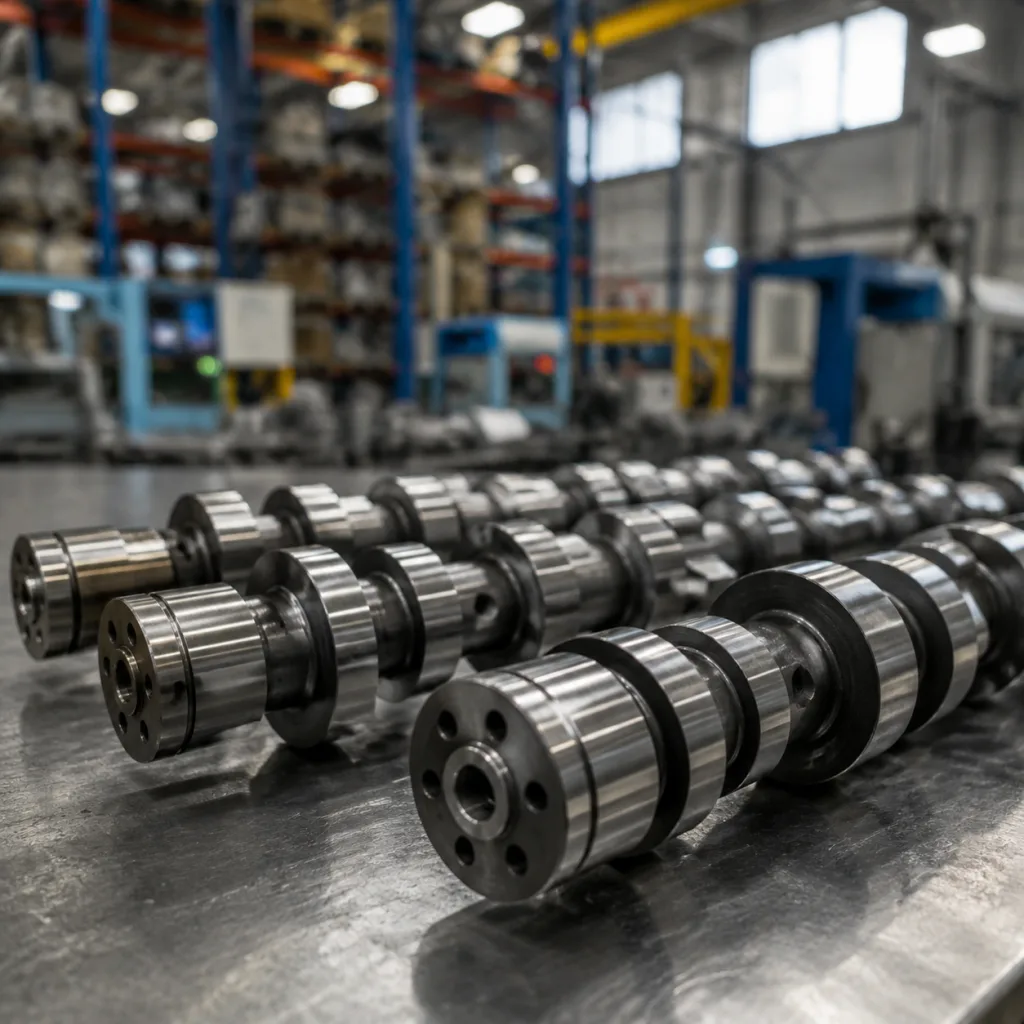
Buyers sourcing camshaft Honda wholesale parts need more than a price list. They need stable drawings, repeatable metallurgy, controlled grinding, and traceable inspection records. For distributors, repair chains, and importers, the main risks are profile drift, incorrect journal sizing, and inconsistent heat treatment. Driventus supplies camshafts for B2B programmes from Taizhou, Zhejiang, with `IATF 16949:2016` and `ISO 9001:2015` systems in place. We support OE part-number cross-references where applicable, with fitment validation against the target application. Driventus is an independent aftermarket manufacturer; brand names are referenced for fitment only. If you are comparing suppliers, focus on process control, lead time, and the ability to hold dimensional tolerances across repeat orders. The notes below are written for procurement teams that need a practical sourcing basis before RFQ, sample approval, or factory audit.
How to decide whether a part is sourceable
For wholesale sourcing, start with the part definition, not the vehicle name.
Confirm engine code, cylinder count, valve-train type, and whether the camshaft is intake, exhaust, or a matched pair.
Ask for the drawing revision, material grade, and heat-treatment route.
Check whether the supplier supports OE cross-references such as `OE 06A107065` only when the application already uses that numbering convention.
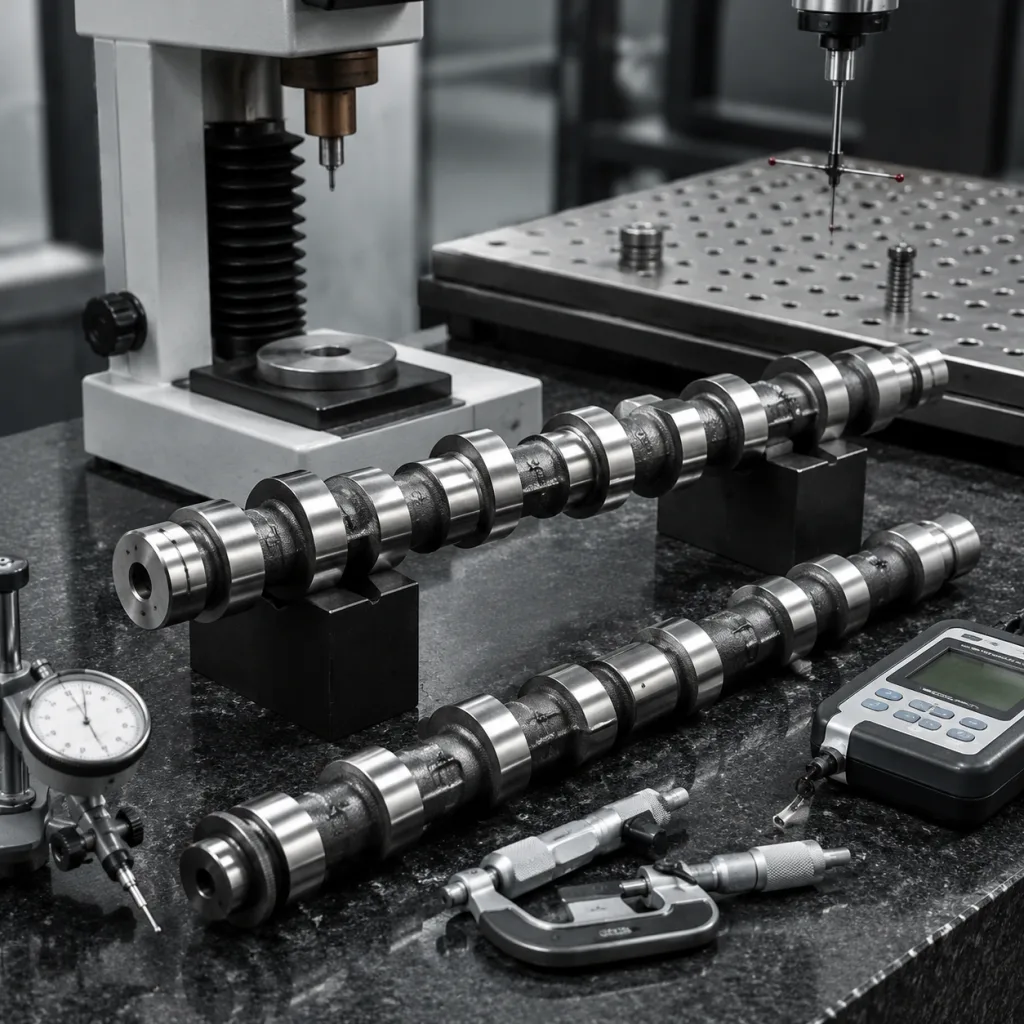
Require traceable inspection data for lobe height, base circle, journal diameter, and runout.
Request sample approval criteria before placing volume orders.
The key decision is whether the application is a straight replacement, a controlled variant, or a custom profile. A cast-iron camshaft usually fits high-volume replacement work because the cost structure is predictable. A billet route makes more sense when the profile needs to change, the batch is small, or the programme is still being validated. Buyers should put the engine family, OE reference if available, target annual volume, and critical tolerance limits into the first RFQ. That keeps the conversation on manufacturability instead of generic fitment claims.
Which specifications actually move cost and fit
Camshaft pricing is driven by process control as much as raw material cost. The table below shows the variables procurement teams should compare.
Item
What to confirm
Typical buyer target
Material
Alloy cast iron, chilled cast, or billet steel
Match OE route or upgraded wear target
Hardness
Surface and core targets by drawing
Commonly HRC `50-60` surface on wear lobes, with core hardness per material route
Runout
Measured at journals and overall shaft
Keep total indicated runout within `0.03-0.08 mm` unless the drawing specifies tighter
Lobe profile
Lift, duration, and phasing tolerance
Typically hold lift within `±0.02-0.05 mm` on replacement programmes
Journal size
Diameter and concentricity
Commonly controlled to `±0.01-0.02 mm` for fit consistency
Surface finish
Ground finish and roughness
Target `Ra 0.2-0.8 μm` on working surfaces
Traceability
Lot codes and inspection records
Heat number, production lot, and final QC record
</tr></thead><tbody> </tbody></table>For Honda applications, the next filter is not just model fit; it is valve-train architecture. VTEC and non-VTEC versions can share a nameplate but not the same cam geometry. Buyers should verify the engine family, valve count, cam sensor trigger pattern, bearing count, and whether the sprocket or actuator interface is included. If the programme serves multiple markets, ask for a first-article report against the reference sample, not only a brochure spec. That report should show each critical dimension against the drawing limits, because that is where many wholesale claims fail.
What MOQ and lead time really mean in wholesale
Wholesale buyers normally compare landed cost, not ex-works price alone. A lower unit price can disappear if the supplier needs repeated rework or uses weak export packing.
Typical procurement points:
MOQ should match your turnover and forecast stability.
Lead time should include machining, heat treatment, grinding, final inspection, and packing.
Packaging must protect lobes, journals, and oil passages from corrosion and impact.
Export cartons should survive palletised freight and mixed-container loading.
If you sell through distributors, ask for barcode or label formats that fit your warehouse system.
For recurring programmes, request a buffer-stock plan or rolling forecast agreement. That reduces shortages when a part becomes seasonally active in the aftermarket.
A practical wholesale structure is often: sample order `1-5 pcs`, pilot lot `20-50 pcs`, then production MOQ from `100-300 pcs` per SKU for standard cast programmes. Custom or low-volume engineering parts may sit at `30-100 pcs` if tooling is already available, but new tooling or new grinding fixtures can push the real MOQ higher. On lead time, a straightforward catalogue camshaft may ship in `20-35 days` after PO and sample approval, while a custom profile or revised OE-match part can take `35-60 days` depending on material supply, heat-treatment queue, and inspection sign-off. Ask the supplier to split timing into raw material preparation, machining, heat treat, grinding, inspection, and packing so you can see where delays really sit. For price logic, request a tiered quote at `100`, `300`, and `500+` units, plus separate charges for packaging, laser marking, and test reports; that makes it easier to compare total landed cost instead of only unit ex-works price.
How to audit quality without guessing
Procurement teams should review the supplier’s quality system before discussing annual volume. Driventus operates under `IATF 16949:2016` and `ISO 9001:2015`, which support controlled production and documented inspection flows.
See our quality system for the type of controls we apply.
Audit checklist:
Incoming material verification and heat-number traceability
In-process measurement of lobe profile, runout, and journal geometry
Final dimensional inspection with calibrated instruments
Hardness verification after heat treatment
Corrosion prevention and packaging inspection
Nonconformance containment and corrective action records
For emissions-linked programmes, suppliers may also need to understand customer-specific requirements connected to `ECE R-83` and environmental compliance duties under `REACH (EC) No 1907/2006`, where applicable to materials and substances.
For a buyer-ready audit, ask the factory to show the actual control plan, gauge calibration status, and the last three production lot reports for the same or a closely related camshaft. A credible answer should include measurement frequency, acceptance criteria, and reaction plans for drift. For example, lobe lift and journal diameter are usually checked at incoming, in-process, and final stages, while runout is best measured after grinding and again before packing. If the supplier offers CMM or profilometer data, confirm the instrument resolution and calibration date, not just the printout. Also request the reject rate by lot or process step; even a simple `PPM` trend is more useful than a generic quality claim when you are comparing two camshaft Honda wholesale suppliers.
When custom camshafts make commercial sense
Standard catalogue parts cover many replacement programmes, but some buyers need a custom grind, altered base circle, or revised lobe timing for a fleet or private-label line. In those cases, custom work is justified when the expected volume supports tooling, setup, and validation costs.
A private-label specification for regional distribution
A dimensional match to a legacy OE sample
A controlled engineering change for a repair programme
If you are building a wider powertrain range, review our catalog and the related engine components page to align camshaft sourcing with gaskets, water pumps, and other matched parts.
Custom work is usually justified when the buyer can lock a measurable requirement into the drawing. That can include a base-circle adjustment within `0.10-0.25 mm`, a lift change of `±0.20 mm`, a revised phasing window, or a sensor-trigger compatibility requirement for the target engine family. It also makes sense when you need a branded carton, market-specific barcode structure, or a matched intake/exhaust pair with controlled phasing between shafts. Before approving a custom job, require a signed sample standard, a PPAP-style inspection pack if your market expects it, and a clear decision on whether tooling amortisation is built into price or separated as a one-time charge.
RFQ checklist: send this before asking for price
Use this checklist before sending a request for pricing:
1. Define the engine family and exact application. 2. Confirm whether you need intake, exhaust, or a pair. 3. Specify target annual volume and initial order quantity. 4. Ask for drawing, material, hardness, and tolerance data. 5. Request sample lead time and mass-production lead time. 6. State packaging, labelling, and pallet requirements. 7. Confirm whether OE cross-reference information is needed for your market. 8. Set acceptance criteria for dimensional inspection and visual finish.
If your team needs a new supply route, review the product range first and then align the technical package with the supplier’s capability. That shortens sourcing cycles and reduces sample churn.
To make the RFQ usable, add the exact part number or reference sample, the expected first order quantity, and the annual forecast by quarter. Include the required tolerances for journal diameter, runout, and lobe lift, plus the finish requirement and any coating or anti-rust oil preference. State whether you need cartons, inner trays, desiccant, or VCI protection, because those items change price and pack-out time. If you are comparing bids, require each quote to separate piece price, tooling if applicable, sample cost, freight basis, and inspection-document cost so the commercial comparison stays clean.
Frequently asked questions
Yes. Private-label programmes are common when the buyer has stable demand and clear packaging artwork. Confirm carton dimensions, barcode format, and any country-specific labelling before production starts. For a realistic private-label order, many buyers start with `100-300 pcs` per SKU, then move to higher releases after carton approval and first-lot inspection. If the design needs a bespoke insert, printed bag, or multilingual label, ask the supplier to quote that separately so you can see the true unit cost.
Request the drawing revision, material specification, heat-treatment route, inspection report, and sample approval criteria. For compliance-sensitive markets, ask how the supplier handles REACH-related material control. You should also request the tolerance table, hardness range, runout result, and lot traceability format, ideally tied to the actual production batch. If the supplier is quoting multiple part numbers, ask for a cross-reference matrix showing the engine code and fitment limits used for each item.
No. Driventus is an independent aftermarket manufacturer; brand names are referenced for fitment only. Buyers should verify dimensional match, profile data, and application compatibility instead of relying on brand approval claims. The real purchasing test is whether the camshaft matches the target engine’s geometry, timing requirements, and hardware interface, and whether the supplier can document that match with drawings and inspection data.
If you are comparing suppliers or preparing an RFQ, send your application details and volume targets through /contact.html and we will help you match the right camshaft specification.