Cylinder Sleeve Iveco Supplier: Sourcing Guide
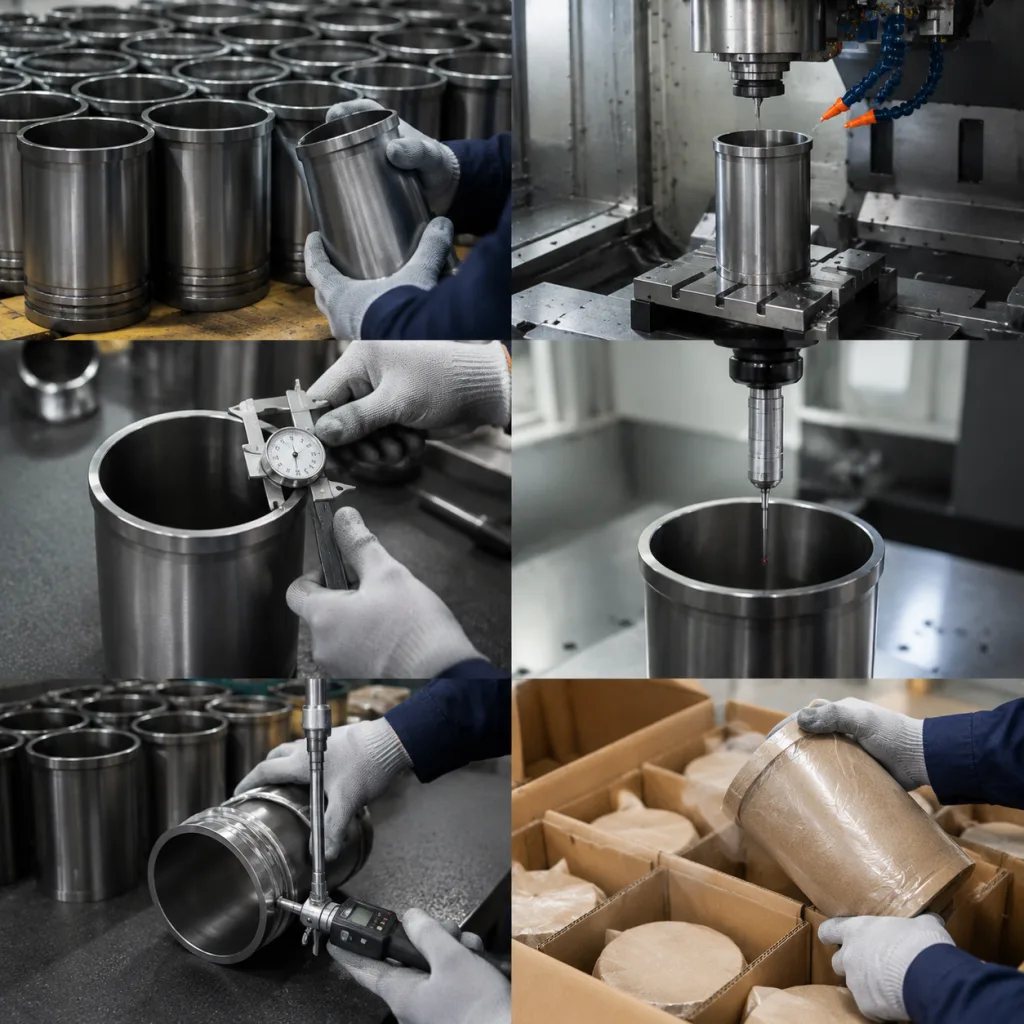
If you are sourcing a cylinder sleeve Iveco supplier for aftermarket distribution, OEM supply, or fleet repair channels, the first decision is not price. It is fitment control, metallurgy, and process stability. A sleeve that measures correctly at one end but varies in bore finish, flange height, or wall thickness can create rework at assembly and warranty risk in service. Driventus supplies engine and powertrain parts from Taizhou, Zhejiang, with IATF 16949:2016 and ISO 9001:2015 systems in place. We export to more than 60 countries and support procurement teams that need repeatable production, documented inspection, and stable packing for cross-border freight. Driventus is an independent aftermarket manufacturer; brand names are referenced for fitment only. If you need a supplier that can support OE cross-references, factory audits, and controlled lead times, start with the dimensional and certification points below.
Decision points before you shortlist suppliers
For a cylinder sleeve Iveco supplier, the first filter should be technical, not commercial. Price matters, but only after the part is proven to fit and survive the duty cycle.
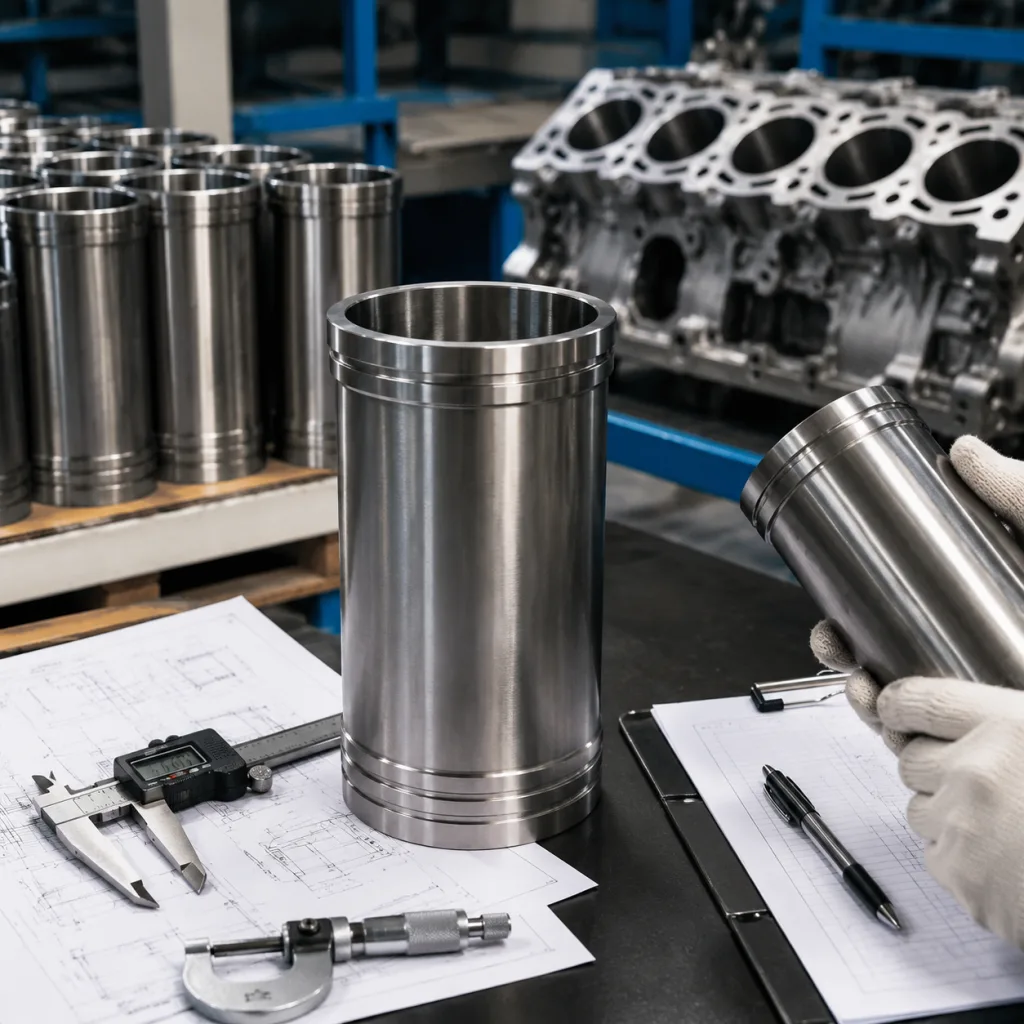
- Dimensional control: verify bore ID, OD, flange height, sleeve length, and wall thickness against drawing or a validated sample.
- Process stability: ask how the supplier controls casting, machining, honing, and final inspection across repeat batches.
- Material fit: confirm grey iron or alloy specification matches cooling design, ring loading, and expected mileage.
- Traceability: require lot coding, batch records, and inspection reports that connect the shipment to production data.
A good shortlist is built from proof, not promises. Ask for first-article results, in-process inspection records, and final checks before you compare commercial terms. If the part is sold against an OE reference, confirm the cross-reference in writing and validate by engine code, not only by vehicle badge. Your RFQ should also define interference fit range, installation method, finish-hone allowance, and cosmetic limits so the factory quotes the correct process the first time.
Failure modes that cause bad fitment
Most sleeve complaints trace back to a small set of avoidable misses. Knowing them early saves a lot of rework.
- Wrong engine family: vehicle badge matches, but the engine code does not.
- Loose OD control: press fit becomes inconsistent, which can lead to movement or distortion.
- Poor bore finish: ring seating suffers and oil control becomes unstable.
- Flange variation: deck protrusion changes and sealing behavior shifts.
- Weak inspection discipline: the sample is right, but the batch drifts.
These failure modes show up differently in the shop and in service. A sleeve with acceptable nominal dimensions can still fail if roundness, concentricity, or hone finish is off. That is why buyers should not treat a catalogue listing as validation. Ask for calibrated measurement data, sample photos, and a clear statement of acceptance limits. If the block is already machined, request a fitment sheet that includes press allowance, lubrication guidance, and post-install hone allowance so the workshop can plan the final cylinder size before cutting metal.
Specification deep-dive for sourcing teams
Below is a practical specification frame used when validating a replacement sleeve. Final numbers depend on the engine family and must be checked against the drawing or sample.
| Item | Typical control point | Procurement note |
|---|---|---|
| Material | High-grade cast iron or alloyed iron | Confirm chemistry and microstructure |
| Inner diameter tolerance | ±0.01 to ±0.02 mm after finish honing | Match piston and ring set data |
| Outer diameter tolerance | ±0.02 to ±0.05 mm depending on interference fit | Critical for press or shrink fit |
| Flange height | ±0.02 mm to drawing | Affects deck protrusion |
| Sleeve length | ±0.03 mm to drawing | Must match block deck and seating depth |
| Wall thickness | Controlled to drawing, commonly ±0.05 mm | Important for heat transfer and rigidity |
| Surface roughness | Ra 0.2 to 0.6 μm after honing, per application | Verify ring seating requirements |
| Hardness | 180 to 260 HB typical, as specified by application | Important for wear resistance |
| Runout / roundness | ≤0.01 to 0.03 mm at final inspection | Reduces assembly and sealing issues |
| Concentricity | ≤0.02 mm where specified | Supports stable compression sealing |
| Supply model | Best for | Trade-off |
|---|---|---|
| Stocked standard parts | Fast-moving references | Less flexibility on special packing or revisions |
| Pilot-to-production launch | New programs and validation orders | Longer setup time before stable replenishment |
| Custom batch production | Special dimensions or private-label programs | Higher coordination and more detailed approval steps |