connecting rod · 2026-06-18

Connecting Rod for Infiniti QX80 Aftermarket Replacement

A connecting rod for Infiniti QX80 aftermarket replacement has to do more than fit the engine. It needs to hold the original geometry, carry the load profile, and stay consistent from batch to batch. For B2B buyers, the real question is whether the part performs like the OE part across repeated orders, not whether one sample looks close enough. Driventus supplies engine components for procurement teams that need repeatable fitment, documented quality control, and stable lead times. Driventus is an independent aftermarket manufacturer; brand names are referenced for fitment only. This article breaks down the buying decision, the failure points that cause returns, and the validation steps that matter when sourcing for the EU, UK, US, Canada, Australia, and Brazil.

When a “fits” claim is not enough

A connecting rod only works in an Infiniti QX80 if the dimensions, materials, and finish all land inside the correct envelope. A part can look right, yet still shift piston position, alter bearing clearance, or create NVH issues once it is installed. That is why procurement teams should treat fitment as a starting point, not the finish line.

Before approving a connecting rod for Infiniti QX80 aftermarket replacement, check:

  • OE reference and engine code match
  • Centre-to-centre length and tolerance band
  • Big-end bore size, roundness, and housing consistency
  • Big-end width and cap alignment
  • Small-end bush ID or pin bore finish
  • Rod weight spread across the set
  • Material grade, forging route, and heat treatment

The risk is not theoretical. A rod that measures correctly on one sample but drifts on another can trigger balancing work, installation delays, and warranty claims. For multi-warehouse operations, the goal is repeatability, not just nominal compatibility.

How to compare OEM and aftermarket rods

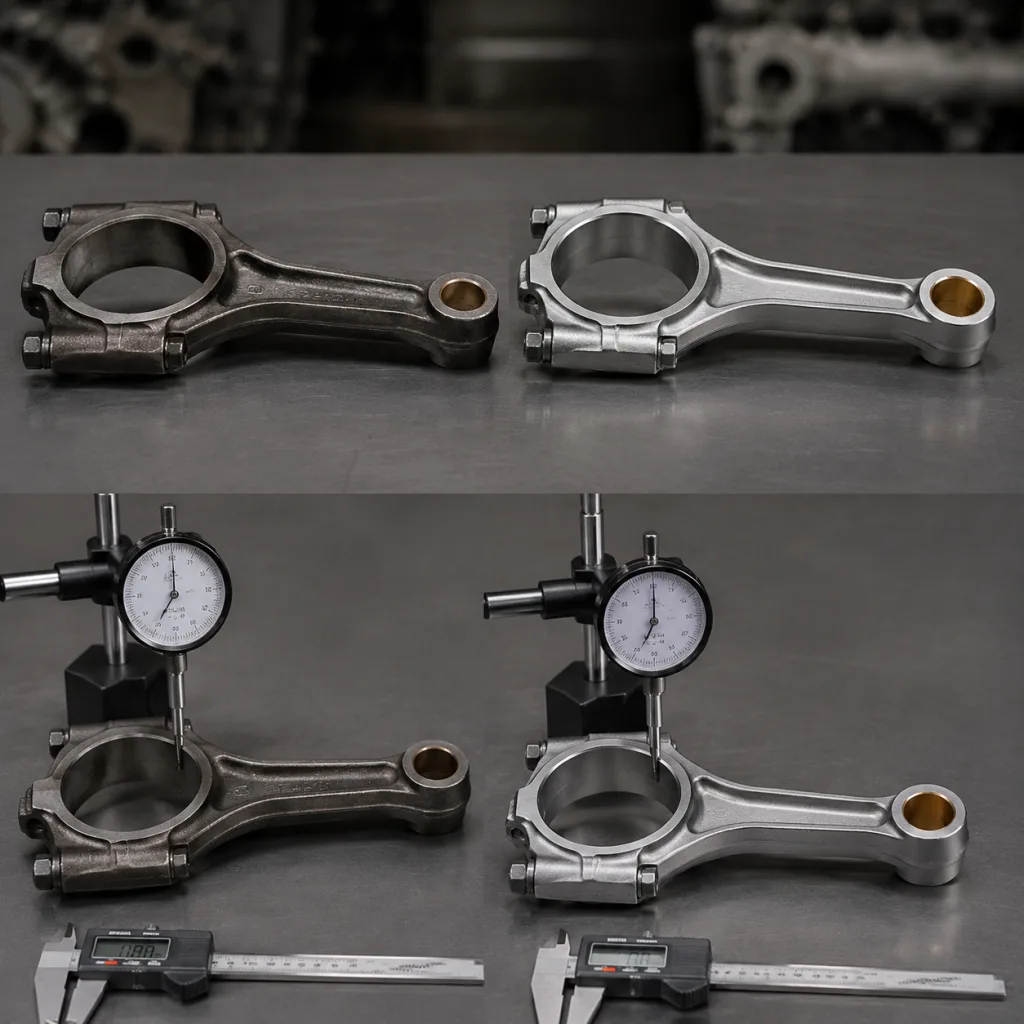
The best buying decision comes from comparing measurable fields side by side. Use the OE part as the benchmark, then review the aftermarket option against the same dimensions and process controls. If the supplier cannot give numbers, the part is not ready for a production-minded order.

</tr></thead><tbody> </tbody></table>A useful quote request includes more than the part number. Add annual volume, carton count, destination market, and whether substitutions are acceptable. If the application is severe-duty or high-mileage, ask for fatigue or load-cycle evidence as well.

How to compare OEM and aftermarket rods

What usually fails first

Most rod problems do not begin with the obvious breaking point. They start with small control misses upstream. A slightly off bore, a loose weight band, or inconsistent heat treatment can pass a casual visual check and still fail in service.

Common failure modes to screen out:

  • Incorrect rod length that shifts piston position
  • Bore distortion that changes oil clearance
  • Weight mismatch that increases vibration
  • Heat-treatment variation that reduces fatigue margin
  • Bolt inconsistency under cyclic load
  • Poor packing that damages the machined surfaces in transit

For buyers, the practical response is simple: ask for inspection records, not just a compliance statement. Dimensional inspection, hardness data, and lot traceability tell you much more than a generic “OE-equivalent” claim.

What Driventus checks before shipment

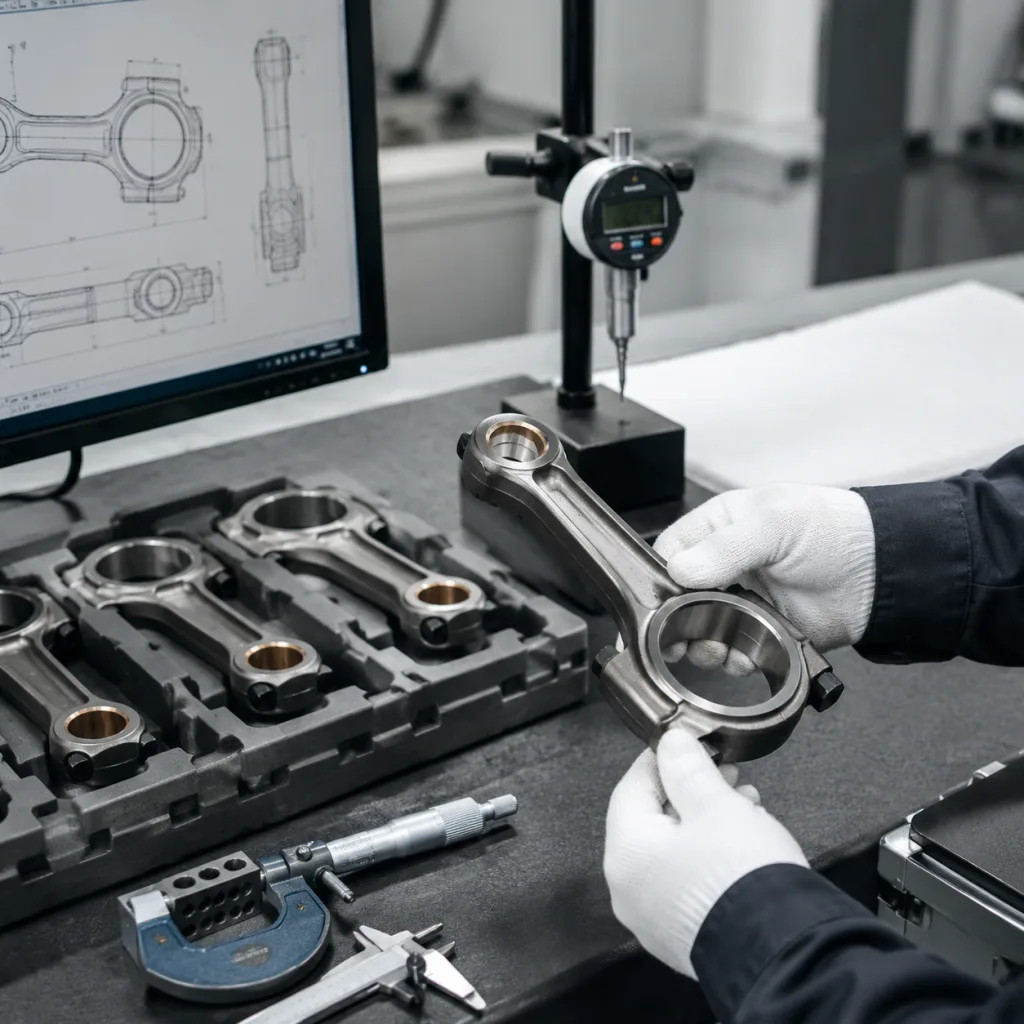
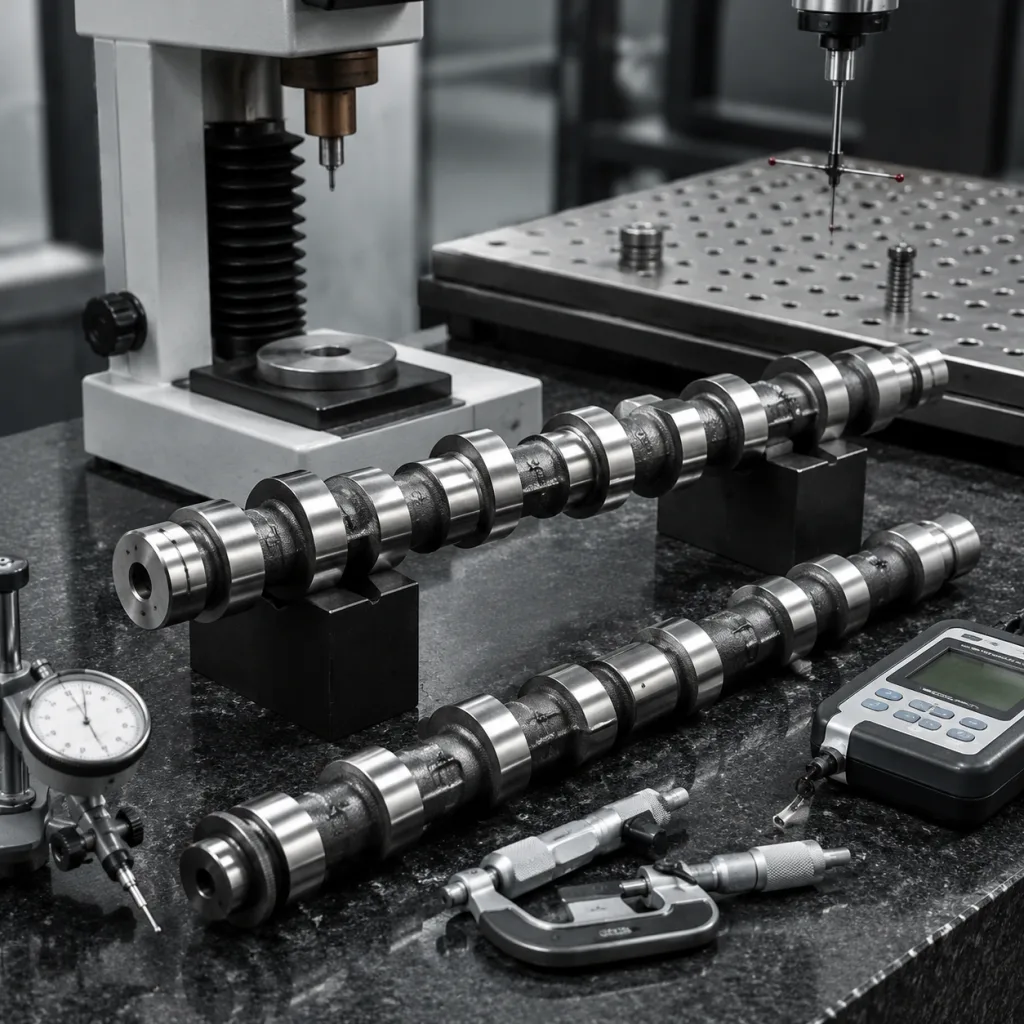
Driventus validates replacement rods through controlled process checks aligned with IATF 16949:2016 and ISO 9001:2015 quality procedures. The sequence matters because each stage catches a different risk.

1. Confirm incoming material against heat number and mill certificate. 2. Inspect forging and machining dimensions at first article and in-process stages. 3. Verify hardness and heat treatment, typically in a controlled range such as 28–34 HRC when the drawing calls for quenched-and-tempered alloy steel. 4. Control concentricity, roundness, and parallelism on big-end and small-end features. 5. Sort weight, record batch traceability, and seal lot labels before packing.

This matters most for distributors and fleet buyers who ship the same reference into multiple fitting locations. One mixed lot can turn into multiple callbacks. Process capability data, where available, is more valuable than a simple pass/fail note.

What Driventus checks before shipment

Step-by-step order checklist

If the technical package is clean, the PO cycle becomes faster and cheaper. Start with the application details, then lock the commercial terms so there is less back-and-forth after the quote.

Recommended order checklist:

  • Engine model, displacement, and year range
  • OE number or verified cross-reference
  • Quantity per engine and total annual demand
  • Required tolerance class or matched-set requirement
  • Bolt reuse policy and packaging label format
  • Destination compliance documents
  • Sample approval timing and target lead time

For standard stock items, ask for production time separately from transit time. If the part is not in stock, a practical planning rule is 30–45 days for production plus shipping, depending on quantity and inspection scope. For urgent replenishment, ask whether a partial shipment is possible against the full PO. Buyers can review our catalog, engine components, and quality system for related sourcing details. When the specification is confirmed, use request a quote with the OE reference, sample photos, target volume, and delivery window.

Frequently asked questions

Yes. The usual approach is OE-equivalent fitment with dimensional verification against the customer’s application data. Driventus is an independent aftermarket manufacturer; brand names are referenced for fitment only. Buyers can specify single-piece replacement, set supply, or programme supply with the same technical standard across batches.

Send the engine model, OE reference if available, quantity, destination country, and any required inspection documents. A drawing or sample photo helps reduce clarification cycles. If you have target tolerances, MOQ expectations, required surface finish, or a requested delivery date, include those as well so the quote reflects both price and lead-time reality.

Yes. Packaging, labelling, and carton configuration can be adapted for distributor or warehouse requirements, subject to the agreed technical and compliance scope. Buyers can also request barcode structure, retail sleeve specs, master-carton count, and pallet configuration to match their receiving process.

If you need a verified fitment review or batch quotation for an Infiniti QX80 application, send the OE reference and target volume through /contact.html.

Request a Quote
Check item OEM expectation Aftermarket buyer check
Centre-to-centre lengthFixed by engine geometryAsk for nominal value and tolerance
Big-end boreControls bearing crush and oil clearanceConfirm gauge data and roundness control
Small-end bore or bush IDMatches wrist-pin fitVerify pin size, bush material, and finish
Rod weightSupports balance across cylindersRequest matched-set limits and lot spread
Bolt specProtects joint integrity under loadConfirm grade, torque, and reuse policy
Surface finishSupports fatigue lifeCheck machining roughness and fillet finish