camshaft · 2026-06-08

Camshaft for Honda Accord Aftermarket Replacement

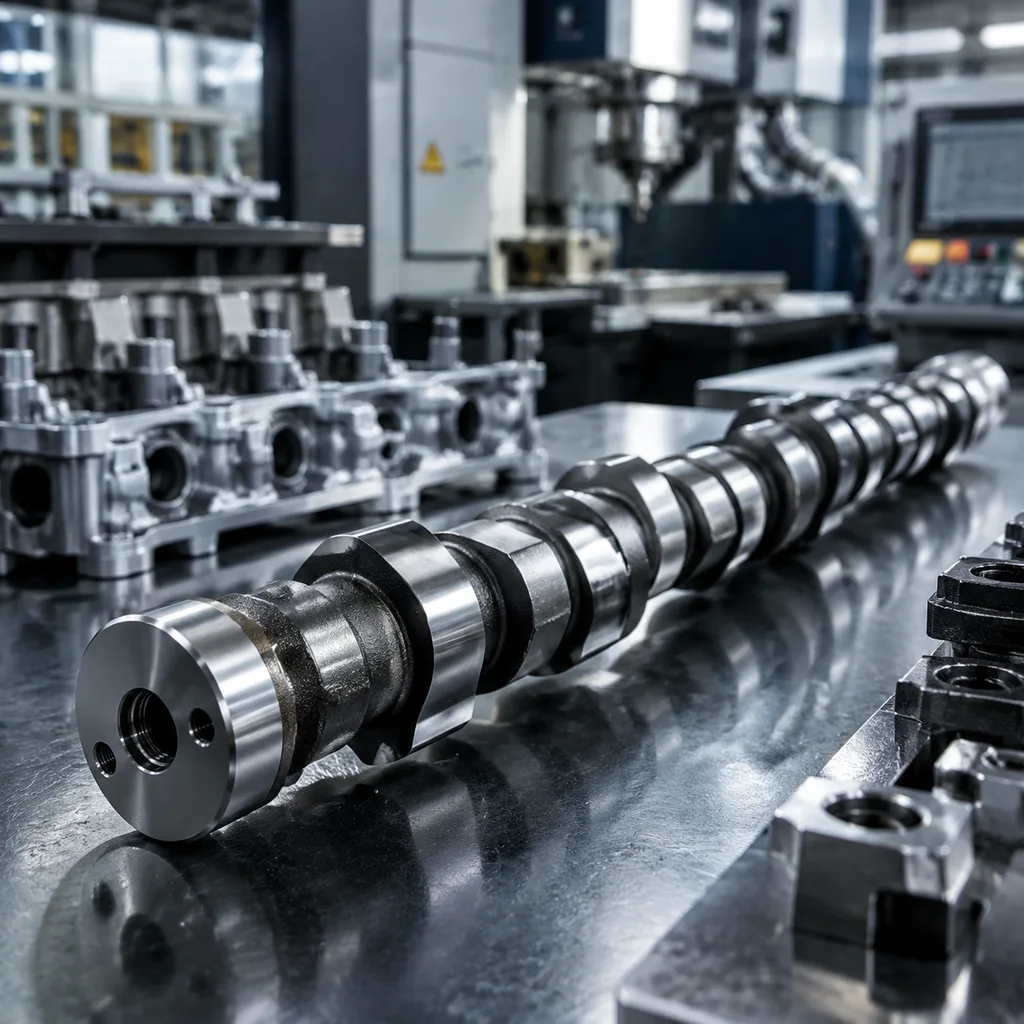
A camshaft for Honda Accord aftermarket replacement has to match the intended engine family, timing layout, journal dimensions, lobe profile, oil-feed geometry and surface finish before it is suitable for a bulk aftermarket program. For importers, repair-chain buyers and category managers, the risk is broader than a single fitment mistake: inconsistent metallurgy, weak lobe hardening, incorrect machining or unstable packaging can create warranty exposure across many branches and markets. This guide sets out practical sourcing checks for Accord replacement camshafts used in independent aftermarket programs, with emphasis on OE-equivalent matching, dimensional verification, validation testing, packaging control and documentation. Driventus manufactures engine and powertrain components in Taizhou, Zhejiang, under IATF 16949:2016 and ISO 9001:2015 controls, supplying distributors, wholesalers, OEM/Tier-1 projects and repair networks in more than 60 countries. Driventus is an independent aftermarket manufacturer; brand names are referenced for fitment only.

Fitment Scope and OE-Equivalent Matching

Accord camshaft demand covers multiple petrol engine architectures, model years and market variants. A replacement program should be managed by engine code, valve-train type, camshaft position and application range rather than by vehicle name alone. This is especially important where different markets use similar model names but different engines, emissions packages or timing systems.

Buyers should request a fitment matrix that separates intake and exhaust camshafts where applicable. The matrix should identify variable valve timing interfaces, trigger features, oil-control passages, journal count and any market-specific application notes. It should also show the production-year range and the corresponding engine code, so catalog teams, warehouse staff and aftersales teams all work from the same reference.

For aftermarket distributors, the most reliable cross-reference process starts with OE sample measurement, engine-code confirmation and packaging label control. OE-style numbers or competitor references should be treated as fitment cross-references only, not as proof of vehicle manufacturer approval. If an internal catalog uses a generic reference such as OE 06A… or OE 11251… for another part family, the same discipline applies: confirm the actual sample, drawing and critical dimensions before purchase release.

Useful buyer checks include:

  • Engine code, displacement and production-year range confirmation
  • Intake, exhaust or single-camshaft position identification
  • Cam sensor, trigger-wheel or timing-reference feature verification
  • Variable valve timing interface check, where fitted
  • Bearing journal count, diameter and oil-hole alignment
  • Lobe orientation and timing relationship against the approved sample
  • Packaging label, barcode and carton traceability review

Buyers can review related engine parts in our catalog and the engine range at /products/engine-components.html.

Dimensional and Material Requirements

A camshaft replacement must maintain timing accuracy, valve lift, bearing support and oil-film stability throughout the service interval. Small deviations in lobe geometry, journal diameter or surface finish can lead to valvetrain noise, accelerated wear, poor lubrication or timing deviation. Procurement specifications should therefore define measurable acceptance criteria instead of relying on visual approval or a basic sample fit.

</tr></thead><tbody> </tbody></table>Material selection depends on engine design, load level and buyer price point. Common manufacturing routes include chilled cast iron, ductile iron and forged steel, depending on lobe design, valvetrain stress and production economics. The selected route should be supported by incoming material certificates, heat-treatment records, machining controls and final inspection data.

For high-volume replacement programs, buyers should ask for a control plan, process flow diagram and PPAP-style evidence when their internal sourcing process requires it. Critical dimensions should be linked to inspection frequency, gauge method and reaction plan, so the approved sample can be reproduced consistently during mass production.

Driventus applies IATF 16949:2016 and ISO 9001:2015 process controls for automotive component manufacturing. The quality system includes incoming inspection, in-process checks, final dimensional inspection and batch traceability.

Validation Tests for Replacement Camshafts

A camshaft for Honda Accord aftermarket replacement should be released only after dimensional, metallurgical and functional validation. For procurement teams, the main question is whether the supplier can repeat the approved condition across production lots, not simply whether one sample can be installed in an engine.

Recommended validation evidence includes:

  • 100% key-dimension inspection for pilot lots
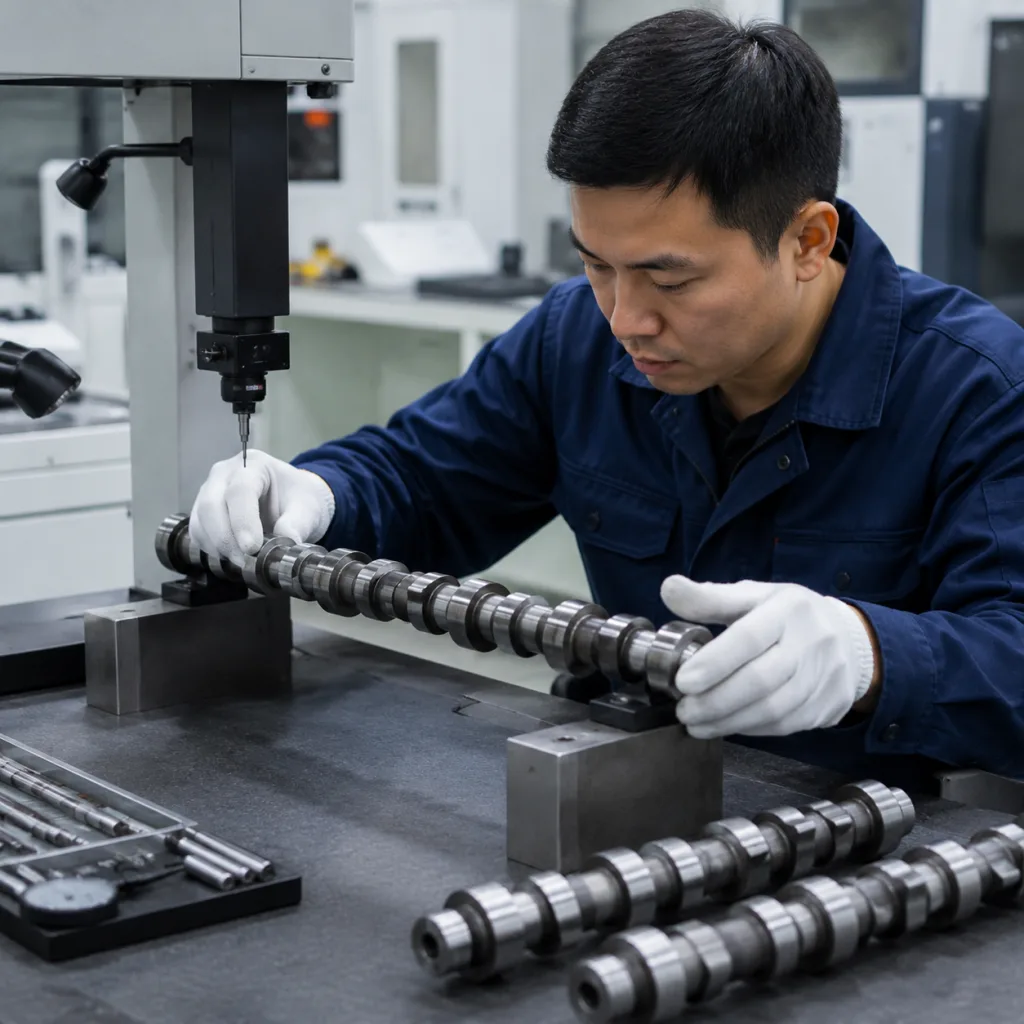
  • Lobe profile measurement against an approved master sample or drawing
  • Journal runout inspection after machining and heat treatment
  • Surface hardness and case-depth verification where applicable
  • Magnetic particle or other crack detection for selected production routes
  • Metallographic structure review for cast or heat-treated material
  • Timing feature, sensor interface and phaser-contact measurement
  • Oil-hole position and cleanliness checks for lubrication reliability
  • Rust-prevention and packaging validation for export handling

Where a repair-chain customer has high warranty sensitivity, buyers may also request bench fitment with mating components such as rocker arms, followers, cam caps, phasers or timing gears. In some programs, a limited installation trial or controlled field release can help confirm noise level, oiling behavior and application accuracy before full distribution.

Any validation plan should define sample size, acceptance limits, gauge method, reporting format and retention period. Retained samples are useful when investigating later claims because they allow the buyer and supplier to compare field returns with the original approved condition.

Published management standards such as IATF 16949:2016 and ISO 9001:2015 support process discipline, but they do not replace part-specific validation. For chemical compliance in export markets, buyers may also request declarations aligned with REACH (EC) No 1907/2006, especially for coated parts, rust-preventive oils and packaging materials.

Procurement Specification Checklist

For import programs, the purchase specification should be clear enough for engineering, quality, warehouse and aftersales teams to use the same reference. Ambiguous descriptions such as “Accord camshaft” can lead to mixed applications, incorrect labeling and high return rates, even when the part itself is well manufactured.

A practical sourcing file should include:

  • Vehicle application range by market, year and engine code
  • Part position: intake, exhaust or single overhead camshaft
  • Approved drawing, 3D file or measured sample report
  • Material grade and heat-treatment route
  • Critical-to-quality dimensions and tolerances
  • Lobe profile data and timing-reference features
  • Surface hardness, roughness and runout limits
  • Oil-hole location and cleanliness requirement
  • Marking, label and carton requirements
  • Rust prevention method and storage-life target
  • Inspection report format for each shipment
  • Non-conformance handling and warranty data process

For large distributor programs, packaging is part of the technical specification. Camshafts require rigid support, corrosion protection and separation from carton walls to prevent impact damage during sea freight, inland transport or courier redistribution. A suitable pack should protect the journals and lobes from dents, moisture and abrasive contamination while remaining practical for warehouse picking.

Export cartons should be checked for stacking strength and labelled with batch codes that connect field claims to production records. Pallet layout, carton weight, barcode format and private-label artwork should be agreed before mass production, not corrected after goods are ready to ship.

If the buyer needs a private-label version, a modified lobe design for a non-standard project or a controlled drawing package, Driventus can review feasibility through custom manufacturing.

Supplier Evaluation for B2B Replacement Programs

A supplier evaluation should verify manufacturing capability, inspection discipline, change control and export reliability. Camshafts require stable machining, controlled heat treatment and accurate final inspection. A low unit price is not useful if the supplier cannot control lobe hardness, journal runout, application data or batch traceability.

Parameter Typical procurement check Why it matters
Overall lengthDrawing or sample matchControls axial fit and sensor alignment
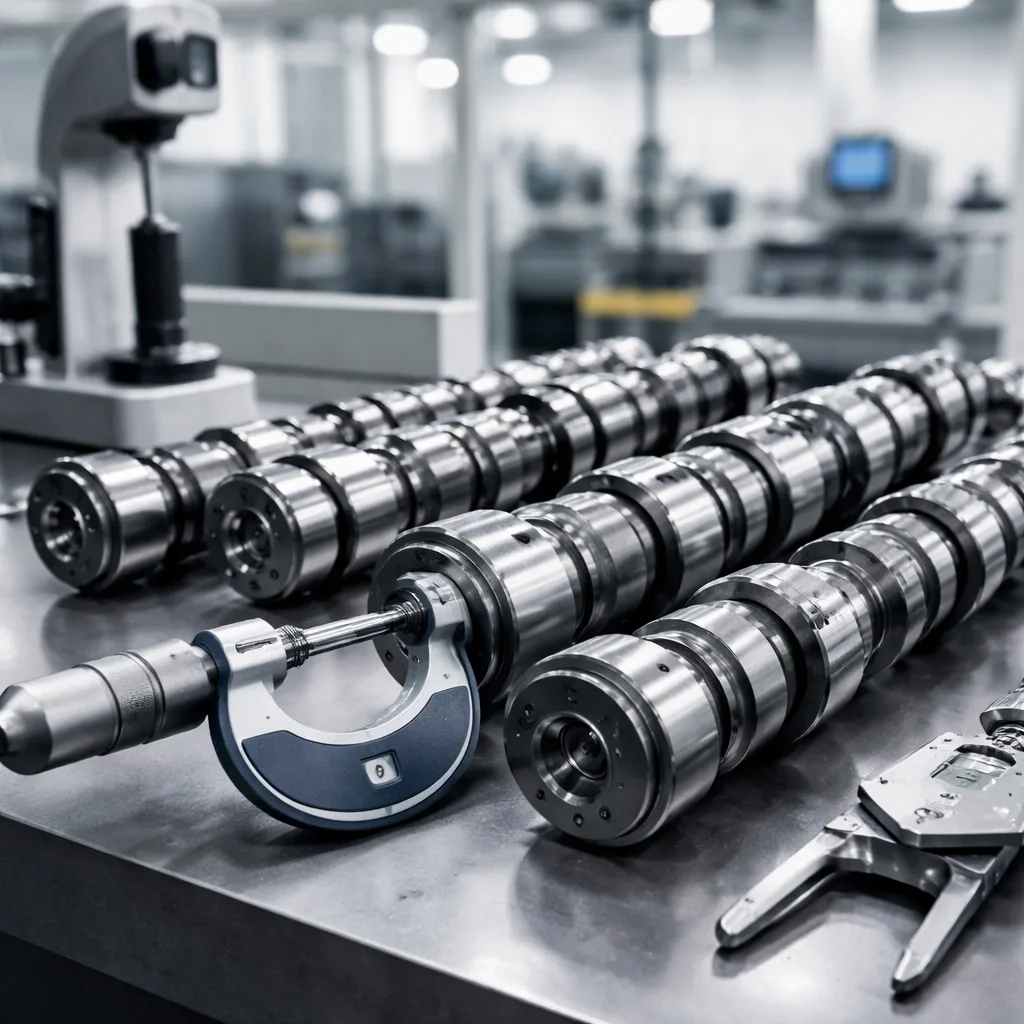
Journal diameterMicrometer inspection by journalMaintains oil clearance and bearing support
Lobe liftProfile measurement or CMM checkControls valve opening and engine performance
Base circleProfile or comparative measurementSupports correct lash and follower contact
RunoutV-block and dial indicator inspectionReduces vibration and uneven bearing load
Surface roughnessRa check on journals and lobesSupports lubrication film and wear resistance
Oil-hole positionGauge or CMM verificationPrevents lubrication starvation
Hardness depthMetallurgical section or process validationProtects lobes and journals from scuffing

</tr></thead><tbody> </tbody></table>Procurement teams should also audit gauge calibration, sample retention, change-control procedures and subcontracted processes such as heat treatment, casting, forging or surface treatment. If the supplier changes a casting source, machining fixture, coating, rust-prevention oil or packaging format, the buyer should receive change notification before shipment.

A strong supplier should be able to explain how approved samples are protected from uncontrolled changes. This includes drawing revision control, first-article checks after tooling adjustment, operator inspection instructions and a clear escalation process when measurements trend toward tolerance limits.

Driventus supplies aftermarket distributors, wholesalers, OEM/Tier-1 customers and multi-location repair chains. For camshaft projects, buyers can provide application lists, annual volume, target packaging and destination-market requirements before requesting quotation.

Commercial Notes for Importers and Repair Chains

For replacement programs, commercial planning should be tied to application coverage, inventory turnover and defect containment. Slow-moving engine variants may need lower MOQ, shared production planning or mixed-carton consolidation, while high-volume Accord applications may justify tooling, dedicated packaging, scheduled replenishment and periodic safety stock.

Key commercial points to clarify before order placement include sample lead time, mass-production lead time, MOQ by part number, carton quantity, pallet dimensions, incoterms, inspection documentation and spare packaging labels. Buyers should also define how supersessions, application updates and label changes are communicated to their ERP or catalog system.

Warranty handling should be agreed at the same stage as price and delivery terms. A practical process defines what evidence is needed for a claim, how returned parts are identified, whether photos are acceptable for initial screening and how corrective actions are reported. This helps prevent isolated installation issues from being confused with batch-level manufacturing problems.

A camshaft for Honda Accord aftermarket replacement is usually purchased as part of a broader engine repair range. Distributors often combine camshafts with gaskets, timing components, pistons, water pumps and other engine parts to reduce freight cost and simplify supplier management. Driventus can quote individual camshafts or a wider engine-component package depending on the buyer’s stocking strategy.

Driventus is an independent aftermarket manufacturer; brand names are referenced for fitment only. For drawings, sample review or batch quotation, buyers can request a quote.

Frequently asked questions

Confirm by engine code, model year, market, camshaft position and valve-train layout. Request dimensional reports and compare the supplied part with an approved sample or drawing before bulk release.

Typical documents include material certificates, dimensional inspection reports, hardness data, process flow, control plan, packaging specification and batch traceability records. Higher-risk programs may also request PPAP-style evidence.

No. Driventus is an independent aftermarket manufacturer; brand names are referenced for fitment only. Replacement parts are supplied according to agreed drawings, samples, specifications and buyer validation requirements.

If you are sourcing Accord camshafts or a wider engine-component program, share your application list, annual volume and packaging requirements. Driventus can review fitment data and respond with a practical quotation through /contact.html

Request a Quote
Evaluation area Buyer question Evidence to request
CertificationIs the process managed under automotive quality systems?IATF 16949:2016 and ISO 9001:2015 certificates
EngineeringCan the supplier measure and reproduce OE-equivalent geometry?Drawings, CMM reports, profile reports
MetallurgyAre hardness and microstructure controlled?Material certificates, heat-treatment records
InspectionAre key dimensions checked with calibrated gauges?Gauge list, calibration records, inspection reports
TraceabilityCan each carton link to a batch?Batch code system and retained records
Export supportCan documentation meet destination-market needs?Packing list, invoice, compliance declarations
Corrective actionCan claims be contained quickly?8D reports and retention samples