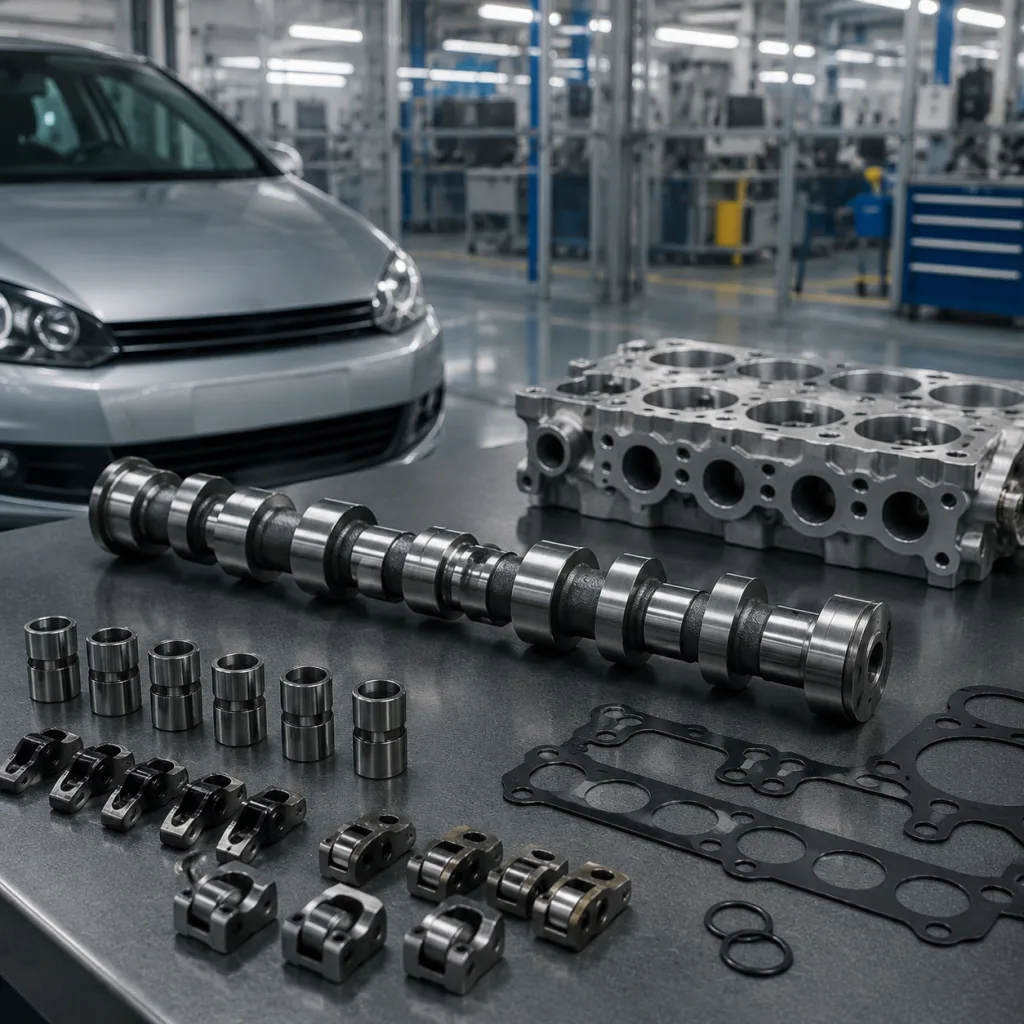
Camshaft for Volkswagen Golf Replacement: OE Match Guide
Choosing a camshaft for Volkswagen Golf replacement is a fitment and validation exercise, not a branding exercise. For procurement teams and workshop buyers, the main risks are incorrect lobe timing, journal size mismatch, the wrong cam profile, and inconsistent surface finish. A correct replacement should match the OE drawing on key dimensions, material specification, heat treatment, and runout. Driventus is an independent aftermarket manufacturer; brand names are referenced for fitment only. Our production is controlled under IATF 16949:2016 and ISO 9001:2015, with traceability checks and dimensional inspection for each batch. If you are sourcing for aftermarket distribution, a repair chain, or an engine reman line, the practical question is straightforward: does the part install, time correctly, and pass validation without rework?
Camshaft fitment: the decision framework
A camshaft replacement should be selected against the OE specification, not only the vehicle model name. For Volkswagen Golf applications, the buyer should confirm the engine code, cylinder count, valve count, cam drive type, and sensor target geometry.
Key points to verify:
- Journal diameter and length
- Overall shaft length and thrust surface location
- Lobe lift, base circle, and lobe separation
- Nose hardness and surface finish
- Keyway, sprocket flange, or timing gear interface
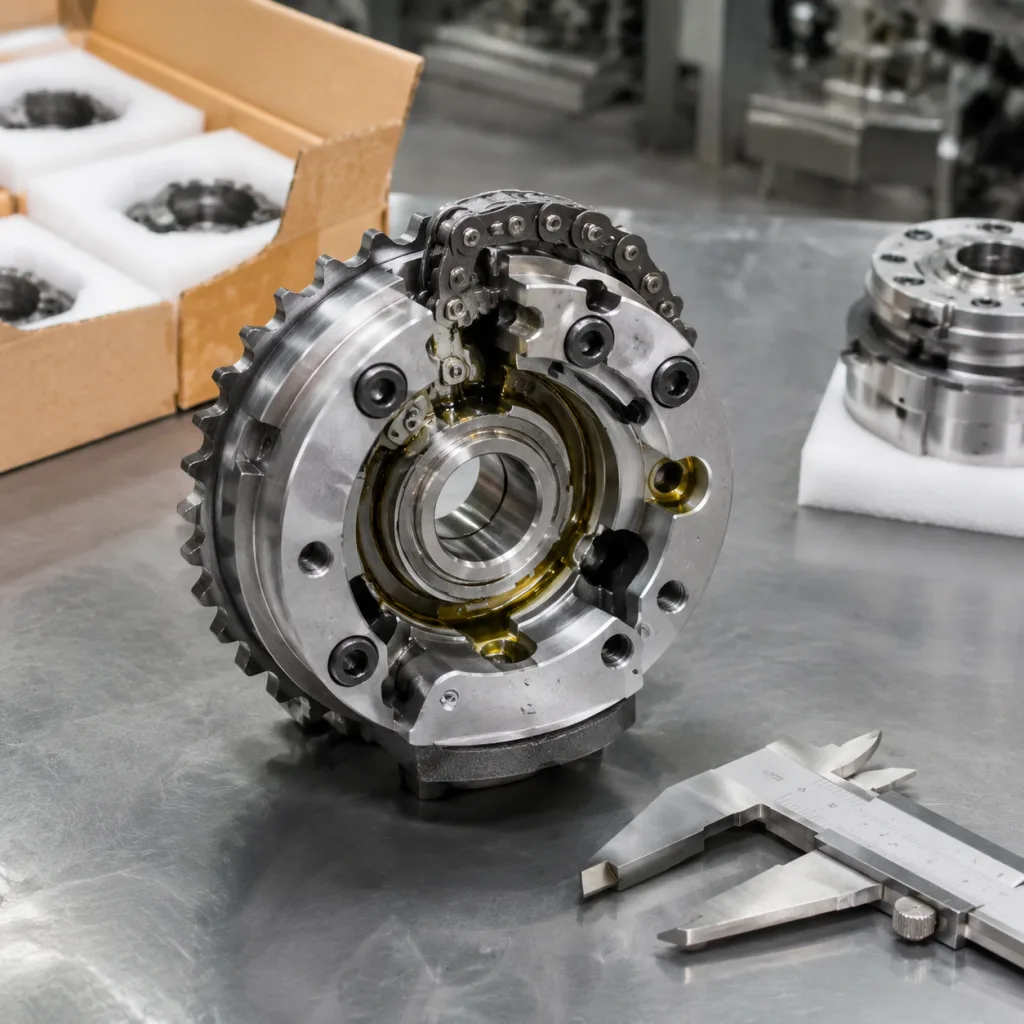
- Trigger wheel position for VVT or position sensing
Where an OE reference is available, use OE cross-references the same way you would use a drawing number. For example, a replacement may be listed against OE 06A107065 when the application calls for that reference. The goal is dimensional equivalence and stable valve timing, not a generic fit claim. For buyer-side qualification, request a target drawing or sample part and confirm the following practical limits before approval: journal diameter should stay within the OE bearing clearance window, shaft length should not vary enough to change thrust loading, and lobe lift should remain within the accepted event-timing tolerance used by the engine family. In many procurement programs, that means verifying critical dimensions to the drawing tolerance and rejecting any part that drifts beyond the OE limit, even if it visually matches.
Where replacements fail in practice
Most camshaft sourcing problems show up after the first install, not on the purchase order. The usual failure modes are predictable: the part is dimensionally close but not exact, the finish is acceptable by eye but rough under load, or the phasing is right for one engine code and wrong for another.
Watch for these mismatch patterns:
- Correct Golf application, wrong engine code
- Same OE family, different trigger or sprocket geometry
- Journal size that changes bearing clearance
- Lobe profile that alters valve timing or lift
- Surface hardness that is too low for the follower type
- Runout that creates noise, wear, or timing variation
The cheapest quote is often the one that misses a hidden variable. That matters most for fleet buyers, remanufacturers, and repair networks, where one bad batch creates repeat claims. A useful control is to compare the sample part against the OE drawing and the engine code list at the same time. If either one is incomplete, pause approval. The question is not whether the camshaft looks right in isolation. It is whether it behaves like the OE part across installation, break-in, and service life.
Spec deep-dive: materials, finish, and hardness
Most replacement camshafts are produced from either chilled cast iron or forged/alloy steel, depending on the engine family and duty cycle. The correct choice depends on lobe loading, expected mileage, and whether the engine uses bucket tappets, roller followers, or hydraulic lifters.
Common production points
- Hardness must suit the lobe and follower design
- Fillet radii must be controlled to reduce stress concentration
- Journal finish must support oil film formation
- Heat treatment must be uniform across the shaft
- Critical faces should be checked for burrs and damage after machining
For fleet and reman buyers, a camshaft that meets the drawing but fails on finish or hardness is still a poor purchase. Ask for batch-level hardness data, profilometer results where available, and final visual inspection records. This is especially important when the part is used in a high-mileage repair programme. In practice, buyers should define a hardness band rather than a single point target when the OE spec allows it, and should confirm the testing method, sample size, and location on the shaft. A useful sourcing package includes material grade, heat-treatment process, surface finish target, and an inspection plan that names the measuring instrument and frequency. If the application uses a coated or nitrided surface, ask for coating thickness or case-depth data as well, because surface treatment variation can change follower wear long before the part fails mechanically.
Validation checks before purchase
For procurement, replacement quality is proven by inspection data and installation consistency. A supplier should provide measurable evidence, not application text alone.
| Check | Why it matters | Typical buyer expectation |
|---|---|---|
| Journal diameter | Prevents bearing wear and oil pressure loss | Within OE tolerance |
| Cam lobe lift | Preserves valve event timing | Match to OE drawing |
| Total indicated runout | Reduces vibration and timing variation | Controlled to drawing limit |
| Surface hardness | Improves wear resistance | Verified by batch test |
| Phasing and index | Keeps valve timing correct | Consistent across production lots |
| Cleanliness | Protects bearings and lifters | Post-wash inspection |