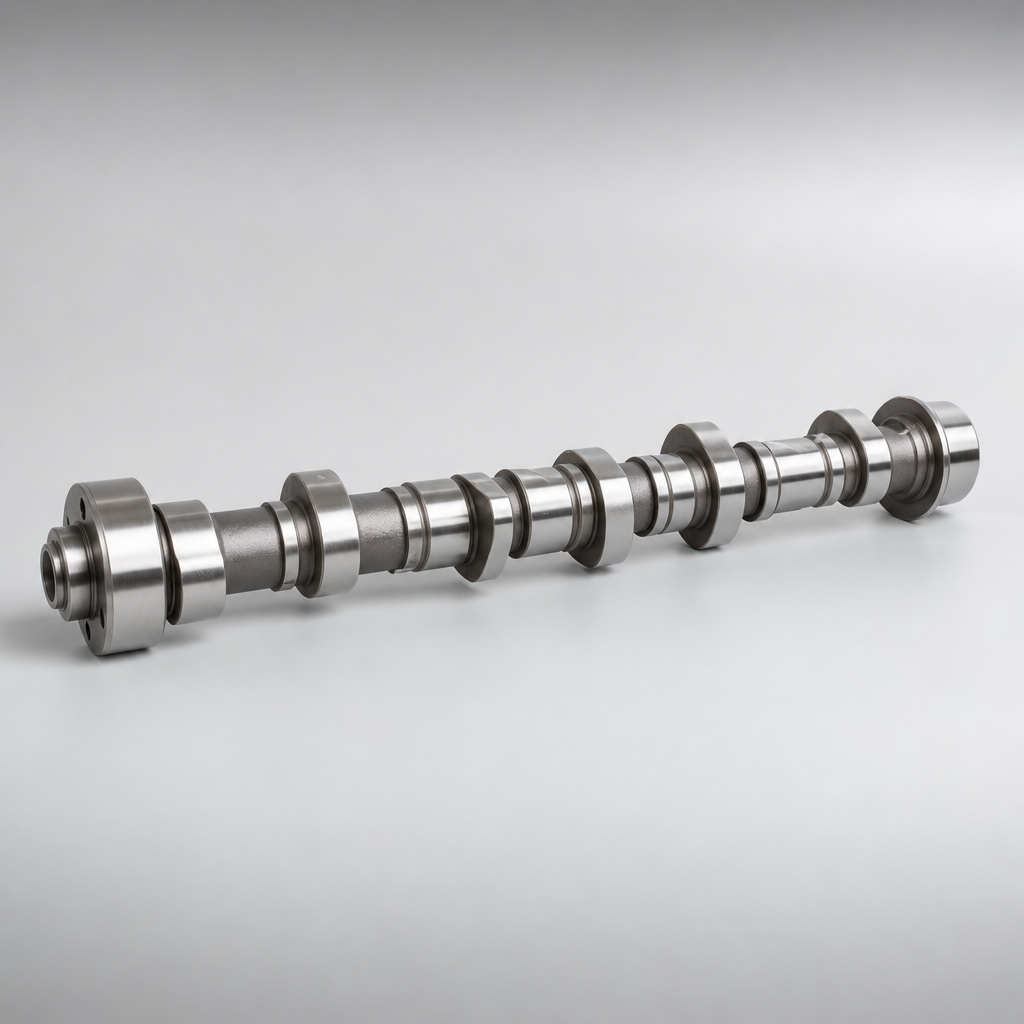
A camshaft phaser Acura wholesale program fails or succeeds on repeatable detail: correct engine coverage, stable oil-control behavior, clean machining, traceable lots, and replenishment that matches real demand. Unit price matters, but it is only useful after the part has been tied to the right engine code, cam position, phasing range, and inspection standard. Distributors, repair chains, and OEM-related supply programs should treat the first quote as a qualification exercise, not a purchase decision. Driventus manufactures engine and powertrain components in Taizhou, Zhejiang, and supplies B2B customers in more than 60 countries. Driventus is an independent aftermarket manufacturer; brand names are referenced for fitment only. This guide gives procurement teams a practical framework for checking cross-references, critical dimensions, validation records, MOQ structure, quality controls, packaging, landed cost, and RFQ data before committing to volume orders.
Start With the Buying Decision: Can This Supplier Repeat the Same Phaser?
The first question is not “does it fit?” It is “can the supplier repeat the approved specification for every lot after the sample?” A camshaft phaser is a hydraulic or electro-hydraulic timing device. Small variation in vane geometry, internal clearance, lock-pin behavior, or oil passage cleanliness can turn an apparently correct part into a warranty problem.
For Acura applications, qualification should connect the part to the exact engine family, actuator type, camshaft position, and OE-style cross-reference. Avoid broad model-name claims. They hide risk.
Before sampling, request the baseline file:
Engine family and application coverage, including displacement, model year range, and market
OE cross-reference list by engine code, not by generic model name
Intake or exhaust position confirmation where separate phasers are used
Material specification for housing, rotor, vane, spring, lock pin, and fasteners
Critical dimensions with target values and tolerances, including bolt circle, bore, face height, oil port width, and trigger feature location
Sample inspection report with at least 3 to 5 measured pieces from the quoted lot or pilot batch
Packaging method that protects oil ports, seal faces, and machined surfaces during sea freight and warehouse handling
Country-of-origin statement and traceability to batch, date code, line, and inspection record
Set the approval route in writing. A practical route is 5 pieces for bench measurement, 2 pieces for installation verification, and 1 retained master sample for future batch comparison. The retained sample matters. It gives both sides a physical reference when later production, warehouse stock, or warranty claims need to be checked against the original approval.
Fitment Failure Modes That Create Returns
Wholesale sourcing for Acura is an engine-level exercise. The same nameplate may use different cam phasing hardware by displacement, cylinder count, market, emissions package, cam position, and production year. A catalogue line can look tidy and still be wrong.
Use this review sequence before releasing a trial order:
1. Confirm engine code, displacement, valve-train layout, model year range, and destination market. 2. Match intake or exhaust position, or both if the platform uses paired phasers. 3. Check hub count, drive interface, oil control path, dowel style, and connector style if the assembly includes an electrical actuator or related control feature. 4. Compare mounting depth, bolt pattern, dowel location, trigger geometry, timing mark orientation, and face-to-face height with a caliper or height gauge. 5. Validate the supplier's cross-reference against original samples or proven aftermarket samples, not only catalogue data. 6. Lock the approved drawing revision, packaging label, and interchange list before the trial order is released.
Typical return drivers are small and expensive: a 1 mm mounting-depth error, a reversed timing mark, an oil-feed hole offset by 0.5 mm, or an intake phaser listed as exhaust. These defects may not be visible during receiving inspection. They appear when the installer is already inside the timing system.
For a camshaft phaser Acura wholesale program, the fitment claim also has to be written cleanly. Driventus avoids claiming manufacturer approval. Driventus is an independent aftermarket manufacturer; brand names are referenced for fitment only. Keep that distinction in procurement files, marketplace listings, and customer-facing compatibility notes.
Specification Deep-Dive: Dimensions and Functions Worth Measuring
Do not approve a camshaft phaser on application data alone. The part has functional surfaces, oil-control paths, spring-loaded features, and rotating interfaces that should be reviewed in a sample inspection, production control plan, or PPAP-style package depending on program risk.
Ask the supplier to mark critical-to-function dimensions on the drawing and show the gauge method used for each feature.
Item
What to verify
Practical target for RFQ review
Housing material
Cast or machined alloy specification, hardness, and heat treatment where applicable
Material grade stated on drawing; hardness band recorded, not only visual approval
Rotor and vane finish
Surface roughness, edge condition, and burr control
Ra value or supplier limit stated; oil-contact edges deburred with no loose chips
Lock pin behaviour
Engagement, release pressure, spring force, and reset consistency
Release pressure and spring force reported across samples; delayed release logged as a defect
Oil port alignment
Port geometry, chamfer condition, and contamination control
Port position checked to drawing; chamfer consistent; no machining residue visible after cleaning
Axial and radial play
Measured against supplier drawing and functional limits
Axial clearance and radial play recorded in mm with upper and lower limits
Torque behaviour
Running torque, breakaway torque, and rotation smoothness
Breakaway/running torque recorded in N.m; no sticking, scraping, or abnormal noise
Phasing range
Angular travel and stop position
Total travel measured in degrees and compared with OE-style reference sample
Sealing surfaces
Flatness, finish, and handling protection
Flatness and surface finish recorded; protected from carton abrasion
Packaging cleanliness
Caps, VCI, sealed bags, and partitioned cartons
Oil ports capped or bagged; individual separation in carton; drop-test method confirmed
</tr></thead><tbody> </tbody></table>Measured values are stronger than pass/fail labels. For tighter programs, define the sample size in the RFQ, such as a 5-piece dimensional layout for approval and AQL inspection for production lots. Also ask whether gauges are calibrated, whether go/no-go fixtures are used for bolt pattern and drive interface, and whether cleanliness is checked after final washing rather than before assembly.
Validation Evidence: Questions That Separate Data From Claims
A useful validation file tells you how the phaser behaved under pressure, oil temperature, cycle count, and failure review. A weak file says the sample was tested and passed. That is not enough for wholesale risk control.
For camshaft phasers, the most relevant checks are functional, leakage-related, noise-related, and durability-based. The test record should show sample quantity, oil grade, pressure range, temperature range, cycle count, acceptance criteria, and failure description.
Common system references include IATF 16949:2016 for automotive quality management discipline, ISO 9001:2015 for broader process control, and material or environmental compliance where applicable such as REACH (EC) No 1907/2006. For performance validation, buyers often ask for internal evidence covering phase response, oil leakage, cold-start operation, lock-pin function, torque behaviour, and endurance cycling. Where the target application is emissions-sensitive, buyers may also ask how the component interfaces with vehicle-level calibration and whether the design can support compliance work under ECE R-83 where relevant to the complete vehicle system.
Ask direct questions:
What is the acceptance band for phase response in degrees and milliseconds under the stated oil pressure?
How many cycles were run in durability testing, and at what oil temperature range, such as cold oil, normal operating temperature, and high-temperature soak?
Was the part tested with the intended oil viscosity range, for example 0W-20, 5W-20, or 5W-30 where applicable to the target market?
What is the internal leakage limit, and is it measured at idle-like and high-pressure conditions?
Are noise, leak, delayed-lock, no-release, over-travel, under-travel, and seizure modes logged separately?
Is there traceability from validation sample to production lot, machining line, assembly date, and final inspection report?
What changes trigger revalidation or customer notification, such as material change, tooling change, coating change, supplier change, or process relocation?
A supplier that cannot answer with documents is a sourcing risk, not a bargain. Good validation evidence also helps distributors review later claims involving installation error, oil contamination, incorrect oil viscosity, or wrong application selection.
MOQ and Lead-Time Planning by Order Stage
Wholesale buyers need a supply pattern, not a one-off production run. MOQ should support qualification, launch, and replenishment without forcing slow stock into the warehouse. Lead time should be split by sample, trial order, repeat order, and mass production.
A practical model is staged:
Sample order: 5 to 10 units, enough for fit check, bench test, documentation review, and retained samples
Trial order: 50 to 200 units per SKU for market launch, repair-network pilot use, or first resale batch
Mass order: commonly 300 to 1,000+ units per SKU, scheduled by forecast with agreed release windows
Mixed-SKU order: total MOQ agreed by carton or value, with per-SKU minimums to avoid uneconomic changeovers
Safety stock: 4 to 8 weeks of average demand held at the supplier, importer, or regional warehouse level
Replenishment review: reorder points based on sell-through, return rate, confirmed production capacity, and ocean-freight timing
Lead time should be stated in weeks and separated into machining, assembly, inspection, packing, and export handling. As a planning range, buyers often treat samples as 1 to 3 weeks when drawings and parts are already available, trial orders as 4 to 6 weeks, and mass orders as 6 to 10 weeks depending on casting, machining capacity, packaging, and inspection load. Ocean freight, customs clearance, and inland delivery come after that.
Compare quotes by landed cost. Unit price alone can mislead. A complete quote should state Incoterms, currency, MOQ, tooling or fixture charges if any, carton quantity, pallet quantity, payment terms, sample cost, and whether private-label packaging is included. Also confirm whether the supplier keeps raw castings, machined subcomponents, or finished inventory. Finished-stock programs shorten response time but need tighter warehouse control and lot rotation. Made-to-order programs give more flexibility for private label or mixed applications, but they require forecast discipline and firm order cut-off dates.
Quality System Scenario: What Happens When a Claim Arrives?
Imagine a repair chain reports cold-start noise after installation. The distributor needs to know whether the issue came from fitment selection, oil condition, installation practice, or the phaser itself. Without lot traceability and inspection records, the review becomes guesswork.
That is why quality system control matters in high-mix timing parts. One dimension, one burr, one weak spring, or one oil leak path can create a claim. A buyer should ask how incoming material is controlled, how machining changes are approved, how in-process torque and clearance checks are recorded, and how nonconforming parts are segregated.
Driventus publishes its quality system so procurement teams can review certification scope and process discipline before qualification. Buyers can also review our catalog and, where needed, engine components to align phasers with adjacent timing and valvetrain items in a single sourcing programme.
A disciplined quality file should include:
IATF 16949:2016 and ISO 9001:2015 certificates with valid scope and expiry date
Control plan showing incoming inspection, machining, washing, assembly, function test, final inspection, and packing
Traceability method by lot, date, production line, operator or station, and inspection record
Incoming inspection criteria for alloy, springs, pins, fasteners, seals, and purchased components
In-process records for bore size, face height, vane clearance, oil-port machining, cleaning, assembly, and torque checks
Final inspection records for phase travel, lock-pin release, leakage, cleanliness, appearance, marking, and packaging
Calibration list for calipers, height gauges, torque meters, pressure gauges, and custom fixtures
Corrective action process for customer claims, repeat defects, and containment of stock in transit or warehouse inventory
For repeat orders, request a lot summary with shipment quantity, production date range, inspection result, and any deviation approval. That file gives import managers and sales teams a factual basis for warranty review, stock containment, and customer response.
Distributor vs Repair-Chain Priorities
Distributors and multi-location repair networks buy the same part for different reasons. A distributor cares about shelf movement, barcode control, carton strength, return handling, and compatibility data that will not inflate claims. A repair chain cares about installation confidence, repeat identification, predictable replenishment, and fewer bay delays.
Both groups need commercial details before award:
Master carton quantity, inner-box quantity, gross weight, net weight, carton dimensions, and palletisation
Barcode, SKU, batch code, date code, and country-of-origin marking requirements
Label language support for export markets, including part number, application note, and fitment disclaimer
Return handling process for fitment disputes, suspected quality claims, and no-fault returns
Availability of replacement seals, bolts, timing components, oil control valves, or related valvetrain items
Rules for artwork approval, carton strength, moisture protection, drop testing, and mixed-SKU shipments
Commercial terms covering MOQ, price breaks, lead time, payment terms, warranty window, and claim evidence
A useful price table should show breaks by quantity, such as sample, 100 pieces, 300 pieces, 500 pieces, and 1,000 pieces where applicable. Do not assume the lowest bracket is the best decision. If it creates 12 months of slow-moving stock, the carrying cost can erase the unit-price benefit. Compare price breaks against sell-through, return rate, storage cost, and emergency replenishment cost.
If your programme needs different packaging, private label, or bundle configuration, Driventus offers custom manufacturing for B2B accounts. This is useful when a buyer wants one specification for multiple sales channels, or when a regional importer needs a controlled label, carton, and pallet standard across recurring shipments. For private label, provide the artwork file, barcode rule, carton burst-strength requirement, pallet height limit, and any marketplace label restrictions before final quotation.
RFQ Walkthrough: Send the Data That Changes the Quote
A clean RFQ shortens quotation time because it removes assumptions. For camshaft phaser Acura wholesale sourcing, the supplier needs the exact engine code, OE reference if known, sample photos, target annual volume, destination market, and required compliance documents. If you already have return data, noise complaints, cold-start rattle reports, delayed timing response, or a known fitment issue from another source, include it during evaluation.
Use this RFQ structure:
Engine code and vehicle application
Model year range, production market, and destination market
Intake or exhaust phaser position
OE reference or verified cross-reference
Photos of the front face, rear face, oil ports, drive interface, trigger features, timing marks, and markings
Physical sample availability and required sample quantity
Target quantity by month or quarter, plus first-order quantity and annual forecast
Required certificates, inspection reports, validation reports, and material declarations
Dimensional requirements or known critical dimensions if the buyer has a drawing or master sample
Packaging and labelling rules, including carton quantity, barcode, language, and private-label needs
Incoterms, destination port, currency, payment terms, and preferred shipping mode
Expected launch date, reorder point, safety-stock plan, and replenishment schedule
That information lets the supplier quote the correct part, flag fitment exceptions early, and recommend sampling, trial order, or direct replenishment. It also separates unit price from tooling, packaging, testing, and logistics so the buyer can compare offers on a landed-cost basis. To move from evaluation to pricing, request a quote with the application data and expected launch schedule.
Driventus is an independent aftermarket manufacturer; brand names are referenced for fitment only.
Frequently asked questions
Yes. Driventus supplies B2B wholesale volumes for aftermarket distribution, repair networks, and OEM-related programmes. The buyer should provide the engine code, OE cross-reference, cam position, sample requirement, and target quantity so the correct application, MOQ, lead time, and price break can be reviewed and quoted.
No. Driventus is an independent aftermarket manufacturer; brand names are referenced for fitment only. We supply parts by verified application and cross-reference, not by manufacturer endorsement.
Ask for IATF 16949:2016 and ISO 9001:2015 certificates, inspection data with measured values, traceability details, material information, validation evidence, packaging specifications, and lot-control records. For regulated markets, request REACH-related declarations where applicable.
Yes. Driventus supports custom manufacturing and packaging for B2B accounts when the order profile justifies it. Share carton size, label language, barcode format, pallet limit, artwork rules, MOQ target, and market requirements in the RFQ so the quotation reflects the real supply model.
Send your application data, OE reference, target volume, MOQ range, and launch schedule, and we will review fitment and supply options for your program. Start here: /contact.html