Camshaft for Skoda Kodiaq Aftermarket Replacement Guide
Buying a camshaft for Skoda Kodiaq aftermarket replacement is a fitment exercise, not a badge exercise. The correct part has to match the engine code, valve-train layout, sensor trigger pattern, lobe geometry, and any variable valve timing hardware used on the specific engine variant. Driventus is an independent aftermarket manufacturer; brand names are referenced for fitment only. For procurement teams, the main risks are dimensional drift, incorrect heat treatment, and incomplete validation documents. This article explains what should be checked before ordering, which inspection data matter, and how to compare aftermarket supply against OE or reconditioned options. If you need a part built to a drawing, sample, or verified OE cross-reference, the same rules apply: confirm the engine family first, then validate geometry, material, and traceability before release.
What a Correct Replacement Must Match
A camshaft is acceptable only when its physical and functional characteristics match the target engine. The listing name alone is not enough.
Check item
What should match
Why it matters
Base circle and lobe lift
Intake and exhaust profile to drawing tolerance
Controls valve opening and closing events
Journal diameter and spacing
Bearing fit and axial support
Prevents oil film loss and premature wear
Lobe phasing
Valve timing relationship
Affects torque, idle quality, and emissions control
Thrust surface and end play
Axial control method
Reduces noise and timing instability
Sensor trigger wheel
Tooth count, position, and indexing
Required for accurate cam signal reading
Material and hardening
Cast, forged, nitrided, or induction-hardened spec
Determines wear life under load
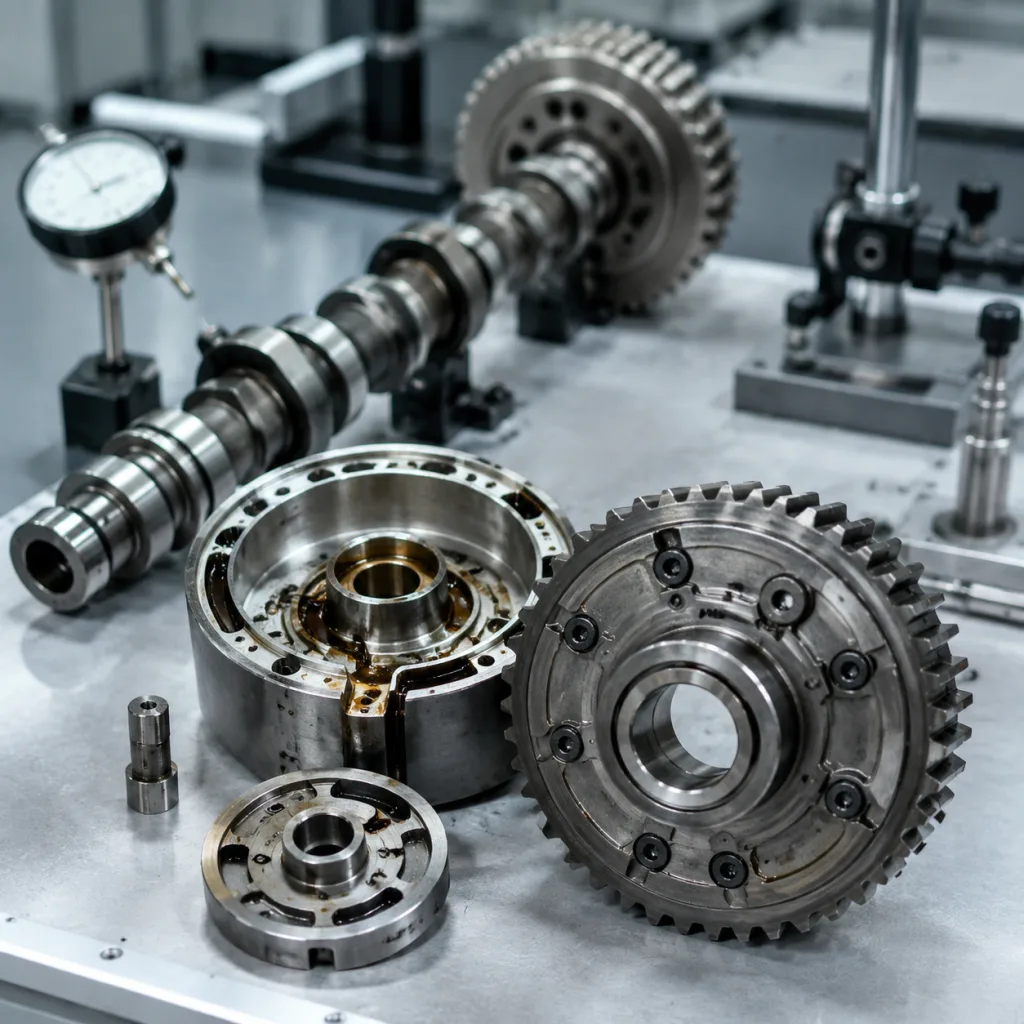
</tr></thead><tbody> </tbody></table>For engines with variable valve timing, the phaser interface must also match the shaft-end geometry and locking arrangement. If one of those points is wrong, the part may install but still fail on timing correlation, MIL checks, or accelerated lobe wear. Use drawing-level data and measured samples, not marketing descriptions. For broader range selection, see our catalog and the related engine components.
Kodiaq Fitment Checks Before Ordering
The Skoda Kodiaq name covers multiple petrol and diesel applications across model years and markets. That means a single badge does not define the part.
Before release, confirm these items:
Engine code and model year
Intake or exhaust side application
Variable valve timing hardware, if fitted
Cam sensor wheel pattern and indexing
Cylinder head revision and bearing cap layout
OE cross-reference, when available from the build record
Packaging requirement for export and warehouse handling
A procurement team should treat the VIN as a starting point, not the final answer. A VIN lookup can still miss replacement heads, mixed production runs, or regional engine variants. The safest control is a sample comparison against the removed part or an engineering drawing. If the part is being sourced for a repair chain or distributor network, lock the fitment rule before ordering volume so returns do not climb later.
Driventus supports fitment review as part of supply planning through custom manufacturing when a standard catalogue item is not the right match.
Materials, Surface Hardening, and Wear
A replacement camshaft must survive boundary lubrication, thermal cycling, and repeated contact stress. That is a materials problem as much as a geometry problem.
Common production routes include:
Chilled cast iron for cost-effective profiles with proven wear behaviour
Forged steel for higher-load applications and tighter fatigue requirements
Nitriding for a hardened case with good scuff resistance
Induction hardening for targeted surface depth on critical lobes and journals
The right route depends on engine load, oil-condition sensitivity, and the target service interval. What matters to buyers is not the label on the process, but the evidence behind it: hardness range, case depth, microstructure, lobe finish, and journal concentricity. A camshaft with poor surface finish can pass initial assembly and still fail after a short service cycle if the oil film breaks down.
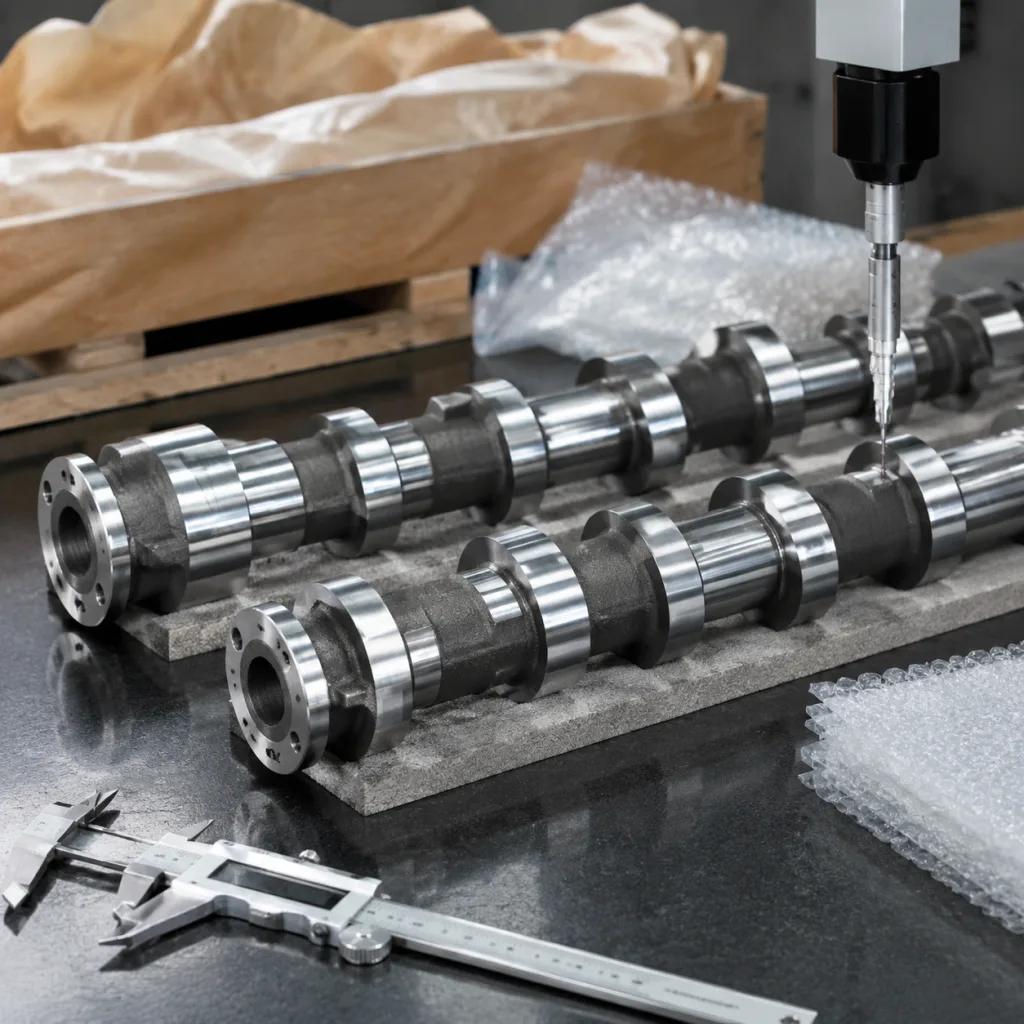
When comparing suppliers, ask for the hardness report, material certificate, and final dimensional inspection record. If those documents are missing, the replacement should be treated as unverified.
Validation and Quality Evidence
For procurement, the key question is whether the part is controlled consistently from batch to batch. That is where process evidence matters.
Driventus works to IATF 16949:2016 and ISO 9001:2015 process control expectations, with chemical compliance aligned to REACH (EC) No 1907/2006. For camshaft supply, the practical outputs are traceable heat lots, measured profiles, and documented release checks.
Documents to request
Dimensional inspection report for journals, lobes, and end features
Material and heat-treatment record
Surface hardness or case-depth evidence where applicable
Traceability record by batch or heat lot
Packaging specification for sea, air, or mixed-mode export
If the camshaft is part of a wider engine validation programme, durability and emissions work may also reference ECE R-83 and SAE J2527 where relevant to the application. Those tests are not a substitute for part-level inspection, but they help confirm that the shaft performs correctly in the assembled engine. Use our quality system to review the control framework before placing a production order.
How Buyers Should Source the Part
A clean sourcing process reduces returns and keeps inventory predictable. The sequence should be simple: identify the engine code, confirm the old part, verify the drawing, then release the order.
If you are buying for a wholesale programme or a multi-site repair network, ask for:
Sample approval against the removed part
OE-equivalence statement limited to fitment and dimensions
Quantity break pricing and lead time by batch size
Export packing detail and carton count per pallet
Replacement policy for transit damage or fitment deviation
Where the application is stable, a standard catalogue item may be enough. Where the market requires a revised profile, packaging change, or regional fitment split, custom manufacturing can be used to align the shaft to the target build. For related valve-train and engine parts, browse our catalog and submit a drawing set if you need a documented quote.
The commercial goal is straightforward: a part that installs correctly, runs quietly, and stays within the planned service life without creating warranty noise.
Frequently asked questions
The VIN helps, but it is not enough by itself. Engine code, production date, and the removed part's measurements are more reliable for fitment control, especially on mixed-market Kodiaq builds.
Yes, if the shaft matches the OE geometry, sensor indexing, material spec, and heat treatment. The buyer should still confirm the drawing, inspection report, and engine variant before release.
Ask for dimensional inspection data, material and hardness records, traceability, packaging spec, and a fitment statement limited to the stated engine code and application. That reduces avoidable returns.
For fitment review, sample comparison, or supply planning, [request a quote](/contact.html).