dual mass flywheel · 2026-06-09

Dual Mass Flywheel Mazda Manufacturer China | B2B Supply

When buyers evaluate a dual mass flywheel Mazda manufacturer China supply option, the deciding factor is not only price. The supplier must hold OE-style geometry, torsional damping behaviour, starter and clutch interface accuracy, and balance consistency across repeat production lots. Driventus supplies B2B aftermarket and OE-linked programmes from Taizhou, Zhejiang, under IATF 16949:2016 and ISO 9001:2015 management controls. Driventus is an independent aftermarket manufacturer; Mazda and other brand names are used only to identify vehicle fitment. A sound sourcing process starts with drawing review, engine and transmission confirmation, and sample validation, then moves into MOQ, lead time, packaging, audit files, and export requirements. Before issuing a production order, buyers should request dimensional reports, material traceability, balance records, and a defined sample-approval route. This guide outlines the checks that matter for distributors, wholesalers, repair chains, and import managers sourcing Mazda applications for the EU, UK, US, Canada, Australia, Brazil, and other export markets.

What buyers should verify before RFQ

A dual mass flywheel should not be sourced from a product photo or a short catalogue description. The first review should confirm application data, transmission code, engine code, clutch interface, and the exact fitment window. If a Mazda programme is being benchmarked against an existing supplier, the request for quotation should include enough detail for engineering and commercial teams to review the same scope.

  • Vehicle model, production year range, engine code, and gearbox type
  • OE reference, where available, or a verified cross-reference family
  • Target annual volume, order frequency, and forecast split by market
  • Packaging requirements, label format, barcode rules, and language needs
  • Validation scope for samples, first article inspection, and production approval
  • Any audit, compliance, or onboarding documents required by the buyer

Use our catalog to review adjacent engine and powertrain lines, and see engine components for related families that often move through the same sourcing workflow. For B2B buyers, value comes from more than a low unit price. The stronger supplier is the one that can confirm fitment, protect lead-time, document each lot, and explain how the part was checked before shipment.

Fitment checks that matter for Mazda applications

The most common sourcing mistake is assuming that two flywheels with similar outside dimensions will perform the same once installed. For a Mazda dual mass flywheel, buyers should verify mass split, bolt pattern, pilot location, ring gear position, starter engagement depth, clutch mounting face, and the permitted rotational free play. If one part number is intended to cover several engine codes or transmission variants, ask for a clear application matrix showing confirmed references, conditional fitments, and exclusions.

</tr></thead><tbody> </tbody></table>Driventus does not claim vehicle manufacturer approval. Mazda and other brand names are used only for fitment cross-reference. Before release, the buyer and supplier should match the vehicle application to the validated part-number family and keep that evidence in the sourcing file.

Manufacturing controls that affect service life

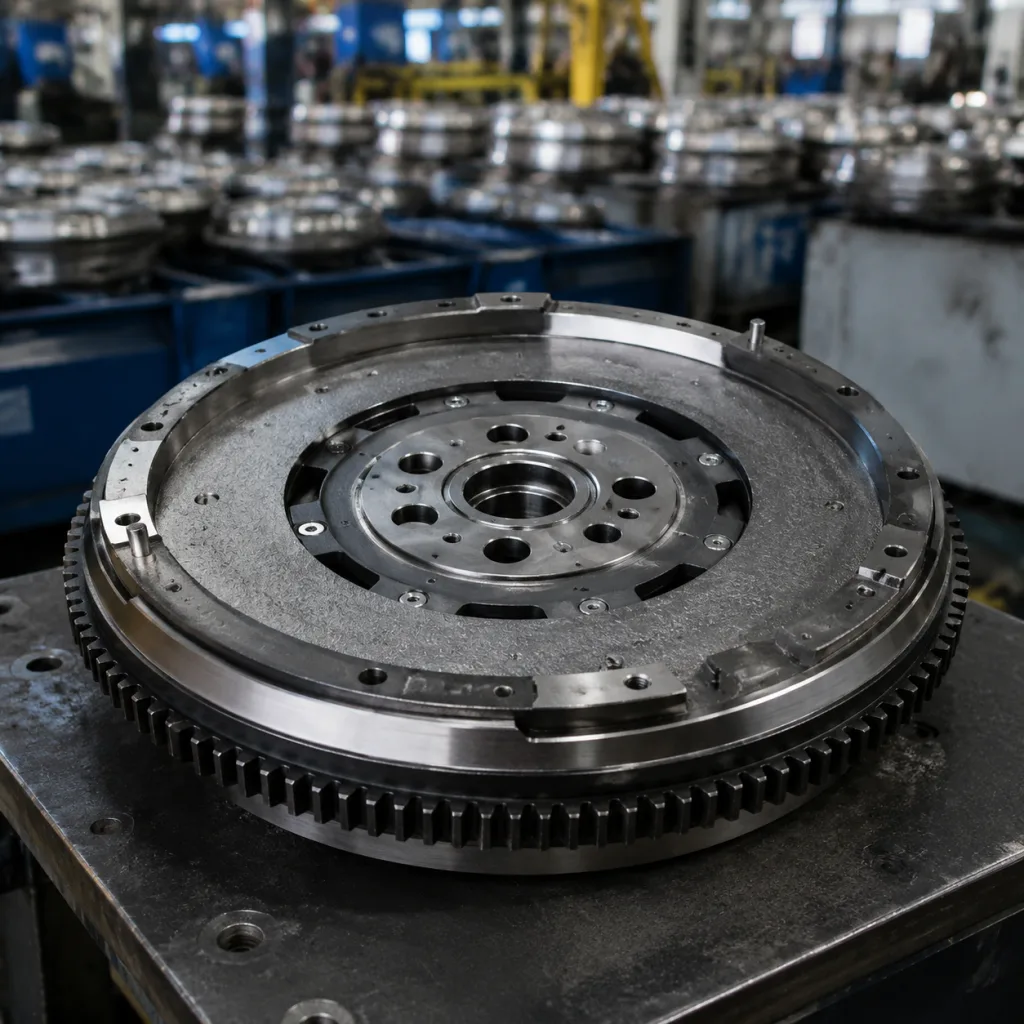
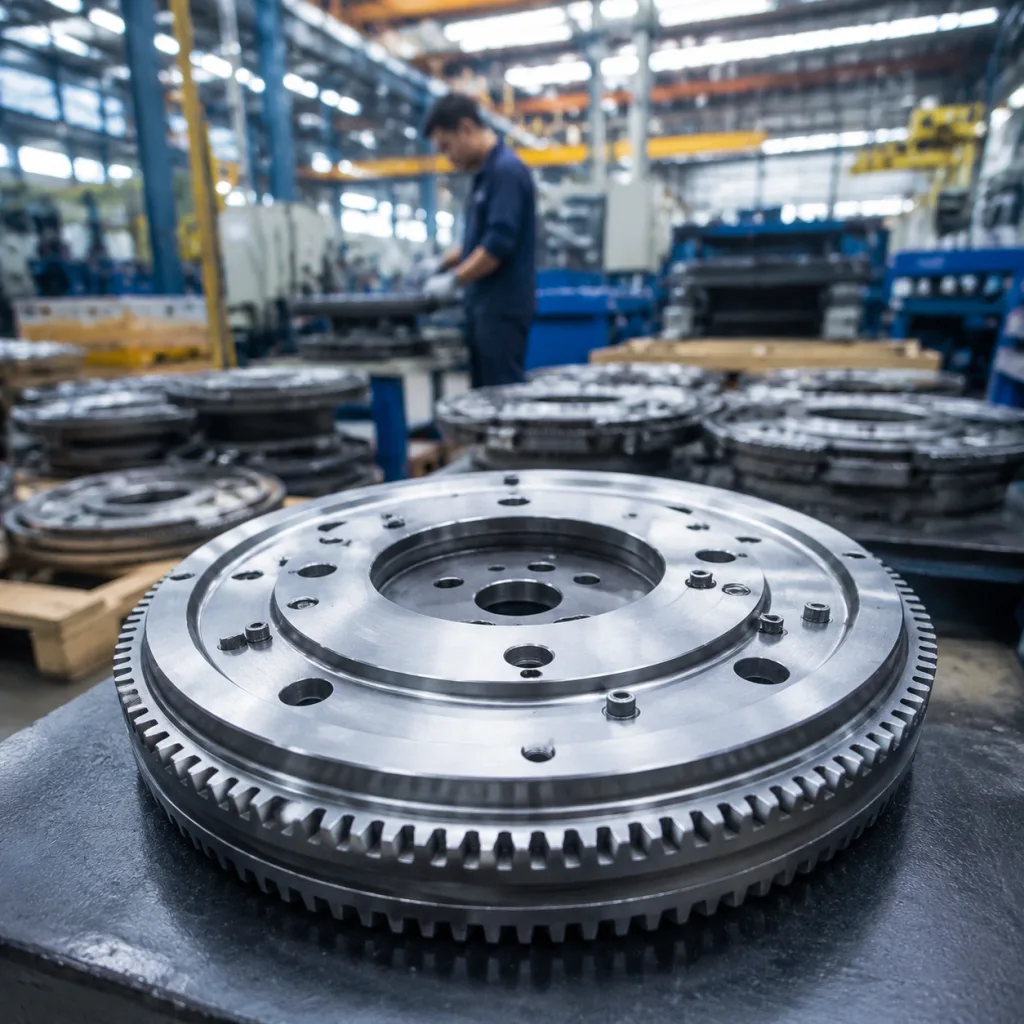
A dual mass flywheel combines machined primary and secondary masses, a damping mechanism, friction interfaces, springs, lubrication, and fastening points that must remain stable under repeated torsional load. Small process changes can affect noise, vibration, clutch feel, and service life, so the process chain needs control from material receipt through final packing.

1. Incoming material verification for masses, spring elements, friction components, grease, and fasteners. 2. Machining control for concentricity, runout, critical seating faces, bolt holes, and ring gear location. 3. Heat-treatment or surface-condition checks where the approved design requires them. 4. Assembly control for spring preload, lubrication quantity, fastener retention, and rotational free play. 5. Dynamic balancing before final release, with records tied to the batch or serialised lot. 6. Final inspection for traceability, marking, surface condition, and export packaging.

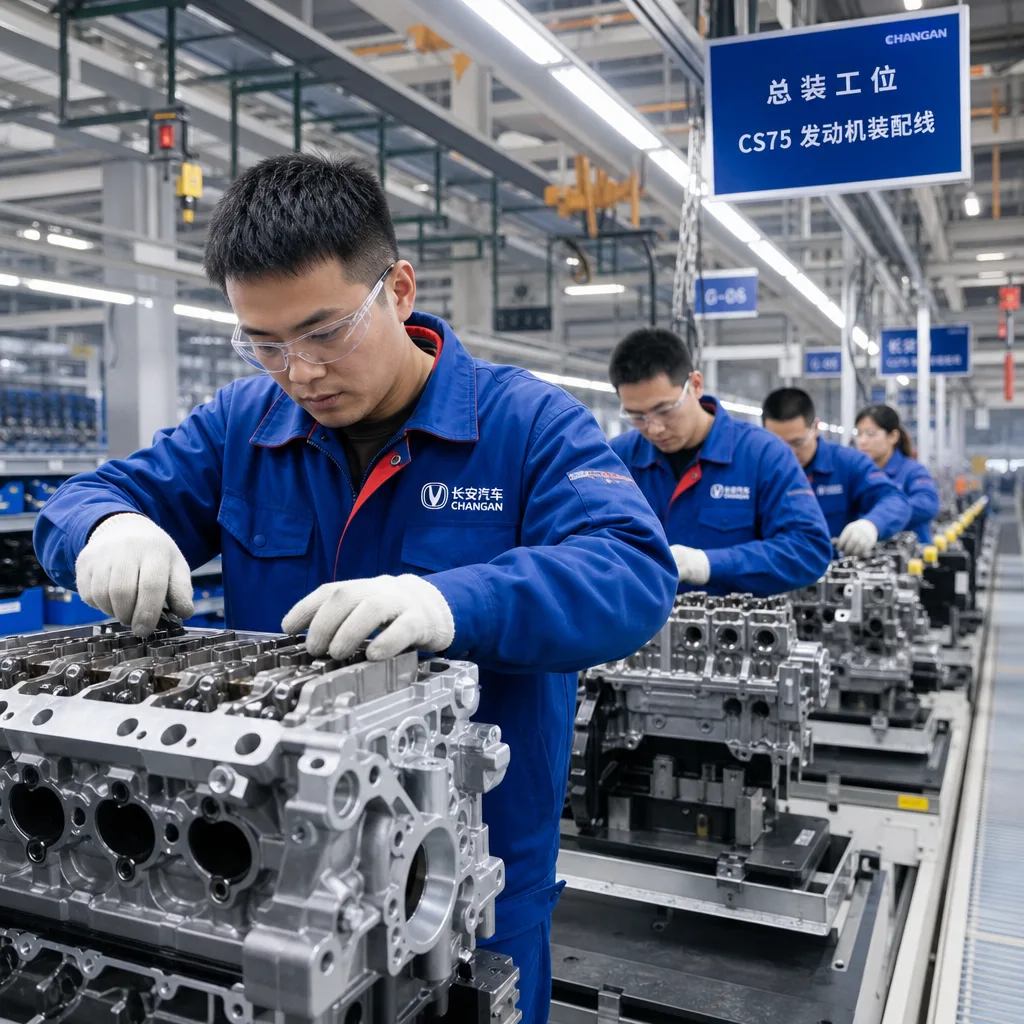
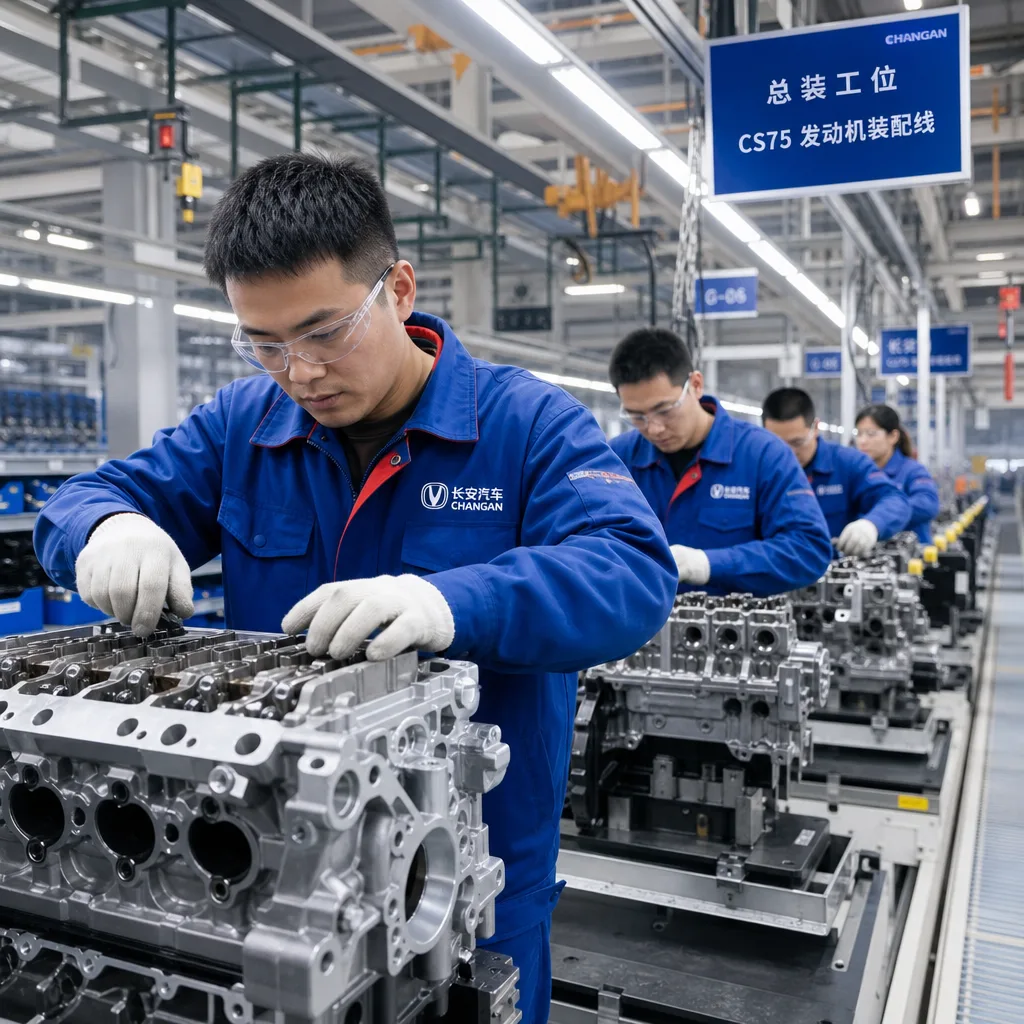
For buyers, the question is not whether a factory can build one acceptable sample. The real test is whether the same process can hold specification across production lots that may ship to several regions under different packaging and documentation rules. Documented work instructions, inspection frequency, calibrated equipment, and traceable lot control make a supplier easier to audit and easier to qualify. Driventus focuses on repeatable process control rather than relying on one-off end-of-line inspection.

Testing, materials, and compliance

A serious sourcing file for a powertrain component should contain both product evidence and compliance evidence. For Mazda applications sold into regulated or distributor-controlled markets, buyers commonly ask for a package that supports technical review, customs documentation, and internal quality approval.

  • Dimensional inspection reports against the agreed drawing or reference sample
  • Dynamic balance records aligned with ISO 1940-1 principles
  • Rotational free-play, runout, and critical interface measurements
  • Material declarations for restricted substances and customer compliance files
  • Production traceability by lot, batch, or other agreed control method
  • Sample approval records, packing approval, and change-control agreement

Our quality controls are organised under quality system practices aligned with IATF 16949:2016 and ISO 9001:2015. For European and UK buyers, REACH (EC) No 1907/2006 declarations are commonly requested as part of the documentation pack. If a customer requires additional validation, the test plan should be linked to the application duty cycle and the failure mode of concern, such as vibration, premature wear, abnormal noise, starter engagement issues, or clutch compatibility.

If a programme needs more than a catalogue replacement, custom manufacturing can be used to align the part with buyer-specific packaging, surface finish, marking, inspection points, or application-controlled requirements.

MOQ, lead time, and supply model

For import managers and category buyers, the commercial structure is as important as the technical file. MOQ should reflect application complexity, tooling or fixture needs, packaging format, documentation load, and whether the item is a standard catalogue part or a made-to-print programme. Lead time is clearer when it is separated into sample build, first production lot, and regular replenishment instead of being treated as one generic delivery date.

Check point What to request Why it matters
Dimensional matchDrawing, CMM report, or verified sample reportHelps prevent clutch, crankshaft, and starter mismatch
Balance dataRecorded dynamic balance resultReduces vibration and driveline complaint risk
Rotational travelMeasured torsional movement and free-play rangeConfirms damping behaviour against the target application
Interface detailsBolt pattern, pilot features, ring gear position, and clutch face dataProtects installation accuracy and service compatibility
Assembly specificationMaterial, spring, grease, and fastener detailsSupports service-life consistency across lots
PackagingExport carton, inner protection, and pallet methodLimits transit damage in long international lanes

</tr></thead><tbody> </tbody></table>For buyers who need a factory review, audit pack, or supplier onboarding documents, the process should cover quality records, export packing, labelling, traceability, and change-control rules. That is the advantage of working with a manufacturer that understands B2B sourcing rather than only quoting a unit price. To compare current availability, start with our catalog, then move into programme-specific discussion through request a quote.

Frequently asked questions

Yes. Driventus supports B2B distributor, wholesaler, and repair-chain supply. The usual inputs are vehicle application, target volume, order frequency, packaging needs, and any cross-reference list required for fitment review.

Typical qualification packs include dimensional reports, balance records, traceability information, material declarations, sample approval data, and packing confirmation. Where required, the file can be aligned with IATF 16949:2016, ISO 9001:2015, and REACH documentation needs.

Yes. Programme-specific packaging, inspection points, markings, or drawing-controlled variants can be handled through the custom manufacturing route. This is the better path when the buyer needs more than a direct catalogue replacement.

Share drawings, target volume, packaging needs, and the Mazda vehicle list you need covered, then [request a quote](/contact.html).

Request a Quote
Supply model Best for Typical buyer priority
Catalogue partFast replenishment and range extensionLower MOQ, shorter lead time, verified fitment
Private-label partDistributor and wholesaler growthPackaging control, branding, label consistency
Made-to-print partSpecific platform or OE-linked programmeDrawing control, validation scope, change management
Consolidated export supplyBuyers sourcing multiple powertrain linesMixed shipments, stable documentation, freight efficiency