Camshaft for Peugeot 3008 OE Equivalent: Sourcing Guide
Procurement teams sourcing a camshaft for Peugeot 3008 OE equivalent need more than a part name and a vehicle fitment note. The correct item must match lobe profile, journal diameter, overall length, timing drive interface, and surface hardness within the limits required by the engine family. For diesel and petrol applications alike, the replacement part should be verified against the OE drawing or a proven cross-reference, then checked by metrology and run-out inspection before release. Driventus is an independent aftermarket manufacturer; brand names are referenced for fitment only. We manufacture engine and powertrain components in Taizhou, Zhejiang, and supply B2B customers in more than 60 countries. For buyers working to IATF 16949:2016 and ISO 9001:2015 systems, the main question is whether the replacement can hold dimensional consistency across batches and support traceable validation data. This article sets out what to verify before purchase.
What OE-equivalent means for Peugeot 3008 applications
OE-equivalent does not mean branded by the vehicle maker. It means the camshaft matches the original functional and dimensional requirements for the engine variant used in the Peugeot 3008. For procurement, that normally includes:
Correct engine code and valve-train layout
Matching bearing journal diameters and spacing
Identical lobe timing, lift, and base circle geometry
Compatible trigger wheel, sprocket, or gear interface
Correct material and heat treatment for wear resistance
Surface finish suitable for low-friction operation
A replacement camshaft should also be checked against the engine family’s lubrication path and follower type. Hydraulic lifters, roller followers, and flat tappets place different demands on lobe hardness and surface roughness. If the supplier cannot show dimensional control, the part is a fitment risk even if the listing says OE equivalent.
Key checks before placing a purchase order
Use a technical checklist rather than a vehicle-only description. The following comparison table is a practical procurement screen:
Check point
What to verify
Why it matters
Engine code
Confirm exact engine family and valve count
Peugeot 3008 uses multiple powertrains
OE reference
Cross-check OE 06A107065 or the correct engine-specific reference when available
Avoids wrong-family substitution
Journal size
Measure diameter, width, and bearing fit
Prevents oil-film failure and seizure
Lobe lift and duration
Compare against drawing or sample
Affects breathing, emissions, and idle quality
End play and run-out
Verify against internal spec
Reduces noise and timing instability
Material / hardening
Confirm alloy and case hardness
Controls lobe and journal wear
Surface roughness
Check Ra on journals and lobes
Supports stable lubrication
</tr></thead><tbody> </tbody></table>If the part is sourced for aftermarket distribution, ask for batch traceability, inspection reports, and packaging controls. For OE cross-reference work, verify that the supplier does not claim vehicle-manufacturer approval. Driventus is an independent aftermarket manufacturer; brand names are referenced for fitment only.
Validation methods used for replacement camshafts
A credible replacement programme uses inspection, not assumptions. Typical validation steps include:
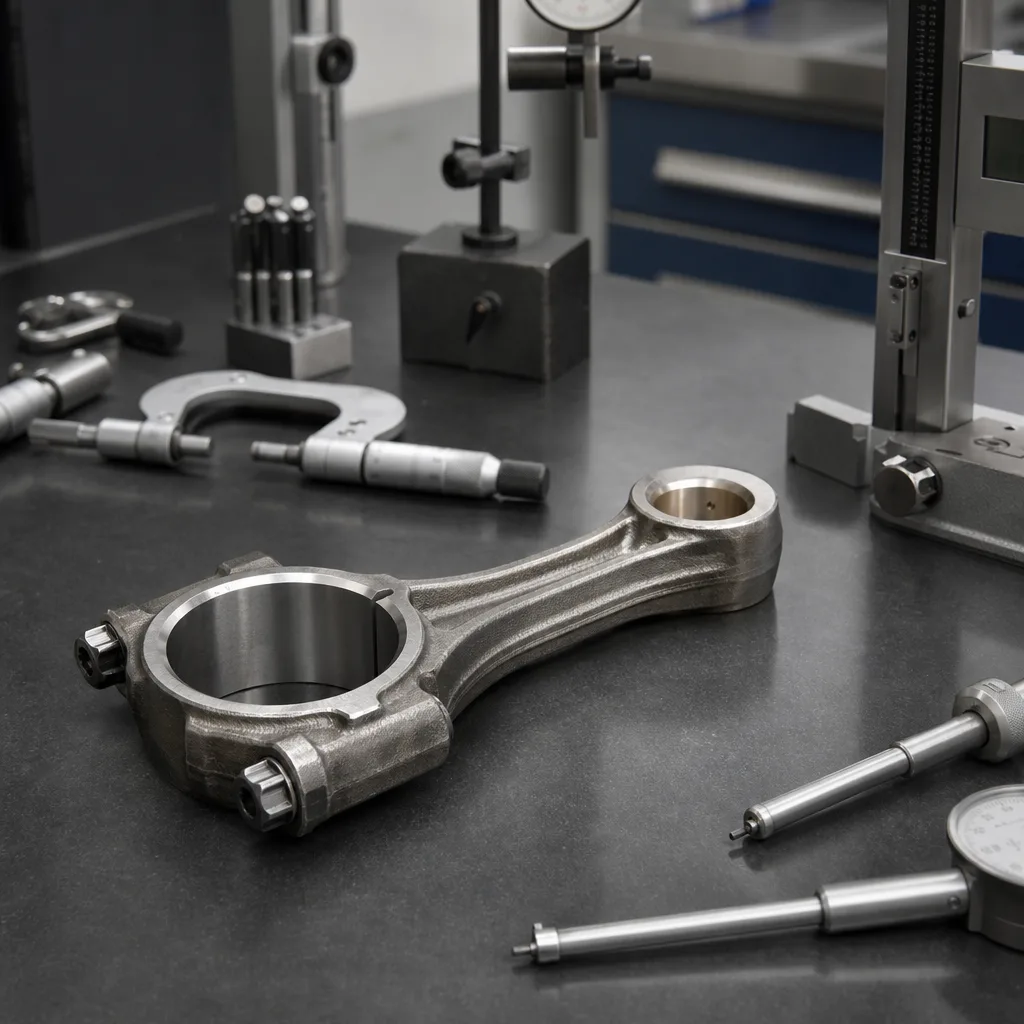
1. Incoming dimensional inspection using micrometers, bore gauges, and CMM where applicable. 2. Run-out measurement to confirm shaft straightness and reduce timing error. 3. Hardness testing on lobes and journals to verify heat-treatment consistency. 4. Profile comparison against master samples or approved drawings. 5. Surface integrity checks for scoring, porosity, and grind burn. 6. Functional assembly check with the intended followers, caps, sprocket, and seals.
For industrial buyers, the most useful evidence is repeatable data from production lots. A one-off sample may fit, but it is not enough for volume supply. At Driventus, quality controls are built around IATF 16949:2016 and ISO 9001:2015 process discipline. More detail is available in our quality system.
Material, heat treatment, and wear control
Camshaft durability is driven by metallurgy and finishing, not appearance. Common requirements for replacement parts include controlled alloy chemistry, quench-and-temper or induction hardening depending on design, and final grinding of lobes and journals to a stable finish. Buyers should ask for the following data where relevant:
Base material specification
Hardness range on working surfaces
Case depth or hardened layer, if applicable
Grinding accuracy on journals and lobe profiles
Corrosion protection for storage and shipping
For engines with long service intervals, lobe wear often starts with poor surface finish or inconsistent hardness. A supplier that controls both machining and heat treatment has better process visibility than a trading-only source. That is one reason vertically integrated manufacturing matters in powertrain sourcing. See our catalog for related engine components and custom manufacturing for programme-specific work.
How to source the correct part for aftermarket or fleet supply
For replacement supply into distributors, wholesalers, repair chains, and fleet channels, the purchase process should start with the engine variant, not the model name alone. Peugeot 3008 applications vary by market, engine displacement, and emission package.
Recommended sourcing workflow
Confirm vehicle year, engine code, and fuel type
Match the OE number or a verified aftermarket cross-reference
Request a dimensional sheet and inspection standard
Ask for sample approval before production release
Specify packaging, labelling, and carton traceability
Define lead time and lot-size expectations before PO issue
If your programme needs a non-standard lobe profile, special packaging, or private label supply, use custom manufacturing. For standard export supply, Driventus can align production with controlled lots, palletisation, and shipment documentation for EU, UK, US, Canada, Australia, and Brazil buyers.
Why procurement teams compare suppliers before ordering
A camshaft is a precision component. A low-price offer without test data can raise downstream cost through returns, rework, and labour time. Procurement teams should compare suppliers on:
Dimensional repeatability across lots
Heat-treatment traceability
Inspection capability and records
Export experience and documentation quality
Certification to IATF 16949:2016 and ISO 9001:2015
Ability to support technical queries quickly
Driventus manufactures engine and powertrain parts in Taizhou, Zhejiang, with export experience in more than 60 countries. For buyers consolidating sources, this reduces the number of vendors needed for related items such as pistons, crankshafts, gaskets, water pumps, and turbochargers. If your team is building a replacement range, review our catalog and the engine-component section at engine components.
Frequently asked questions
No. OE equivalent means the part is designed to match the original function and dimensions. It does not mean the part is approved or endorsed by the vehicle manufacturer.
Ask for engine-code confirmation, OE cross-reference, dimensional report, hardness data, run-out results, and batch traceability. These documents help confirm fitment and consistency.
Yes. We support custom manufacturing for defined specifications, sample-to-drawing development, and volume supply. Use the contact page for programme details and target volumes.
If you need a verified camshaft for Peugeot 3008 OE equivalent supply, send your engine code, OE reference, and annual volume requirements. Request a quote at /contact.html