Clutch Kit Jaguar Replacement: OE Match and Validation
Choosing a clutch kit for Jaguar replacement work is primarily a fitment and validation exercise, not a branding exercise. Procurement teams need the correct spline count, friction diameter, release bearing design, cover height, and torque capacity before a part can be approved for service or distribution. Driventus is an independent aftermarket manufacturer; brand names are referenced for fitment only. For buyers serving workshops, repair chains, or wholesale channels, the priority is a dimensional match that supports predictable pedal feel, smooth engagement, and dependable service life after installation. That means checking OE cross-references, measuring critical interfaces, and confirming the kit has been validated through relevant production controls under IATF 16949:2016 and ISO 9001:2015. This article sets out the procurement checks that matter when replacing Jaguar clutch kits across common manual-transmission applications.
What a replacement clutch kit must match
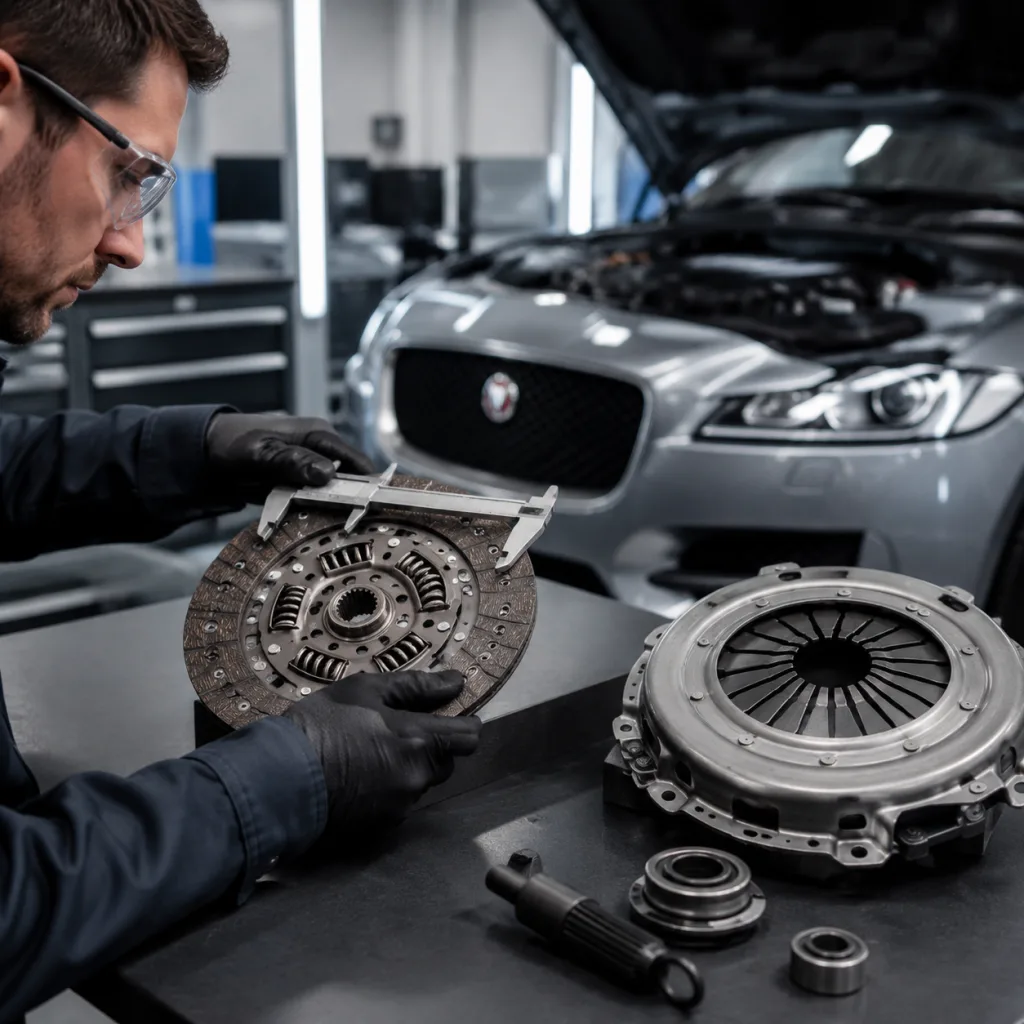
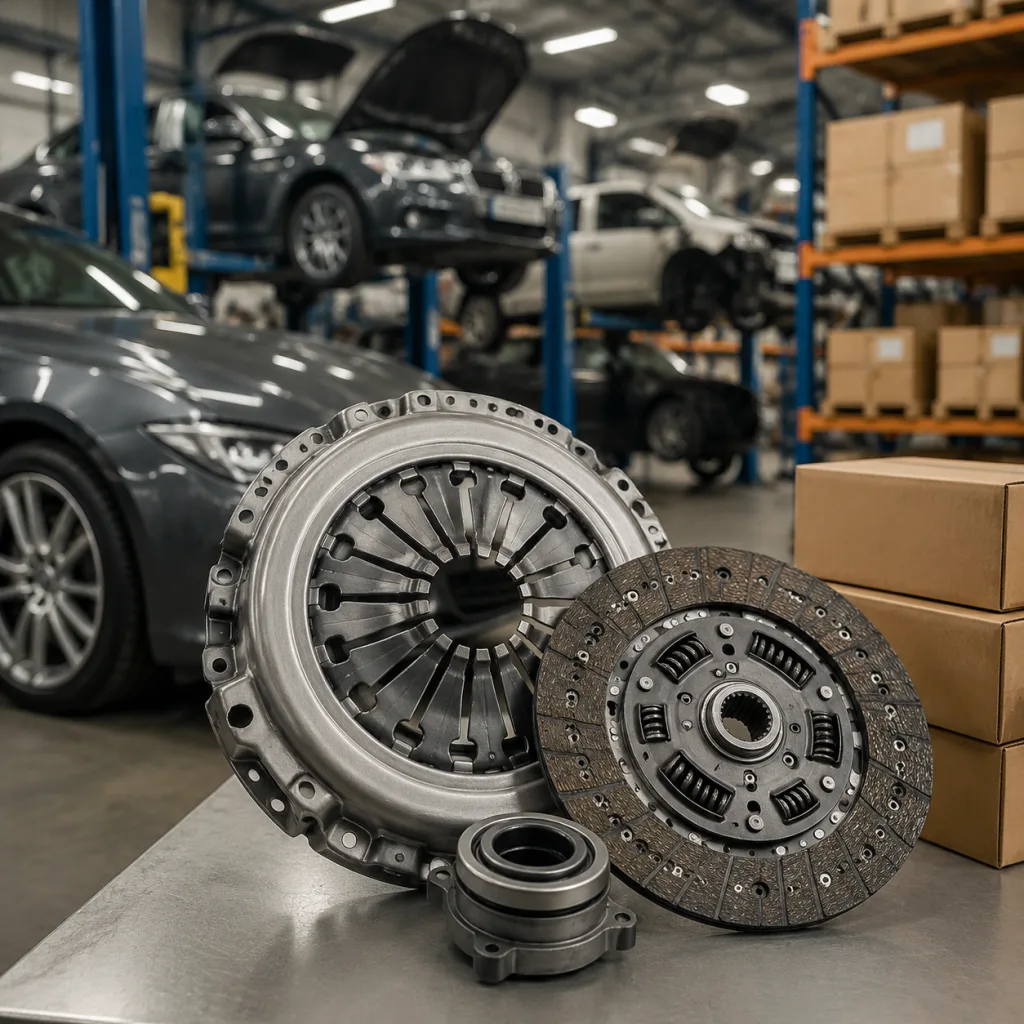
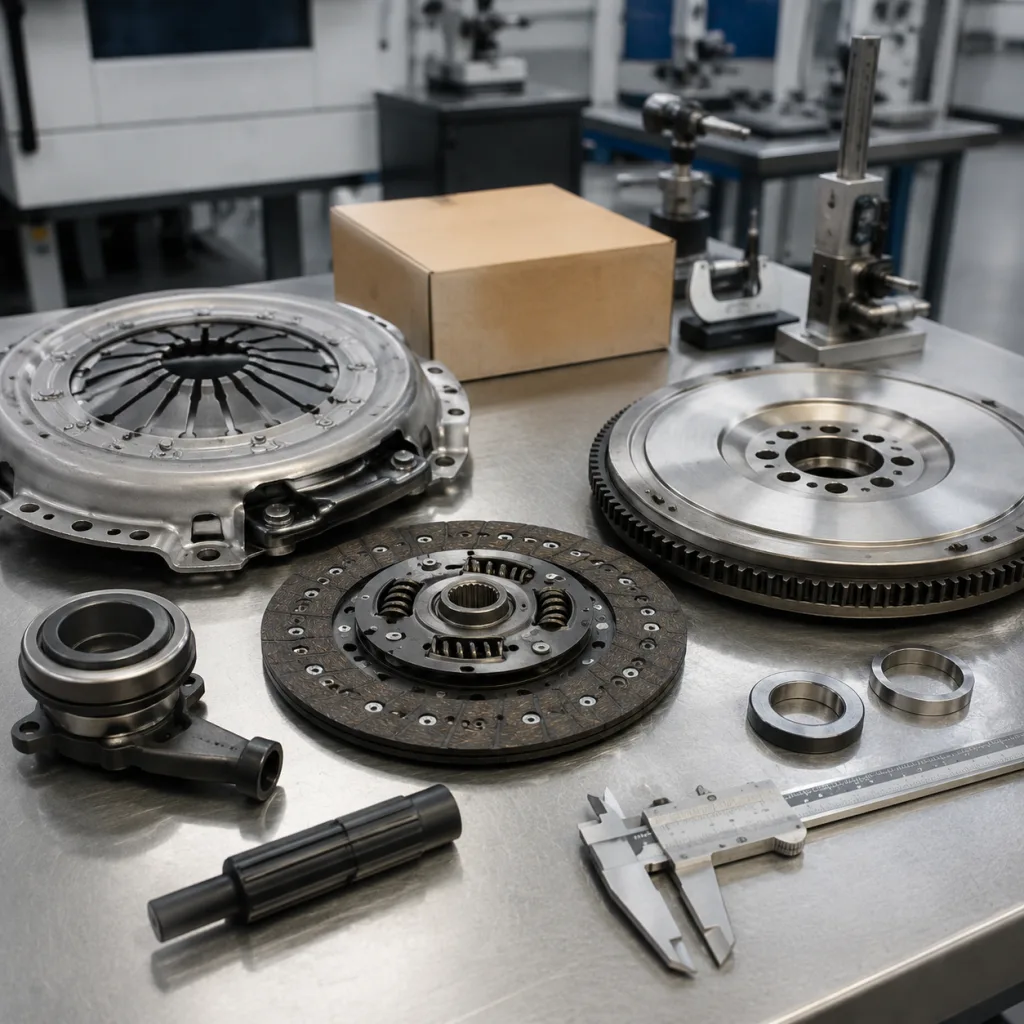
A Jaguar replacement clutch kit must match the transmission and clutch system, not only the vehicle model. The minimum technical checks are:
Friction plate outer diameter, typically 215 mm, 228 mm, or 240 mm depending on application
Spline count and major diameter, commonly 18x21.0 mm, 20x22.3 mm, or transmission-specific equivalents
Hub offset and damper spring layout, with offset tolerance typically held within ±0.5 mm of the OE sample
Cover assembly bolt pattern, bolt seat type, and installed height, usually checked to within ±0.3 mm to ±0.5 mm on critical stack dimensions
Release bearing type and travel window, including concentric or fork-type actuation where applicable
Torque capacity versus engine output and transmission ratio, with a sourcing target of at least 10% to 15% headroom above peak engine torque for normal road use
For OE-equivalent sourcing, buyers should cross-reference the vehicle application to the original part number where available, then verify the engineering data on the supplied sample. If the keyword search already includes an OE code, use the same convention in documentation, for example `OE 06A107065`. Do not rely on model-year naming alone. On manual Jaguar applications, small differences in transmission family can change the complete kit specification, especially between 2.0L, 3.0L, and V8-derived manual conversions.
Fitment checks for Jaguar applications
Use a structured inspection process before accepting stock into inventory or fitting a trial unit. Compare the sample against the removed part and the vehicle build data.
Check point
What to verify
Why it matters
Driven plate diameter
Match to OE and flywheel contact width, with diameter variation no more than ±1.0 mm
Prevents slip or incomplete engagement
Spline count and major diameter
Match to gearbox input shaft; verify spline fit with a test arbor when possible
Avoids installation failure
Cover bolt circle
Same PCD, bolt seat geometry, and thread engagement depth
Ensures mounting compatibility
Release bearing height
Within the required operating window, typically checked against OE stack height with ±0.5 mm acceptance
Controls pedal travel and release point
Friction material
Organic or equivalent OE material, plus visible rivet clearance and lining thickness within sample spec
Supports drivability and wear balance
</tr></thead><tbody> </tbody></table>A good replacement part should install without forcing the gearbox, should release cleanly during bench checks, and should show no runout or balance issues that exceed the vehicle programme’s acceptance limits. As a practical rule, buyers should ask for disc runout under 0.30 mm and plate face variation under 0.25 mm on production samples unless the OE print specifies tighter limits. For fleet buyers and repair networks, consistent dimensional control matters more than visual similarity.
Validation testing and quality control
Driventus builds clutch components under documented process control and export-oriented inspection routines. For procurement teams, the most relevant checkpoints are the controls behind the part, not the sales claim around it.
We align production and release checks with IATF 16949:2016 and ISO 9001:2015. For cross-border sourcing, materials and surface treatments should also be reviewed against REACH (EC) No 1907/2006 where applicable. In practical terms, that means:
Incoming material verification for steel and friction compounds, including certificate review for grade, hardness, and batch identity
Dimensional inspection on critical interfaces, with sample plans commonly set at AQL 1.0 or tighter for pilot lots
Dynamic balancing and concentricity checks where required, with target residual imbalance typically below 15 g·mm on rotating assemblies unless the OE requirement is stricter
Packaging control to prevent corrosion and liner damage, including VCI protection or equivalent export packaging for sea freight
Traceability to batch or production lot, with lot coding that supports warranty returns and field failure analysis
For replacement programmes, the supplier should provide test records that support repeatable fitment. If your organisation needs a private-label or application-specific programme, see custom manufacturing. Buyers should also clarify whether the first order is a validation sample, pilot run, or production release, because the document set and inspection depth should scale with the order stage.
Why wholesalers and repair chains standardise this part
Repair chains and distributors standardise clutch kits to reduce returns, shorten installation time, and simplify inventory. One poor-fit kit can create labour claims that cost more than the part margin.
The usual commercial requirements are:
Stable supply by application family, with MOQ typically set at 50 to 200 kits for catalogue programmes and lower only for pilot orders
OE-equivalent fit and predictable pedal feel, backed by a sample approval process before stock release
Carton labelling that supports warehouse picking, including application code, OE reference, and lot number
Clear cross-reference data for catalogue teams, ideally with vehicle, engine, and transmission codes in a single line item
Warranty support tied to lot traceability, plus agreed claim evidence such as installation photos or returned sample retention
Price logic that matches volume and packaging structure, with tiered quotations for sample, pilot, and annual call-off quantities
For buyers managing multiple regions, it helps to source from a supplier that can support both catalogue-based purchasing and technical review. You can review our catalog for adjacent engine and powertrain components, and our quality system for process and certification details. If your product range includes related drivetrain items, the engine and powertrain family overview may also be useful. When comparing offers, ask whether quoted lead time is ex-works, FOB, or delivered, because transit assumptions can change landed availability by one to three weeks depending on destination.
Procurement checklist before you place an order
Before approving a clutch kit Jaguar replacement order, confirm the following:
1. OE cross-reference or VIN-based application confirmation. 2. Transmission code, engine code, and flywheel type. 3. Disc diameter, spline count, and cover geometry. 4. Release bearing specification and included hardware. 5. Required certification, packaging, and label format. 6. Sampling expectations for first article or pilot order. 7. Target annual volume, reorder frequency, and MOQ acceptance. 8. Lead time expectation for sample, pilot, and production orders. 9. Inspection records required on receipt, including AQL or full-measurement requests. 10. Price break points by quantity and whether tooling or label setup is included.
If you are comparing suppliers, ask for dimensional drawings, material declarations, and inspection summaries before purchase. That is the fastest way to reduce misfit risk. For direct sourcing support, request a quote with your target application, annual volume, and market destination. We can then confirm applicability, lead time, packing requirements, and whether the requested MOQ matches the planned buying cadence. For urgent programmes, ask for sample availability separately from production availability so the quote reflects both timelines correctly.
Frequently asked questions
Yes. VIN or OE cross-reference data is the best starting point for application confirmation. We then compare key dimensions, transmission code, clutch architecture, and the requested release-bearing type before shipment. For higher-risk applications, we may also request photos of the removed part and flywheel to verify stack height and mating geometry.
Yes. We support private-label and application-specific programmes through our custom manufacturing service, subject to technical agreement, packaging needs, forecast volume, and target market. Typical launch discussions cover MOQ, carton artwork, barcode format, sample quantity, and the lead time for first production lot versus repeat orders.
Buyers can request relevant quality and inspection documentation aligned with IATF 16949:2016 and ISO 9001:2015, plus material and traceability information where required. Depending on the programme, this can include dimensional reports, incoming material certificates, lot traceability, and pilot approval records for the first shipment.
If you need a dimensional match for Jaguar replacement sourcing, send your OE number or application details and we will confirm the correct kit. Start here: /contact.html