Connecting Rod for Genesis GV70 Aftermarket Replacement
A connecting rod for Genesis GV70 aftermarket replacement must match the original engine geometry, mass, and fatigue performance before it enters service. For procurement teams, the key question is not whether the part looks similar, but whether it can hold the same centre-to-centre length, big-end bore, small-end bore, and bearing alignment under repeated load. Driventus supplies engine and powertrain components for B2B replacement programmes, with production controlled under IATF 16949:2016 and ISO 9001:2015. Driventus is an independent aftermarket manufacturer; brand names are referenced for fitment only. For a GV70 programme, buyers should verify OE cross-reference, material route, machining tolerances, and validation tests such as fatigue, hardness, and dimensional inspection. This article sets out what to check when sourcing a replacement rod for repair networks, distributors, and importers supporting petrol engine applications.
What an aftermarket connecting rod must match
For replacement use, the rod must be functionally equivalent to the OE part, not just visually similar. The critical points are:
Centre-to-centre length
Big-end bore and roundness
Small-end bore and bush fit
Beam profile and mass balance
Cap face flatness and bolt clamp integrity
Surface condition at the fracture split or parting line
If any of these are off, the engine can show abnormal bearing wear, oil temperature rise, noise, or piston stability issues. For a Genesis GV70 application, buyers should confirm the exact engine code before placing an order. The same model line may use different rod specifications depending on displacement, turbocharging, and model year.
A replacement part should be validated against OE drawing data or a confirmed sample. Driventus can support OE 06A107065-style cross-reference workflows where the buyer already has a known reference number, but the final fitment check must still be completed by application and engine variant.
Key dimensions and inspection points
Procurement teams should request a dimensional report, not only a catalogue description. The following items are standard checkpoints in a replacement programme:
Inspection item
Why it matters
Typical buyer check
Centre-to-centre length
Controls piston position and compression height match
Compare to OE drawing or sample
Big-end bore
Affects bearing clearance and oil film stability
Measure with calibrated bore gauge
Small-end bore
Affects pin fit and piston rock
Check at room temperature after finish machining
Weight class
Impacts balance across cylinders
Verify matched sets if required
Bolt torque retention
Prevents cap separation under load
Confirm test report and torque spec
Surface hardness
Supports wear resistance
Request hardness certificate
</tr></thead><tbody> </tbody></table>If the engine family uses fracture-split rods, the split face integrity and bolt specification must also be documented. For forged rods, grain flow direction and heat treatment uniformity are important. These checks align with standard quality controls under IATF 16949:2016 and ISO 9001:2015, and they should be part of any incoming inspection plan.
Materials, process control, and validation
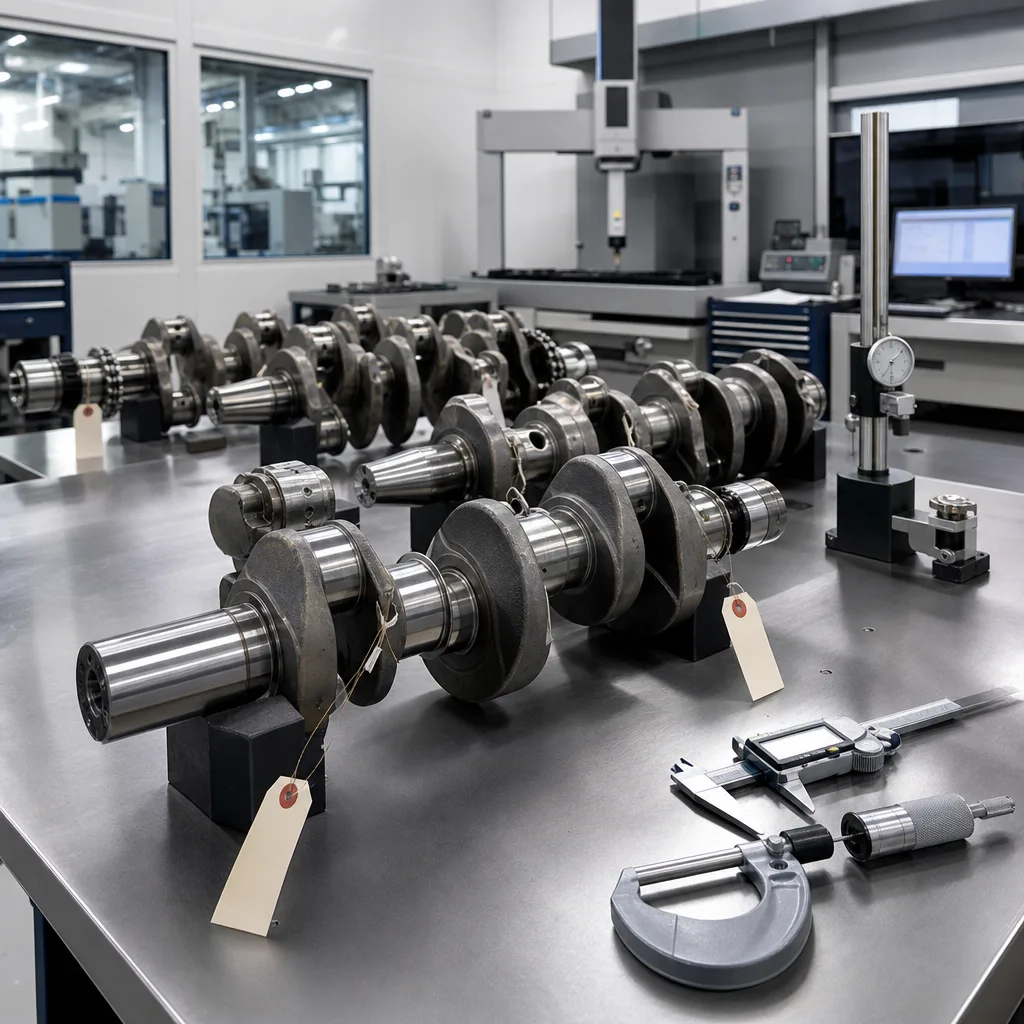
A dependable aftermarket rod depends on stable metallurgy and controlled machining. Common production routes include forged steel with subsequent heat treatment, shot peening, and precision honing of the bearing bores. Buyers should ask for the following evidence:
Material specification and heat treatment record
Hardness range and test method
Magnetic particle or crack inspection where applicable
100% dimensional check on critical bores and lengths
Batch traceability and lot coding
Packaging that prevents cap damage and corrosion
Validation should cover static load, fatigue, and dimensional stability after heat cycling. Where relevant, test plans may reference published methods such as SAE J2527 for corrosion or durability-related evaluation, and REACH (EC) No 1907/2006 for material compliance in EU supply chains. Do not accept a supplier statement without supporting test data. A replacement rod is a safety-critical internal engine part, so consistency matters more than a low unit price.
How Driventus supports replacement sourcing
Driventus manufactures engine components for distributors, wholesalers, and repair-chain programmes that need stable repeat supply. For a GV70 replacement project, the sourcing flow is usually:
1. Confirm engine code and OE reference 2. Match the application to an approved sample or drawing 3. Review dimensional report and material certificate 4. Confirm packaging, labelling, and carton quantity 5. Approve pilot batch before mass order
If a buyer needs a special coating, length revision, or private label supply, our custom manufacturing team can support project-specific development. For standard catalogue items, review our catalog and the broader engine components range. Our quality system covers incoming material control, in-process inspection, and final release checks for export programmes.
Driventus is an independent aftermarket manufacturer; brand names are referenced for fitment only.
Procurement risks to avoid
The main risk in a connecting rod for Genesis GV70 aftermarket replacement is incorrect application matching. The GV70 nameplate does not guarantee one rod specification. Common sourcing errors include:
Ordering by model name only, without engine code
Mixing forged and fracture-split designs
Ignoring weight class when building matched sets
Accepting a part with no bore or hardness report
Skipping verification of bolt grade and torque procedure
Another risk is packaging damage before installation. A small nick at the cap face or bore can create bearing issues after start-up. Incoming inspection should include visual review, rust prevention status, and measurement of one part per lot minimum, with more intensive sampling for new vendors. For importers and distributors, a conservative approval process reduces warranty claims and avoids downstream downtime for repair networks.
What to send when requesting a quote
To speed up quotation and technical review, send the following details:
Vehicle model and year range
Engine code or VIN decode
OE reference number, if available
Required quantity and target annual volume
Destination market and compliance needs
Packaging and labelling requirements
Sample photos or measured sample data
If you need a replacement programme built around a known OE 06A107065-style reference, include the exact cross-reference source and application notes. This reduces the chance of an incorrect supply proposal. For custom programmes, buyers should also state whether first-article inspection, PPAP-style documents, or batch traceability reports are required.
Frequently asked questions
No. Confirm the engine code, OE reference, and measured dimensions first. The same vehicle line can use different rod specifications by engine and model year.
Request dimensional reports, material certificates, hardness data, batch traceability, and inspection records. For new sources, ask for sample validation and packaging details.
No. Driventus is an independent aftermarket manufacturer; brand names are referenced for fitment only. We supply replacement parts based on application and technical match.
If you are building a replacement supply programme, send your OE reference, engine code, and volume target for review. Start here: /contact.html