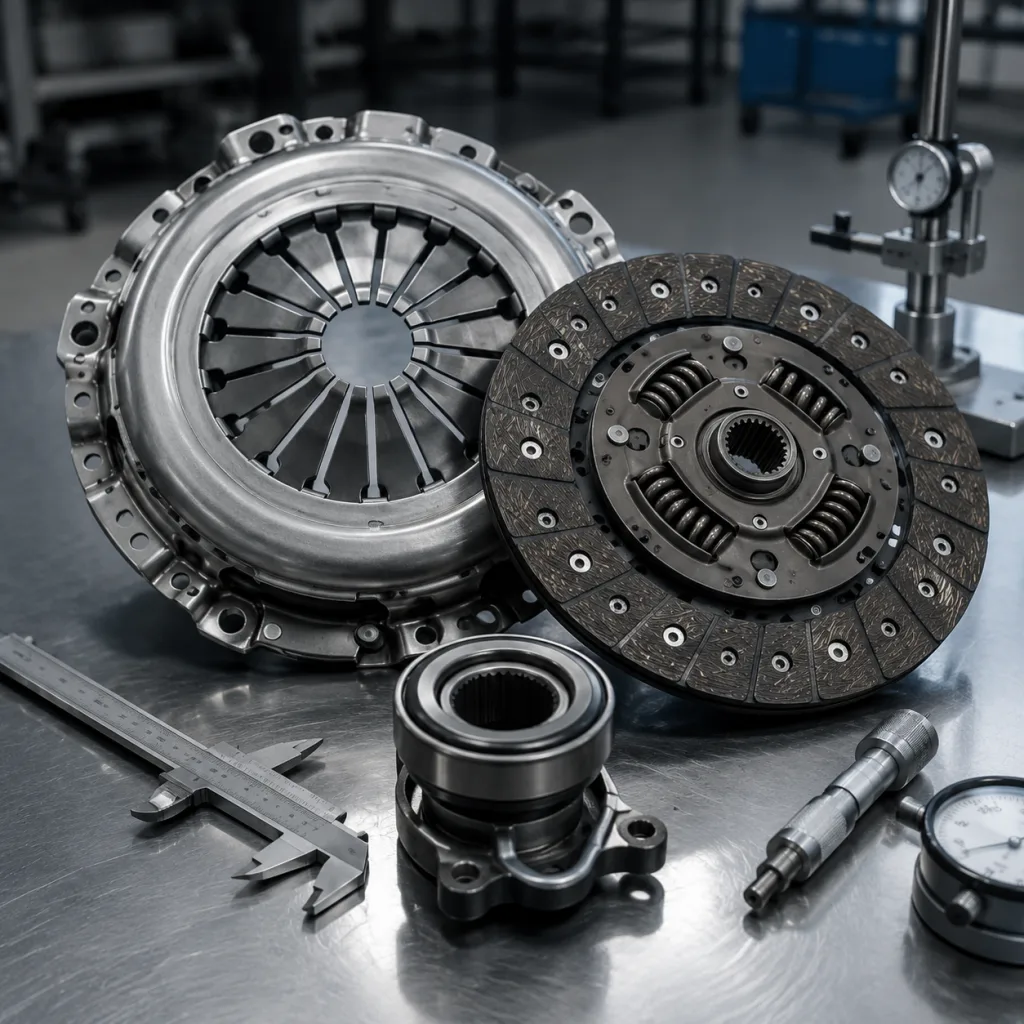
Camshaft for Mitsubishi Outlander Aftermarket Replacement
A camshaft for Mitsubishi Outlander aftermarket replacement should never be approved from a model-name match alone. The part has to carry the right journal layout, lobe geometry, timing references, thrust position, trigger features, oiling details, and surface finish for the exact engine variant. One small mismatch can shift valve timing, accelerate follower wear, or create repeat installation failures across a repair network.
Driventus supplies replacement camshafts for engine rebuild programmes with controlled machining, heat treatment, inspection, and batch traceability aligned with IATF 16949:2016 and ISO 9001:2015. Driventus is an independent aftermarket manufacturer; Mitsubishi and Outlander names are referenced only to identify application fitment. Use this guide as a procurement decision framework before sample approval, purchase-order release, or import stock receipt.
Decision gate: is the camshaft truly equivalent?
Start with function, not appearance. A replacement camshaft may look correct on a bench and still fail in service if lobe phasing, base circle, thrust control, trigger pattern, or oil-feed details are wrong.
Approve only after these points are confirmed
Engine code, cylinder count, valve train layout, and production year range
OE number or verified interchange reference, where available
Overall length, journal diameters, straightness, and runout
Base circle, lobe lift, lobe indexing, and cam timing relationship
Material grade, heat-treatment route, hardness target, and surface finish
Drive-end interface, thrust surface arrangement, oiling features, and trigger geometry
Packaging method, corrosion protection, batch coding, and traceability marks
The key question is simple: will this part install, rotate, time, lubricate, and wear like the intended original specification? If the answer depends only on a catalogue cross-reference, the sourcing risk is still open.
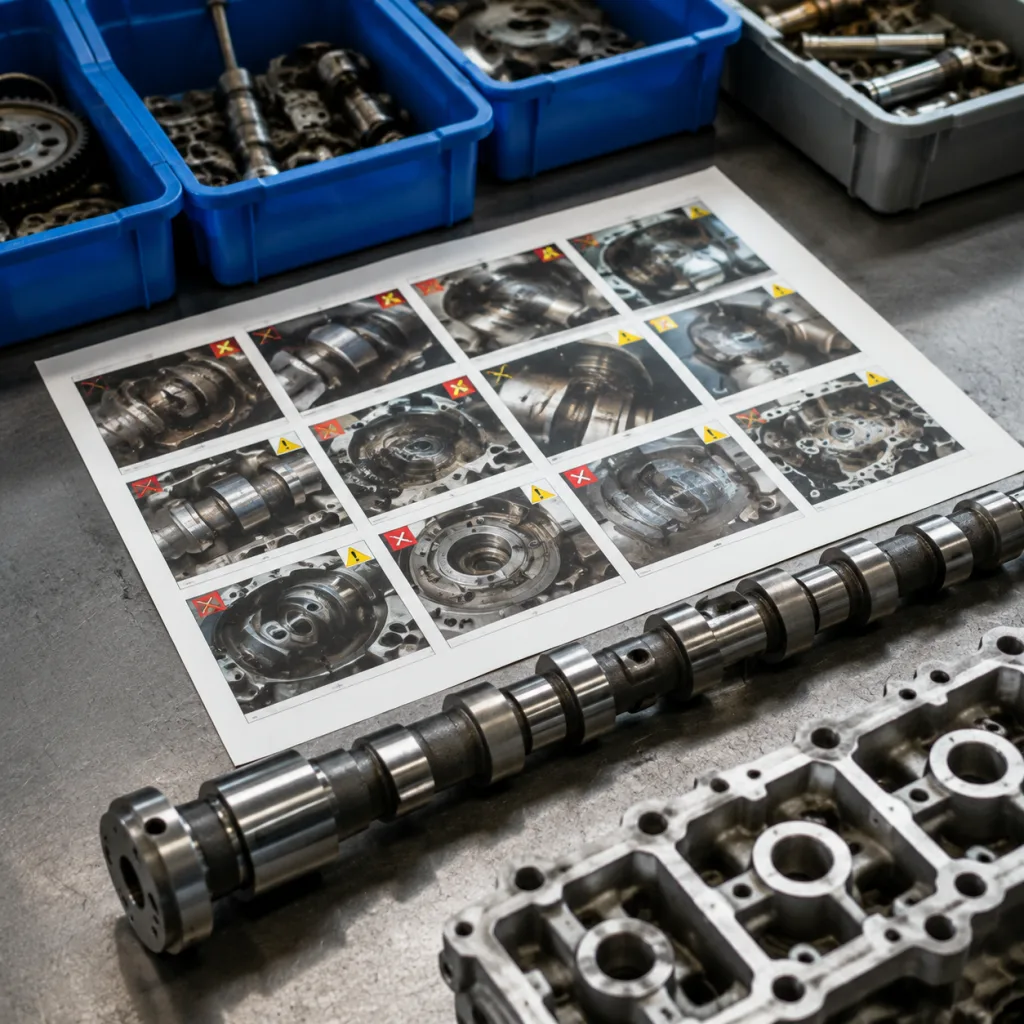
Failure mode map for Outlander fitment mistakes
The Outlander nameplate spans several generations, markets, and engine families. Gasoline, direct-injection, turbocharged, diesel, and hybrid-related applications may use different cam profiles, sensor references, drive interfaces, and oiling arrangements. Validate by engine code and OE reference before relying on the vehicle model name.
Failure mode
Likely cause
Buyer control
Engine noise after installation
Journal clearance, surface finish, or lubrication mismatch
Measure journals and confirm finish, hardness, and oil-hole position
Misfire or poor compression
Incorrect lobe lift, duration, or indexing
Compare profile data with drawing, master sample, or fixture report
Timing fault code
Wrong trigger feature or drive-end reference
Check sprocket, slot, keyway, sensor wheel, or pickup geometry
Binding during assembly
Runout, straightness, thrust face, or cap fit issue
Fit-check in the target head under specified torque
Early follower wear
Incorrect hardness, case depth, or surface texture
Request heat-treatment and inspection records by batch
High return rate
Over-broad catalogue consolidation
Separate references by engine family and production range
</tr></thead><tbody> </tbody></table>If a supplier groups all Outlander engines under one camshaft reference, treat it as a warning sign. Wrong-engine consolidation is one of the fastest ways to turn a low unit cost into a warranty programme.
Spec deep-dive: metallurgy, machining, and traceability
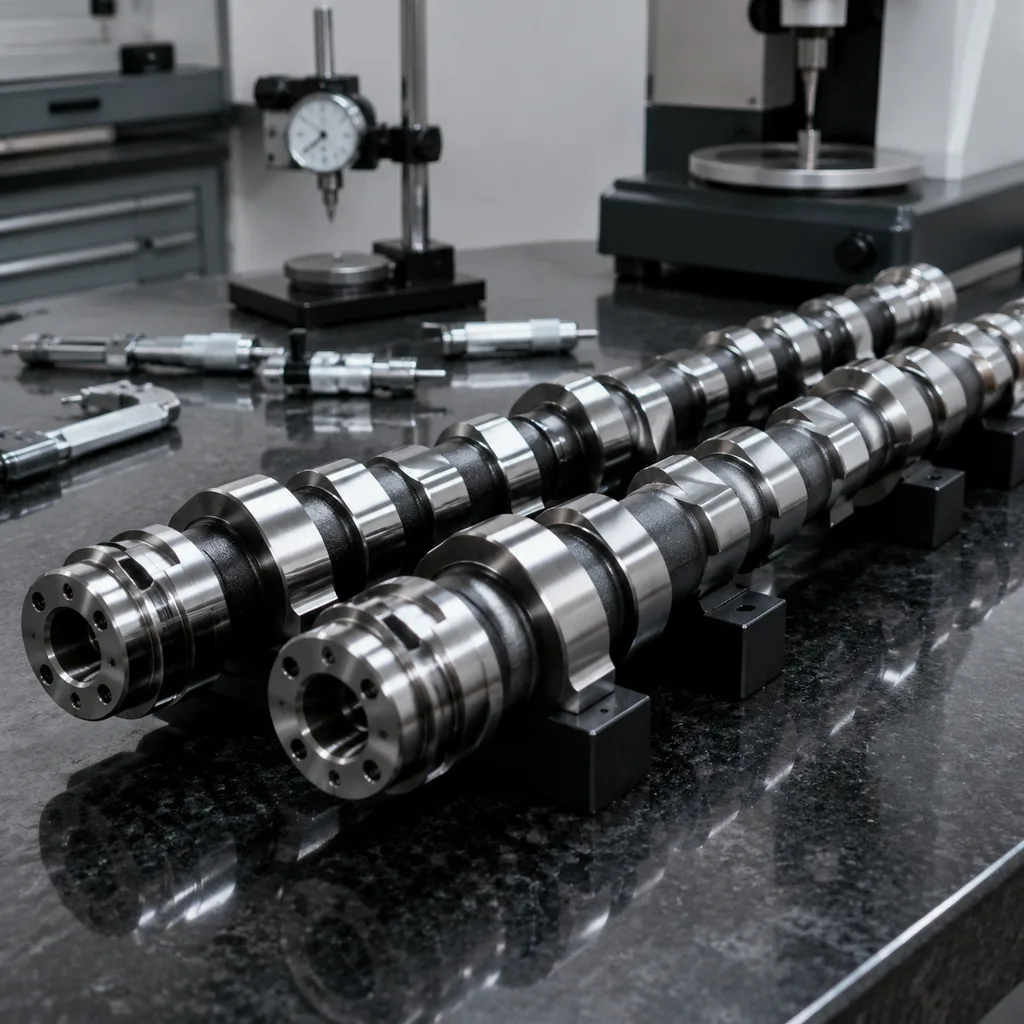
A reliable aftermarket camshaft is built through controlled process windows, not final inspection alone. Depending on the design, production may use alloy cast iron, chilled cast iron, or forged steel, followed by lobe hardening, journal grinding, polishing, straightening, cleaning, and protective packing.
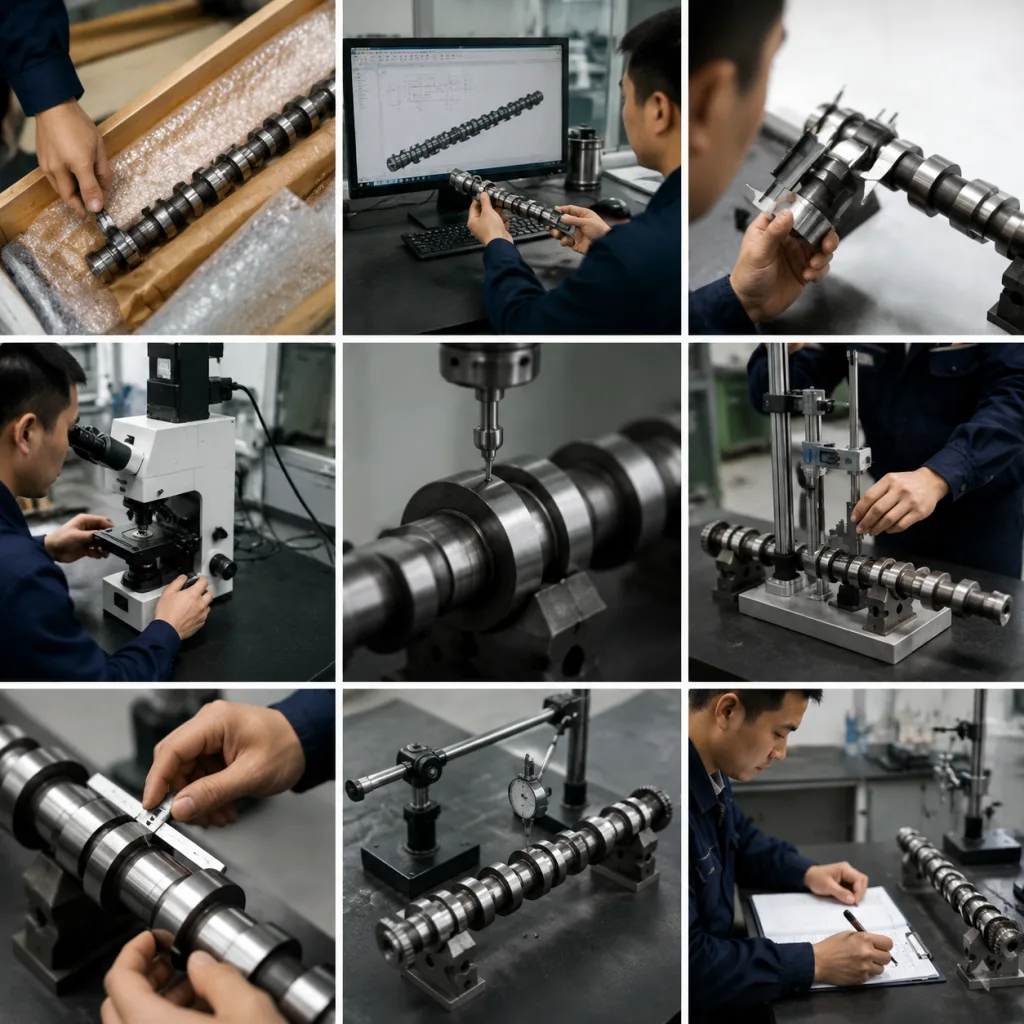
Technical controls worth specifying
Journal concentricity, straightness, and runout checked on a defined sampling plan or 100% basis for critical lots
Lobe lift, base circle, and indexing verified with a master fixture, profile gauge, or CMM data
Surface hardness and case depth confirmed after heat treatment, with batch records retained
Oil holes, slots, trigger features, thrust faces, and drive-end geometry inspected before packing
Anti-corrosion oil, VCI protection, or phosphate treatment selected for the shipping route and storage period
Particle-cleanliness checks completed before dispatch to reduce assembly contamination
For procurement teams, the inspection record is part of the product. It should connect the batch, process route, measured characteristics, inspector status, and packing identity. That link makes containment faster if a field issue appears. If your programme requires documented inspection and traceability, review our quality system before placing a volume order.
Step-by-step sample validation before PO release
A dimensional report is useful, but it is not enough. First-source approval should prove that the camshaft assembles correctly, rotates freely, holds timing, and survives early running conditions.
1. Install the sample in the target cylinder head with the correct bearings, caps, seals, and thrust hardware. 2. Torque the assembly to specification and confirm smooth rotation with no binding or tight spots. 3. Verify timing with the original gear, sprocket, phaser, or drive arrangement. 4. Confirm trigger-signal or sensor-reference accuracy where the camshaft includes a pickup feature. 5. Check oil flow at journal, lobe, and follower contact areas. 6. Run sample or endurance testing, then inspect wear pattern, hardness condition, and surface distress. 7. Compare all results with pre-agreed acceptance limits before releasing the purchase order.
Define the pass/fail rules before testing starts. Useful criteria include maximum runout, lift tolerance, indexing tolerance, hardness range, cleanliness level, post-test wear limit, corrosion-protection condition, and acceptable cosmetic standard. For related engine hardware, see our catalog and the broader engine components section.
Q&A for sourcing terms, MOQ, and claims
What should be agreed before production starts? Confirm MOQ by engine family, material route, and finish level. Also lock the lead time for tooling, casting or forging, heat treatment, grinding, inspection, packing, and export readiness.
How should sample approval be documented? Use a clear approval pack: dimensional report, hardness or heat-treatment record, installation feedback, traceability format, packing specification, and corrosion-protection confirmation.
What commercial details reduce disputes later? Agree palletisation, private-label requirements, carton content, export marks, Incoterms, spare-ratio policy, and replacement-claim process before serial production. Claims are easier to resolve when lot identity and inspection records are visible.
When is custom manufacturing the better route? Choose custom production when the target reference has low catalogue reliability, a market-specific requirement, an alternate material route, or private-label packing needs. Driventus supports B2B supply to aftermarket distributors, OEM and Tier-1 channels, engine rebuilders, and repair networks with documented production control. For custom profiles, alternate material routes, private-label packing, or market-specific carton requirements, see custom manufacturing.
Driventus is an independent aftermarket manufacturer; brand names are used only to describe fitment. The most efficient starting point is the OE reference, engine code, sample photos, and target annual demand. With that data, our team can confirm whether an existing replacement camshaft or a custom production run is the better route. You can request a quote once the fitment information is ready.
Frequently asked questions
Start with the engine code, VIN-derived application data, and verified OE or interchange reference. Then check journal size, lobe profile, trigger features, thrust location, oiling details, and drive-end geometry against a sample or technical drawing.
Yes. A direct replacement can be supplied for the independent aftermarket when it matches the required fitment, dimensions, materials, and performance criteria. Driventus does not claim Mitsubishi approval or endorsement; application suitability is validated through engineering data, sample inspection, and buyer-specific checks.
Request dimensional inspection data, hardness or heat-treatment records, material information, batch traceability, packing details, and corrosion-protection confirmation. For regulated markets, also confirm material compliance with REACH (EC) No 1907/2006 where applicable.
Share your engine code, OE reference, sample details, and annual volume, and we will confirm the best replacement route for your programme. Start here: /contact.html