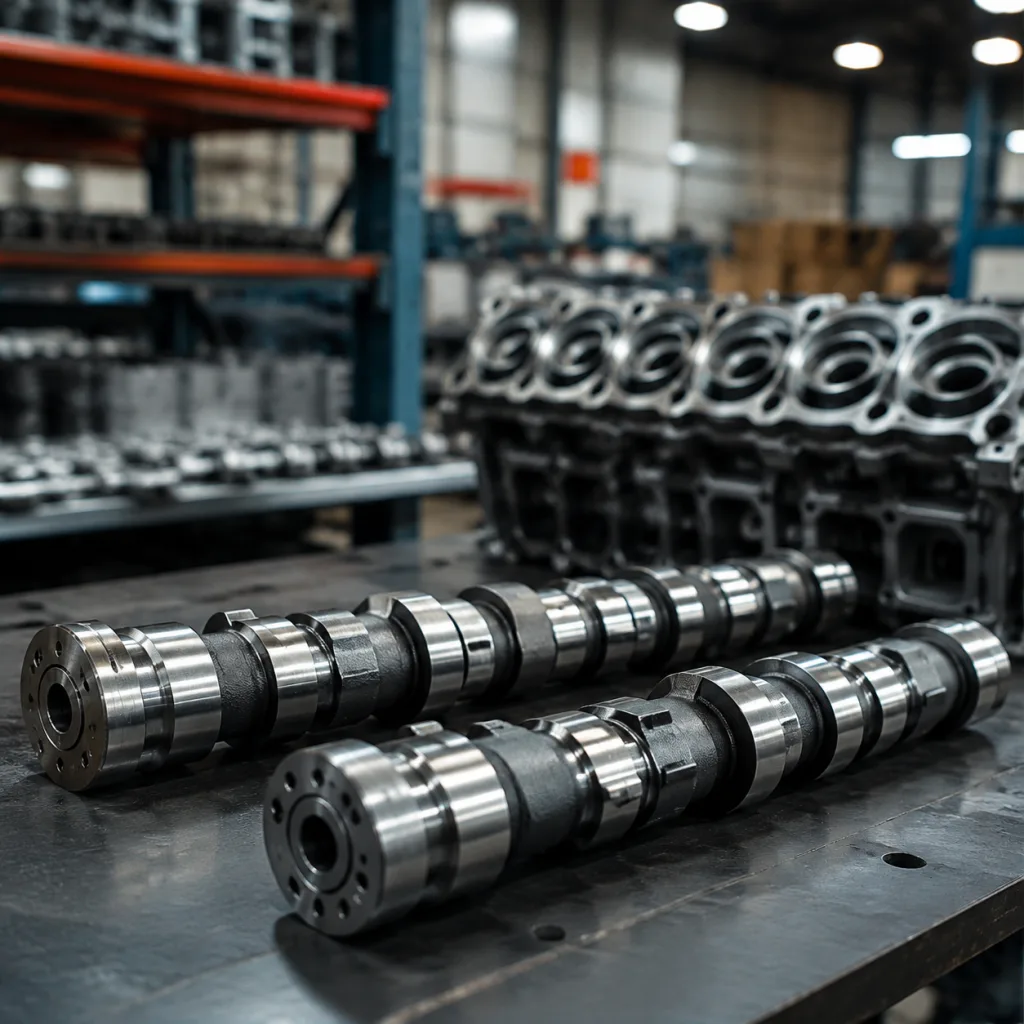
Camshaft for Ford Transit Aftermarket Replacement Guide
Choosing a camshaft for Ford Transit aftermarket replacement starts with the engine family, timing hardware, and measured geometry—not the vehicle name alone. Transit fleets often include different diesel and petrol variants, so the same model year may use different lobe profiles, trigger wheels, journal diameters, overall lengths, end-float control arrangements, and sprocket interfaces. For procurement teams, the goal is practical and clear: OE-equivalence. The part should match the intended drawing revision, hold controlled geometry after heat treatment and finish grinding, and pass incoming inspection and validation. That matters even more in commercial fleets, where a small error in lobe timing, journal size, or trigger indexing can turn into repeated downtime, warranty cost, or workshop rework across many vehicles. Driventus is an independent aftermarket manufacturer; brand names are referenced for fitment only. The sections below outline what to check before placing a purchase order, which documents to request, and how we support distributors, repair networks, and OEM/Tier-1 buyers with traceable supply.
What a replacement camshaft must match
A replacement camshaft is not defined by the badge on the van. It is defined by the exact engine variant, valvetrain layout, and timing interface. On Ford Transit applications, the key controls are lobe phasing, lobe lift profile, base-circle diameter, journal diameter, journal spacing, thrust-face geometry, sprocket or hub fit, and any sensor trigger feature used for cam position feedback.
In sourcing terms, a camshaft for Ford Transit aftermarket replacement needs to reproduce the original part’s functional geometry within a controlled tolerance window. Looking roughly similar is not enough. At minimum, buyers should verify:
Intake/exhaust lobe sequence and angular spacing
Lobe lift and base-circle dimensions
Journal diameters, widths, and positional relationship to the lobes
Overall shaft length and end-feature dimensions
Oil feed drillings, grooves, or lubrication flats where applicable
Dowel, keyway, press-fit, bolt pattern, or taper details at the timing interface
Trigger wheel, reluctor, or reference-window position relative to cam timing datum
Even small geometric errors can create very predictable field problems. A journal diameter shift of only a few hundredths of a millimetre may alter oil clearance enough to affect start-up lubrication or bearing wear. Excessive total indicated runout can increase valvetrain noise and uneven journal loading. And if a trigger feature is indexed a few crank-angle degrees out of position, the result may be correlation faults, unstable idle, poor cold starts, or cam/crank synchronization fault codes.
That is why it is safer to ask for the supplier’s controlled drawing or inspection plan instead of accepting a broad “fits Transit” claim. A sound process compares the supplier drawing with the engine data sheet and, where possible, an approved OE sample. If reverse engineering was used, ask which features were measured directly on the sample, which were checked on a CMM or dedicated profile equipment, and which dimensions were inferred from catalog interchange data.
For procurement teams, application clarity matters from the start. Ask for the target engine family, the drawing revision, and the inspection method used to verify lobe geometry, journal geometry, and timing features. Suppliers that can identify controlled dimensions and datums are generally much easier to qualify than those relying on platform-level interchange claims.
Fitment checks before you issue a PO
Before approving a purchase order, confirm the part against these points:
Check
Why it matters
What to request
Engine code, displacement, and power rating
Transit platforms use different cam profiles across diesel and petrol engine families, and even within similar model years
OE reference cross, engine-family confirmation, and sample comparison
Timing drive and sprocket/hub interface
Incorrect taper, keying, dowel position, or bolt pattern can shift cam phasing or prevent assembly
Interface drawing with critical dimensions and photos
Journal sizes and bearing geometry
Oil clearance is set by journal diameter, width, and housing relationship; wrong values increase wear and seizure risk
Journal measurement report, tolerance range, and runout data
Lobe layout and trigger indexing
Incorrect lobe event or sensor feature position can cause rough running, DTCs, or no-start conditions
Lobe timing reference and trigger-position inspection record
End-float/thrust arrangement
Wrong thrust-face width or location can create side-load wear or axial movement issues
Thrust-face dimensions and end-feature details
Packaging and traceability
Required for warehouse identification, claim isolation, and batch containment
Lot code format, carton label sample, and batch traceability statement
</tr></thead><tbody> </tbody></table>These checks are a baseline, not a full approval routine. In many B2B purchasing flows, problems begin when the vehicle description is validated but engine-level variation is ignored. A Transit may already have had an engine swap, a cylinder-head change, an updated sprocket arrangement, or mixed aftermarket timing hardware. For wholesale, remanufacturing, and repair-network programmes, VIN-based identification alone is not always enough unless it is cross-checked against the actual engine build.
Before placing a series order, it is worth confirming a few more sourcing details with the supplier:
Whether the shaft is supplied bare or with assembled timing hardware, dowels, or trigger components
Whether one aftermarket part number represents a single drawing revision or multiple production variants
Whether intake/exhaust or left/right orientation must be controlled separately on the target engine
Whether there were OE running changes affecting trigger indexing, thrust hardware, or lobe revision
Whether first-article approval and batch sampling are included in the control plan
For first-time procurement, many buyers follow a staged PPAP-style approval logic even when full automotive PPAP is not formally required: drawing review, sample approval, then production release only after dimensional and traceability records are checked. It takes more time than buying from a simple catalog description, but it greatly reduces the risk of returns, installation complaints, and workshop downtime.
Start with our catalog if you are comparing part families, or review the broader engine components range when you need a matched supply set. That can be helpful when the sourcing brief also includes followers, rocker hardware, bearings, seals, or timing parts, because compatibility across the full valvetrain system still matters.
Materials, heat treatment, and surface finish
Camshaft durability depends on three things working together: base material, hardening route, and finish quality on the lobes and journals. In the aftermarket, common routes include chilled cast iron for many standard-duty applications and alloy steel with induction hardening or nitriding for applications that need higher core toughness or stronger surface wear resistance. The correct route depends on the original engine design, follower type, lubrication regime, and service duty.
For commercial-vehicle use such as Transit, material choice is more than a manufacturing preference. It affects contact fatigue resistance at the lobe nose, scuff resistance during start-up, journal stability under load, and the shaft’s ability to hold geometry over long service intervals. Stop-start delivery cycles, extended idle hours, and high-load operation can create a harsher wear pattern than typical passenger-car use, so the process should be assessed against the real duty profile.
A procurement specification should cover more than the material name alone. Ask for measurable controls such as:
Surface hardness range on lobes and other hardened functional areas
Hardening method, such as chilled casting, induction hardening, or nitriding
Effective case depth or hardened layer specification where applicable
Journal surface roughness, typically reported as Ra on the finished surface
Straightness or total indicated runout after heat treatment and finish grinding
Confirmation that final inspection was completed after hardening and final machining
A technically credible supplier should also be able to explain how distortion is managed after heat treatment. Hardening can change straightness, lobe form, and journal concentricity. A controlled process usually includes a post-treatment straightness check, finish grinding of journals and lobes where required by design, and final verification of the features that affect oil film, follower contact, and timing accuracy.
Surface finish deserves close attention because nominal dimensions alone do not guarantee acceptable break-in behaviour. Journal roughness that is too high can disrupt oil film formation. Lobe grinding that leaves an inconsistent profile or an unfavourable lay direction can accelerate follower wear. Exact targets vary by design, but buyers commonly ask for measured roughness values on journals and lobes, along with confirmation that lobe profile and lead/crown were checked on suitable profile equipment.
If a supplier cannot provide measured records for hardness, roughness, and post-treatment geometry, the part may still look acceptable visually—but it becomes much harder to qualify for repeat B2B supply. For professional buyers, consistency from batch to batch matters more than one sample that happens to fit. The goal is not just successful installation; it is stable field performance across workshops, claims periods, and service intervals.
Validation and compliance buyers should request
A credible supplier should operate under quality system controls aligned with IATF 16949:2016 and ISO 9001:2015. Those systems do not replace your own incoming inspection, but they do help reduce variation in machining, heat treatment, traceability, document control, and corrective action handling.
For a camshaft for Ford Transit aftermarket replacement, validation should clearly link the approved drawing, the manufacturing batch, and the delivered part. Buyers often concentrate on interchange and unit cost, but the bigger commercial risk usually comes from undocumented variation. If a batch later leads to noise complaints, fitment problems, or premature wear, traceable records are what make it possible to isolate affected lots, identify root cause, and contain warranty exposure.
For the documentation pack, ask for:
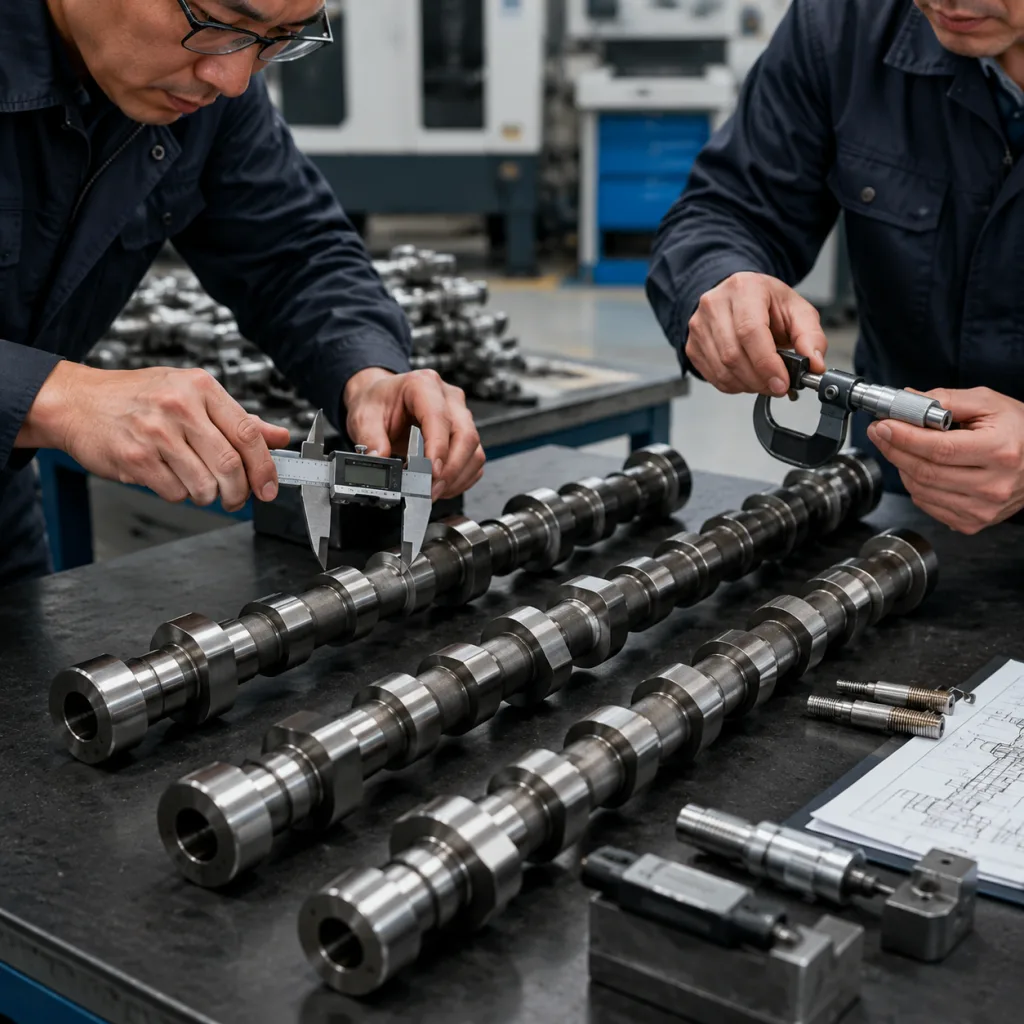
Dimensional inspection report against the approved drawing, including critical-to-function features
Material declaration and, where required, chemical composition or material grade certificate
Heat-treatment record or batch certificate with hardness results
Runout/straightness and surface-finish records where these are defined as acceptance points
Lot traceability and packaging identification format
Compliance statement for REACH (EC) No 1907/2006 and any customer-specific restricted-substance requirements
Any application-specific validation data used for approval
Depending on your sourcing model, you may also want to define acceptance criteria for:
Journal diameter tolerance
Lobe profile tolerance and timing position
Total indicated runout
Surface hardness range
Journal and lobe roughness
Marking location and content
Rust-prevention method and storage-life expectation
Carton strength, corrosion packaging, and palletization rules
Incoming validation on the buyer side should match the level of risk. For a new supplier or new part number, many procurement teams carry out a full dimensional review on first articles, confirm marking and label format, and retain approved samples as a golden reference. Once process capability is established, controls can shift toward periodic verification, batch sampling, and exception-based escalation.
If corrosion resistance, coating integrity, or long storage life is part of the brief, define the test method before production begins. Do not rely on vague terms like “anti-rust” or “warehouse safe.” Specify the preservation oil or VCI approach, storage duration, packaging condition, and any salt-spray or transit-packaging expectations relevant to your market. The more precise the approval criteria are before launch, the easier it is to avoid disputes later.
How Driventus supports procurement teams
Driventus supplies aftermarket camshafts as part of a broader engine programme for distributors, wholesalers, repair networks, and OEM/Tier-1 buyers. If you need a standard replacement, we can quote against an existing reference. If you need a controlled variant, use custom manufacturing to define the drawing, packaging, marking, and inspection requirements.
Our support is built around how B2B buyers actually source components: by technical risk, documentation depth, and supply continuity. Some customers need a straightforward OE-equivalent replacement for routine replenishment. Others need a more controlled supply programme with private label, neutral packaging, market-specific labels, batch coding, custom carton counts, or customer-defined inspection records. In both cases, the objective is the same: reduce technical uncertainty before the order is released and maintain consistency after SOP.
Typical procurement points we can support:
OE-equivalent dimensional matching against approved reference data
Review of fit-critical geometry such as journals, lobes, timing interface, and trigger features
Batch-level traceability and lot identification
Carton, label, and pallet specification
Private-label or neutral packaging
Sample submission and approval before mass production
Where a customer provides a sample or technical reference, we can review the part at the level needed for aftermarket qualification, including fit-critical geometry and documentation expectations. If the brief is still at RFQ stage, we can align the quotation around annual volume, target market, packaging rules, and the validation package required for approval. That makes it easier for procurement teams to compare offers on a like-for-like basis rather than on unit price alone.
This becomes especially relevant when buyers are consolidating suppliers across several engine-component categories. A camshaft order often sits alongside related sourcing for followers, rocker arms, timing components, seals, or cylinder-head hardware, so the commercial value is not limited to the shaft itself. In many cases, the bigger purchasing objective is a stable wider supply arrangement.
If you are comparing multiple engine families or consolidating suppliers, send the target application, annual volume, OE/interchange references, and any mandatory documentation or inspection criteria. That gives us enough information to confirm feasibility before you open a sourcing programme. Clear RFQ input usually leads to faster technical confirmation, fewer revision cycles, and a more reliable purchasing decision.
Frequently asked questions
Match the engine code, timing drive interface, sensor trigger features, lobe layout, and journal dimensions. The most reliable method is a drawing-to-sample comparison supported by measured inspection data such as journal diameters, runout, and trigger indexing. For mixed fleets or uncertain service history, verify the actual engine family physically rather than relying only on the vehicle description.
Request a dimensional report, material declaration or grade certificate, heat-treatment record with hardness results, lot traceability, and a compliance statement for REACH (EC) No 1907/2006. For stronger control, also define acceptance criteria for runout, lobe timing position, surface finish, marking, rust prevention, and packaging.
Yes. Use our [custom manufacturing](/oem-services.html) process to define packaging, marking, labeling, and inspection requirements before production. We can also align the offer to your warehouse and purchasing controls, including lot-code format, carton rules, pallet standards, and batch traceability.
If you need an OE-equivalent replacement, send the engine code, OE reference, photos, or a sample part for review. [Request a quote](/contact.html).