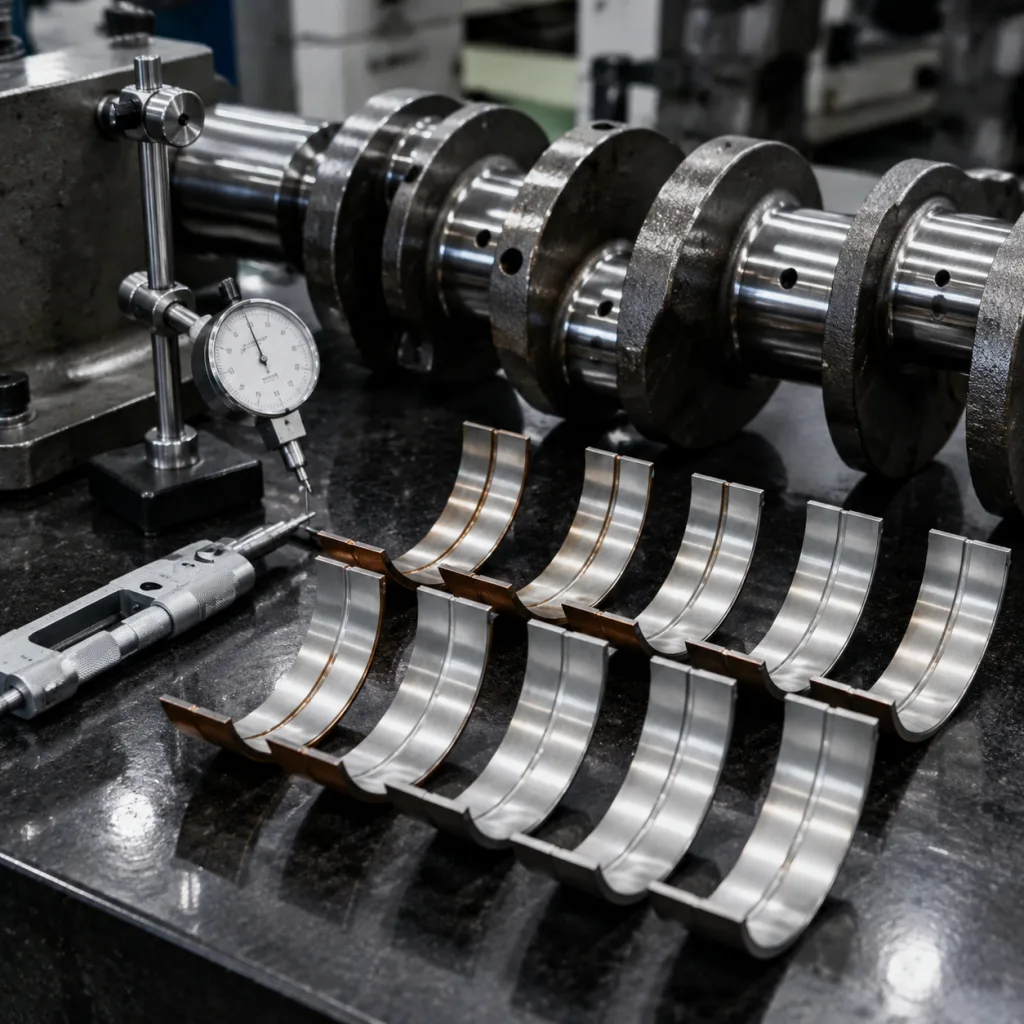
A camshaft for Citroen Berlingo replacement programme should be built around confirmed application data, not visual similarity or model name alone. Buyers need to verify dimensional match, journal finish, lobe profile, material control, timing compatibility and batch traceability before adding a part to stock. The Berlingo has been produced across multiple petrol and diesel engine families, model years and regional specifications, so fitment should be managed by engine code, VIN-linked application data and OE cross-reference conventions.
For distributors, repair chains and Tier-1 service channels, the risk is wider than early wear. Incorrect valve timing, restricted oil flow at the journals, insufficient hardness depth or mixed applications can create warranty exposure across several branches. This guide explains the sourcing checks Driventus uses when developing and supplying OE-equivalent aftermarket camshafts for B2B customers. Driventus is an independent aftermarket manufacturer; Citroen and Berlingo names are used only to identify vehicle fitment.
Fitment control before sourcing
Citroen Berlingo applications differ by production year, emissions level, cylinder head design, fuel system and market. A purchasing file should never rely on “Berlingo camshaft” as the sole identifier. Procurement teams need a controlled application format and should require the supplier to confirm every cross-reference before shipment.
Minimum fitment data should include:
Vehicle model, generation and market region
Engine code and displacement
Fuel type and emissions level, where available
Camshaft position: intake, exhaust or single overhead camshaft
Timing drive type: belt, chain or gear interface
Sensor trigger configuration and end-slot geometry
OE part-number cross-reference from the buyer’s own fitment file
Quantity split by application, not only by total order volume
A correct camshaft for Citroen Berlingo replacement must match the cylinder head, valve train and timing architecture. For B2B programmes, Driventus recommends building a fitment matrix before comparing price, MOQ or lead time. Buyers can review related engine products in our catalog and engine component families at /products/engine-components.html.
OE-equivalent dimensions and material requirements
Replacement camshafts are functional geometry parts. Small deviations in lobe lift, base circle, journal diameter, thrust face width or trigger feature angle can change valve opening, lubrication clearance, axial location and sensor correlation. For distributors, repeatability between batches is as important as the first approved sample.
Control point
Typical requirement for sourcing files
Commercial reason
Journal diameter
Application-specific, measured by drawing
Controls oil clearance and seizure risk
Journal roundness
Confirmed by inspection plan
Reduces bearing wear and cylinder-head noise
Lobe lift
Matched to OE-equivalent profile
Maintains valve timing and engine output
Base circle
Drawing-controlled
Supports correct follower preload and lash control
Surface roughness
Controlled on journals, lobes and thrust faces
Supports oil film stability
Hardness
Verified on wear surfaces
Reduces lobe and follower wear
Runout
Checked across datum journals
Limits timing variation and bearing load
Thrust face width
Drawing-controlled
Keeps axial movement within specification
Sensor feature geometry
100% checked where critical
Helps avoid cam/crank correlation faults
</tr></thead><tbody> </tbody></table>Material selection depends on the engine application and follower design. Common options include chilled cast iron, forged steel and billet steel, with heat treatment selected according to lobe contact stress, lubrication conditions and expected service life. The supplier should maintain process records for casting or forging, machining, heat treatment, straightening, surface finishing and final inspection.
For exported components, material declarations may also need to support customer compliance with REACH (EC) No 1907/2006. Driventus manages production under IATF 16949:2016 and ISO 9001:2015 through its documented quality system.
Validation testing for replacement programmes
A camshaft supplier should validate both geometry and durability before releasing a replacement part family. Dimensional inspection alone is not enough because the camshaft works under cyclic load, boundary lubrication during start-up and high contact stress at the lobe-follower interface.
Typical validation controls include:
First-article inspection against the approved drawing or master sample
Coordinate measuring machine checks on datum features, journals and lobe positions
Cam profile measurement for lift curve, duration and phasing
Metallographic inspection for microstructure and hardness depth
Surface roughness testing on journals, lobes and thrust faces
Magnetic particle or equivalent crack detection where the process requires it
Dynamic runout and straightness verification after heat treatment
Bench or engine durability testing when requested for a new programme
Production control plans that link critical features to inspection frequency
For timing-sensitive applications, trigger wheel or machined sensor feature accuracy must be controlled closely. A small angular error can generate diagnostic trouble codes or starting complaints even when the lobe geometry is correct. Repair chains are especially exposed because the same part number may be installed across several workshops before a pattern is identified.
Driventus does not claim approval or endorsement by any vehicle manufacturer. The objective is OE-equivalent aftermarket performance supported by inspection data, traceability and controlled production.
Replacement risks seen in the field
Camshaft failures in service are commonly linked to lubrication, surface condition, incorrect application or installation error. A replacement camshaft should be assessed together with the complete valve train and oil system, not treated as an isolated part.
Symptoms that require investigation
Buyers and technical support teams should flag warranty claims that mention:
Ticking or tapping noise from the cylinder head
Rough idle after installation
Loss of power or poor acceleration
Camshaft position sensor correlation faults
Metal debris in the oil or filter
Visible scoring on lobes or journals
Premature follower, rocker or tappet wear
Repeated timing fault codes after belt or chain service
Parts to check during installation
A new camshaft can fail quickly if it is installed into a contaminated or worn system. Repair instructions should require inspection of followers, hydraulic tappets, rocker arms, oil feed galleries, seals, timing belt or chain components, tensioners and oil pump condition. The cylinder head should be cleaned carefully so machining debris, sludge or excess sealant cannot restrict oil flow.
For distributors, warranty handling improves when the inner pack includes a short installation notice. It should remind technicians to inspect associated wear parts, use the correct engine oil grade, prime lubrication points and follow the correct timing procedure. This reduces avoidable returns and helps separate product issues from installation-related failures.
B2B sourcing checklist for importers and repair chains
When adding a camshaft line to an aftermarket range, procurement teams should compare suppliers by technical evidence as well as unit price. A low purchase cost can disappear quickly if fitment gaps, weak packaging or poor traceability create branch returns and unresolved warranty claims.
The following checklist is suitable for RFQ packages and supplier audits:
Confirm IATF 16949:2016 and ISO 9001:2015 certification scope
Request drawing-based dimensional reports for critical features
Require batch traceability from material lot to final carton
Confirm hardness, microstructure and roughness test methods
Ask for packaging design suitable for sea freight and parcel distribution
Define acceptable corrosion protection period for storage and transit
Confirm labelling requirements: part number, batch, application and country of origin
Agree warranty data format and claim investigation process
Check whether PPAP-style documentation is available where required by the buyer
Review capacity, MOQ, lead time and forecast flexibility
Confirm how cross-reference updates are controlled after range launch
Driventus manufactures camshafts and related engine components in Taizhou, Zhejiang, with export supply to more than 60 countries. Standard B2B support includes application matching, private-label packaging, batch documentation and controlled inspection. For application-specific geometry, revised materials or customer-owned drawings, buyers can discuss custom manufacturing with the engineering team.
Packaging, logistics and documentation
Camshafts are vulnerable to impact, corrosion and journal damage during transport. A replacement programme should define packaging before the first purchase order, especially for mixed-SKU export shipments and distribution networks where cartons may be handled several times before installation.
Recommended packaging controls include:
Individual oiling or VCI protection for machined surfaces
End caps or molded supports to protect sensor features and journals
Rigid inner cartons to prevent lobe-to-carton contact
Master cartons sized to avoid excess weight per carton
Palletisation with moisture control for sea freight
Barcode labels aligned with the customer’s warehouse system
Batch number visible without opening the inner pack
Separation of similar-looking applications to reduce picking errors
Documentation should include a packing list, commercial invoice, certificate of conformity where requested, and inspection summaries for agreed critical dimensions. For regulated markets, importers may also request material declarations aligned with REACH (EC) No 1907/2006.
A controlled camshaft for Citroen Berlingo replacement supply chain reduces receiving errors, installation complaints and branch-level stock confusion. Buyers who need MOQ, lead-time or cross-reference confirmation can request a quote with engine code, target quantity and destination market.
Frequently asked questions
Use engine code, model year, fuel type, camshaft position and OE cross-reference data from the buyer’s own fitment file. Model name alone is not sufficient because Berlingo applications vary by engine family, emissions level and market.
Yes. Driventus supports B2B private-label packaging, batch labels, application matching and export documentation. Packaging specifications should be agreed before order release so they match the customer’s warehouse, logistics and warranty process.
Available documents may include a certificate of conformity, dimensional inspection summary, hardness data, material traceability and batch records, depending on the order and customer requirements. Production is managed under IATF 16949:2016 and ISO 9001:2015.
If you are building a camshaft sourcing file for Berlingo service applications, send engine codes, target quantities and destination market for review. Contact Driventus at /contact.html