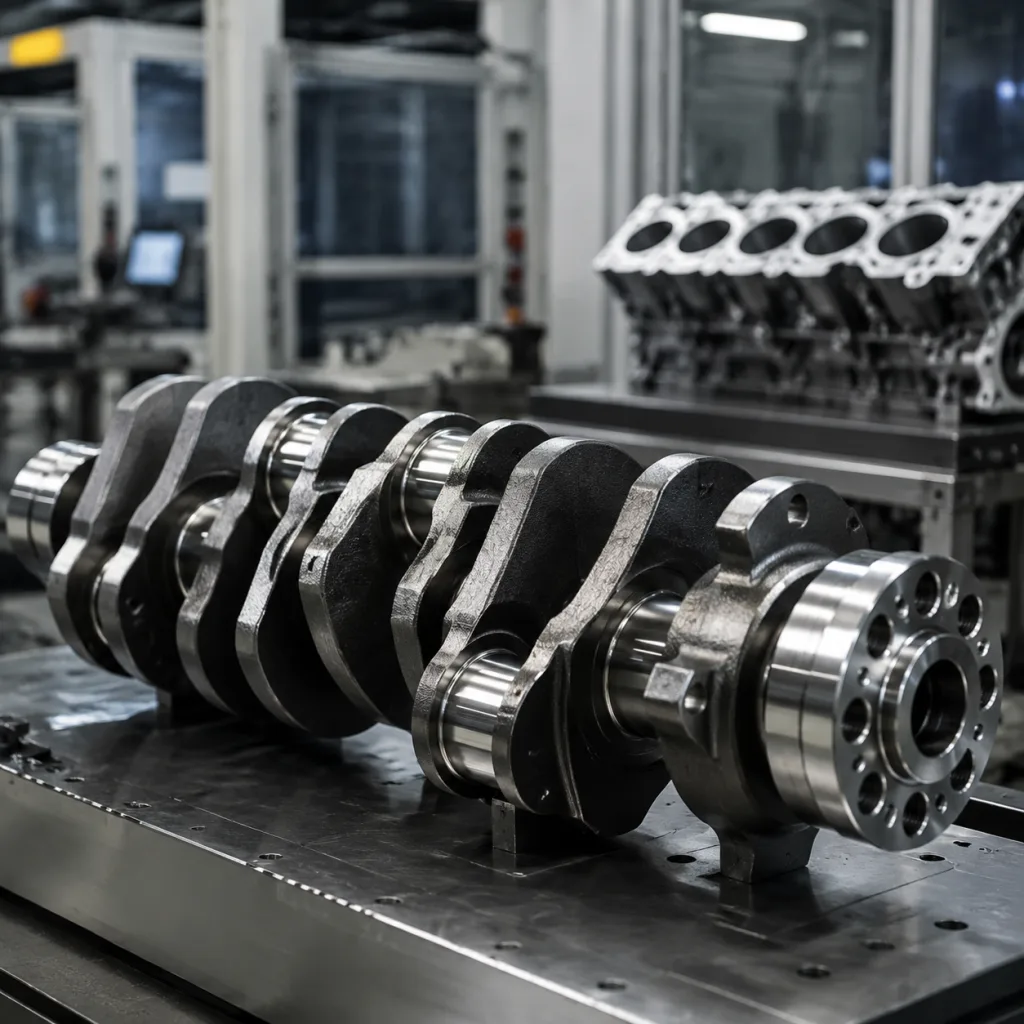
Camshaft for Citroen Berlingo Aftermarket Replacement: Buyer Guide
A camshaft for Citroen Berlingo aftermarket replacement has to match the original cam profile, journal geometry, thrust control, timing-drive interface, and contact-surface finish before it should be released into service. For procurement teams, the issue is not simply whether the part is listed for a Berlingo. It is whether it can deliver OE-equivalent valve lift, duration, lobe phasing, hardness, runout, and lubrication performance for the exact engine code in question. Driventus is an independent aftermarket manufacturer; Citroen, Peugeot, PSA, and Stellantis names are used for fitment identification only. We supply engine and powertrain components to distributors, repair networks, fleet-maintenance channels, and B2B buyers that need repeatable dimensional control backed by inspection records. For this application, sound sourcing starts with OE cross-reference verification, then moves into material grade, heat treatment, profile grinding, and validation against drawing tolerances and customer specifications. If you are weighing supplier options, this guide sets out the checks that help reduce fitment claims, workshop returns, and installation delays.
What a Citroen Berlingo camshaft replacement must match
A replacement camshaft has to do more than sit correctly in the cylinder head. It must preserve valve timing, opening duration, ramp shape, and lift so the engine remains within the same combustion, emissions, and lubrication window as the original design. For procurement, the main fitment variables are:
OE cross-reference, engine code, and cylinder-head variant
Overall length, journal diameter, oil-feed groove, and thrust face geometry
Lobe centreline, valve lift, base circle, flank/ramp profile, and phase relationship
Drive end type: timing belt sprocket, chain gear, keyed nose, reluctor/sensor feature, or VVT interface where applicable
Lobe and journal surface finish, case depth, and hardness range for wear control
Small differences can create large service problems. The engine may show low compression, unstable idle, abnormal emissions, poor drivability, timing correlation faults, or premature follower wear. That is why a camshaft for Citroen Berlingo aftermarket replacement should never be selected on appearance alone. A base-circle deviation changes valve lash or hydraulic tappet preload; a centreline or keyway error shifts valve events; and a poor journal finish can disturb the oil film in the cylinder-head bearing saddles. In practice, the buyer should verify the drawing, measured sample, OE reference, and engine code before approving the part for release.
It is also important to separate basic fitment from true OE-equivalence. A part can physically mount while still causing timing deviation, valvetrain noise, fault-code recurrence, or reduced service life because the profile is wrong or the heat treatment is inconsistent. Driventus uses controlled machining, grinding, and inspection processes to keep critical characteristics within production targets defined for B2B supply, with traceable checks on the dimensions that influence engine performance.
Typical acceptance points
Check item
Why it matters
Typical procurement review
Journal diameter and roundness
Bearing fit, oil clearance, and seizure risk
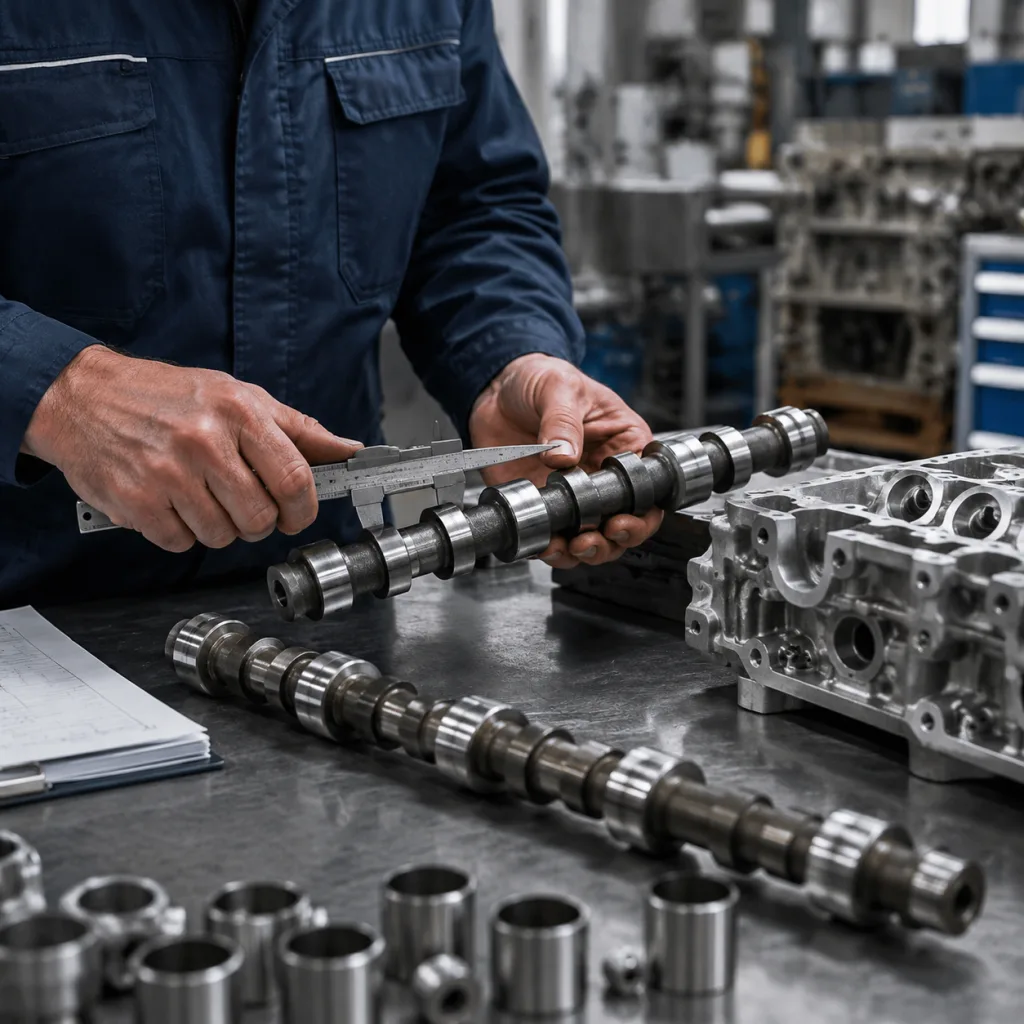
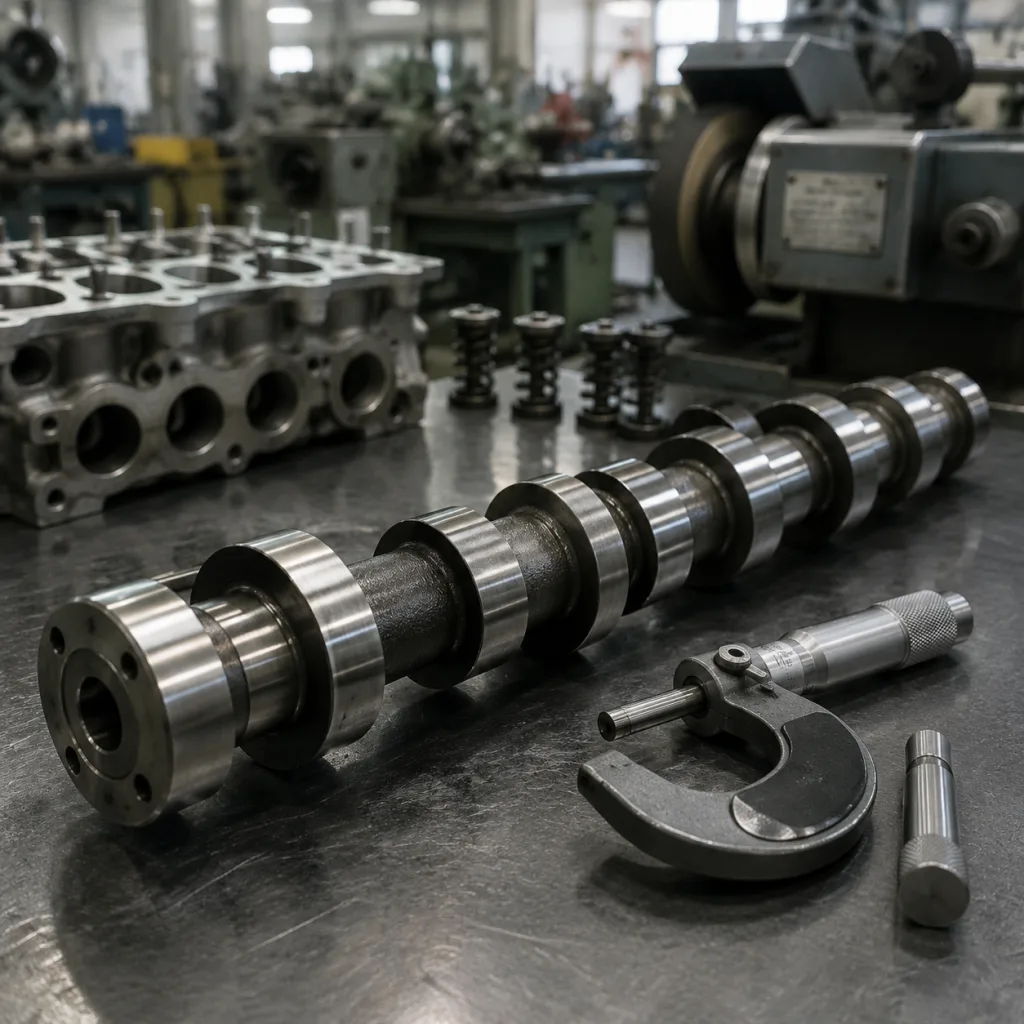
Micrometer or air-gauge inspection against drawing
Lobe lift and base circle
Valve event consistency and tappet preload
Cam profile measurement against master data or OE sample
Runout and straightness
Vibration, bearing load, and seal wear
Dial indicator or V-block measurement
Surface hardness and case depth
Lobe, follower, and journal life
Hardness test report and heat-treatment record
Drive end geometry
Timing alignment and sensor correlation
Keyway, dowel, gear, sprocket, or actuator gauge verification
</tr></thead><tbody> </tbody></table>
OE-equivalence checks before ordering
For replacement parts, the strongest sourcing decision begins with the OE number and engine variant, not the vehicle badge. Citroen Berlingo applications can vary by PSA/Stellantis engine family, fuel type, emission level, cylinder-head layout, transmission package, and model year. Before issuing a purchase order, buyers should confirm the engine code, valve train arrangement, cam drive interface, and emission specification. One model name may cover engines with different camshaft profiles, timing hardware, sensor targets, and follower designs, so the procurement record needs to define the exact application.
A practical procurement checklist includes:
1. Verify the OE part-number cross-reference from service data, EPC data, or the removed sample part. 2. Confirm whether the engine uses SOHC, DOHC, one camshaft per bank, hydraulic tappets, roller followers, or variable valve timing hardware. 3. Check whether followers, rocker arms, hydraulic lifters, cam seals, bearing caps, and timing components must be replaced with the camshaft. 4. Review the supplier’s dimensional inspection report, material certificate, and heat-treatment summary. 5. Confirm packaging, rust prevention, desiccant or VCI requirement, and shelf-life expectations for export storage. 6. Validate whether the part is intended for the same emission specification and engine-code revision as the original unit. 7. Confirm that the timing drive end matches the sprocket, gear, chain wheel, reluctor, dowel, keyway, or actuator arrangement used on the engine.
Driventus does not claim vehicle-manufacturer endorsement. We supply aftermarket parts built for fitment compatibility and repeatable production control. When buyers compare sources, they should ask for measured samples, inspection records, and installation history, not just catalogue descriptions. If a supplier cannot explain what changed from one engine revision to another, the application risk remains unresolved.
Information buyers should request
OE reference, engine code, and application confirmation
Material grade, casting or forging route, and heat-treatment summary
Lobe and journal hardness range, case depth target, and inspection method
Runout, straightness, profile, and drive-end verification records
Surface-finish data for lobes and journals where required by the customer drawing
Country of origin, packing specification, label format, MOQ, and lead time
Material, machining, and testing expectations
A replacement camshaft must hold its geometry under cyclic valve-spring loading, boundary lubrication at start-up, and continuous oil-film stress at the journals. The manufacturing route usually includes precision casting or forging, stress relief where required, rough machining, heat treatment, straightening, finish grinding, polishing, cleaning, rust prevention, and final inspection. Buyers should understand which controls are applied at each stage, because variation anywhere in the route can affect lobe wear, oil-film stability, tappet rotation, and valve timing consistency.
Common technical requirements include:
Controlled lobe hardness and case depth for wear resistance under follower contact
Journal concentricity, roundness, and profile-grinding accuracy
Defined roughness on lobe and journal contact areas to support oil-film formation
Cleanliness control to reduce grinding residue, casting sand, and embedded debris
Anti-corrosion protection such as oil film, VCI paper, sealed bags, or customer-specified export packing
Batch traceability from material lot and heat treatment to finished-part inspection
Stable dimensional control across repeated production runs, not only first-article samples
Verification of drive-end features, sensor targets, dowel positions, keyways, and threaded holes
Published standards matter because they define the quality framework around the part, even when the camshaft itself is controlled mainly by drawing, OE sample, and customer specification. Driventus operates under IATF 16949:2016 and ISO 9001:2015 quality systems. Where materials, coatings, packaging, or market access are involved, buyers may also request REACH (EC) No 1907/2006 compliance statements for EU supply chains. Depending on order volume and programme risk, validation plans may include hardness mapping, dimensional capability studies, metallographic checks, salt-spray or corrosion-resistance review for packing validation, and rig or engine endurance testing.
From a procurement perspective, the question is not only whether the camshaft was made correctly once. It is whether the supplier can prove it was made correctly batch after batch. That means requesting dimensional reports, hardness data, in-process control evidence, and final release records rather than relying on a catalogue description. It also means checking how the part is protected after manufacturing, because transport corrosion, thread damage, or abrasive residue can compromise an otherwise acceptable component before it reaches the workshop.
If your sourcing programme includes multiple engine families, our custom manufacturing support can align dimensions, packaging, labelling, and inspection reports to your specification. For buyers managing mixed inventories, this helps reduce confusion across carton labels, revision codes, engine codes, and inspection standards while keeping each camshaft matched to the intended engine family.
How Driventus supports B2B replacement supply
Procurement teams need parts that repeat across batches, not one-off samples that pass an initial visual review. Driventus supplies camshaft programmes with controlled documentation, export packing, and batch traceability for distributors, repair chains, fleet maintenance programmes, and Tier-1 supply routes. In aftermarket supply, the commercial risk is often not the first shipment. It is the repeat order that must arrive with the same dimensions, the same fit, and the same release evidence.
Our process typically includes:
Drawing review against OE reference, service data, or supplied sample
Material route and heat-treatment confirmation for the intended valve-train contact system
Machining capability confirmation for journals, lobes, thrust faces, oil features, and drive-end details
In-process inspection and final dimensional checks for critical-to-fit and critical-to-function dimensions
Packaging specification for warehouse storage, export handling, rust prevention, and mixed-SKU consolidation
Batch records for receiving, traceability, warranty review, and claims analysis
Sample approval support for trial orders, PPAP-style documentation where requested, and initial order qualification
Consolidated documentation for procurement, quality, receiving, and customer-service teams
Buyers reviewing our quality system can assess the inspection structure used for production release. If you need a broader engine programme, see our catalog and the related engine components range for matched gaskets, pumps, seals, timing components, and rotating parts. This is useful when the camshaft is part of a rebuild kit or fleet maintenance package, because component compatibility matters as much as the camshaft itself.
A good B2B supply relationship should also make internal processing easier. Clear labels, stable part numbers, revision control, barcode or batch identification, and consistent packaging reduce receiving errors and help warehouse teams separate trial stock from production inventory. For export buyers, that discipline lowers transit damage risk and makes customs, depot handling, and aftersales investigation more predictable.
This approach helps prevent a single part from being correct in isolation but incompatible with the rest of the repair kit. For fleet and aftermarket programmes, repeatable specification control matters as much as unit price.
How to compare suppliers for this application
When comparing suppliers for a camshaft for Citroen Berlingo aftermarket replacement, the lowest quotation is not enough. A useful comparison looks at measurable output, application knowledge, documentation quality, and commercial reliability. A cheaper offer that lacks profile data, drive-end confirmation, dimensional proof, or traceability often becomes more expensive after the first return, installation delay, or warranty claim.
Supplier factor
What to verify
Why it affects your cost
Dimensional control
Profile, runout, journal diameter, roundness, thrust width, and drive-end tolerances
Reduces rejection, timing issues, and comeback rates
Documentation
Material, heat-treatment, hardness, and inspection records
Speeds receiving approval and quality sign-off
Batch consistency
Sample-to-sample repeatability and control-plan evidence
Lowers warranty and mixed-stock risk
Export readiness
Carton strength, VCI or oil protection, label data, and pallet standards
Prevents corrosion, impact damage, and warehouse errors
Communication
Response time and part-matching support
Cuts sourcing delays and wrong-application orders
Engineering support
Ability to confirm OE cross-reference, engine code, and revision differences
Reduces fitment mistakes before volume release
Traceability
Batch, lot, heat-treatment, and inspection identification
Improves claims handling and corrective action
</tr></thead><tbody> </tbody></table>Ask for a current sample, drawing confirmation, and a written cross-reference note before placing volume orders. If the supplier cannot explain the acceptance limits or will not share inspection evidence, the pricing advantage is not meaningful. The same applies when a supplier can quote a part but cannot confirm the inspection method used to verify runout, hardness, straightness, drive-end geometry, or profile accuracy.
For buyers consolidating supply across multiple depots or export markets, the evaluation should also include packaging consistency, label accuracy, MOQ flexibility, and lead-time reliability. A stable supply chain can repeat the same part specification across multiple shipments with the same measured result. If you are consolidating supply, Driventus can support request a quote for trial orders, production volumes, or custom packaging requirements.
For procurement teams, the right supplier is the one that can repeat the required specification across shipments and provide the records needed to prove it.
Common buying errors and how to avoid them
The most frequent sourcing mistake is matching only by vehicle model name. Berlingo variants can share body styling while using different PSA/Stellantis engine families, cylinder-head layouts, cam drive architectures, and emissions calibrations. Another common error is overlooking the supporting parts that should be replaced during installation. A camshaft rarely succeeds as a standalone purchase if the associated followers, hydraulic lifters, rocker arms, bearings, seals, or timing components are already worn or contaminated.
Avoid these issues:
Ordering without OE reference and engine-code confirmation
Reusing worn followers, lifters, rocker arms, bearings, or seals
Accepting a visual match without dimensional and profile data
Ignoring lobe surface finish, hardness, and heat-treatment evidence
Skipping rust-prevention and packaging checks for corrosion-sensitive export stock
Failing to replace timing-related components during overhaul where service procedure requires it
Approving a part without confirming revision compatibility, drive-end geometry, or sensor-target features
The cost of a wrong camshaft is not limited to the part itself. It can include labour, workshop downtime, customer claims, secondary valve-train damage, diagnostic time, and additional shipping cost for replacement stock. In workshop environments, a mismatched camshaft can also create avoidable diagnostic work because symptoms may appear as idle instability, low power, timing faults, misfire codes, or unusual valvetrain noise. For that reason, procurement teams should build in drawing approval, sample validation, and batch traceability before release.
A practical way to reduce risk is to require a sign-off record that ties the OE reference, engine code, cam drive type, and measured sample to the purchase order. That record should be available before the first production shipment, not after a warranty issue appears.
Driventus is an independent aftermarket manufacturer; brand names are referenced for fitment only.
Frequently asked questions
Match the OE reference, engine code, cam drive type, cylinder-head layout, and key dimensions such as journal diameter, lobe lift, base circle, drive-end geometry, and overall length. A model-name-only match is not reliable, because Berlingo applications can use different engines, emissions specifications, and valve-train layouts under the same badge.
Request a dimensional report, material or heat-treatment summary, hardness data, batch traceability, and a compliance statement for REACH (EC) No 1907/2006 where relevant. For B2B approval, it is also useful to request drawing confirmation, OE cross-reference notes, and a clear description of the inspection methods used for runout, profile, journal diameter, and drive-end geometry.
Yes. Through our OEM and private-label support, we can align packaging, labelling, carton specification, rust prevention, and inspection records to your programme. Use /contact.html to start, especially if you need export-ready cartons, multilingual labels, barcode or batch labels, or customer-specific documentation.
If you are sourcing a camshaft for Citroen Berlingo aftermarket replacement, send your OE reference, engine code, sample details, and target volume for a technical review. Start here: /contact.html