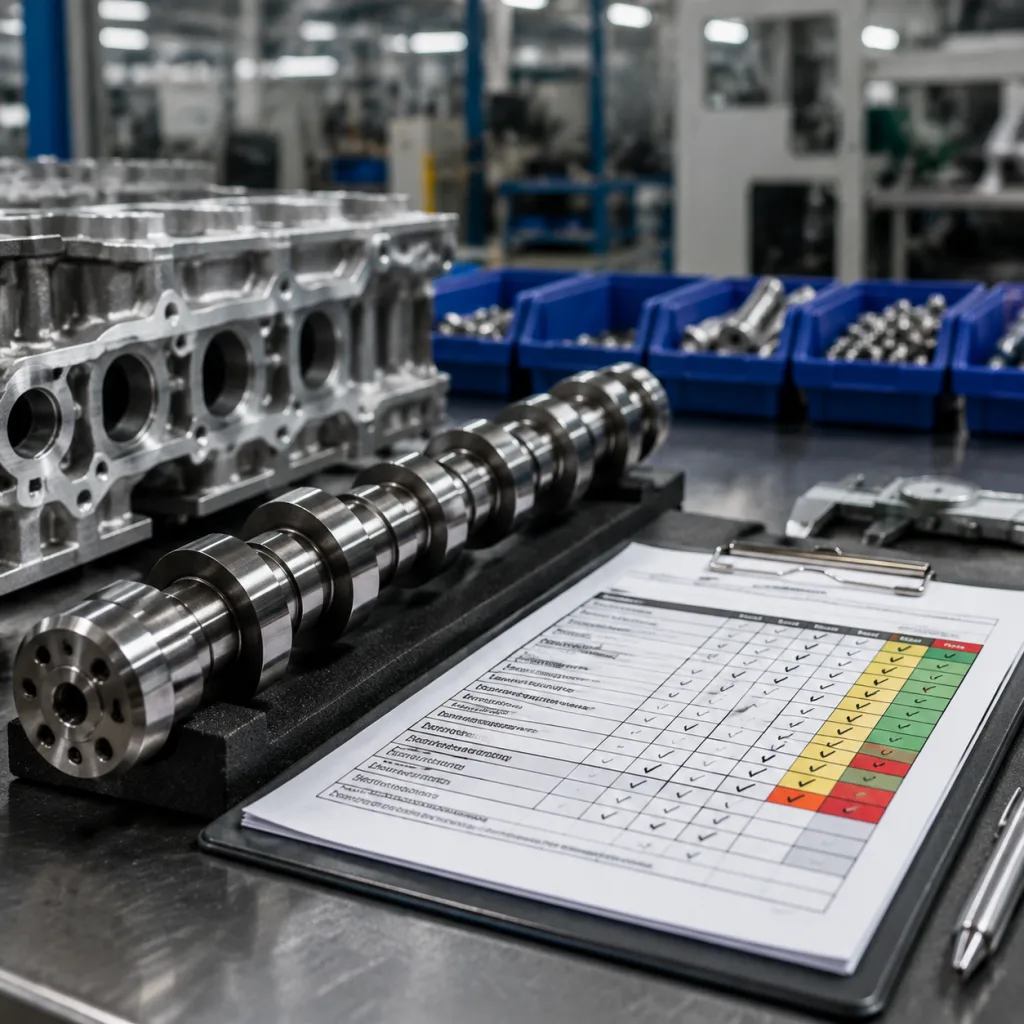
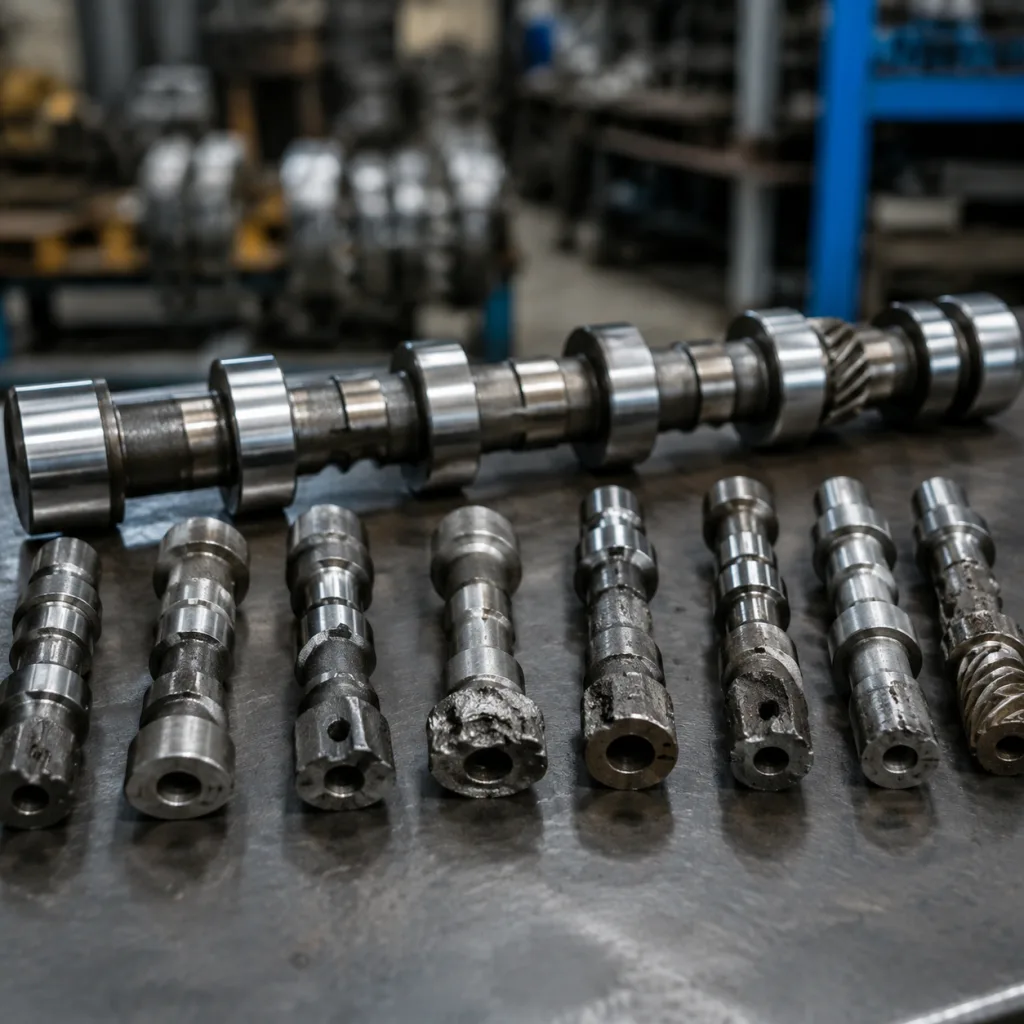
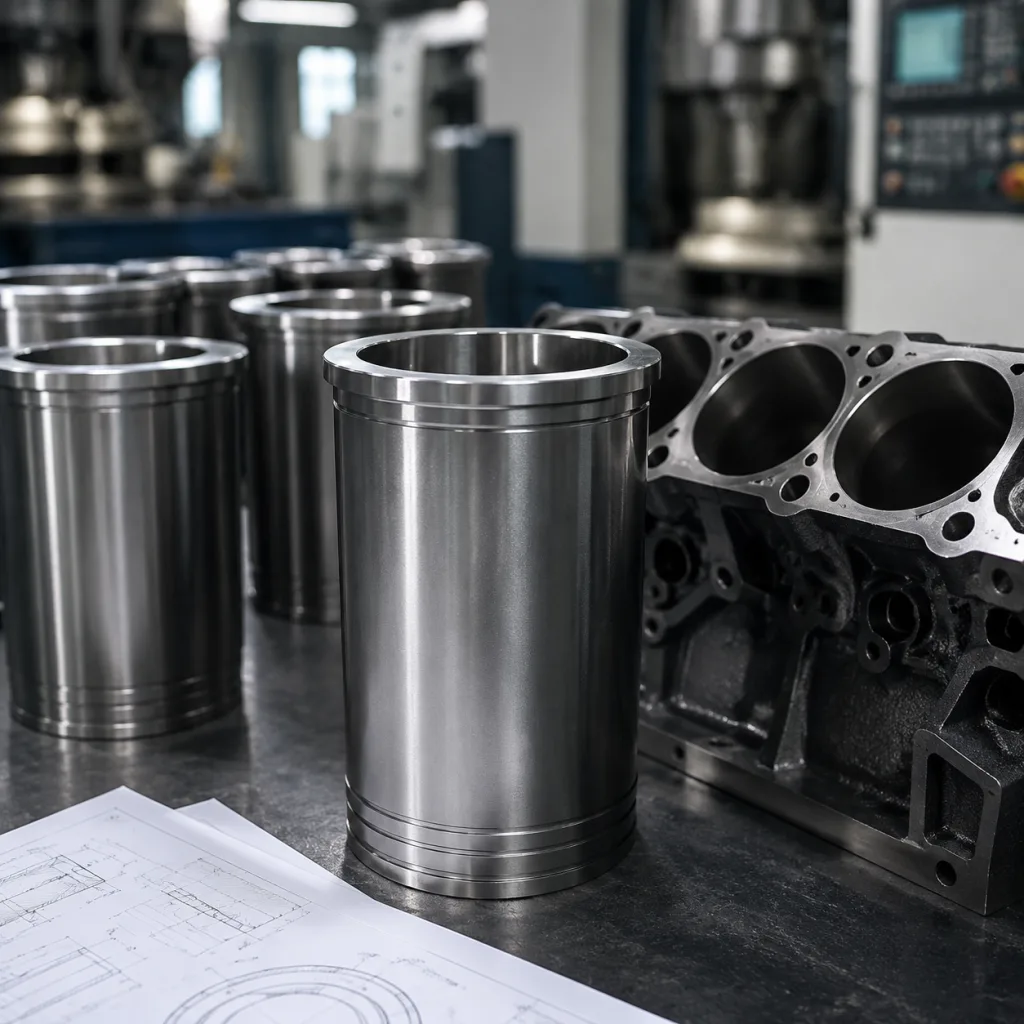
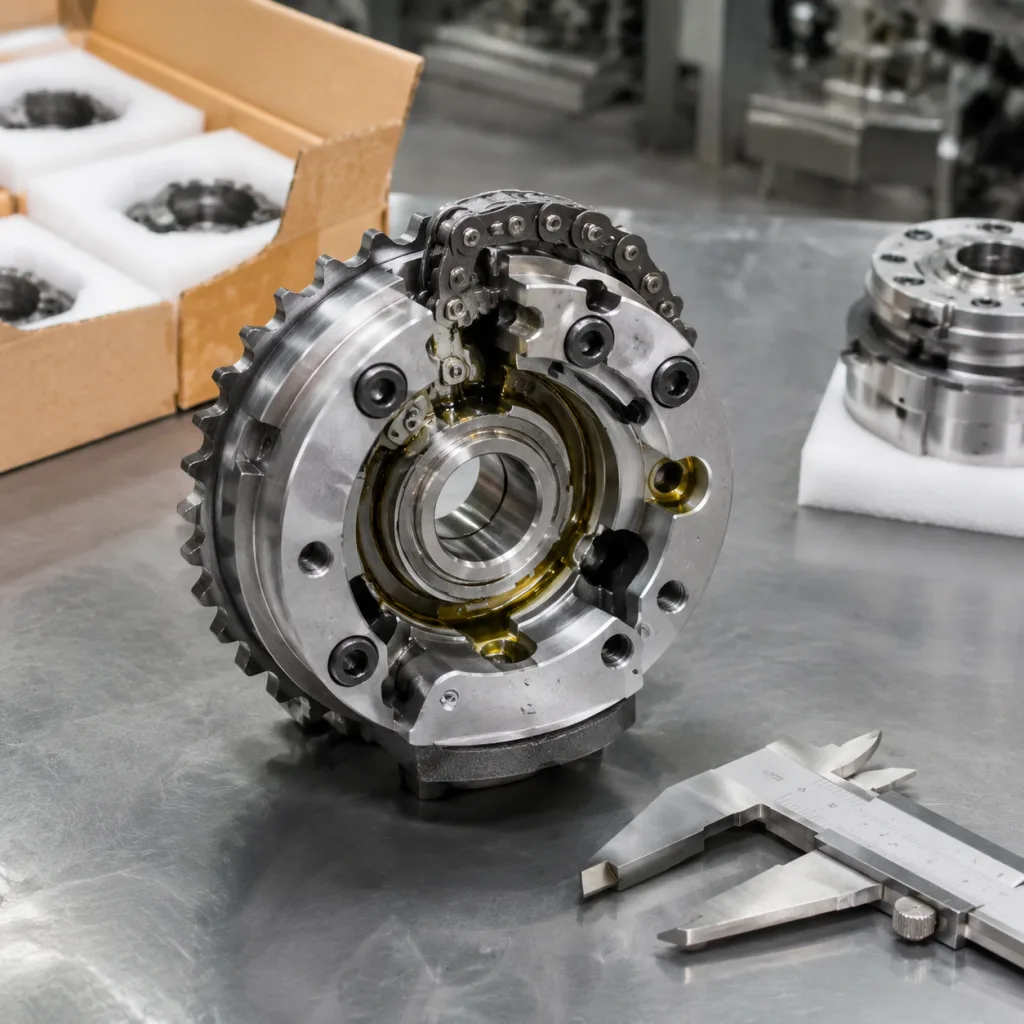
If you are evaluating a camshaft chevrolet oem supplier, start with the drawing package rather than the price list. Camshaft performance depends on lobe geometry, lobe phasing, journal concentricity, runout, hardness profile, and, just as importantly, how consistently the part is machined and heat-treated across the full production run. Driventus is an independent aftermarket manufacturer; brand names are referenced for fitment only. Based in Taizhou, Zhejiang, we supply distributors, OEM and Tier-1 programmes, and multi-location repair chains in more than 60 export markets. For procurement teams, the key questions are straightforward: can the plant hold drawing tolerances lot after lot, trace raw material heat numbers and heat-treatment batches, and support validation to the programme standard? Those answers should be visible in the quality records, first-article report, and commercial terms before any order is placed.
Successful sourcing usually depends on engineering, quality, and purchasing aligning before nomination. A capable supplier should be able to review the application, confirm the manufacturing route, flag likely risk points such as post-hardening distortion or profile drift, and document how the part will be controlled from raw material intake through final packing. That matters even more when the programme covers Chevrolet fitment across multiple engine families, private-label distribution, or export markets with different compliance expectations. The strongest sourcing decisions are built on measurable process capability, controlled specifications, and repeatable execution, not catalogue claims alone.
What Buyers Should Verify First
A serious RFQ starts with the control points, not a broad fitment description. For a Chevrolet camshaft, buyers should define the engine family, valve train layout, target valve lift, duration at a stated checking height, lobe separation angle, journal diameters, thrust-face geometry, drive-end features, and any OE cross-reference already supported by the drawing. If the programme has an emissions, idle-stability, or torque-curve target, state it directly. The profile affects manifold vacuum, overlap, and low-speed drivability. Ask for the material route, heat treatment, coating or preservative, and inspection plan before asking for unit price.
The first job is to remove ambiguity. Many sourcing delays begin when buyer and supplier are working from different revision levels, or when the quote is based on a broad application list instead of a controlled dimensional package. Chevrolet applications can vary by displacement, model year, fuel system, emission package, and whether the engine uses hydraulic roller lifters, flat tappets, or cam phasing. The supplier should confirm the exact application scope before feasibility is accepted. If one camshaft must cover multiple references, document that interchange logic early with a cross-reference table and dimensional justification.
Buyers should also be explicit about which dimensions are critical to function. On a camshaft, that usually includes lobe profile accuracy, base-circle size, journal diameter and cylindricity, total indicated runout, thrust-surface flatness, keyway or reluctor features, and angular phasing between intake and exhaust lobes. On production programmes, critical controls may include journal diameter tolerance in the low-micron range, runout at or below about 0.03-0.05 mm depending on design, and phased-angle checks referenced to the master datum. If the part works with hydraulic lash adjusters, variable valve timing systems, or hardened followers, disclose those mating conditions because they affect profile tolerance, hardness strategy, and surface finish.
A practical pre-quote checklist includes:
Drawing or sample revision
Engine code, model range, and production years
OE number, aftermarket interchange, or internal customer reference
Material grade and heat-treat specification
Required hardness, case depth, or nitrided layer depth
Runout, concentricity, lobe-to-lobe phasing, and profile tolerance
Surface roughness target for lobes and journals
Packaging, labelling, and export market
Validation standard, sample approval route, or PPAP level if required
If you do not have a full drawing, a validated sample plus the critical dimensions is usually enough to begin feasibility review. In that case, the supplier should identify which features can be measured directly, which require profile scanning or reverse engineering, and which assumptions must be approved before tooling or volume release. That is the difference between a genuine camshaft chevrolet oem supplier and a trader quoting from an application list alone.
Material and Manufacturing Choices
Material choice should match duty cycle, contact stress, and cost target. Chilled cast iron is common for standard replacement programmes because the chilled lobe surface provides good wear resistance and the blank is economical for volume machining. Alloy steel or billet steel is used when higher fatigue strength, more aggressive lobe geometry, or heavier valve-spring loads justify the added machining and heat-treatment cost. Forged steel sits between those routes when the programme needs stronger section properties and better grain flow than cast material.
The manufacturing route matters just as much as the base material. For mainstream replacement demand, chilled cast iron often offers the best balance of cost, machinability, and wear performance. For higher-load or performance-oriented applications, alloy steel gives better fatigue behaviour and more freedom in profile development. Forged steel can be a strong option where torsional strength and impact resistance matter, but it also requires tighter control of forging quality, stock allowance, and downstream machining.
Construction
Typical use
Technical notes
Commercial trade-off
Chilled cast iron
High-volume replacement parts
Good lobe wear resistance, stable blank cost, common for OE-style replacement
Lowest unit cost, limited flexibility for major geometry changes
Billet or alloy steel
Performance or custom OEM programmes
Higher core strength, suitable for induction hardening or nitriding, greater profile freedom
Higher machining content and longer cycle time
Forged steel
Heavy-duty or higher-load applications
Better section integrity and fatigue performance than cast options
More complex upstream process control
</tr></thead><tbody> </tbody></table>Buyers should also ask how the blank is produced and how the final geometry is generated. A camshaft may involve casting or forging, rough turning, semi-finish machining, lobe and journal grinding, heat treatment, finish grinding or superfinishing, washing, rust prevention, and final inspection. Every step introduces a possible variation point. Unstable heat treatment can distort journals or shift straightness. Poor grinding control can alter lobe flank shape, nose radius, or taper and shorten service life.
For wear control, induction hardening and gas or plasma nitriding are common routes, depending on substrate and duty cycle. Programmes should define target hardness and effective hardening depth, not just the method name. Drawings may, for example, specify lobe surface hardness in the 55-62 HRC range for hardened steel designs, or equivalent hardness scales for cast materials, together with a minimum effective case depth measured at the specified hardness criterion. Surface finish is equally important. Lobes and journals are often controlled in the sub-micron to low-micron Ra range because excessive roughness can increase break-in wear and disrupt the oil film.
When evaluating a camshaft chevrolet oem supplier, ask for more than a generic statement of material type. Request:
Raw material standard and foundry or steel source
Blank-forming process and traceability method
Heat-treatment method, target hardness range, and effective case depth
Grinding, profile-generation, and superfinishing method if used
Control plan for distortion after hardening
Surface roughness target on lobes and journals
Rust-prevention oil, VCI packing, or other corrosion-protection method for shipment
Final acceptance should follow the signed drawing, not a generic catalogue dimension. When material, process route, and finish are matched to the Chevrolet application, the result is not just compatibility on paper but stable production and reliable service.
Quality Control and Validation
Quality control is where sourcing claims become measurable. A credible plant should operate under IATF 16949:2016 and ISO 9001:2015, with traceability from raw material heat to finished lot. For EU supply, REACH (EC) No 1907/2006 matters for preservatives, coatings, oils, inks, and packaging materials. First articles should report lobe lift, duration or profile reference points where specified, base-circle size, journal diameter, runout, hardness, and surface finish, together with calibration status for key gauges and instruments.
For camshafts, inspection has to prove both dimensional accuracy and process stability. One conforming sample does not show that the supplier can hold the same geometry over repeated lots. Buyers should review how the plant controls incoming material, in-process machining, post-heat-treatment distortion, and final profile verification. In better-controlled programmes, lobe profile is checked with dedicated camshaft measuring equipment or profile tracers rather than relying only on general-purpose CMM point checks. If the supplier cannot explain where variation is most likely to occur and how it is contained, programme risk remains high even if the prototype looks acceptable.
Common validation items include:
CMM and/or dedicated cam-profile inspection for geometry and phasing
Micrometer, roundness, and runout checks on all journals and datum features
Rockwell hardness and case-depth checks where specified
Magnetic particle inspection for crack detection when design or process risk justifies it
Cleanliness checks for oil holes, grooves, or internal passages where applicable
Lot traceability, mill certificates, and heat-treatment charts
Some test methods in automotive engine components are programme-specific, so endurance and corrosion validation should follow the agreed customer standard rather than a generic claim. ASTM B117 may be useful for comparing corrosion resistance of coated or protected surfaces and packaging systems, but it is not a substitute for full application validation. If durability testing is required, the supplier and buyer should agree cycle count, lubrication condition, follower type, spring load, and acceptance criteria before sampling begins.
For many buyers, first-article approval should also include a visual and functional review. Surface burns from grinding, burrs, edge condition, oil-hole cleanliness where applicable, drive-end fit, and packing condition all affect downstream acceptance. If the camshaft is part of a kit or private-label programme, packaging validation should confirm label accuracy, barcode readability, anti-rust protection, and transit resistance.
A strong quality package from a camshaft chevrolet oem supplier typically includes:
Dimensional report against drawing balloon points
Lobe profile or cam-report printout with phased-angle results
Material certificate or raw material traceability record
Heat-treatment chart and hardness report
Runout, concentricity, and straightness inspection results
Surface finish results for lobes and journals
Process flow, PFMEA summary, or control plan if agreed
Gauge calibration status for key measurement tools
Nonconformance and corrective-action procedure on request
If your programme needs PPAP or sample approval, request the submission level in the RFQ. That avoids rework later. It is also wise to agree in advance how deviations will be handled, who approves engineering changes, and whether revalidation is required after tooling adjustment, material-source change, foundry change, or process relocation. Those controls help ensure that the approved sample remains representative of production supply, not just the first batch.
Lead Time, MOQ, and Commercial Terms
Lead time is usually driven by three factors: tooling status, process route, and approval scope. A part with stable tooling, released process parameters, and an approved drawing can move into production quickly. A new profile is different. It typically needs sample machining, profile measurement, hardness verification, and often one or more correction loops before volume release.
Buyers should separate development timing from mass-production timing. Prototype or first-sample lead time may be relatively short if the supplier can machine from an existing blank or adapt current process capability. Volume lead time is different because it must cover raw material or blank procurement, casting or forging lead time, heat treatment, finish grinding, final inspection, packing, and shipment. Typical export schedules also need buffer for approval feedback and booking. If specifications change mid-process, the schedule can slip quickly because profile, fixturing, and inspection programmes may all need revision.
Minimum order quantity is usually influenced by blank economics, setup time, heat-treatment batch size, and grinding efficiency. For established replacement references, MOQ may be more flexible because blanks, tooling, and gauges already exist. For custom profiles, private-label programmes, or reverse-engineered parts, the supplier may require a higher opening quantity to amortize setup, dedicated fixtures, profile masters, special gauges, and validation work. Buyers should ask whether MOQ decreases after first approval, because that affects stocking strategy and cash flow.
When you send a quote request, include:
Annual demand and call-off pattern
Forecast by quarter or by destination if available
Target market and compliance requirements
Material, heat-treatment, and finish requirements
Packaging specification, barcode format, and pallet requirements
Whether the part is for replacement, OEM supply, or private label
Required Incoterm, destination port, and preferred shipment mode
Approval timeline and SOP or launch date
Commercial terms should also cover the details that often create hidden cost later. These include sample charges, tooling ownership, inspection-gauge ownership, drawing confidentiality, warranty handling, containment procedure for nonconforming lots, and whether the supplier will hold safety stock or blank stock for recurring releases. In export business, carton strength, pallet dimensions, anti-corrosion packing, and desiccant or VCI use can materially affect claim rates and warehouse handling, so they should be confirmed before order placement.
For custom dimensions or reverse engineering, custom manufacturing helps lock the profile before production starts. That is usually the right path when the buying team wants a controlled source rather than a trading-only offer. A dependable camshaft chevrolet oem supplier should be able to explain not only unit price, but also the technical assumptions behind the price, the approval path, the batch logic, and the replenishment model once the programme enters normal supply.
Why Driventus Fits This Part Family
When buyers compare a camshaft Chevrolet OEM supplier with local machining options or trading-only companies, the real question is simple: can the factory control geometry at scale? Driventus fits this part family because the company already supplies engine components in recurring production, not as a one-off machining shop. Buyers can review our catalog, the broader engine components range, and the quality system, then validate process capability before nomination. If the application needs a special profile, finish, or packaging format, custom manufacturing is available with drawing-based control.
The value for procurement teams is not just manufacturing access, but sourcing clarity. A supplier should be able to move from RFQ to feasibility review, and from sample inspection to production release, with documentation that supports internal approval. That matters when the programme serves multiple warehouses, regional distributors, or OEM-style supply chains that require stable labelling, repeatable quality records, and traceable lot control.
Driventus is an independent aftermarket manufacturer; brand names are referenced for fitment only. That distinction matters for procurement teams that need clean documentation, export traceability, and a supplier who can support audits without implying OEM endorsement. For buyers working under private-label or OE-equivalent positioning, it helps keep packaging, declarations, and sales documentation aligned with compliance expectations.
From a sourcing perspective, the fit is strongest when the buyer needs:
Drawing-based or sample-based feasibility review
Controlled machining and grinding for critical geometry
Material, blank-source, and heat-treatment traceability by lot
Support for first articles, sample approval, or PPAP-style packs
Export-ready packaging and labelling control
A supplier relationship built around recurring production, not ad hoc trading
For a camshaft programme, the practical test is still the same: can the plant hold the profile, prove the material route, and deliver consistently across batches? If the answer is yes, the sourcing case is stronger than a price-only comparison. That is the standard buyers should apply when selecting a camshaft chevrolet oem supplier, and it is the basis on which Driventus positions its support for this part family.
Frequently asked questions
Send the drawing or approved sample, engine family, annual demand, OE reference or interchange number, material preference, heat-treatment target, finish requirement, packaging specification, and destination market. If critical dimensions such as journal size, runout, hardness, or lobe phasing are already defined, include them in the RFQ so feasibility starts from the correct technical baseline.
Yes, when the drawing or approved sample defines the geometry and inspection standard. We verify key characteristics such as journal diameter, lobe profile, phased angle, runout, hardness, and surface finish against the programme specification before release.
Yes. Buyers can review process controls, traceability, inspection records, and quality-system documentation. We can support PPAP-style sample packs or other agreed approval documents when the programme requires them.
Share the drawing, OE reference, annual volume, target hardness or finish, and destination market through [request a quote](/contact.html) to start the review.