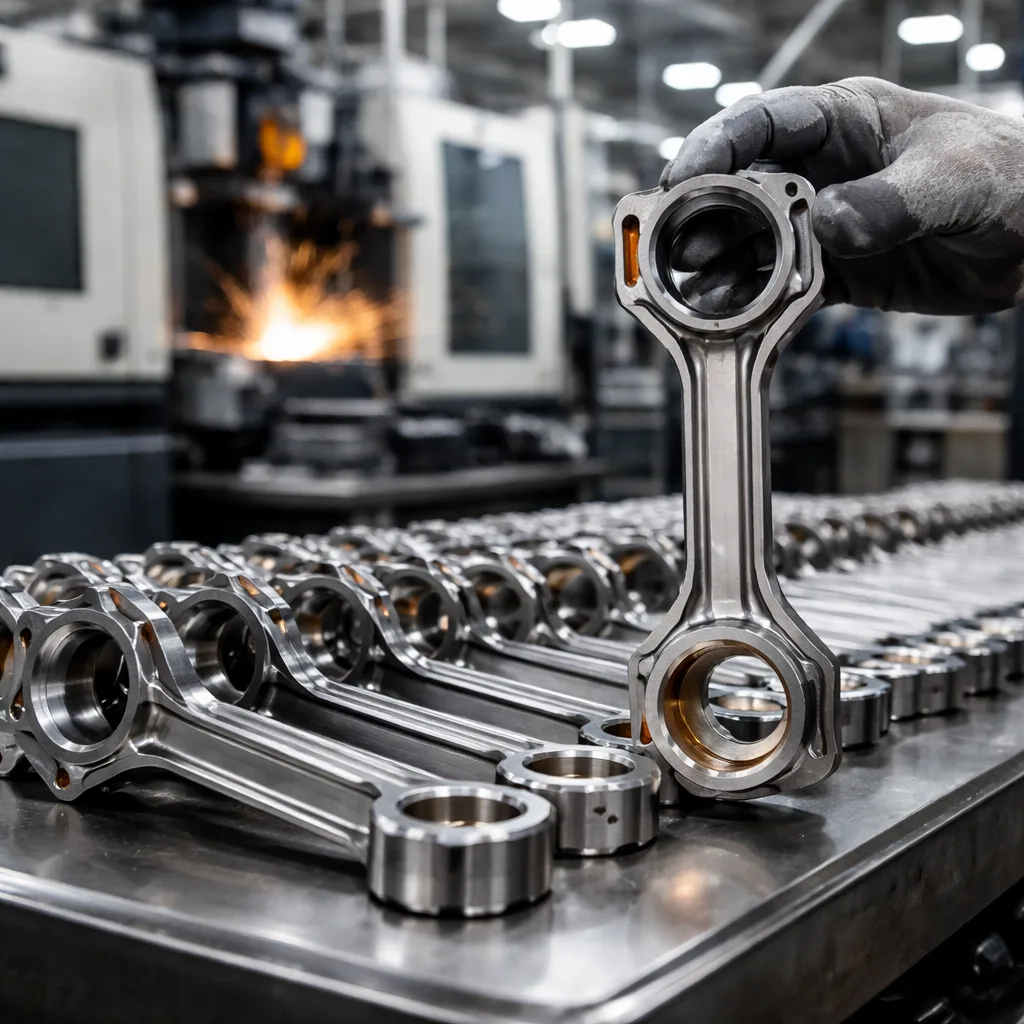
A camshaft for Cadillac CTS aftermarket replacement is a precision sourcing item, not a generic engine part. For importers, repair-chain buyers, and engine component distributors, the main commercial risks are dimensional mismatch, unsuitable surface hardening, incorrect lobe geometry, weak cleanliness control, or inconsistent batch records. A replacement camshaft must match the target engine variant, intake or exhaust position, valve timing strategy, sensor interface, oiling design, and valvetrain load. Driventus manufactures engine and powertrain components in Taizhou, Zhejiang, and supplies B2B customers in more than 60 countries. Our CTS camshaft sourcing and production process is built around OE-equivalent geometry, controlled metallurgy, documented inspection, and export-ready packaging for international distribution. Driventus is an independent aftermarket manufacturer; vehicle brand names are referenced for fitment identification only. This guide outlines what procurement teams should verify before sourcing Cadillac CTS replacement camshafts for aftermarket programmes.
Fitment Scope and OE-Equivalent Replacement Requirements
Cadillac CTS applications differ by model year, engine family, valvetrain layout, emissions configuration, and intake or exhaust camshaft position. Buyers should not source by vehicle name alone. A camshaft must be matched to the correct engine code, cam position, cam phaser interface where applicable, journal layout, trigger pattern, oil feed design, and installation-side requirements.
For aftermarket replacement programmes, the purchasing file should include:
Vehicle platform and model-year range
Engine displacement and engine code
Intake or exhaust camshaft position
Variable valve timing interface, if fitted
Sensor target or reluctor configuration
Journal count and bearing diameter range
Lobe count, base-circle reference, and lift profile
Oil feed position and drilling layout
Packaging label format and customer part-number mapping
OE references should be treated as fitment cross-references only, and only when supplied or confirmed by the customer. They help identify the intended application but do not imply approval, endorsement, or supply relationship with any vehicle manufacturer.
Distributors can review adjacent engine product families in our catalog and the engine component range at /products/engine-components.html before confirming a sourcing list.
Critical Camshaft Specifications for CTS Applications
A replacement camshaft should be controlled against drawings, approved samples, and inspection plans rather than visual comparison alone. For CTS applications, small deviations in lobe profile, journal geometry, oil passage location, or timing interface can lead to valve-train noise, diagnostic fault codes, reduced power, unstable idle, or accelerated component wear.
Specification area
Procurement check
Typical validation method
Material grade
Cast iron, chilled cast iron, or steel as specified by application
Mill certificate, incoming chemical analysis
Journal diameter
Match bearing and cylinder head housing requirements
Micrometer and roundness inspection
Lobe profile
Lift, duration, opening ramp, closing ramp
Cam profile measuring machine
Surface hardness
Wear resistance at lobes and journals
Rockwell or Vickers hardness test
Runout
Shaft straightness under rotation
Dial indicator or CMM check
Timing interface
Phaser, keyway, dowel, sprocket, or gear drive compatibility
Fixture verification
Oil passages
Correct drilling, flow path, and cleanliness
Airflow, visual, and cleaning audit
Sensor feature
Correct target geometry and angular position
Gauge and functional fixture check
</tr></thead><tbody> </tbody></table>For high-volume replacement programmes, the control plan should define critical-to-function dimensions, tolerance bands, measuring frequency, and escalation rules for nonconforming parts. Buyers should request production part approval records, batch inspection reports, retained sample policies, and change-control procedures where relevant.
Material, Heat Treatment, and Surface Finish Controls
Camshaft durability depends on contact fatigue resistance, lubrication stability, dimensional consistency after machining, and the interaction between the cam lobe and follower. For replacement CTS camshafts, Driventus controls three areas closely: base material, hardening process, and final surface finish.
Common manufacturing routes include cast camshafts with chilled lobe surfaces, induction-hardened steel camshafts, and assembled camshaft designs depending on the application. The selected route must match the original valvetrain load, follower type, lubrication path, and engine operating conditions. A roller follower application does not impose the same contact condition as a flat tappet or direct-acting bucket design, so material and surface treatment should not be changed without validation.
Key inspection points include:
Chemical composition verification against the approved material specification
Hardness depth checks on lobes and journals where hardening is specified
Surface roughness inspection on bearing journals and lobe contact faces
Magnetic particle or equivalent crack detection where required by the control plan
Deburring and oil-hole cleanliness checks before final packaging
Anti-corrosion treatment for sea freight and long warehouse dwell time
Final visual inspection for handling marks on lobes, journals, and sensor features
Surface finish is especially important. Excessive roughness can damage followers during initial running, while poor oil-hole cleanliness can introduce abrasive particles into the lubrication system. For distributors selling into repair networks, these issues often appear as warranty claims rather than immediate receiving defects, making preventive process control more valuable than end-of-line sorting.
Validation Testing and Quality Documentation
Procurement teams should evaluate a camshaft supplier by documentation quality as well as unit price. Driventus operates under IATF 16949:2016 and ISO 9001:2015 frameworks, with batch traceability and process controls suitable for aftermarket and OE-service style programmes. Details of our quality system are available for sourcing teams preparing supplier files.
A CTS replacement camshaft programme may include the following validation records:
Dimensional inspection report by batch
Material certificate or internal material verification record
Surface hardness and case-depth report where applicable
Cam profile measurement record
Runout and straightness report
Cleanliness and oil passage inspection checklist
Corrosion protection validation where required by customer specification
Packaging drop-test or transit validation for export cartons
Lot traceability record linking production date, inspection data, and shipment
Published management standards such as IATF 16949:2016 and ISO 9001:2015 are relevant to process control, traceability, corrective action, and supplier discipline. For EU importers, chemical and material declarations may also need to consider REACH (EC) No 1907/2006. These standards do not replace part-specific engineering validation, but they make it easier to audit how the part is produced, inspected, packed, and released.
Driventus can also support custom manufacturing where buyers provide drawings, samples, target specifications, or private-label packaging requirements.
Commercial Sourcing Checks for Importers and Distributors
For aftermarket distributors, a camshaft sourcing project usually includes more than one SKU. CTS-related demand may be grouped with timing components, gaskets, lifters, followers, oil control valves, seals, and other engine repair parts. Buyers should confirm whether the supplier can maintain consistent fitment data, carton labelling, inspection documentation, and reorder stability across the full programme.
Recommended RFQ details include:
Annual forecast and first-order quantity by SKU
Target markets: EU, UK, US, Canada, Australia, Brazil, or mixed distribution
Required packaging: neutral, customer brand, or bulk service packaging
Barcode, carton label, and pallet label requirements
Incoterms and preferred port
Required certificates and inspection documents
Sample approval process and lead-time expectation
Warranty return analysis procedure
Cross-reference list and customer part-number mapping
A camshaft for Cadillac CTS aftermarket replacement should also be checked against local market expectations. North American buyers may prioritise rapid SKU coverage, interchange accuracy, and clear application data. EU and UK importers often require stronger material declarations and traceability records. Brazilian distributors may need robust packaging because of longer inland transport routes, higher humidity exposure, and additional handling points.
Before placing a production order, procurement teams should approve golden samples, confirm all cross-references, freeze the drawing revision or sample reference used for production, and define how future engineering changes will be communicated.
Avoiding Common Replacement Failures
Most replacement issues are preventable when engineering data, purchasing records, and installation assumptions are aligned before production. The highest-risk errors are not always visible during receiving inspection, especially when the shaft appears visually similar to the requested item.
Common failure modes include:
Incorrect intake or exhaust position supplied under the same vehicle description
Lobe profile close in appearance but outside the functional timing requirement
Trigger wheel or sensor feature set at the wrong angular position
Poor hardening control leading to premature lobe wear after installation
Contaminated oil passages causing bearing, follower, or cylinder head damage
Weak packaging allowing impact damage during ocean freight
Mixed revisions shipped without clear label or batch separation
Repair chains and distributors should treat camshaft claims as technical data points. Returned parts should be checked for installation conditions, lubrication failure, follower compatibility, timing system condition, oil contamination, and evidence of handling damage before assigning supplier responsibility. A structured return analysis protects both the distributor and the supplier from repeat failures.
For B2B programmes, Driventus can align inspection plans, packaging, fitment data, and batch records before mass production. This reduces the chance that a nominally correct replacement camshaft creates downstream service problems.
Frequently asked questions
Yes. Driventus can supply CTS replacement camshafts for B2B aftermarket programmes when fitment data, samples, or drawings are confirmed. Validation focuses on geometry, material, surface hardness, timing interface, oiling features, and batch traceability.
Buyers should request dimensional inspection reports, material verification, hardness data, cam profile checks, runout records, cleanliness checks, and packaging specifications. For regulated markets, REACH (EC) No 1907/2006 declarations may also be relevant.
No. Driventus is an independent aftermarket manufacturer; brand names are referenced for fitment identification only. OE references, when used, are for cross-reference and application identification, not endorsement.
For CTS camshaft sourcing, sample review, or private-label replacement programmes, contact Driventus to [request a quote](/contact.html).