A Volkswagen-fitment EGR valve is rarely rejected because the casting looks wrong. It is rejected because the connector lock feels weak, the gasket is missing, the actuator feedback drifts, the catalogue cross-reference points to the wrong engine code, or one branch receives a batch that cannot be traced. That is the real cost centre in egr valve volkswagen wholesale sourcing.
For importers, repair-chain suppliers and regional distributors, the buying decision should balance coverage, calibration repeatability, accessory scope, packaging accuracy, compliance paperwork and warranty handling—not just EXW price. Demand is strongest on ageing diesel parc and high-mileage petrol applications, where sticking valves, internal leakage, cracked housings, failed position feedback and unstable electronic actuation drive repeat repairs.
Driventus manufactures engine and powertrain components in Taizhou, Zhejiang, and exports to more than 60 countries. This article gives procurement teams a practical way to evaluate Volkswagen-fitment EGR valve supply: what to specify, where failures occur, how MOQ and lead time affect landed cost, what to check during audits, and which documents to collect for EU, UK, US, Canada, Australia and Brazil programmes. Driventus is an independent aftermarket manufacturer; brand names are referenced for fitment only.
Start With a Fitment Decision, Not a Model List
The first sourcing decision is not “which Golf or Passat part do we need?” It is whether the supplier can match the correct valve architecture to the correct engine code, connector, actuator and accessory set. Volkswagen-fitment EGR valves cross petrol and diesel applications, and one vehicle model family may contain several incompatible valve designs.
Build the range from structured data. Confirm the buyer SKU, OE cross-reference family, engine code, displacement, model year range, fuel type, market region, connector pin count, actuator type, cooler interface and included parts. An OE reference such as OE 06A… or OE 11251… should be treated only as a fitment cross-reference, not as a claim of vehicle manufacturer approval.
A useful SKU file should answer these questions before a quotation is compared:
What is being supplied? Valve-only body, motorised body, body with position sensor, cooler-mounted assembly or service kit.
How is it actuated? Vacuum diaphragm, electric motor actuator, sensor-integrated design or cooler-mounted electronic assembly.
Will it physically fit? Flange hole centre distance, mounting-face flatness, bore diameter, valve-seat runout, cooler interface and shaft movement all need confirmation by drawing, sample or first-article report.
Will the harness connect reliably? Connector housing geometry, pin count, terminal plating, lock design and retention force should be checked; loose-terminal complaints are expensive to diagnose at branch level.
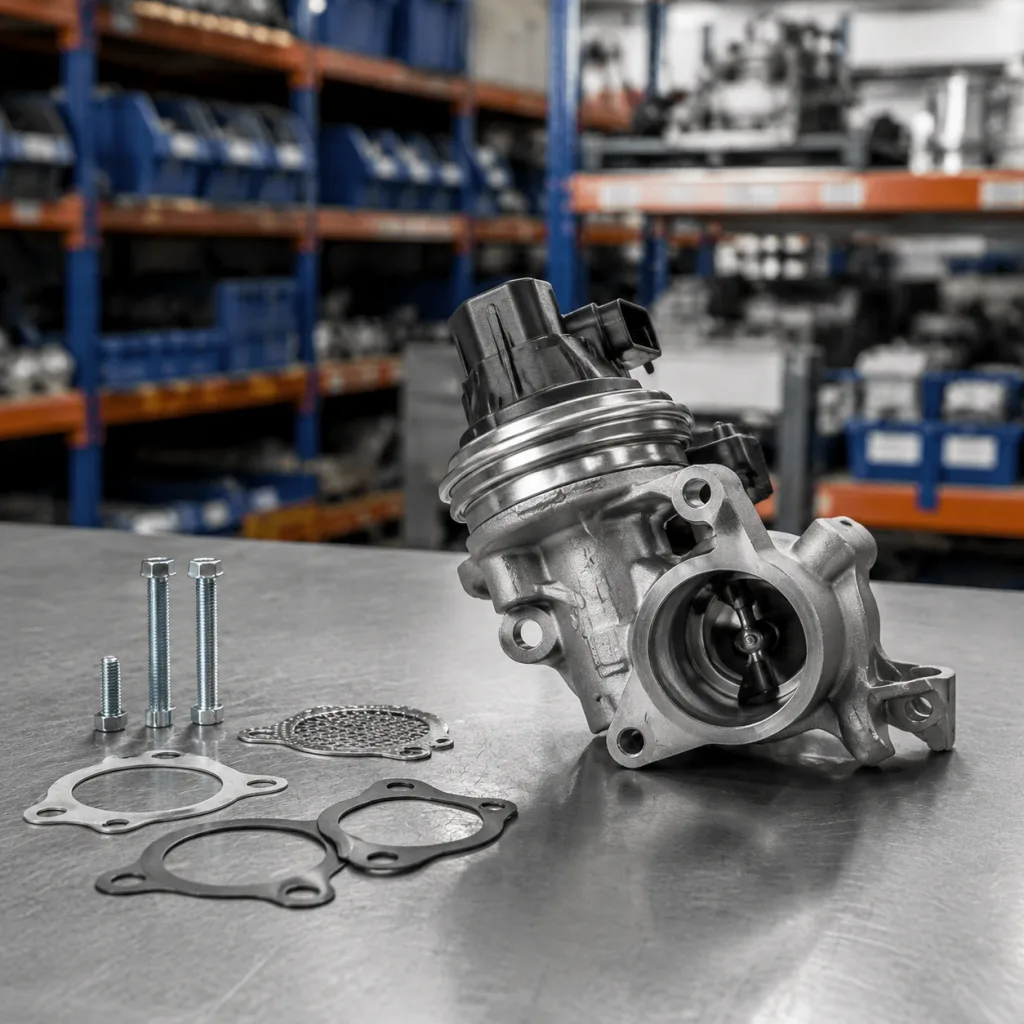
What arrives in the box? Gasket, O-ring, clamp, screw, cooler seal and instruction insert must be defined by SKU, not assumed.
Can the importer prove control? Drawing confirmation, inspection plan, material declaration, batch traceability, certificate of conformity and packaging specification should be linked to the order.
Separate valve-only items from cooler-mounted assemblies early. They use different packaging, test fixtures, freight volume assumptions and warranty analysis. A valve-only SKU may pack 20–40 pieces per master carton, depending on weight and connector protection. Cooler-mounted assemblies often require individual foam or moulded tray support and fewer units per carton.
Importers consolidating adjacent engine demand can review our catalog, including engine components, where EGR-related parts may be planned under one shipment.
Choose MOQ by Launch Risk, Not Supplier Habit
MOQ should reflect how much uncertainty remains. A new Volkswagen-fitment range needs room to verify labels, fitment mapping and market response. A proven range can move toward scheduled releases, family-level consolidation or container replenishment.
A practical pattern is to start smaller, measure sell-through and returns for three to six months, then increase MOQ by part family. Trial orders often run 50–100 pieces per fast-moving SKU or 300–500 mixed pieces by family. Standard replenishment commonly sits around 200–500 pieces per SKU. Larger orders of 800–1,500 pieces per part family may be needed when castings, actuators or connector purchases must be consolidated. Final MOQ depends on tooling status, actuator availability, packaging type and whether the order is neutral pack or private label.
Procurement item
Typical wholesale consideration
Buyer control point
Trial MOQ
50–100 pcs per SKU or mixed 300–500 pcs by family
Confirm carton labels, fitment data and first-article reports
Standard MOQ
200–500 pcs per SKU, depending on casting and actuator lot
Align with 90- to 120-day sales forecast and safety stock
Private-label MOQ
Often 500+ pcs per SKU or shared carton run
Approve artwork, barcode format and label position before PO release
Lead time
25–35 days for repeat neutral-pack items; 35–55 days for new or private-label runs
Request confirmed schedule after approved sample and deposit
Sampling
7–15 days when tooling exists; 20–30 days if fixture or accessory confirmation is needed
Approve fitment, connector, test report and packaging sample
Packaging
Neutral, buyer brand or programme-specific
Approve artwork, barcode format, carton strength and pallet plan
Reorder planning
Blanket PO, call-off order or scheduled releases
Track monthly sell-through, stock cover and defect return rate
</tr></thead><tbody> </tbody></table>Do not compare quotations on EXW unit price alone. Ask for Incoterms, currency, validity period, packing quantity, gross weight, carton dimensions, sample charge, tooling or fixture cost, accessory inclusion and pallet plan. A USD 0.30–0.80 difference in gasket, clamp or O-ring scope can change the real unit cost if the workshop expects a complete repair kit.
For stable supply, share annual volume by part family as well as by SKU. That helps the factory reserve casting, machining, actuator assembly and testing capacity. For private-label programmes, approve artwork, barcode logic and carton drop-test expectations before mass production. Waiting until final inspection creates avoidable relabelling, repacking and shipment-delay risk.
Where EGR Valve Failures Usually Start
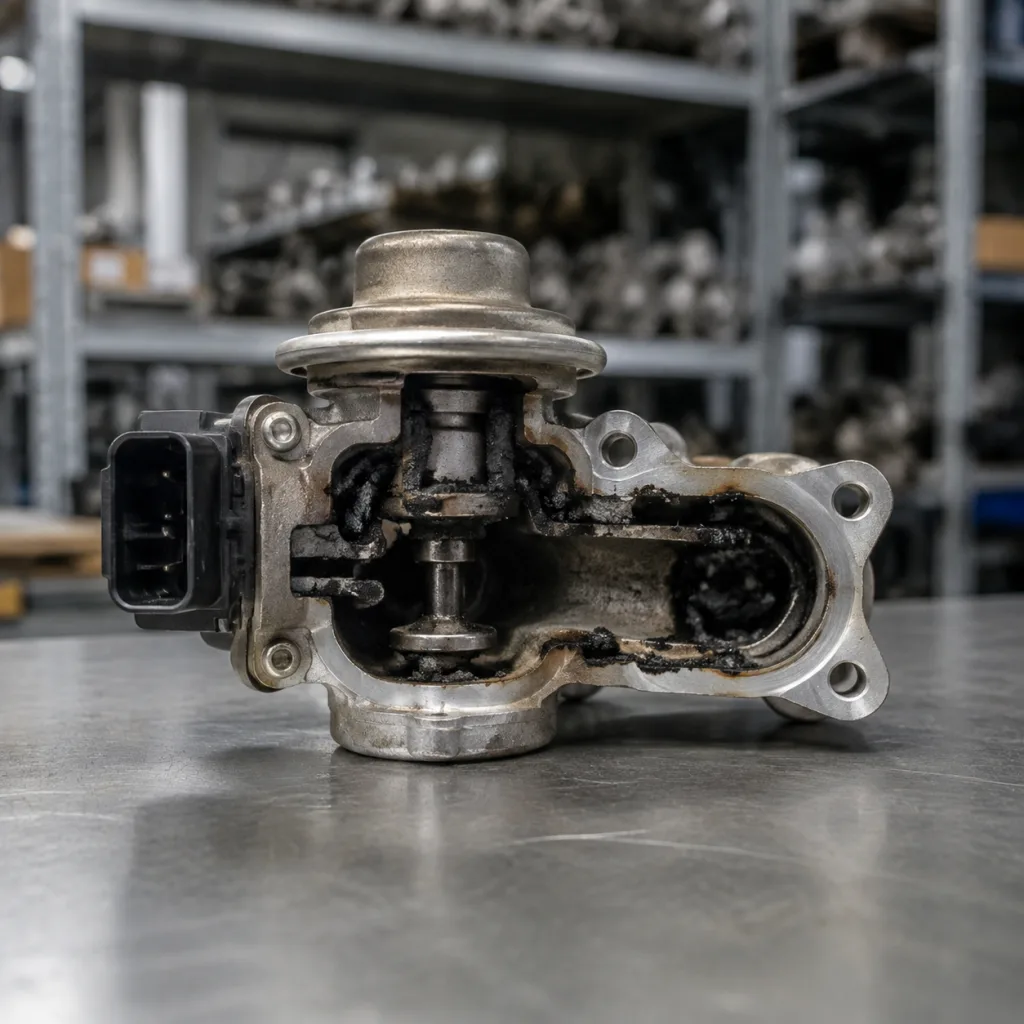
EGR valves work in heat, soot, vibration and repeated electrical cycling. The visible part may look acceptable while the failure is already built into the process: a rough valve seat, weak connector retention, poor shaft alignment, unstable actuator feedback or a casting that moves after thermal cycling.
Driventus operates under IATF 16949:2016 and ISO 9001:2015 quality management frameworks. Buyers can review the quality system when preparing supplier qualification or factory-audit documentation.
Focus validation on the failure modes that generate workshop comebacks:
Seat leakage: controlled through valve-seat geometry, concentricity, sealing-face condition and airflow or leakage testing against an approved limit.
Sticking or sluggish movement: controlled through shaft alignment, bore finish, spring quality, contamination removal, stroke testing and thermal cycling.
Electronic instability: controlled through actuator response time, feedback signal, return position, abnormal-noise checks and 100% end-of-line electrical testing for electronic units.
Thermal distortion: controlled through material selection, machining datum control, flange flatness and hot/cold cycling.
Connector complaints: controlled through housing geometry, terminal plating, lock design, retention force and handling protection during packing.
Corrosion exposure: controlled through plated brackets, fasteners and exposed metal checks, including salt-spray or corrosion-resistance testing where winter-road markets require it.
Packing and catalogue errors: controlled through label inspection, barcode accuracy, accessory verification, carton integrity and traceability codes.
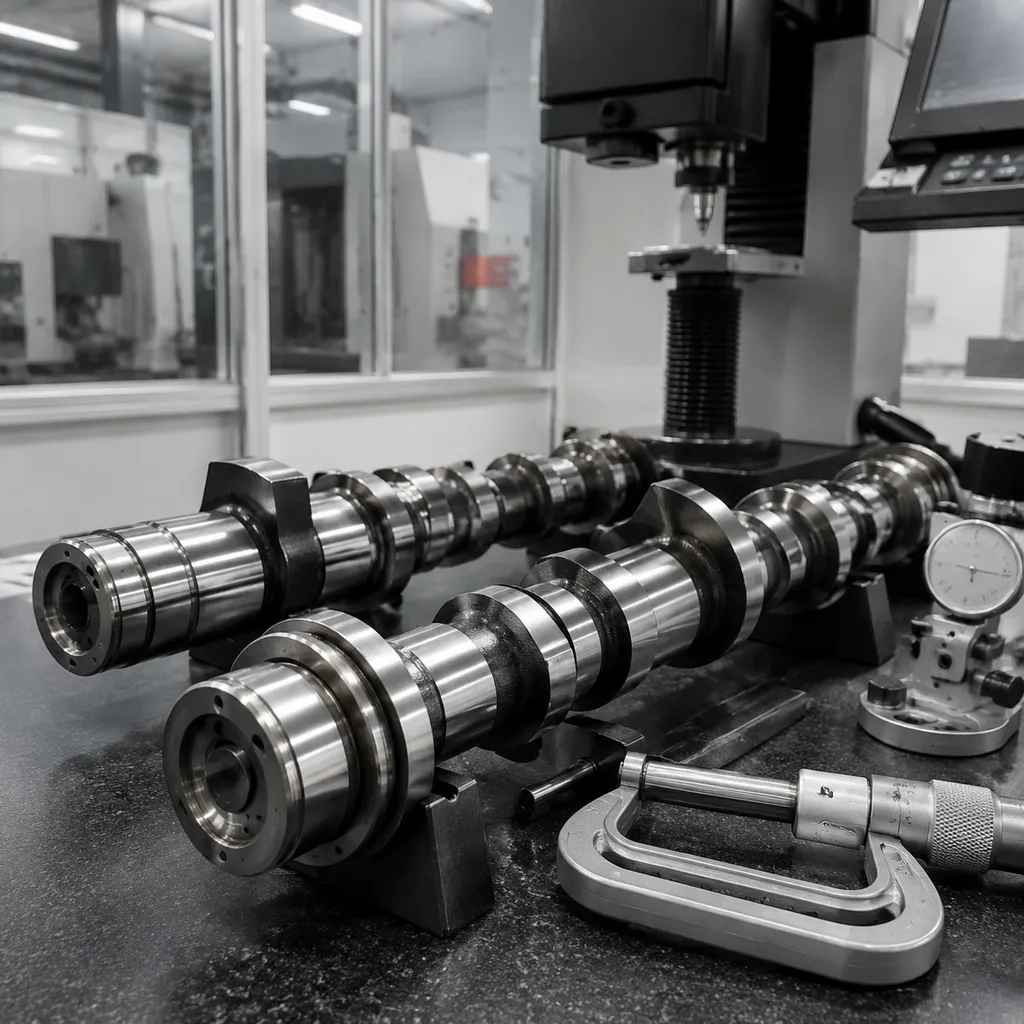
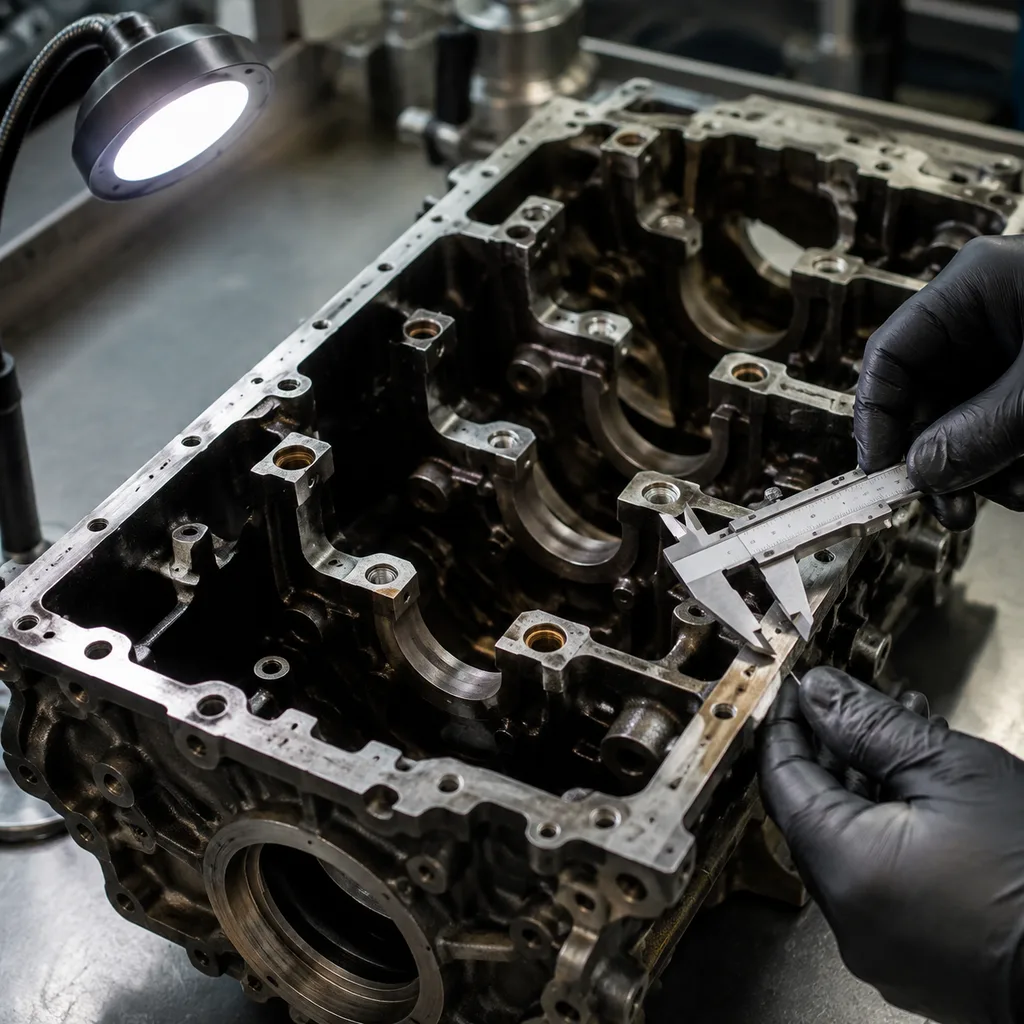
Incoming inspection should cover aluminium or cast-iron bodies, shafts, springs, seals, connectors and electronic subassemblies, with supplier lot numbers recorded against the work order. CNC machining controls should verify flange datum, bore diameter, valve-seat geometry, shaft location and bolt-hole position at first-off, patrol inspection and final inspection. Flange flatness is commonly controlled around 0.05–0.10 mm, depending on drawing requirement and gasket design.
Ask for a control plan that names the CTQ items: valve-seat leakage, shaft torque, actuator stroke, connector retention, mounting flatness and barcode accuracy. Many importers use ANSI/ASQ Z1.4 or ISO 2859-1 sampling with AQL 0 for critical safety or function failures, AQL 1.0 for major defects and AQL 2.5 for minor appearance or packing defects. Leakage and actuator-response tests should normally be 100% checks, not sampled checks.
Compliance paperwork may also affect import readiness. REACH (EC) No 1907/2006 is relevant for chemical substance declarations in EU supply chains. RoHS may be requested for electronic subassemblies, even where automotive exemptions or regional rules differ. Vehicle emissions regulations such as ECE R-83 are useful context for system function, but replacement-component sourcing should not imply approval, endorsement or supply status from a vehicle manufacturer.
Audit the Batch Trail From Casting to Carton
A sample can pass while the production system is weak. That is why the audit should follow one live batch from raw material receipt to finished carton and test whether the records connect. The goal is simple: prove that the approved sample can be repeated under normal production pressure.
Audit checklist
Traceability: batch code linkage from casting lot and purchased subcomponents to finished part carton, with records retained for the agreed warranty period.
Gauge control: calibration status for bore gauges, torque tools, leak-test fixtures, airflow benches and electrical testers; expired gauges should be locked out, not merely labelled.
Process capability: dimensional stability evidence on critical-to-fit and critical-to-function dimensions, with Cpk targets agreed for high-volume SKUs where data is available.
Torque and assembly control: defined torque range for motor, bracket, cover and flange fasteners, with operator instructions and torque-tool verification per shift.
Cleaning control: documented chip, burr and contamination removal after machining, especially around the valve seat, shaft area and air passage.
End-of-line testing: fixture identification, test pressure or electrical programme version, operator ID and pass/fail recording linked to batch code.
Non-conformance handling: quarantine area, root-cause reports, corrective-action closure and reinspection records.
Sample retention: retained golden samples, first-off samples and production samples for comparison.
During the audit, ask the supplier to show the casting lot, machining record, cleaning confirmation, actuator installation record, functional test result, label print record and carton code for the same batch. Then compare one production unit against the approved sample. Check connector fit. Watch one leak test. Scan one label against the database.
If the supplier cannot link the physical part, test result, operator record and carton label, traceability is not strong enough for high-volume repair-chain supply.
Change control deserves a separate conversation. A connector supplier, actuator calibration, seal material, spring specification or casting die may change without visible difference to the box. The buyer should receive a notification route and, where needed, revalidation samples before the altered product enters regular supply.
RFQ Spec: The Fields That Prevent Misquotes
A vague RFQ creates a cheap quote and a slow approval. A precise RFQ lets the supplier confirm tooling, fitment, test method, accessory scope and packing cost before commercial negotiation begins. Do not send only a vehicle model list; the same model family may use different engine codes, actuator designs and connector formats.
Recommended RFQ fields:
Target application range and market region.
Buyer SKU, existing catalogue number and required cross-reference format, for example OE 06A… where already used in the buyer database.
Engine code, displacement, fuel type, emission level and production year range where available.
EGR valve type: vacuum, electronic, cooler-mounted or valve-only assembly.
Connector pin count, orientation, locking feature, terminal style and photo if possible.
Critical dimensions from drawing or sample: flange hole spacing, bore diameter, valve-seat location, cooler interface, gasket groove and overall height.
Required gasket, clamp, screw, O-ring, cooler-seal inclusion and whether accessories must be packed inside the unit box or master carton.
Annual forecast, first order quantity, reorder frequency, desired safety stock and preferred shipment mode.
Packaging requirement: neutral, buyer brand, bulk pack or repair-chain programme, including barcode type such as EAN-13, UPC, Code 128 or QR code.
Inspection requirement: first-article report, sample quantity, AQL level, functional test records and any third-party inspection standard.
Required documents: inspection report, material declaration, certificate of conformity, packing list, commercial invoice, certificate of origin and fumigation-free pallet declaration where needed.
Target Incoterms and destination port, warehouse or consolidation point.
State the price logic as well. Ask for separate pricing for neutral pack and private label. Define the accessory set. Specify whether the quote should be EXW, FOB Ningbo/Shanghai or CIF destination. Request price breaks at 100, 300, 500 and 1,000 pieces. This prevents a bare valve from being compared with a boxed repair kit.
For buyers developing a specific valve body, actuator bracket or consolidated repair kit, Driventus can discuss custom manufacturing based on drawings, samples or controlled specifications. Custom work should include dimensional agreement, validation plan, sample approval, packaging confirmation and change-control rules before tooling or mass production.
Importer Scenario: The Lowest Quote Is Not the Lowest Cost
Consider two suppliers quoting the same Volkswagen-fitment EGR valve. Supplier A is USD 1.20 cheaper. Supplier B includes the gasket set, confirms connector retention testing, supplies barcode-ready private-label cartons and links each carton to end-of-line functional test records. Supplier A quotes the valve only, uses a generic carton and treats leakage testing as a sampled inspection.
On paper, Supplier A wins. In the warehouse, the saving can disappear quickly. Missing gaskets trigger branch complaints. Generic labels slow receiving. A connector issue creates technician distrust. One untraceable batch turns into a broad warranty argument because the importer cannot isolate the affected production lot.
Use commercial controls that expose those hidden costs:
Approve 3–5 pre-production samples per critical SKU before releasing a large PO, with one sample retained by the buyer and one by the factory.
Use an agreed AQL inspection plan for appearance, dimensions, connector fit, accessory inclusion and functional testing; treat critical functional failures as rejectable even if appearance passes.
Require unit and carton labels to match the buyer SKU, barcode rules and cross-reference database, then scan-check labels during pre-shipment inspection.
Track return analysis by defect mode: sticking, leakage, connector issue, actuator fault, missing gasket or fitment mismatch.
Set a written warranty review route requiring photo, fault code, mileage, installation date and batch code before credit or replacement approval.
Review forecasts quarterly to prevent overstock of slow-moving references and shortages of A-movers.
Landed-cost modelling should include unit price, packing cost, accessory cost, carton quantity, pallet volume, inland freight, ocean or air freight, duty, customs brokerage, inspection cost and expected warranty reserve. Fast movers often need 8–12 weeks of cover. Slower Volkswagen-fitment references may sit at 4–8 weeks to avoid dead stock. If production lead time is 35–55 days and ocean freight adds 25–40 days, reorder points must trigger well before local inventory reaches its final month of demand.
For egr valve volkswagen wholesale programmes, consolidation can improve purchasing efficiency when demand is predictable. Gaskets, sensors, water pumps and other engine components may ship under one commercial schedule, reducing freight complexity, document handling and warehouse receiving time. Driventus is an independent aftermarket manufacturer; brand names are referenced for fitment only.
Frequently asked questions
Send target applications, cross-reference family such as OE 06A… if already used, engine codes, fuel type, actuator type, connector details, accessory requirements, annual forecast, first order quantity, packaging requirements and destination. Photos, drawings or samples help confirm flange, connector, gasket and cooler-interface details.
Yes. Private-label supply can include buyer-approved cartons, labels, barcodes, packing lists and pallet requirements. Artwork, SKU mapping, label verification, sample approval and carton strength checks should be completed before mass production to reduce relabelling risk and shipment delays.
No. Driventus is an independent aftermarket manufacturer; brand names are referenced for fitment only. Cross-references are used to identify application compatibility and do not imply approval, endorsement or supply to a vehicle manufacturer.
For SKU coverage, MOQ, sample timing and audit documents for Volkswagen-fitment EGR valves, [request a quote](/contact.html).