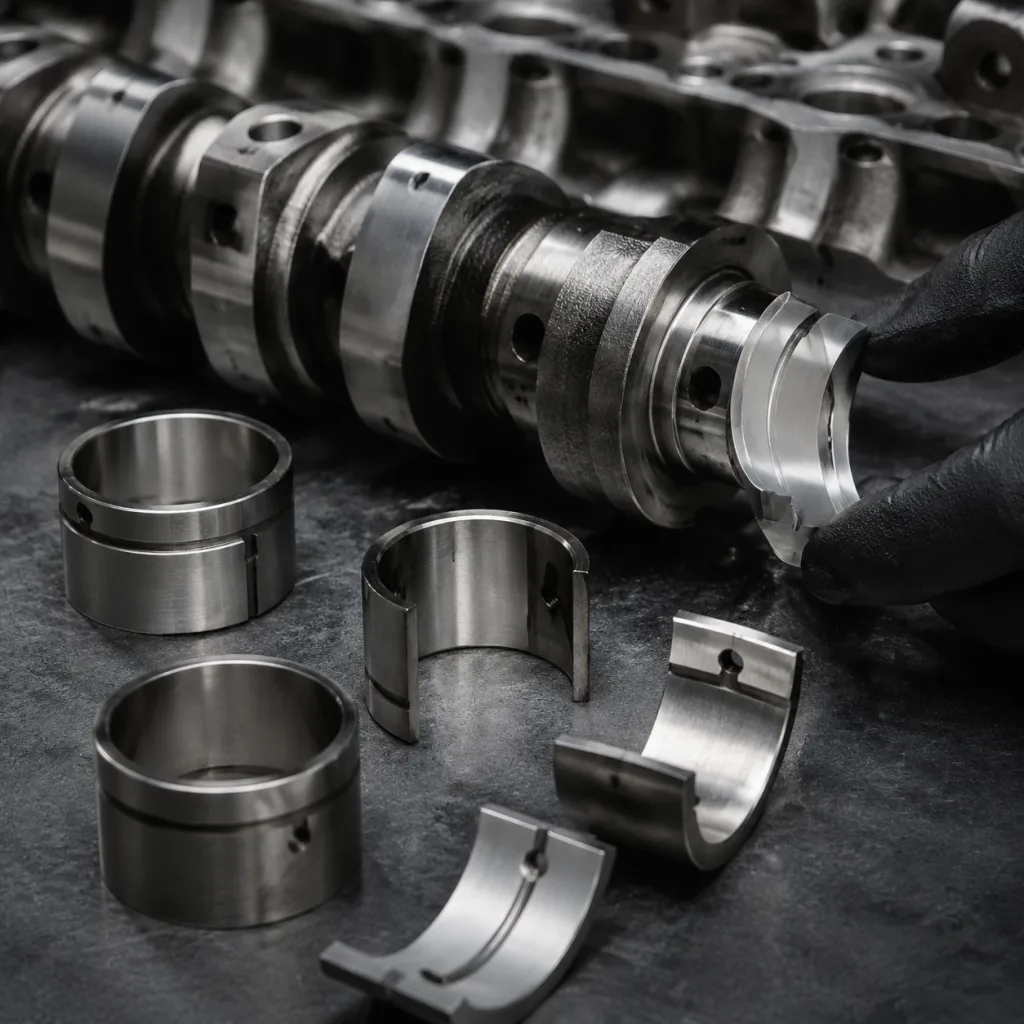
Camshaft Acura Wholesale: Sourcing Guide for Buyers
For procurement teams evaluating **camshaft acura wholesale** supply, the question is not simply whether a part exists in a catalogue. The real decision is whether the supplier can hold metallurgy, lobe geometry, traceability, and fitment accuracy across repeated batches. In this category, small process drift becomes expensive fast: one bad heat-treat lot, one cross-reference error, or one weak inspection routine can create returns, warranty claims, and inventory write-downs.
This guide is built for B2B buyers comparing Acura-fit camshaft manufacturers, not retail replacement shoppers. It focuses on the issues that change landed cost and field reliability: supplier capability, audit evidence, MOQ logic, lead time, packaging, and document readiness for export markets. Driventus is an independent aftermarket manufacturer; brand names appear only for fitment reference.
A practical target for many buyers is not a low headline price, but a supply plan that behaves predictably: sample approval in roughly 15-30 days, production in 35-60 days, and lot-to-lot variation kept under control. That requires drawing-linked tolerances, realistic setup economics, and quotations that separate ex-works pricing from tooling, packaging, and inspection content.
Start with the failure modes, not the price list
When reviewing a camshaft acura wholesale offer, the first filter should be risk, not catalogue breadth. A supplier can list many references and still miss the fundamentals that matter in service.
The most common failure modes are:
Metallurgy drift: inconsistent hardness or core strength between batches
Geometry drift: lobe profile, runout, or journal size variation outside a tight band
Heat-treatment inconsistency: poor furnace control or weak batch records
Packaging damage: corrosion, bent edges, or handling marks before installation
Weak traceability: no clear lot history when a claim appears
Before price negotiation, ask for hard evidence on these points:
Material route and grade
Heat-treatment method and hardness targets
Journal and lobe tolerance control
Surface roughness data
Batch traceability method
Inspection report format
Packing standard for export transit
Typical checkpoints buyers request include journal diameter tolerance around ±0.010 to ±0.020 mm, total indicated runout at ≤0.03 to 0.05 mm, surface roughness near Ra 0.2-0.4 µm on journals, and controlled lobe finish depending on follower design. If a supplier cannot supply drawing-linked values and sample inspection data before quoting, the risk profile is already too high.
For buyers building a wider engine-component programme, reviewing our catalog and the broader /products/engine-components.html range can help identify line-fill opportunities and reduce vendor count.
A simple rule applies: if the supplier cannot explain how it prevents drift, the quote is not yet comparable.
What a capable camshaft supplier should show you
A useful audit asks one question: can the plant repeat the same part, not just make one acceptable sample?
Audit area
What to check
Why it matters
Certification
IATF 16949:2016 and ISO 9001:2015 scope, validity, and audit status
Shows structured quality control and corrective-action discipline
Incoming material control
Chemistry verification, approved sub-suppliers, and lot traceability
Reduces variation in hardness, machinability, and wear behaviour
Machining capability
CNC grinding, journal finishing, and profile inspection equipment
Directly affects timing accuracy and repeatability
Heat treatment
Furnace calibration, hardness-test frequency, and control records
Critical to wear life and batch consistency
Metrology
CMM, roundness testing, surface-roughness measurement, and runout gauges
Confirms dimensional stability
Batch traceability
Part marking, traveller cards, and lot history
Supports containment and warranty analysis
Packaging
VCI protection, end caps, moisture control, and transit validation
Reduces corrosion and handling damage
</tr></thead><tbody> </tbody></table>Ask to see the supplier’s quality system in use, not just on paper: control plans, PFMEA logic, gauge calibration intervals, sample reports, and reaction plans when dimensions drift.
A competent production flow usually looks like this:
1. Raw blank receipt and lot logging 2. Rough machining or rough grinding 3. Heat treatment or chill-control verification 4. Finish grinding with in-process compensation 5. Deburr, wash, dry, and oil-hole cleaning 6. Final inspection and hardness sampling 7. Rust prevention, labeling, and export packing
Useful questions include:
1. What hardness range is specified by material grade? 2. How are runout and lobe profile checked? 3. What PPAP support is available for controlled programmes? 4. Can the factory separate pilot, SOP, and service batches? 5. What happens when one tool or machine moves out of tolerance? 6. How are nonconforming lots quarantined and dispositioned?
For higher-volume programmes, also ask about operating cadence: first-off inspection at setup, hourly checks on critical dimensions, hardness checks by furnace or lot, and final AQL release. A supplier that can name these controls is usually easier to manage than one relying on end-of-line sorting.
Match MOQ and lead time to how you actually buy
In camshaft acura wholesale sourcing, commercial terms should follow demand patterns. A distributor with mixed-fitment sales needs different stock logic than a repair chain ordering the same few references every month.
The key planning variables are:
MOQ by part number
Sample lead time
Serial production lead time
Safety stock target
Container utilisation
Forecast visibility
Release method for repeat orders
In practice, MOQ often follows the process route:
Existing active SKU with standard packaging: about 50-100 pcs per SKU
Lower-volume service SKU with dedicated setup: about 150-300 pcs per SKU
New or modified spec with separate tooling or gauges:300-500+ pcs plus validation cost
Mixed order across several references: sometimes lower MOQ per SKU if total order value or machine hours meet the threshold
Lead time should be broken into stages:
Supply stage
Typical timing
Buyer note
Existing sample from current production
7-15 days
Fastest when stock or a recent lot exists
First sample from existing tooling
15-30 days
Includes setup, grinding, inspection, and report issue
New-tool or modified-spec sample
30-45+ days
Add tooling and profile verification
Repeat production order
35-60 days
Depends on blank availability and line loading
Private-label packaging approval
Add 7-14 days
Artwork, barcode, carton proof, and print lead time
</tr></thead><tbody> </tbody></table>A good sourcing plan separates validation from serial supply. Many buyers start with a small approval batch, then move to rolling releases once fitment, performance, and early warranty feedback are stable.
If the programme includes private label, bespoke packaging, barcode rules, or specification adjustments, ask about custom manufacturing early. Doing that later creates avoidable delays in artwork approval, carton setup, and warehouse scanning rules.
For inventory planning, a common rule is:
Fast movers: 6-10 weeks of stock
Medium movers: 4-6 weeks with forecast visibility
Slow movers: buy to order or consolidate quarterly
That approach usually protects fill rate without building dead stock.
The spec details that decide field life
Camshafts can pass a basic dimensional check and still fail in service. The reason is simple: field performance depends on geometry, metallurgy, finish, and process discipline together.
Critical characteristics
Lobe profile accuracy: affects valve timing and lift consistency
Journal diameter tolerance: affects oil clearance and fit
Concentricity and runout: affects vibration and uneven wear
Hardness consistency: supports scuff resistance
Surface roughness: affects lubrication behaviour
Core strength and integrity: limits cracking risk
Typical measurable targets include:
Runout:≤0.03-0.05 mm TIR depending on shaft length
Journal roundness: often 0.005-0.010 mm on critical diameters
Journal taper: often ≤0.005-0.015 mm
Lobe phasing/indexing: checked against drawing values
Hardness sampling: 3-5 points on first article, then lot-based checks
Crack detection: magnetic particle inspection where the route justifies it
Standards and compliance references
There is no single universal aftermarket camshaft standard, so buyers should anchor the programme in process control. Verify IATF 16949:2016 and ISO 9001:2015, and check any destination-market substance declarations required under REACH (EC) No 1907/2006 where applicable. If the part is part of a broader regulated vehicle programme, system-level requirements may also matter.
Cross-references must be handled carefully. Never let a fitment claim substitute for dimensional proof. If your brief includes an OE-style reference such as OE 06A107065, use it only as a sourcing identifier, not as a guarantee of endorsement or compatibility.
Process method matters too. A plant that rough-machines, heat-treats, then finish-grinds with in-process compensation will usually control geometry better than one relying on heavy final correction. Ask whether the supplier uses:
Dedicated lobe grinders or profile-controlled CNC grinding
Master profile comparison or digital scan data
SPC on journals and key lobe dimensions
Controlled wash and preservation before packing
Traceable gauge calibration on a defined cycle
These details are directly tied to warranty risk.
How to read two quotes side by side
The cheapest unit price rarely wins once tooling, packaging, and freight are included. In a camshaft acura wholesale RFQ, the best quote is the one that makes assumptions visible.
Ask each supplier to state:
Unit price by volume break
Tooling status: existing, modified, or new
MOQ per SKU and per shipment
Standard lead time for samples and repeat orders
Inspection content included in release
Packaging type and units per carton
Warranty handling process
Origin and compliance documents available
A clean comparison should also show whether the quote includes:
Material certificate availability
Dimensional report on first samples
Hardness data
Protective coating details
Private-label carton and label support
Mixed-container loading support
Incoterm basis and export packing assumptions
A practical RFQ sheet should separate these cost elements:
Basic release, full dimensional report, PPAP-level support
Adds engineering time
Logistics basis
EXW, FOB, CIF, or DDP assumptions
Landed cost can differ a lot
Payment terms
Deposit, balance, or OA terms
Affects total programme cost
</tr></thead><tbody> </tbody></table>You may also see simple pricing patterns:
High-runner reference: lower price because tooling is already amortised
Low-volume service reference: higher price because setup is spread over fewer pieces
Private-label programme: extra carton, label, barcode, and artwork charges
Engineering change: one-time fee plus revised serial price if extra process steps are needed
Service responsiveness matters as much as price. If engineering questions take a week to answer before an order, deviation handling may be equally slow after shipment. Ask for a deviation-response commitment such as acknowledgement within 24-48 hours, containment within 72 hours, and corrective action in an agreed window.
To discuss a specific wholesale camshaft programme, you can request a quote with your target volumes, fitment list, packaging needs, and destination market.
Frequently asked questions
MOQ depends on the reference, material route, tooling status, and packaging format. Existing production parts often start around **50-100 pcs per SKU**, while slower-moving or dedicated-setup references may require **150-300 pcs**, and new-development items can be **300 pcs or more**. Buyers should confirm MOQ per SKU rather than only per order because casting, forging, grinding setup, and inspection economics usually determine the true minimum.
Yes, provided the manufacturer can manage artwork control, carton specification, barcode requirements, and batch traceability. Buyers should also confirm whether private-label supply changes MOQ, lead time, approval timing, or export-document support. In practice, private label often adds **7-14 days** for artwork and packaging approval unless printed cartons and labels are already standardised.
Request current certification status for IATF 16949:2016 and ISO 9001:2015, sample dimensional reports, material information, hardness or inspection data where relevant, packing specifications, and traceability procedures. For applicable destinations, buyers should also ask for declarations aligned with REACH (EC) No 1907/2006. For more controlled programmes, it is useful to request a **first article report, control plan, PFMEA summary, lot-marking method, and sample packaging specification** before serial release.
If you are qualifying a new camshaft source for distributor, OEM-service, or repair-chain supply, Driventus can review your fitment list, volume plan, and document requirements. Contact our team here: /contact.html