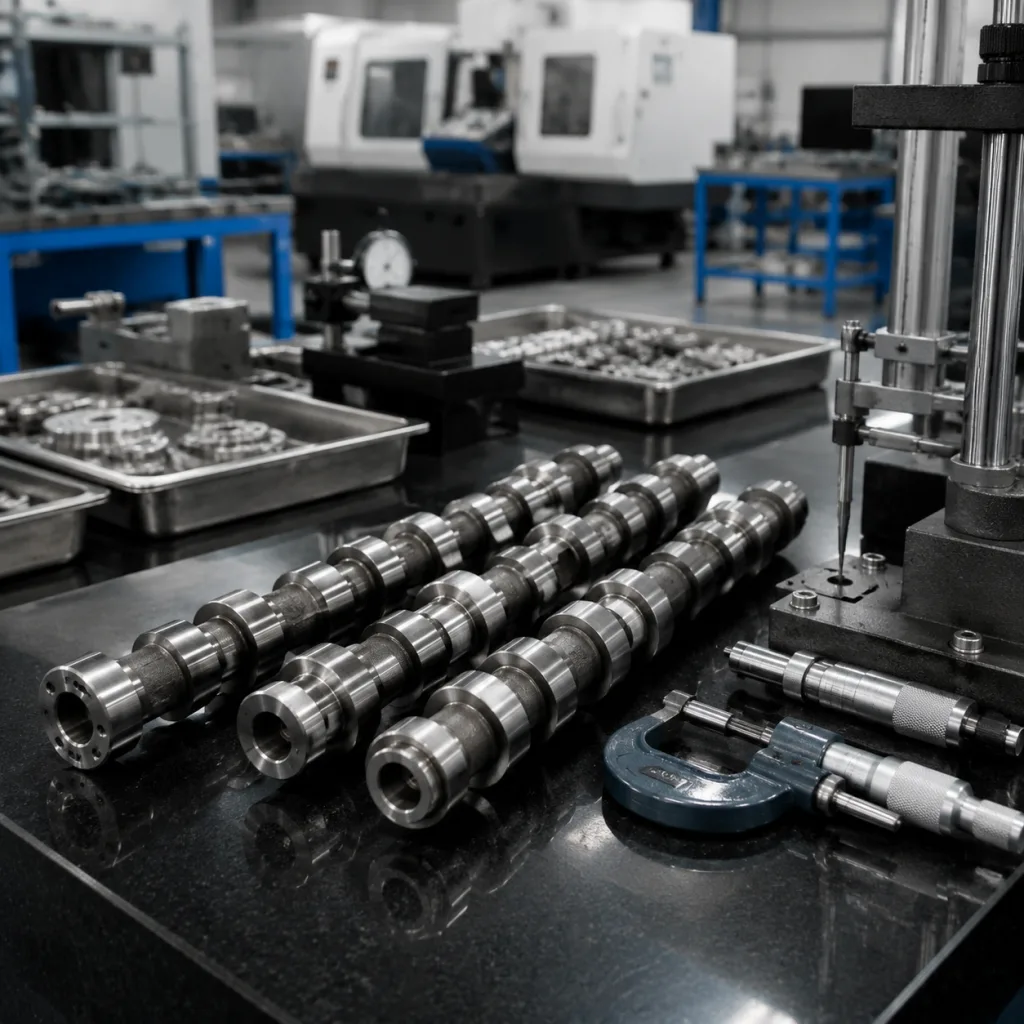
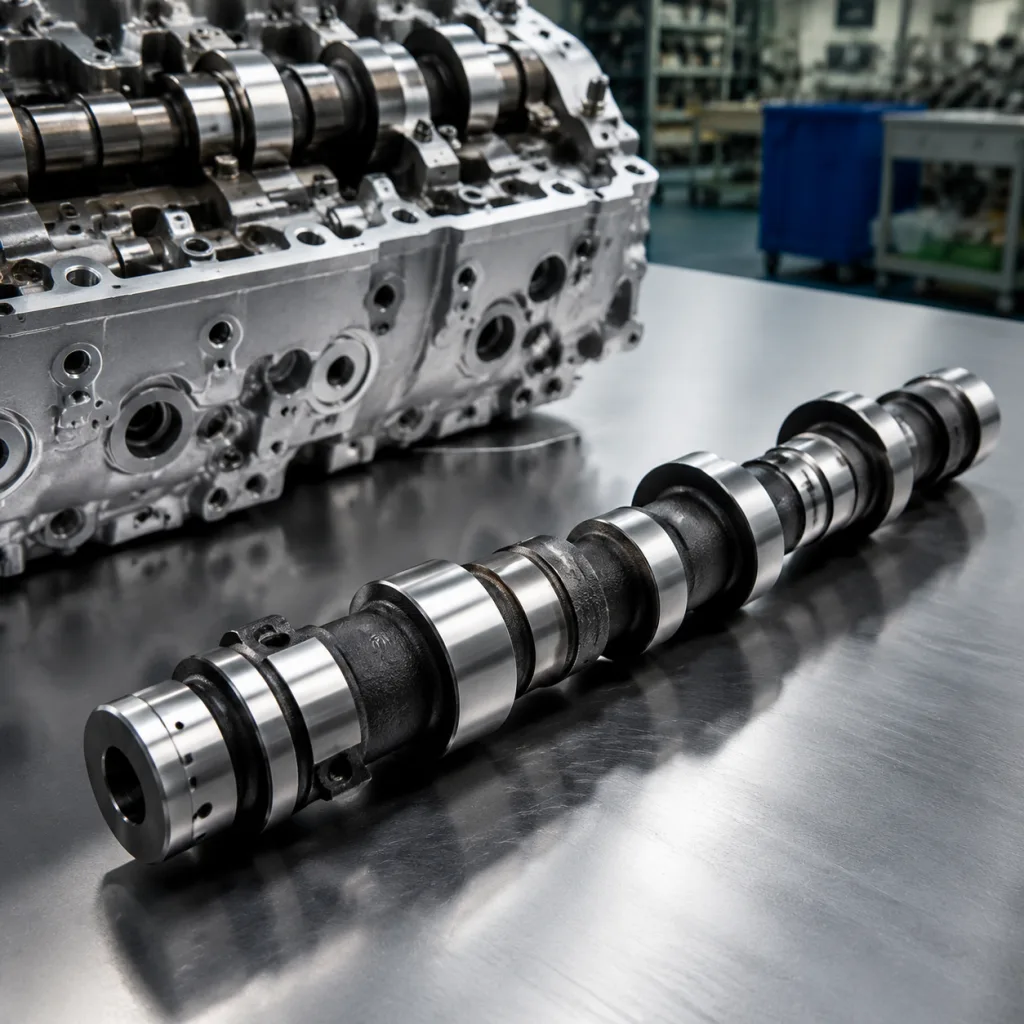
Camshaft for Acura RDX OE Equivalent Sourcing Guide
A camshaft for Acura RDX OE equivalent replacement program has to do more than fit the engine on paper. The real risk is not a bad headline match; it is a part that installs, then misses on timing, wear, or sensor correlation. Procurement teams need repeatable dimensions, controlled lobe profiles, verified surface hardness, accurate trigger geometry, disciplined packaging, and inspection records tied to each batch.
Acura RDX applications have used different engine families and valve-train layouts across model years, so the first job is to lock the application definition. A clean sourcing brief should identify the engine code, model year range, intake or exhaust position, sensor trigger design, and any OE cross-reference format already used by the distributor or repair-network system.
Driventus manufactures engine and powertrain components for B2B customers, including aftermarket distributors, OEM and Tier-1 suppliers, and multi-location repair chains. Our Taizhou facility operates under IATF 16949:2016 and ISO 9001:2015 procedures for process control, incoming material checks, machining inspection, and batch traceability. Driventus is an independent aftermarket manufacturer; brand names are referenced for fitment only.
Start With the Fitment Decision
Before anyone asks for a quote, decide what kind of replacement the program actually needs. The same camshaft family can look simple in a catalog and still split into multiple sourcing paths once the engine code, valve timing hardware, and position are confirmed.
Use this first-pass checklist:
- Vehicle application: Acura RDX, model year range, market region, and engine code where available.
- Camshaft position: intake, exhaust, front bank, rear bank, or complete set.
- Valve timing features: VTC/VVT interface, dowel location, phaser mounting face, and sensor trigger arrangement.
- Cross-reference: distributor SKU, existing aftermarket number, or OE-style reference already used in the customer system.
- Commercial scope: annual volume, release schedule, target packaging, private-label requirement, and destination market.
If any of those items are vague, the quotation will be vague too. A supplier may still be able to price the part, but the risk of revision mismatch goes up fast. For that reason, buyers should define the acceptance target in numeric terms before sample submission: allowable bore-to-journal clearance, maximum runout, trigger-wheel clocking tolerance, and the inspection standard for cosmetic defects.
A practical starting point is to hold journal diameter within the drawing tolerance band, match lobe profile against the approved master sample, and keep total indicated runout below the engine builder’s threshold. If those limits are not stated, Driventus will propose a control set based on the sample measurement report and the observed OEM-style geometry.
Procurement teams can review related engine products in our catalog and the engine component range at /products/engine-components.html. For programs requiring a new drawing, modified packaging, or dedicated inspection plan, custom manufacturing is the correct route.
Where OE-Equivalent Programs Fail
Most sourcing problems do not start with material. They start with a part that is close enough to pass a quick visual check but wrong in one functional detail. That is why a camshaft for Acura RDX OE equivalent sourcing program needs a failure-mode view, not just a fitment label.
The weak points usually show up in these areas:
- Lobe lift or profile drift that changes valve event timing.
- Journal diameter variation that affects oil clearance and noise.
- Runout that creates timing instability at speed.
- Phaser face or dowel location error that prevents clean VVT alignment.
- Sensor trigger geometry that shifts ECU signal timing.
- Poor surface finish that accelerates break-in wear.
- Burrs, edge damage, or grinding burns that show up only after receipt.
If a buyer treats all camshafts as interchangeable, these failures are easy to miss until warranty returns appear. A part can match the catalog image and still fail assembly because the phaser face is off, the trigger feature is clocked incorrectly, or the thrust face does not sit where the head expects it to sit.
That is why acceptance language should be tied to measurable characteristics. For example, a sourcing brief may require journal diameter within ±0.01 mm of the approved print, lobe lift within ±0.05 mm of the master sample, and trigger feature angular position within ±1 degree of the verified reference. Final acceptance should also state allowable burr height, edge break requirement, and visual defect criteria such as scratches, pitting, or grinding burns.
If the engine family uses a phaser or variable timing actuator, phaser face flatness and dowel location should be called out separately. A shaft can measure correctly on the lobe and still fail at assembly if the VVT interface is wrong.
Driventus uses controlled machining, heat-treatment verification, and final inspection sampling according to customer drawings or approved master samples. Where customer drawings are not available, reverse engineering must be treated carefully: fitment data, sample measurement, material analysis, and functional correlation should be documented before production release.
Specification Checkpoints That Matter
OE-equivalence does not mean visual similarity. It means the camshaft reproduces the functional geometry the engine depends on. For Acura RDX applications, the important checks are the ones that protect timing, lubrication, bearing contact, and sensor synchronization.
| Feature | Procurement check | Typical validation method |
|---|---|---|
| Lobe lift and profile | Match approved drawing or master sample | Cam profile measuring instrument |
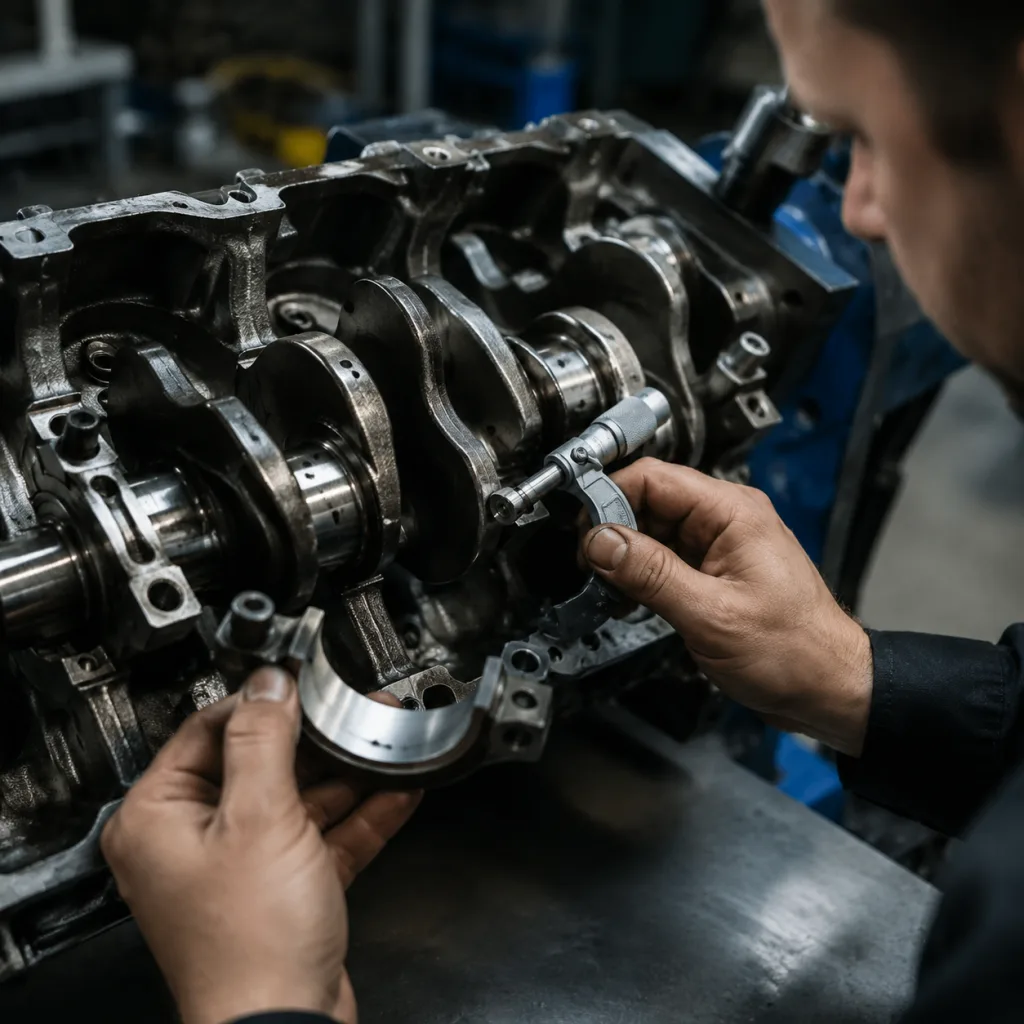
| Journal diameter | Controlled for oil clearance | Micrometer and roundness measurement |
| Total runout | Limits bending and timing variation | V-block or between-centres indicator check |
| Surface hardness | Supports wear resistance | Rockwell or equivalent hardness test |
| Lobe surface finish | Reduces break-in wear | Surface roughness tester |
| Phaser mounting face | Maintains VVT alignment | CMM or dedicated fixture |
| Sensor trigger feature | Maintains ECU signal timing | Optical comparator or CMM |
| Oil holes and grooves | Confirms lubrication path | Visual, gauge, and flow checks |