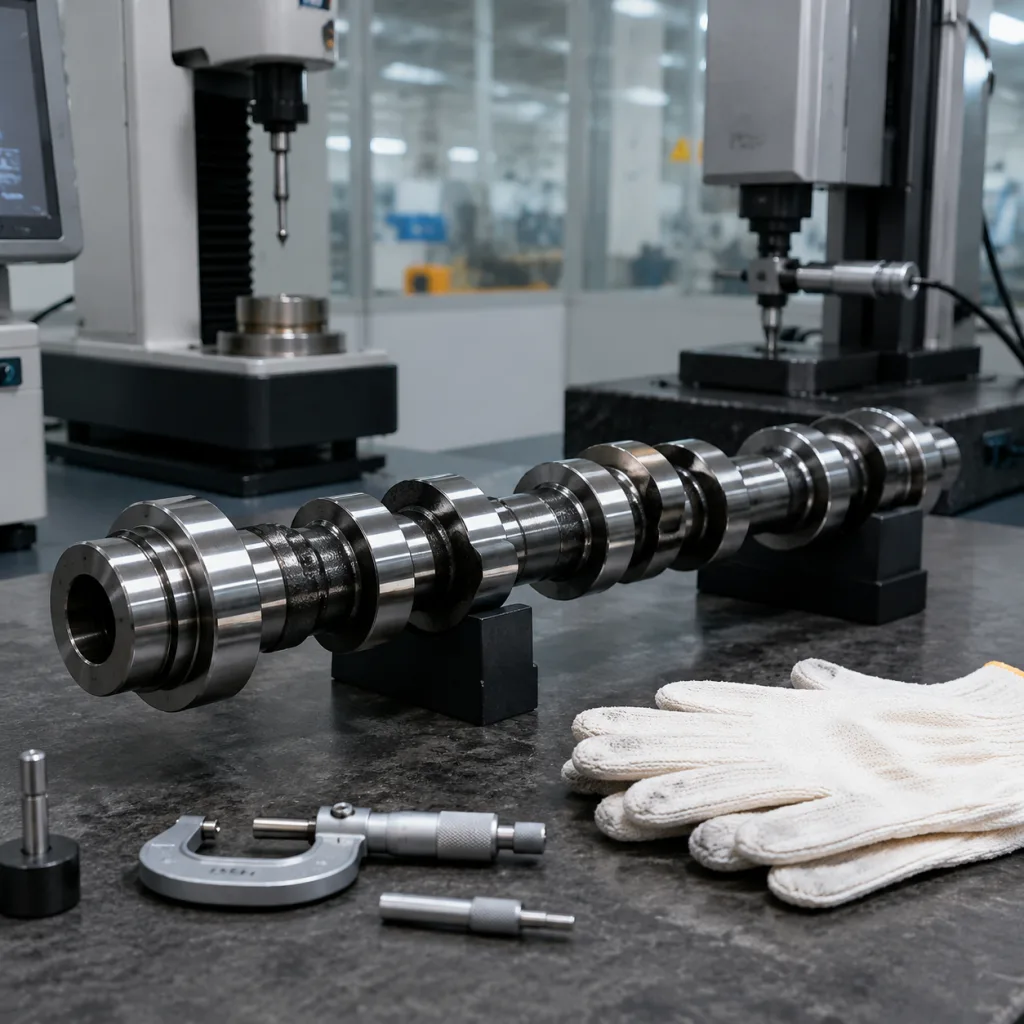
If you are sourcing a camshaft Honda manufacturer China partner, the real questions are not broad claims. They are fitment control, metallurgy, machining repeatability, test coverage, and supply continuity. For procurement teams, the objective is to lower field failures and incoming-inspection rejects while keeping landed cost predictable. Driventus manufactures engine and powertrain components in Taizhou, Zhejiang, and exports to more than 60 countries. We work with aftermarket distributors, OEM and Tier-1 buyers, and repair-chain buyers who need consistent dimensions and documented quality controls. Driventus is an independent aftermarket manufacturer; brand names are referenced for fitment only. This article shows how to judge supplier capability, where camshaft programs fail, and which documents should be in hand before production approval.
Start with the failure modes
When evaluating a camshaft Honda manufacturer China source, begin with the problems that actually create warranty claims.
Lobe profile drift between batches
Journal wear from poor hardness control
Runout that looks minor but hurts valvetrain timing
Trigger-wheel or phasing errors on sensor-equipped parts
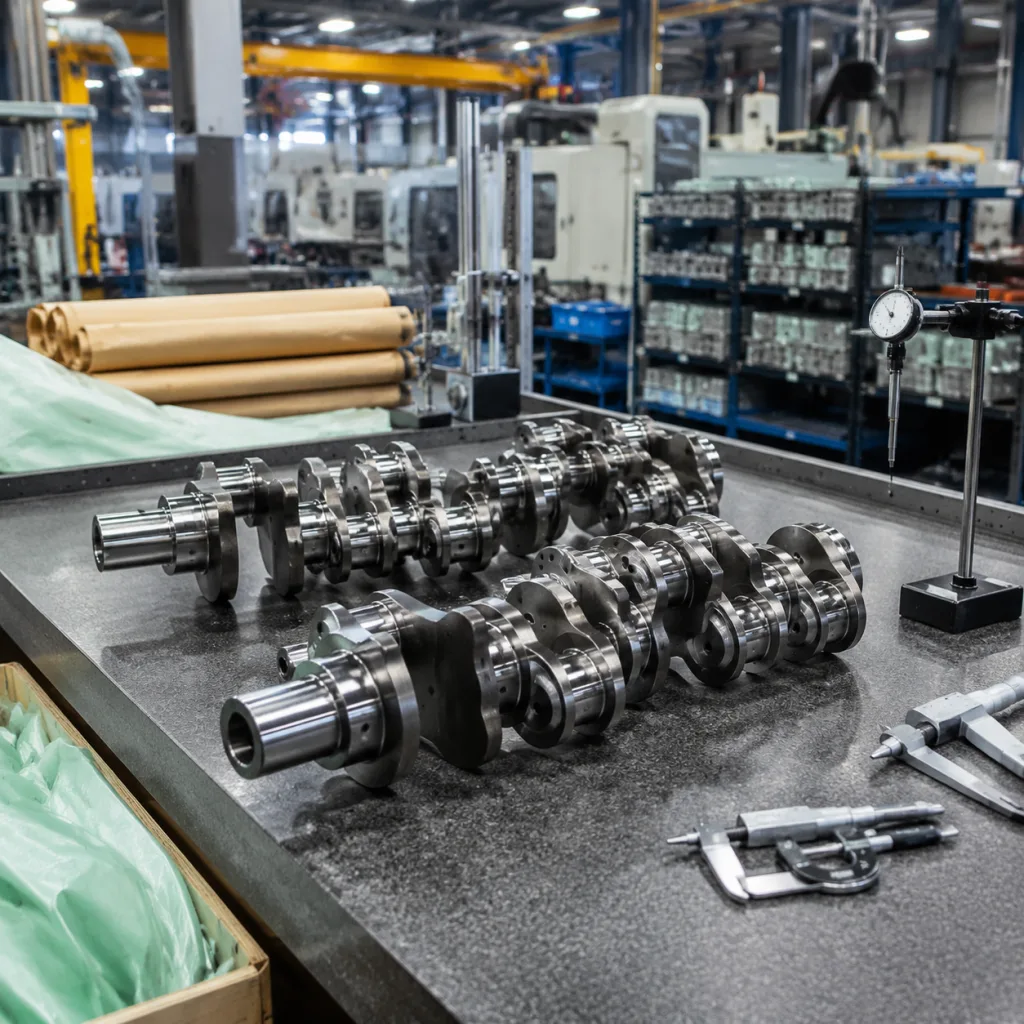
Packaging damage that shows up only after transit
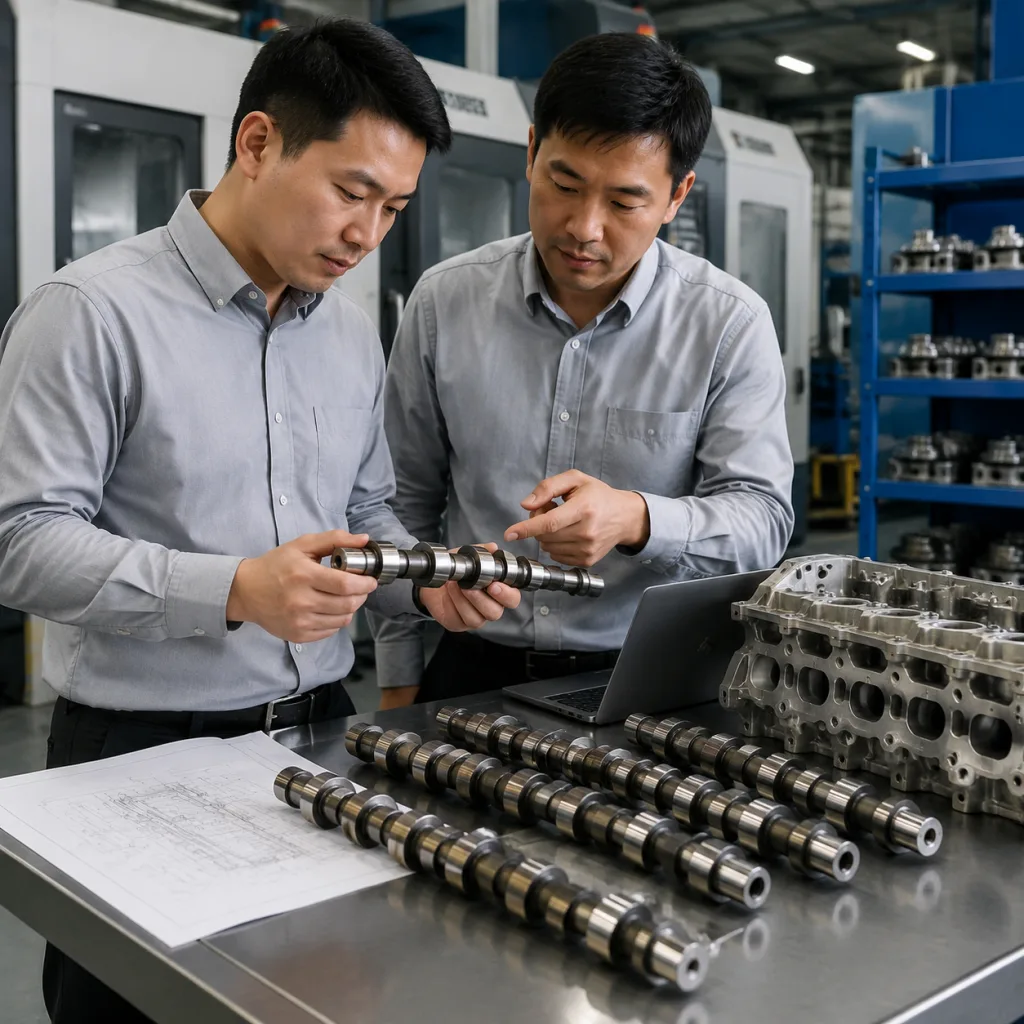
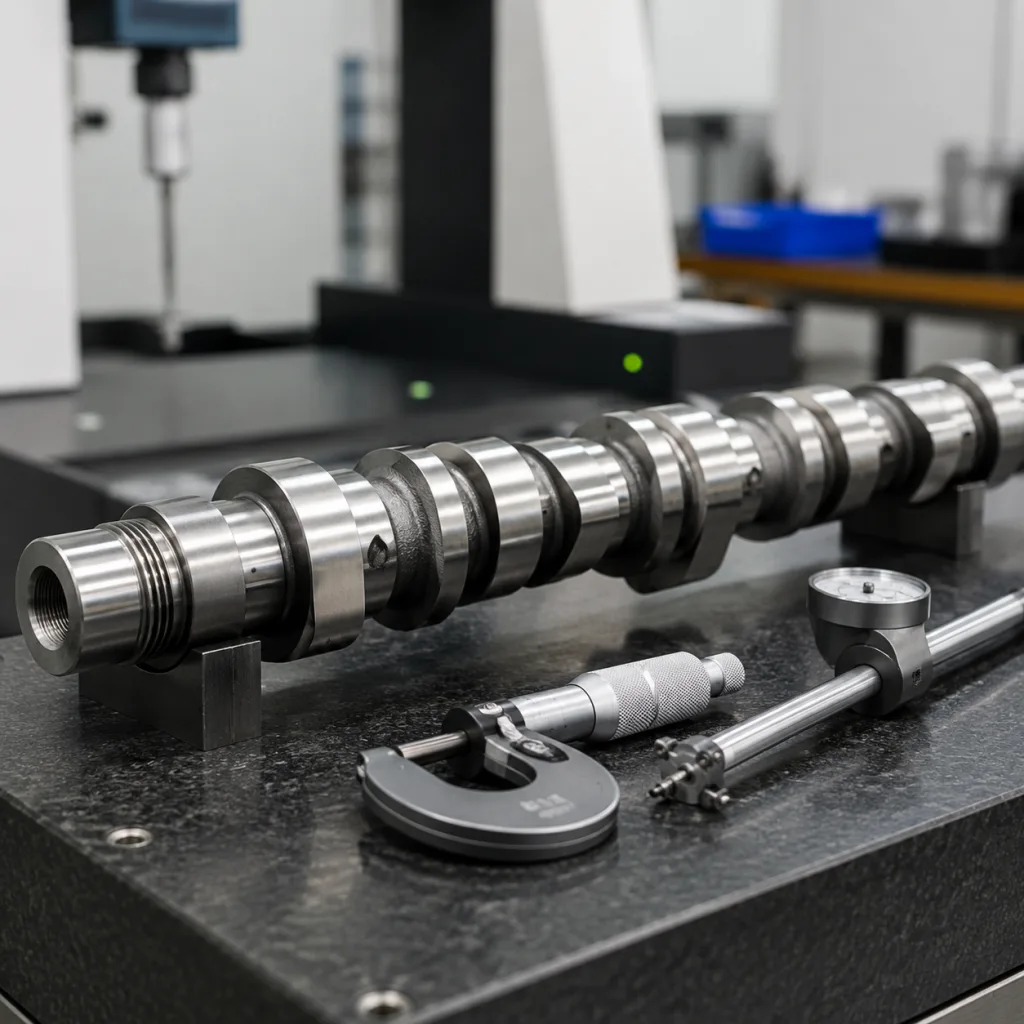
The buying question is simple: can the supplier make the same geometry repeatedly, not just once? Ask for dimensional reports on the features that matter most: base circle, lift, phasing, journal alignment, and end play. For Honda-fit replacement programs, request nominal dimensions, tolerance bands, and sample acceptance values in writing before you approve mass production. Typical control targets buyers should ask the factory to state on the drawing or inspection sheet include journal diameter within ±0.01 mm, lobe lift within ±0.03 mm, runout not above 0.02 mm TIR, and surface roughness below Ra 0.8 μm on ground journals. If the part is intended for replacement use, require a clear statement of OE cross-reference and application coverage. Driventus supports OE part-number cross-references in fitment documents, but does not claim vehicle manufacturer approval or endorsement.
Choose the right manufacturing route
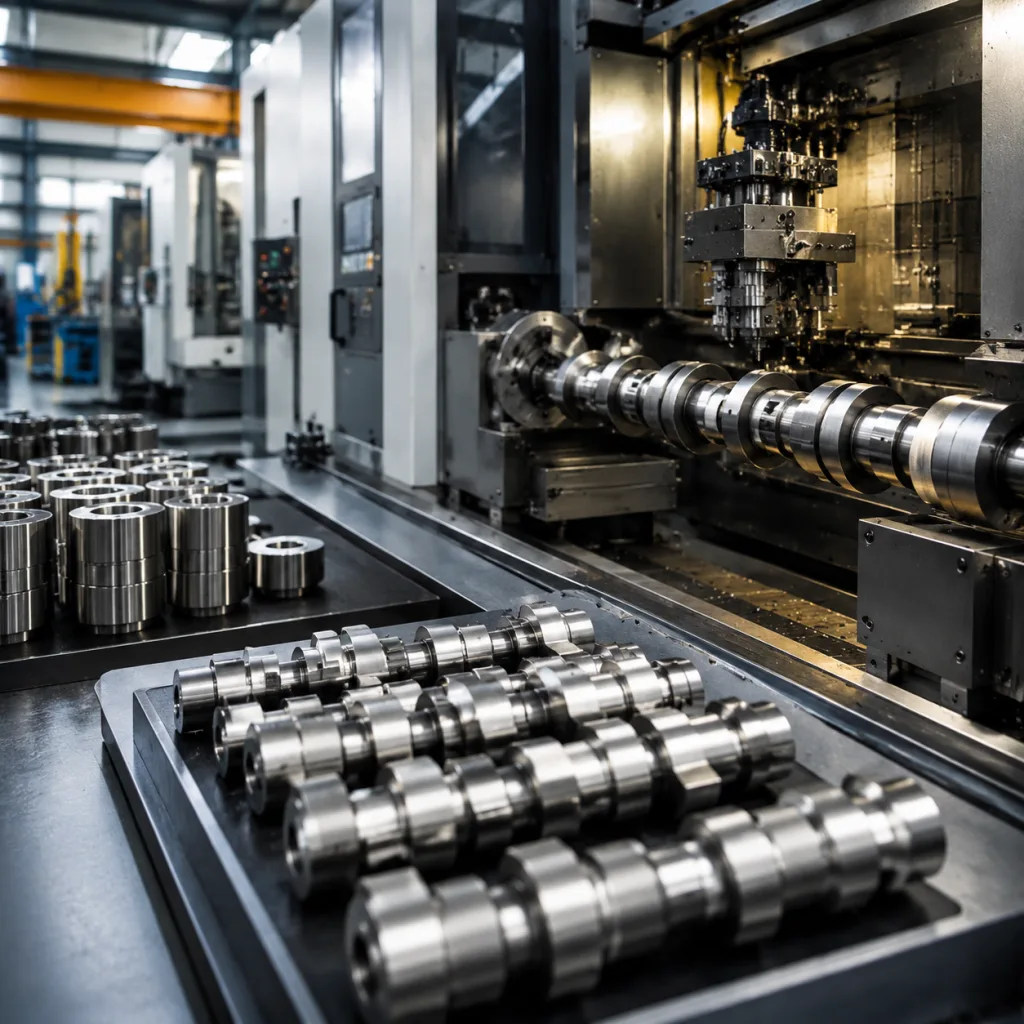
Camshafts are usually produced from chilled cast iron, forged steel, or billet steel, and the route should match rpm range, valve-spring load, and wear target. A supplier that cannot explain why it chose a material is a risk.
Typical buyer checks
Control item
What to request
Why it matters
Material certificate
Heat number and chemistry report
Confirms batch consistency
Hardness data
Surface and core hardness values
Indicates wear resistance
Heat treatment
Process summary and verification method
Reduces lobe scuffing risk
Grinding control
Journal and lobe grinding records
Supports dimensional repeatability
Traceability
Lot code and packaging ID
Supports claims handling and recall control
</tr></thead><tbody> </tbody></table>For Honda applications, ask for the heat-treatment window and the target hardness range, not just a pass/fail statement. A practical request is surface hardness of 55-62 HRC for hardened steel camshafts, with core hardness documented separately; for cast-iron parts, request the supplier’s equivalent hardness scale and the test location. The supplier should also define how it controls warpage after heat treatment and finishing, including straightening limits, post-grind correction limits, and final inspection frequency. Stable process control matters more than a low sample price. Driventus operates under IATF 16949:2016 and ISO 9001:2015 controls, which helps procurement teams align PPAP-style expectations with recurring production lots.
Compare the paperwork, not just the sample
For B2B sourcing, documents should support inspection, not just fill a folder. At minimum, request the control plan, incoming-material checks, in-process inspection points, and final inspection record. For export programmes, the supplier should also understand REACH (EC) No 1907/2006 where applicable and maintain clear declarations for regulated substances.
A practical document set includes:
Dimensional inspection report with sampling method
Hardness and surface-finish results
Material certificate and heat-treatment record
Packaging specification and label format
Nonconformance and corrective-action procedure
Ask for the actual inspection method used on critical features: air gauge, micrometer, CMM, profile projector, or dedicated cam gauge. Buyers should also define acceptance logic up front, including AQL level, lot size, and whether 100% inspection is required on first articles or new-tooling launches. A new Honda-fit camshaft program may require a 5-piece first-article check, a 30-piece capability run, and a tighter release gate before shipment approval. Also ask how the supplier handles runout, lobe-lift variation, and surface defects such as scoring or pitting. These are common rejection reasons in incoming inspection. Driventus details its production controls on the quality system page, and buyers can compare product coverage in our catalog.
Work out the supply model before you order
Procurement teams usually need a supplier that can balance forecast volume with order flexibility. For camshaft programs, MOQ is often driven by tooling, batch heat treatment, and grinding-line scheduling. Lead time will depend on whether the part is catalog production, semi-custom, or fully custom.
A sourcing model to request from the factory:
Sample lead time for engineering approval
First production lead time after order confirmation
Standard batch size and MOQ by part family
Reorder lead time for repeat lots
Packing configuration by carton and pallet
Ask for three commercial cases: sample order, pilot order, and steady-state production. A practical structure is 7-15 days for sample machining if tooling exists, 20-35 days for first production after sample approval, and 25-45 days for repeat lots depending on material availability and heat-treatment queue. MOQ should be stated separately for standard catalog parts and custom profiles; for many camshaft lines, an MOQ of 50-200 pieces per part number is common, while private-label or custom profiles may need a higher launch quantity or a tooling deposit. Ask the factory to quote price breaks by 100, 300, and 1,000 pieces, because unit cost often changes materially once setup cost is spread across volume. If your programme needs limited-engine production or niche applications, ask whether the factory can support lower MOQ with agreed pricing tiers. If you need a new profile or a private-label range, use custom manufacturing to review drawing control, prototype steps, and validation timing. This is where a responsive China supplier can outperform a catalog-only exporter.
Validate fitment before release
A camshaft can match the part number and still fail in the engine if lobe timing, journal size, or trigger features are off. Before authorising volume, confirm the fitment method used by the supplier. The strongest approach combines drawing comparison, gauge checks, and engine-family validation on a reference build.
Key checks before release:
1. Confirm OE cross-reference and engine-code coverage. 2. Compare critical dimensions against the approved sample. 3. Verify phasing, lift, and end-play allowances. 4. Review packaging to prevent transit damage. 5. Keep a retained sample for claim investigation.
For a buyer-ready validation plan, ask the supplier to state the exact measurement points, acceptance tolerances, and test sample size on the approval document. A practical launch gate is first article inspection on 100% of critical dimensions, plus a retained master sample signed off by both sides. For camshaft programs that include sensors or trigger wheels, confirm tooth count, indexing position, and axial location, since these features can affect engine start and misfire logic. For buyers in the EU, UK, US, Canada, Australia, and Brazil, the goal is the same: reduce warranty exposure. Ask for validation evidence tied to the application, not only to the part number. If you need a focused engine-component programme, see engine components for related categories.
Frequently asked questions
Yes. We support OE part-number cross-references for fitment and application control. We do not claim vehicle manufacturer approval or endorsement, and brand names are used for fitment only.
Driventus operates under IATF 16949:2016 and ISO 9001:2015. For regulated markets, we also align documentation with REACH (EC) No 1907/2006 where applicable.
Request a dimensional report, material certificate, heat-treatment record, packaging specification, and a clear lead-time and MOQ statement. For custom programmes, ask for drawing control and validation timing.
If you are comparing suppliers for a camshaft programme, send your target application, annual volume, and OE reference list. We will review fitment and sourcing options with you at /contact.html