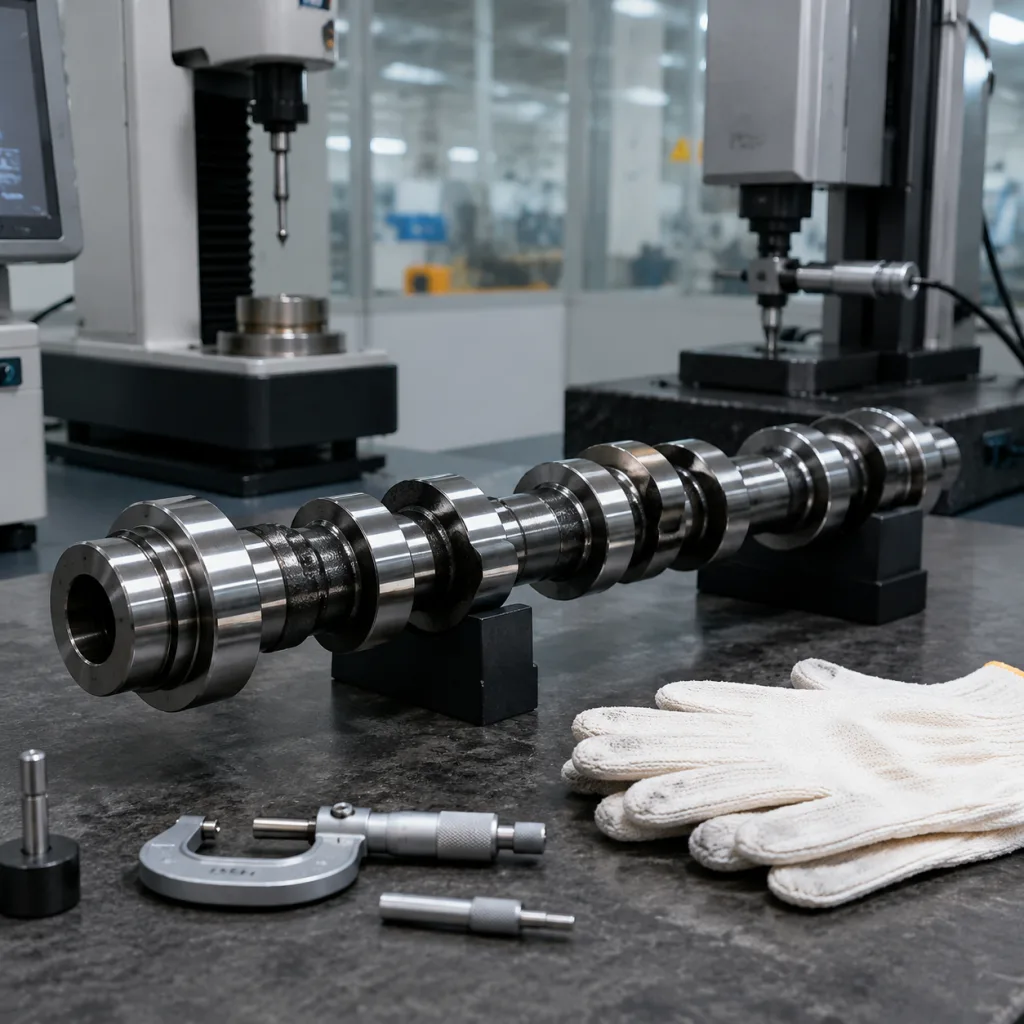
Camshaft Acura Replacement: OE Match and Validation
A camshaft Acura replacement has to match the original profile, journal geometry, and timing requirements before installation. For procurement teams, the real risk is not the nameplate alone; it is dimensional drift, incorrect lobe separation, or inconsistent heat treatment that can alter valve timing and durability. Driventus supplies engine and powertrain parts for B2B programmes, including aftermarket distributors, OEM and Tier-1 channels, and repair networks. Driventus is an independent aftermarket manufacturer; brand names are referenced for fitment only. For buyers comparing suppliers, the practical checks are straightforward: confirm OE cross-reference, verify base-circle and journal dimensions, review material and hardness data, and request test evidence. Our production follows IATF 16949:2016 and ISO 9001:2015 controls, with compliance support for REACH (EC) No 1907/2006 where applicable.
Camshaft Acura replacement: first decision checks
A valid replacement should match the original cam profile within the stated tolerance window, not just look similar. Journal runout, surface finish, and surface hardness all affect wear, valve timing, and long-term stability.
Start with the application, not the part photo. Confirm engine code, cam position, intake or exhaust designation, variable valve timing compatibility, and whether the drive system uses a belt, chain, or gear. If the OE reference is uncertain, ask for a sample-based verification pack before approving production.
Replacement criteria belong in the purchase specification, not in catalogue notes. For higher-risk programmes, define acceptance limits for lobe lift, base-circle variation, and journal finish on the RFQ so the supplier cannot substitute a visually similar shaft with different behavior.
Spec deep-dive: dimensions, materials, and hardness
The best comparison is a specification review, not a generic fitment claim. Ask suppliers to document the items below before sample approval.
Item
What to verify
Typical buyer tolerance target
Journal diameter
Match the OE bearing size and clearance target
±0.01 to ±0.02 mm from print, depending on the journal size
Total length
Confirm head and thrust geometry
±0.10 mm for overall length; tighter if thrust-controlled
Lobe lift
Intake and exhaust values must match the application
Within ±0.03 mm of the approved master sample
Base-circle diameter
Must align with lifter or follower system
Within ±0.02 mm and consistent across lobes
Lobe separation angle
Verify against OE timing data
Within ±0.5° for critical performance applications
Material / hardness
Include heat treatment data and hardness range
Core and surface hardness per drawing; typical surface target 50–60 HRC where applicable
Runout
Measure on a calibrated fixture
≤0.02 mm TIR for most production shafts; lower if specified
</tr></thead><tbody> </tbody></table>Tolerance control matters more than catalogue wording. For multi-market sourcing, ask for inspection criteria aligned to IATF 16949:2016 and ISO 9001:2015, plus material compliance statements where required by REACH (EC) No 1907/2006. If the camshaft is nitrided or induction-hardened, request case depth data, heat-treatment charts, and hardness traverse results. A useful acceptance pack should also show journal surface finish, typically Ra 0.2–0.4 µm for precision bearing interfaces unless the OE drawing states otherwise.
Validation sequence before release
Replacement parts should be validated before you move from sample to purchase order. The minimum test set depends on volume and end use, but the following checks are standard for serious procurement.
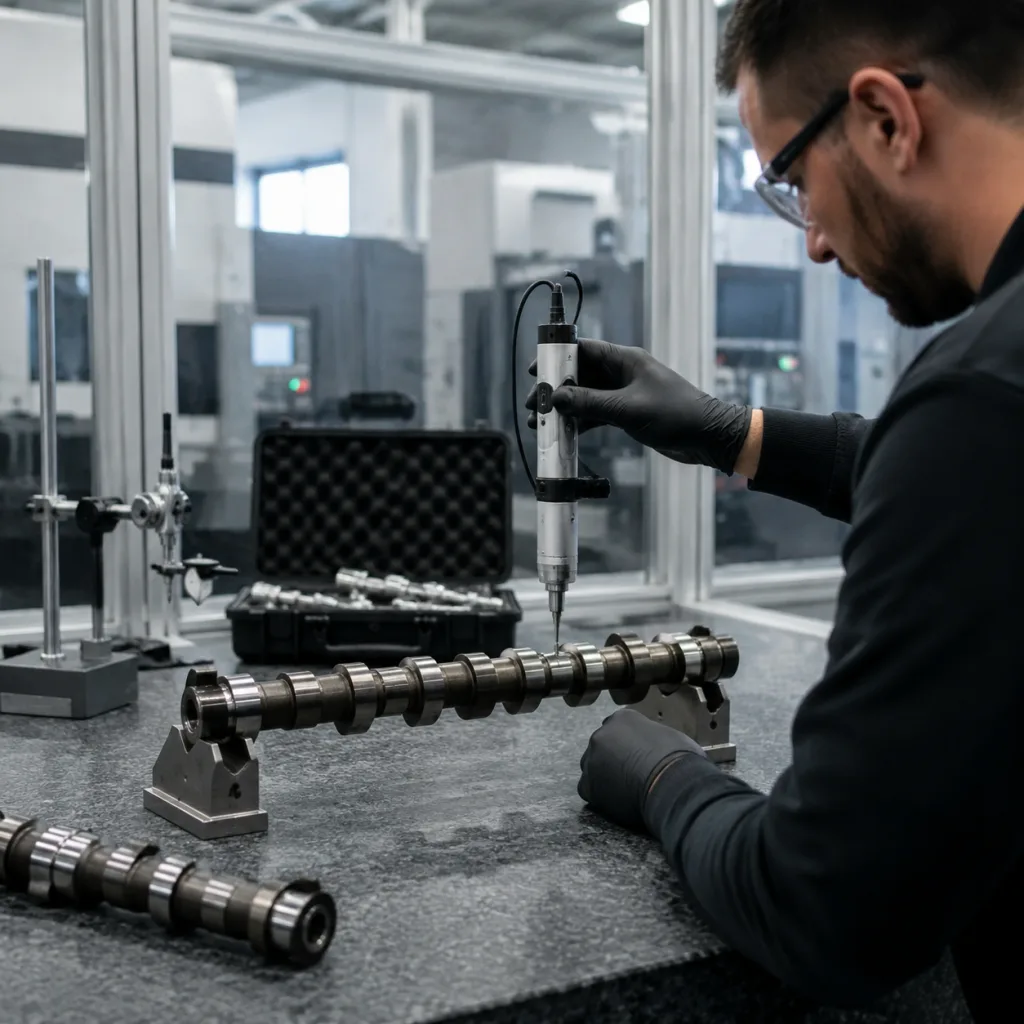
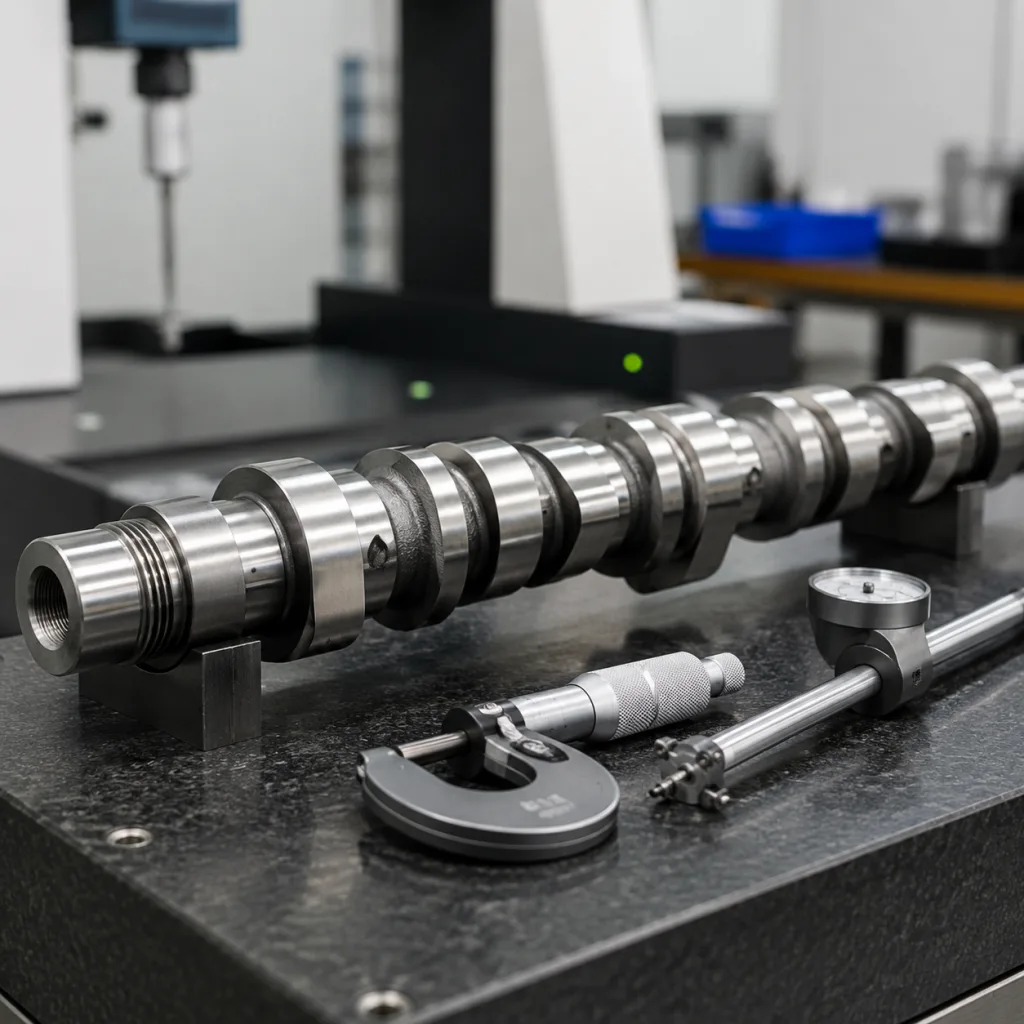
CMM or gauge verification of critical dimensions.
Surface hardness and case depth checks, where applicable.
Dynamic runout and concentricity inspection.
Profile comparison against OE master data or a controlled sample.
Functional engine bench or vehicle-fit trial for timing confirmation.
Metallurgy review for material grade, microstructure, and heat-treatment consistency.
A practical release path is first article inspection, then fitment trial, then limited pilot run before mass buy. Buyers often request 3 pieces for engineering verification, 5 to 10 pieces for pilot build, and one retained sample for future comparison. If the application is customer-facing and emissions-sensitive, add durability or corrosion data that reflects the market. Driventus supports validation packs for new programmes and repeat orders, including dimensional reports, photo records, and traceable sample control.
Failure modes: when a direct shelf part is wrong
Some camshaft failures show up before installation; others appear only after start-up. The common risk is assuming the OE cross-reference alone guarantees function.
Watch for these failure modes:
Correct length, wrong lobe profile.
Acceptable fit, but excessive runout under load.
Hardness inside range, but shallow case depth or poor consistency.
Visual match, but different journal finish that accelerates wear.
Compatible engine family, but incorrect VVT or timing-drive configuration.
If the application involves a discontinued engine, regional calibration changes, or an obsolete profile, custom manufacturing is often the safer route. A sample-to-print match with signed approval data removes guesswork and prevents repeated mismatch across branches or regions.
Custom manufacturing or catalog part?
Use a cataloged replacement when the OE reference is stable, the dimensions are well controlled, and the acceptance window is already proven. Use custom production when the programme needs tighter control than off-the-shelf inventory can hold.
Choose custom manufacturing when:
The OE reference is superseded and stock is inconsistent.
A private-label programme needs controlled branding and packaging.
The buyer requires sample-to-print approval data.
Volume justifies dedicated tooling and locked inspection limits.
The approved tolerance window is tighter than shelf inventory can support.
Driventus offers custom manufacturing for drawing control, sample approval, and repeatable production. This route is useful when the buyer needs to lock a specific hardness range, lobe profile, or finish requirement that cannot be guaranteed by a generic aftermarket part.
Procurement checklist for approval
Before release, confirm the order pack includes:
Application list with engine and model coverage.
OE cross-reference or verified sample reference.
Dimensional report for first article approval.
Material and hardness certificates, if specified.
Packaging and labelling requirements for the destination market.
Lead time, MOQ, and spare sample policy.
Price break table by quantity, with currency and incoterms stated.
Reorder trigger and version-control reference for repeat buys.
For distribution or workshop supply, the goal is consistency across lots, not only initial fit. Many B2B buyers work with a MOQ of 50 to 200 units on cataloged parts, while custom or sample-to-print programmes may start lower if tooling is already complete. Lead time typically falls into three bands: sample approval in 7 to 14 days for stocked references, 3 to 5 weeks for standard production, and 6 to 10 weeks when new tooling, heat-treatment changes, or private-label packaging are required. Ask for tiered quotations at 100, 300, and 500 units so you can compare landed cost instead of a single list price. For pricing, samples, or technical review, use request a quote.
How suppliers should quote the part
A usable quotation should make commercial and technical risk visible at the same time. For a camshaft Acura replacement, the quote should separate unit price, tooling if any, sample charges, packaging fees, and freight assumptions. It should also state whether the price is based on ex-works, FOB, or DDP terms, because that changes landed cost and comparison accuracy.
Buyers should also ask for the quantity-price ladder. A strong quote will show at least three breakpoints, for example 100, 300, and 500 pieces, with the lower unit cost tied to stable production scheduling. If the order is for a regional distributor, add a tolerance for over- or under-shipment, usually 0 to 5 percent, so receiving teams can plan stock without rework. If the programme is recurring, request a six- to twelve-month validity period on the price and confirm whether raw-material surcharges can be indexed. Driventus can prepare quotes with sample lead time, production lead time, and QC deliverables stated up front so purchasing can compare suppliers on total programme cost rather than only part price.
Frequently asked questions
No. Driventus is an independent aftermarket manufacturer; brand names are referenced for fitment only. We supply replacement parts based on verified application and dimensional data, with tolerances and inspection limits defined by the buyer's specification or approved master sample.
Ask for the OE cross-reference, dimensional report, material or hardness data if specified, and packaging details. For larger orders, request sample approval, traceability records, runout data, and a price/MOQ/lead-time quote that states quantity breaks and shipping terms.
Yes. We support drawing-based and sample-based production for aftermarket and B2B customers, including validation packs and repeat-order control through our OEM services. We can also align the programme to target hardness, finish, and dimensional tolerances for the application.
If you need a verified fitment review or a quotation for replacement supply, contact the Driventus team here: /contact.html