By Vincent Xi, Editorial Author
Briggs and Stratton Engine Rebuild Kit Sourcing Guide
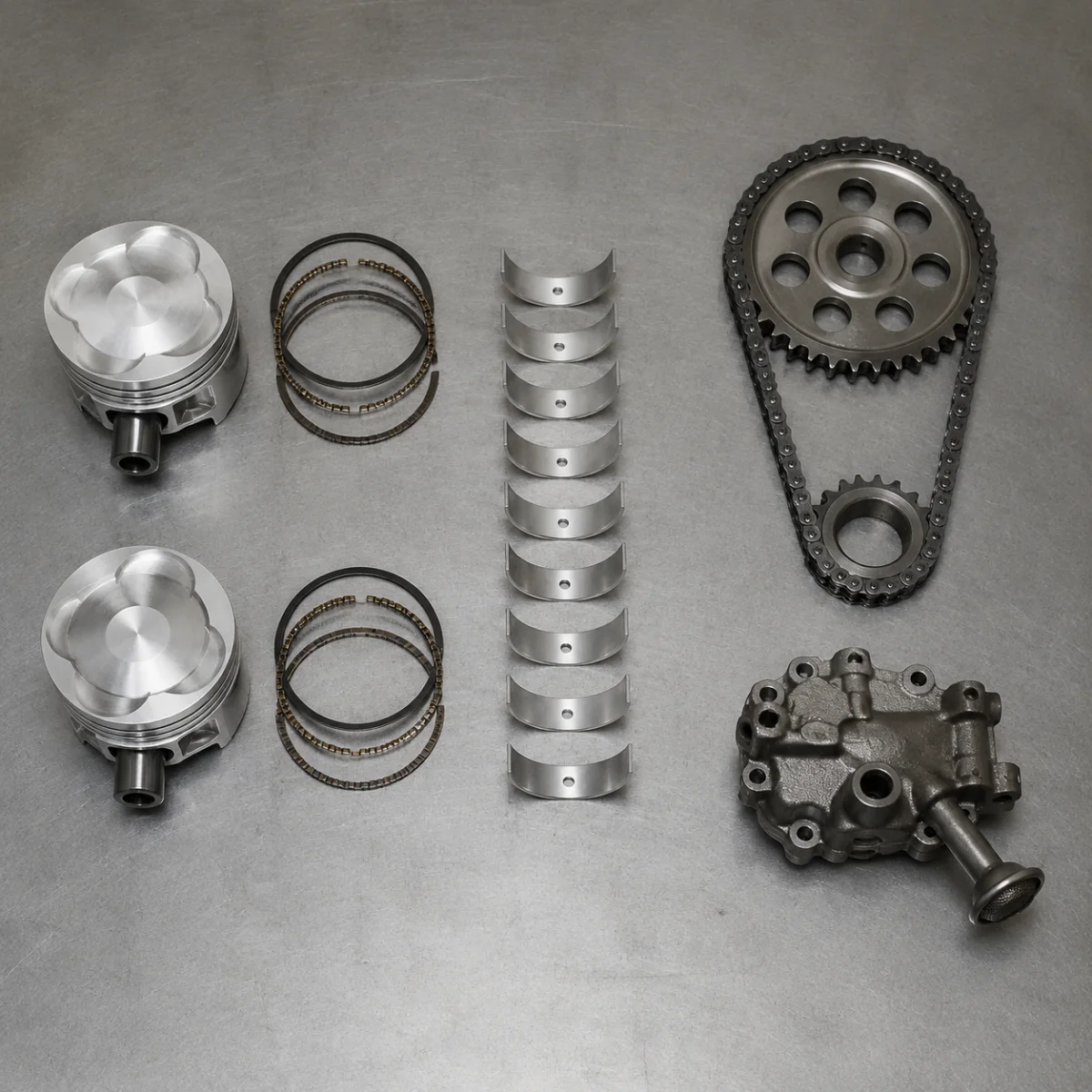
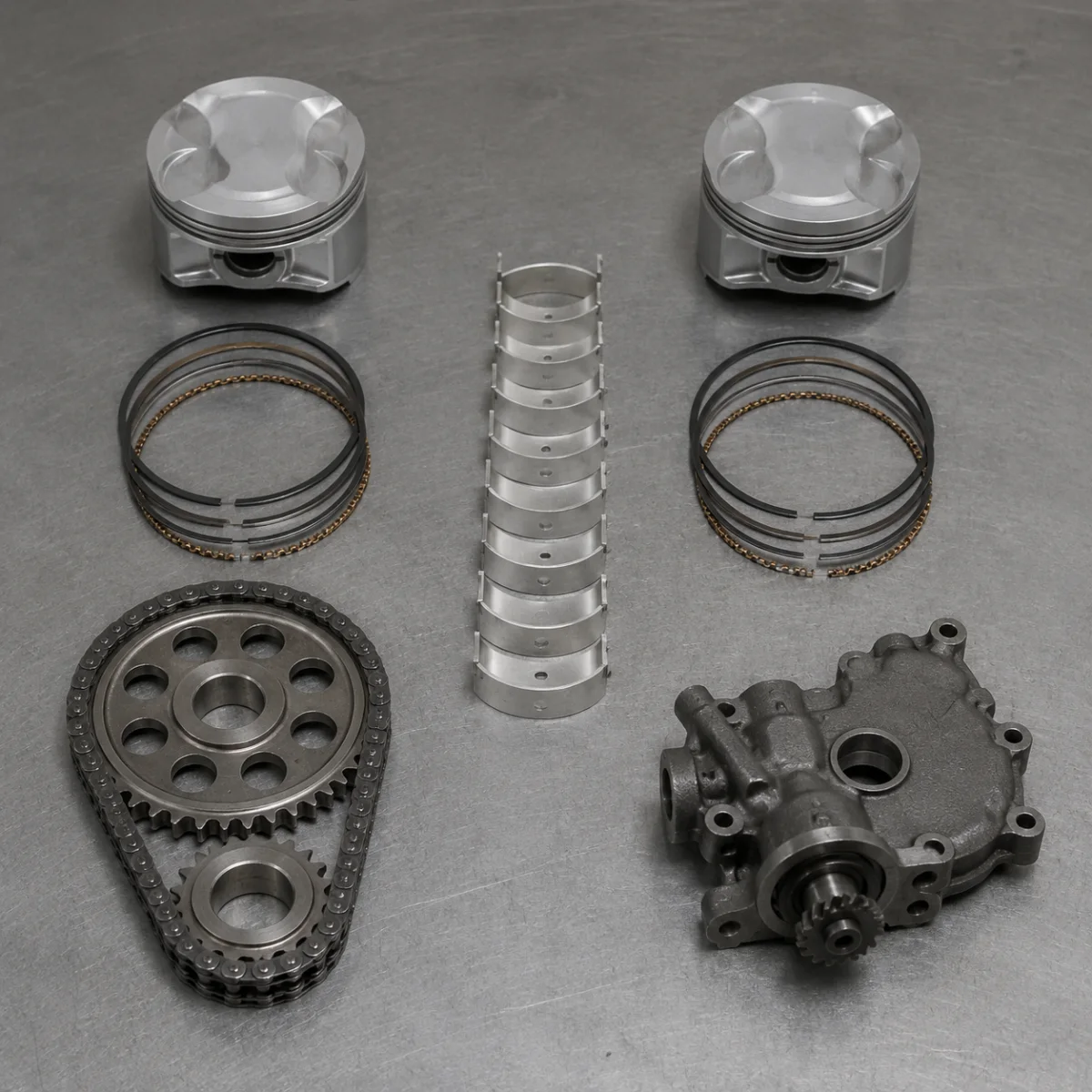
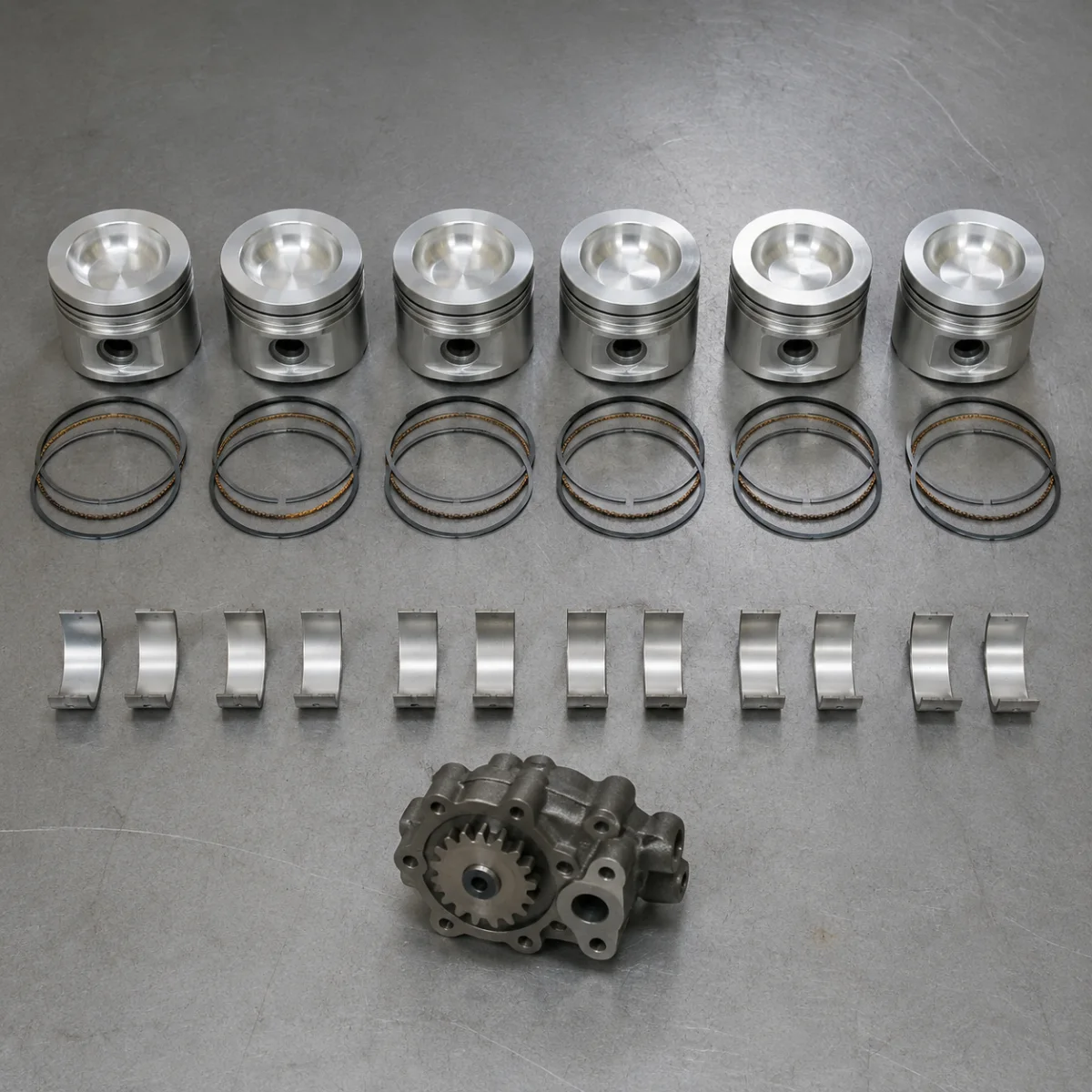
A Briggs and Stratton engine rebuild kit should be specified as a controlled service package, not bought as a generic box of parts. For distributors, wholesalers, sourcing engineers and category buyers, the practical question is whether the piston, rings, gaskets, seals, bearings and valve-related parts match the exact engine model, type, trim and repair depth. Briggs and Stratton’s public support guidance, updated on January 29, 2026, says the complete source of specification information is the engine repair manual, and that model number identification provides basic specifications such as valve settings, bore and stroke. Use that as the starting point for procurement: identify the engine first, define the rebuild scope second, then approve the kit through drawings, samples and inspection records. Brand names and OE references are used only for fitment context and do not imply approval or endorsement.
Identify the Engine Before Naming the Kit
The phrase "briggs and stratton engine rebuild kit" is useful for search, but it is not precise enough for a purchase order. A supplier may use that wording for a piston-and-ring set, a gasket set, a carburetor service kit, or a wider overhaul package. Those are different products with different return risks.
Start the RFQ with the engine model, type and trim. Then state the repair objective: top-end refresh, bottom-end rebuild, full overhaul, or carburetion-related service. Briggs and Stratton’s support guidance says model number identification is needed for basic specifications such as valve settings, bore and stroke, while the complete specification source is the engine repair manual. In procurement terms, the support page helps buyers locate the right evidence; it does not replace the engine-specific manual, illustrated parts list or controlled supplier drawing.
Availability also needs an early check. The 2017 repair manual excerpt for MODEL 130G00, MODEL 131G00, MODEL 13R200, MODEL 13U100 and MODEL 13U200 states that some models have limited service parts. Before comparing quotes, confirm that the intended parts are serviceable and available for the exact engine references being covered.
A clearer catalogue structure separates kits by repair boundary:
- Top-end gasket and valve service kits.
- Piston, ring and pin kits by standard size or verified oversize.
- Bottom-end kits covering seals, bearings, connecting rod and crankcase gaskets where applicable.
- Full rebuild kits assembled from approved sub-kits.
- Carburetor rebuild kits listed separately from internal engine overhaul kits.
Buyers can review adjacent part families in engine components and our catalog, but each sourced kit still needs its own BOM, fitment statement, sample approval and inspection basis.
Turn the RFQ Into a Controlled Scope
Price comparison only works after the kit content is fixed. Two suppliers can quote the same keyword while offering different parts, quantities and exclusions. That creates commercial noise and, later, workshop returns.
The RFQ should require a line-item bill of materials with part name, quantity per kit, material grade where relevant, coating or surface treatment, packing method, barcode requirement and interchange reference. If brand or OE references appear in the file, keep them in compatibility fields only. They should not be written as approval, endorsement or original-equipment claims unless the buyer has a current document proving that status.
| Decision point | Buyer question | Document to request | ||
|---|---|---|---|---|
| Engine coverage | Which model, type and trim references are included? | Coverage matrix tied to current parts data | ||
| Repair scope | Is this top-end, bottom-end, full overhaul or carburetor service? | Kit BOM with inclusions and exclusions | ||
| Bore condition | Is the kit standard size or oversize? | Piston and ring drawing with size marking | ||
| Gasket coverage | Which sealing interfaces are included? | Gasket layout or drawing set | ||
| Change control | What happens if a component source changes? | Written change-notification process |
| Item to verify | Supplier document | Buyer check | ||
|---|---|---|---|---|
| Piston and ring size | Drawing and kit BOM | Confirm standard or oversize selection against cylinder measurement | ||
| Gasket set | Gasket drawing and material declaration | Match every interface to the engine type and trim | ||
| Oil seals | Seal drawing and material statement | Check lip profile, shaft fit and storage condition | ||
| Valve parts | Drawing, hardness or material note where applicable | Confirm stem, head and keeper geometry before approval | ||
| Packaging | Packing specification | Verify mixed-part prevention and lot traceability |
| Evidence type | How to use it | What it must not do | ||
|---|---|---|---|---|
| Current repair manual or buyer-approved drawing | Govern dimensions, service limits and fitment approval | Be replaced by a catalogue shortcut | ||
| Illustrated parts list | Confirm component references and exploded-view context | Prove material, tolerance or supplier quality by itself | ||
| Public support guidance | Explain where to find specifications and why model identification matters | Serve as a kit BOM | ||
| Historical manual excerpt | Show inspection logic and dimensional terminology | Act as a universal current specification | ||
| Supplier interchange sheet | Support cross-reference review | Override drawings, manuals or sample results |
| Data point | Value | Scope | As of | Evidence |
|---|---|---|---|---|
| B&S support page read time | 2 min read | Briggs and Stratton public support article on finding engine specifications, used only as source-context metadata | Updated on January 29, 2026; source retrieved on 2026-07-15 | Supports that the cited support page is a short guidance article, not a full repair specification manual. Source |
| Torque rating RPM basis | 2600 RPM | Gross torque values for individual gas engine models labelled in accordance with SAE J1995 as described by Briggs and Stratton support guidance | Updated on January 29, 2026; source retrieved on 2026-07-15 | Used to show that engine data may have a specific rating basis and should not be converted into rebuild-kit fitment claims. Source |
| Horsepower rating RPM basis | 3600 RPM | Gross horsepower values for individual gas engine models labelled in accordance with SAE J1995 as described by Briggs and Stratton support guidance | Updated on January 29, 2026; source retrieved on 2026-07-15 | Used to reinforce that published engine ratings have defined conditions and are not direct rebuild-kit approval evidence. Source |
| Replacement catalog file size | 38 MB | Briggs and Stratton Replacement Engine Catalog PDF file size stated on the support page for general replacement engine measurements | Updated on January 29, 2026; source retrieved on 2026-07-15 | Used as source-context evidence that the replacement catalogue is a large general guide, not a kit-specific BOM. Source |
| 130000-series repair manual publication year | 2017 year | Copyright year stated in the Briggs and Stratton 130000 Series repair manual excerpt covering MODEL 130G00, MODEL 131G00, MODEL 13R200, MODEL 13U100 and MODEL 13U200 | Copyright 2017; source retrieved on 2026-07-15 | Used to identify the repair-manual excerpt as a 2017 source context, not a current universal kit specification. Source |
| 130000-series model count named in manual excerpt | 5 models | Engine models listed in the 2017 Briggs and Stratton 130000 Series repair manual excerpt: MODEL 130G00, MODEL 131G00, MODEL 13R200, MODEL 13U100 and MODEL 13U200 | Copyright 2017; source retrieved on 2026-07-15 | Supports the point that repair documentation is model-scoped and should not be treated as a brand-wide rebuild-kit approval. Source |
Methodology
Publicly retrievable source excerpts were reviewed for Briggs and Stratton specification-finding guidance, repair-manual context, model scope and dimensional examples. Numeric data points were retained only where the supplied excerpt visibly stated the value, unit and scope. Current support guidance was weighted above historical manual excerpts for sourcing workflow claims, while historical data was used only to illustrate the type of dimensional verification buyers should request. Non-comparable values were not charted.
Limitations and what to verify
- The excerpts do not provide a complete current BOM for any specific Briggs and Stratton engine rebuild kit; buyers must verify model, type, trim, illustrated parts list and supplier drawings before ordering.
- Historical repair-manual dimensions may not apply to current engines or all service populations; buyers must confirm current repair-manual limits, sample measurements and quotation documents for the exact engine coverage.
- The evidence does not prove Driventus certification, endorsement by Briggs and Stratton, field performance, annual capacity, exports, shipments or defect rates; buyers should verify quality records, sample inspection results and change-control terms directly.
Sources used
- How do I find Briggs & Stratton engine specifications? — briggsandstratton.com. Supports the article's guidance that engine model identification and repair manuals are needed for specifications such as valve settings, bore and stroke, and provides rating-basis context for 2600 RPM torque and 3600 RPM horsepower values under SAE J1995.
- BRIGGS & STRATTON CORP., Milwaukee, Wis. 53201, ... — vieux.tracteurs.free.fr. Provides historical examples of dimensional service-table language, including crankshaft end play, cylinder resizing and inspection/check/test terminology.
- Briggs & Stratton 130000 Series Repair Manual FREE — powerproducts.co.za. Supports the distinction between model-specific repair-manual information, trained service assumptions, top-end and bottom-end service context, and limited service-part availability.
Frequently asked questions
Include engine model, type and trim coverage, a line-item BOM, drawings or controlled interchange references, material declarations, critical dimensions, sample requirements, packaging rules, label wording and change-notification terms. Ask the supplier to state exclusions clearly.
Only if shared coverage is supported by current manuals, illustrated parts lists, drawings and sample checks. Broad compatibility claims should not replace model-specific verification, especially for piston, ring, gasket, seal and valve-related parts.
No. Historical manuals can explain service logic and terminology, but current engine-specific documents and buyer-approved drawings should govern sourcing. Treat old tables as supporting references unless the buyer confirms they apply to the exact engine population.
Use Briggs and Stratton references only to identify fitment context, such as engine model coverage or interchange comparison. Do not use brand names to imply approval, endorsement, certification or original-equipment status unless a current approved document supports that claim.
Separate them whenever piston or ring size differs. Historical repair manual excerpts may show oversize resizing as a service concept, but buyers must verify the applicable current manual and cylinder measurements for the exact engine before ordering.
Share your target engine coverage, desired kit contents and document requirements with Driventus for a sourcing review. Start with a controlled request a quote and review related engine components.
Request a Quote