By Vincent Xi, Editorial Author
12 Valve Cummins Engine Rebuild Kit Sourcing Guide
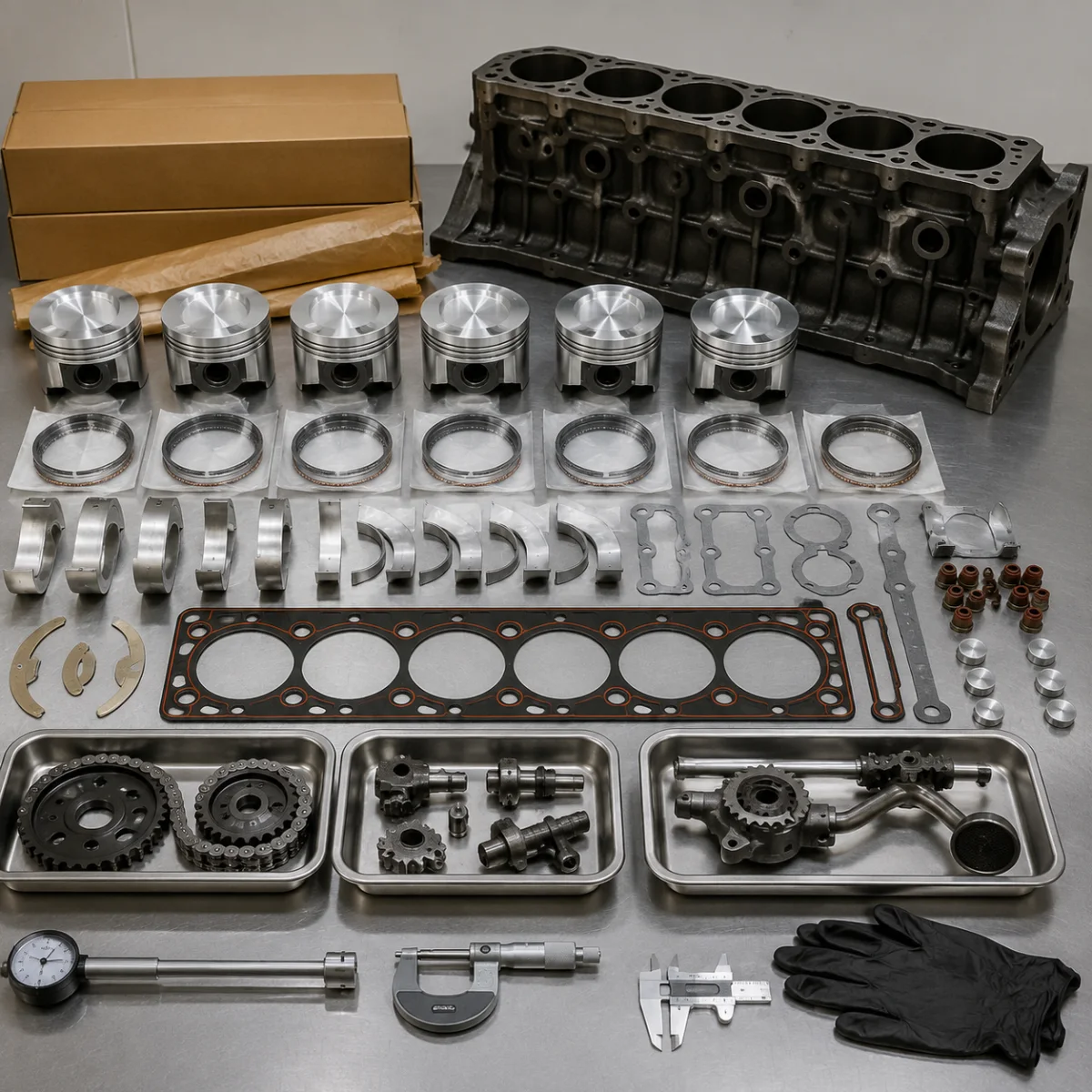
A 12 valve Cummins engine rebuild kit is not a single universal carton. For B2B buyers, the real purchasing question is whether the quoted piston, ring, bearing, gasket, seal and hardware package matches the engine build and the repair depth. Price only becomes comparable after the engine identity, kit contents, option sizes, inspection evidence and packing method are controlled.
The main risk is misfit: a familiar marketplace phrase can hide the wrong piston bowl, an incomplete lower gasket set, mixed bearing sizes, unverified material claims, weak carton separation or a quote that never connects the kit to an engine serial number, CPL, teardown measurement, approved sample and controlled BOM. This guide is written for distributors, import managers and category buyers comparing aftermarket supply options. Cummins, Dodge, Ram and other brand or OE references should be used only for fitment identification; they do not imply approval or endorsement.
Because the supplied source set does not include a verified 12-valve rebuild-kit drawing, current service limit table or complete bill of materials, the procurement path should stay evidence-bounded: identify the engine, freeze the kit scope, request quotation-specific documents, approve samples, and check every reorder against batch inspection records.
Start with engine identity, not the kit name
A useful RFQ begins with the engine file. Include the engine serial number where available, CPL, application, block casting identifier, fuel-system configuration, turbo arrangement, current bore condition and intended repair depth. Without those details, two suppliers can quote the same 12 valve Cummins engine rebuild kit phrase and still build materially different kits.
Define the repair depth before asking for a price:
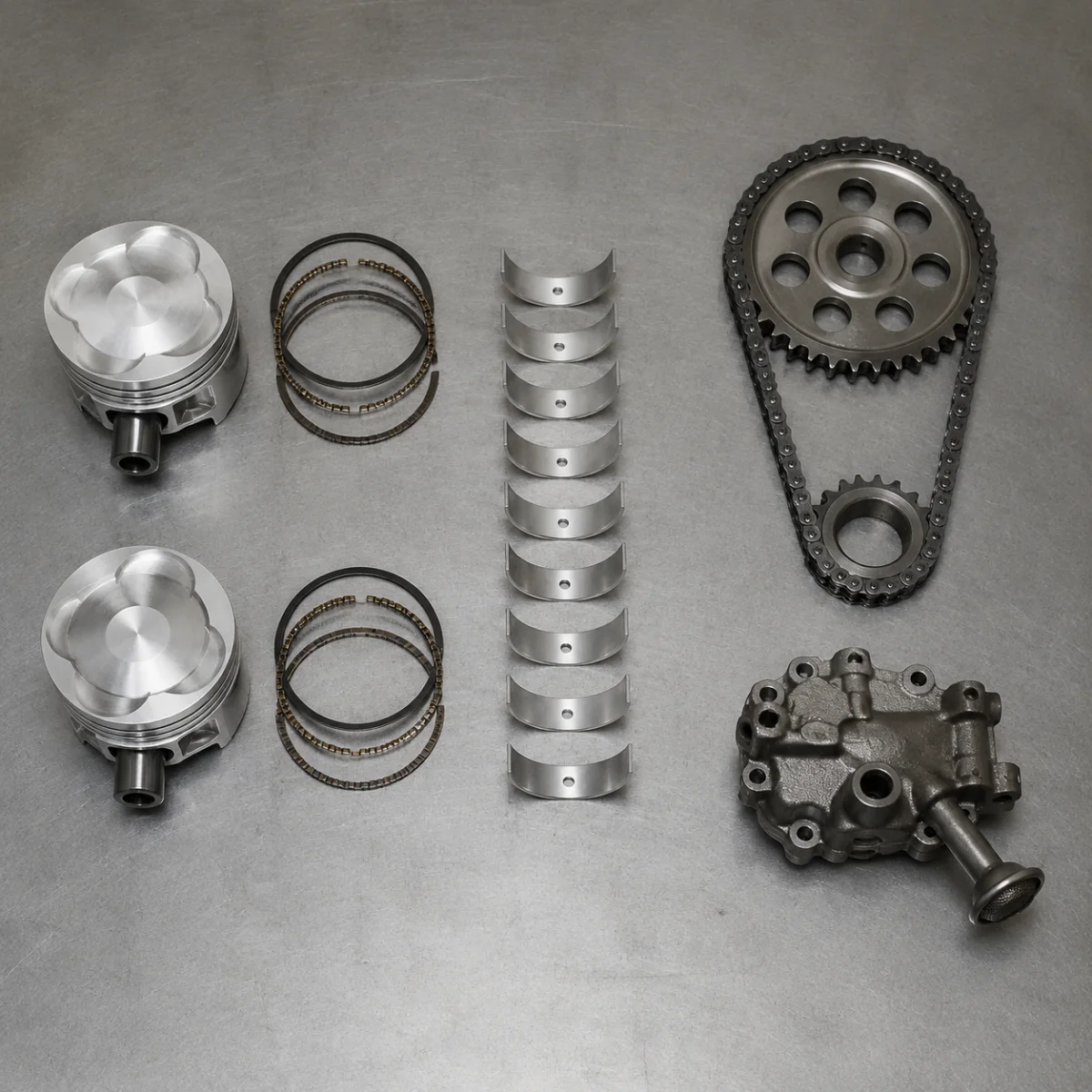
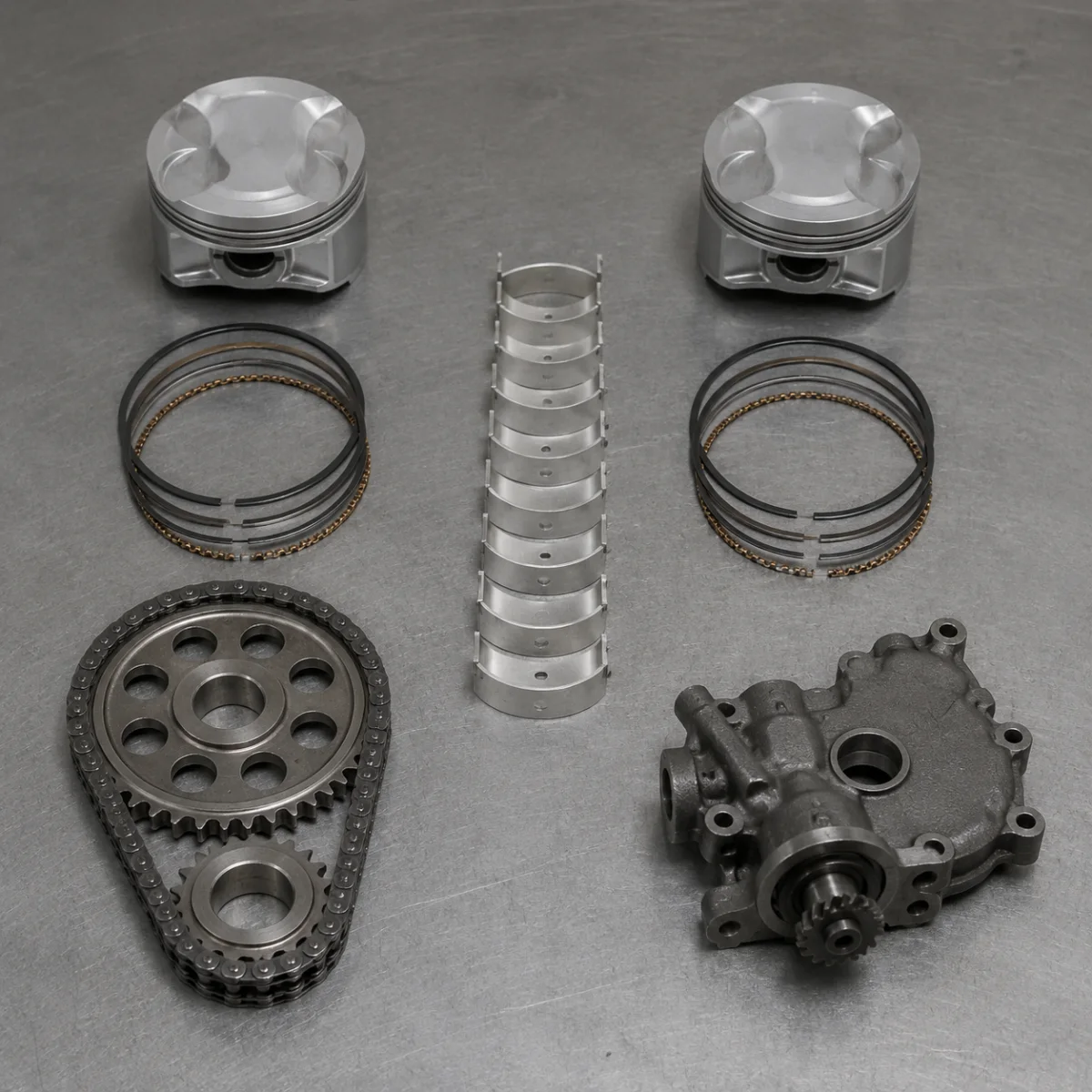
- In-frame kit: pistons, rings, liners or bore parts where applicable, pin bushings, rod bearings, main bearings, thrust washers and upper/lower gasket sets.
- Major overhaul kit: in-frame scope plus oil pump, water pump, cam bushings, timing components or additional hardware only if listed in the agreed BOM.
- Gasket-only kit: upper, lower, turbo, manifold and injector sealing parts, with no rotating assembly content.
- Custom packing set: buyer-defined contents for private label, regional repair habits or mixed inventory needs.
Ask the supplier to write the engine identity fields back into the quotation. The quote should state the fitment basis used: buyer sample, drawing, teardown dimensions, service record or supplier cross-reference. Use engine components and our catalog as internal product-family starting points, but keep the binding specification in the RFQ file: drawings, approved sample record, inspection plan and packaging list. A catalogue title is not a controlled technical description.
Filter out ISX12 keyword confusion early
Diesel catalogues and search results often blend unrelated Cummins naming patterns. A mechanical 12-valve rebuild request is a different procurement case from an ISX12 engine-family search. That distinction should be written into the RFQ, because a short keyword can move from sales to purchasing to a supplier without enough context.
One aftermarket ISX12 article in the supplied source set is dated July 30, 2024. In that ISX12 context, it lists a 130 mm bore, a 150 mm stroke and a 40 quarts oil system capacity. Those are concrete figures with a visible source context, but they are not a 12 valve Cummins engine rebuild kit specification. Their procurement value here is cautionary: numbers from a different engine article should not migrate into a 12-valve kit quotation.
Add a disambiguation line to the purchasing document: "No substitution by engine-name similarity; supplier must confirm fitment against buyer-provided engine serial number, CPL, teardown measurements, approved sample or drawing." This is especially important when sourcing through marketplaces or trading companies that group multiple diesel platforms under broad phrases such as Cummins rebuild kit, diesel overhaul kit or 12 valve kit.
Turn the kit into a line-item BOM
A low quote is not comparable until the contents are comparable. Require a line-item bill of materials instead of a one-line kit description. Each line should show part description, reference number for fitment only, material or coating callout where claimed, quantity per engine, optional grade or size, packaging unit and available inspection evidence.
| RFQ field | Decision value | Buyer verification | ||
|---|---|---|---|---|
| Engine serial number and CPL | Narrows the actual build configuration | Cross-check against service records, teardown notes and buyer drawings | ||
| Repair depth | Prevents in-frame, major overhaul and gasket-only quotes from being mixed | Match every quoted part group to the intended repair job | ||
| Piston and bowl reference | Controls combustion and compression compatibility | Compare sample, drawing, supplier photo set and dimensional report | ||
| Ring set details | Prevents ring thickness, coating or pack-order assumptions | Confirm ring markings, measured dimensions and packaging labels | ||
| Bearing options | Avoids one-size quotations where undersize bearings may be needed | State standard or undersize requirement after crank inspection | ||
| Gasket set contents | Prevents upper/lower kit omissions | Request exploded packing list and sample carton photos | ||
| Seals, washers and hardware | Small omissions can stop an overhaul job | Confirm every seal, washer and fastener count before shipment | ||
| Documentation | Shows whether repeat orders can be controlled | Request dimensional report, material declaration and batch traceability format |
| Data point | Value | Scope | As of | Evidence |
|---|---|---|---|---|
| CFP59 manual copyright year | 2005 year | Copyright line in the Cummins CFP59 Series Operation and Maintenance Manual excerpt for fire pump drive engine documentation | Excerpt retrieved 2026-07-15; source line shows © 2005 Cummins Inc. | Used in the evidence-boundary section to show that official engine documents can be dated and revision-sensitive. Source |
| CFP59 maintenance specifications section | 10 section | Manual navigation reference for Maintenance Specifications in the Cummins CFP59 Series excerpt | Excerpt retrieved 2026-07-15; source text refers to Maintenance Specifications in Section 10. | Used to support the recommendation that buyers verify kit details against current engine documentation. Source |
| CFP59 maintenance schedule section | 4 section | Manual navigation reference for Maintenance Guidelines and schedule table in the Cummins CFP59 Series excerpt | Excerpt retrieved 2026-07-15; source text refers to Maintenance Guidelines in Section 4. | Used to show that maintenance guidance is document-structured and should not be replaced by a supplier shortcut. Source |
| ISX12 article publication date | 2024-07-30 date | Publication date shown in the aftermarket ISX12 engine guide excerpt | Article page dated July 30, 2024 in the excerpt; retrieved 2026-07-15. | Used to identify the date context for ISX12 figures that are not specifications for a 12-valve kit. Source |
| ISX12 bore example | 130 mm | Bore figure in an aftermarket ISX12 engine guide, used only as a non-core keyword-disambiguation example | Article page dated July 30, 2024 in the excerpt; retrieved 2026-07-15. | Used to warn buyers that ISX12 public specifications should not be substituted for 12-valve kit fitment. Source |
| ISX12 stroke example | 150 mm | Stroke figure in an aftermarket ISX12 engine guide, used only as a non-core keyword-disambiguation example | Article page dated July 30, 2024 in the excerpt; retrieved 2026-07-15. | Used with the bore figure to demonstrate the risk of confusing an ISX12 article with a 12-valve kit RFQ. Source |
| ISX12 oil capacity example | 40 quarts | Oil system capacity figure in an aftermarket ISX12 engine guide, used only as a non-core keyword-disambiguation example | Article page dated July 30, 2024 in the excerpt; retrieved 2026-07-15. | Used to reinforce that platform-specific figures in a vendor article are not a rebuild-kit specification for another engine family. Source |
Methodology
Publicly available source excerpts were reviewed for engine-document context, visible numeric figures and relevance to rebuild-kit sourcing. Figures were extracted only where the excerpt showed the value and surrounding context. Cummins documentation was treated as stronger evidence for document-control principles, while the aftermarket ISX12 article was used only for keyword disambiguation, not as a specification for the target kit. Dimensional, material, tolerance, testing, quotation and inspection guidance was framed as buyer verification language because the supplied excerpts do not provide a verified 12-valve rebuild-kit drawing, service-limit table, test plan or supplier-specific claims.
Limitations and what to verify
- The available public source set did not include a complete verified bill of materials, current service specification or dimensional drawing for a 12 valve Cummins rebuild kit; buyers must verify engine serial number, CPL, teardown measurements, drawings and sample inspection reports before ordering.
- The available excerpts did not provide verified tolerances, material grades, coating specifications, test procedures or acceptance criteria for a 12-valve rebuild kit; buyers must request those details from the supplier and compare them with current applicable service documentation or approved samples.
- The ISX12 figures come from an aftermarket article about a different engine context; buyers must not use those figures for 12-valve kit fitment and should require supplier confirmation against current service documentation and approved samples.
- No supplier certification, facility operation, annual capacity, export market coverage, defect rate, price, lead time or customer outcome is stated because those claims were not supported by the supplied research pack.
Sources used
- CFP59 SERIES — mart.cummins.com. Supports the discussion of official engine documentation, maintenance-specification references and the need to verify current manuals.
- Cummins ISX12 Engine Guide: Specs, Maintenance & ... — heavydutykits.com. Used only to illustrate keyword confusion between ISX12 information and a separate 12-valve rebuild-kit sourcing request.
Frequently asked questions
Include engine serial number where available, CPL, application, repair depth, requested kit contents, standard or undersize bearing needs, gasket scope, packaging requirements and required documents. Ask the supplier to return a line-item BOM rather than a single kit name.
Yes, but only for fitment or reference context. The quotation should state that brand names and OE references do not imply approval or endorsement. The supplier must still provide fitment evidence, dimensional checks, material claims where relevant and kit-completeness documentation.
Yes. Approve a packed kit and key loose components before volume purchasing. Check dimensions, markings, gasket construction, bearing options, packaging labels and BOM completeness. Keep a signed approval record and deviation list for reorders.
Ask for quotation-specific measurements for critical features such as piston, ring, bearing, gasket and seal interfaces, using current drawings, service references or approved samples as the control. Material or coating details should be documented only where the supplier makes a claim, then checked against inspection records and sample evidence.
ISX12 is a different engine context from a 12-valve rebuild-kit request. Public ISX12 figures can show why keyword confusion is risky, but they should not be used to define 12-valve kit fitment or dimensions.
Request a line-item BOM, dimensional inspection report, material or coating declaration where claims are made, packaging list, sample approval record, change-control statement and batch traceability format. The documents should match the quoted kit and shipment, not a generic supplier profile.
For a controlled sourcing discussion, send the engine details, target kit scope and document requirements to Driventus. Start with a concise RFQ through request a quote.
Request a Quote