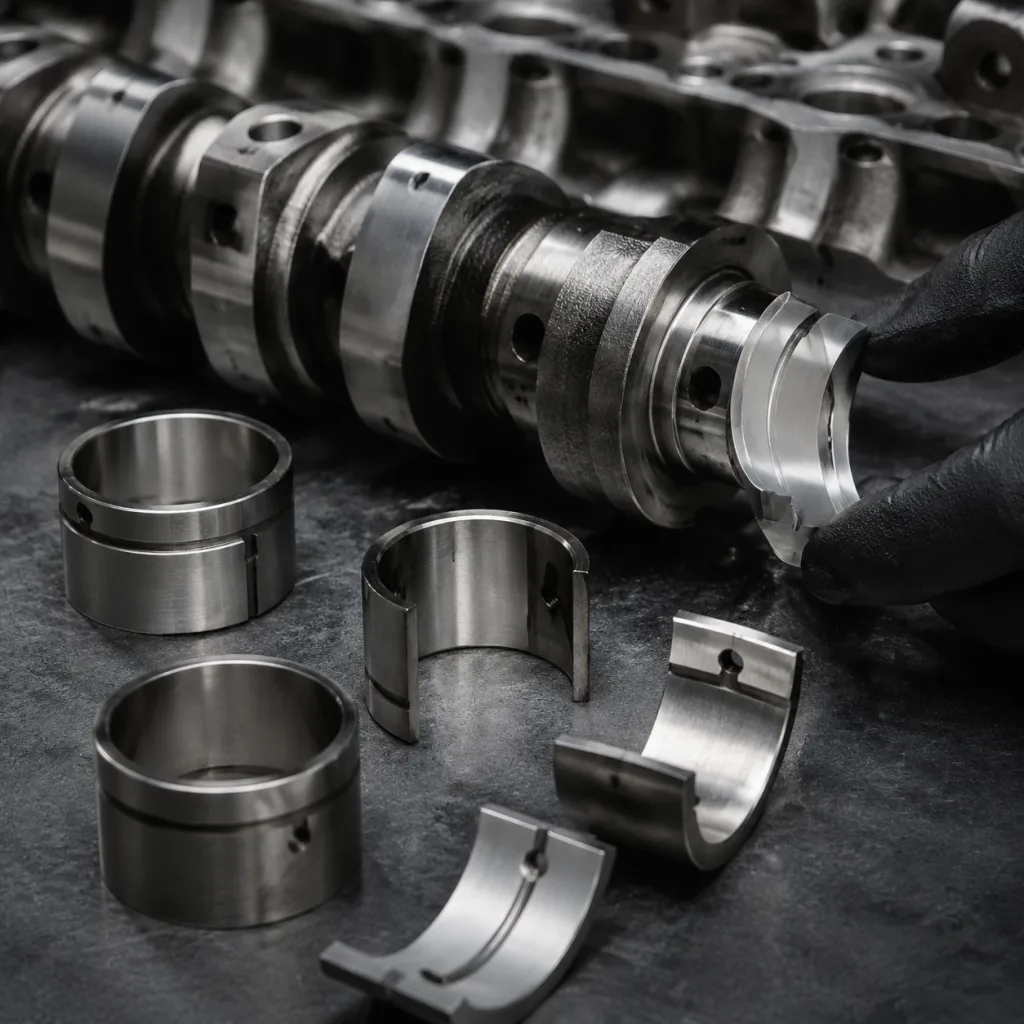
Valve Stem Seal Material Specifications for Buyers
Valve stem seal material choice is not a small line-item decision. It affects oil control, smoke on start-up, emissions durability, turbo heat tolerance and warranty risk. For buyers, the real question is not “what is cheapest?” but “what survives this engine, this oil package and this service interval without creating claims?”
That means the procurement spec has to cover compound family, lip design, stem finish, guide geometry, spring load, packaging and validation. A part that looks OE-like can still fail if the valve stem seal material is wrong for the temperature and oil environment.
Driventus manufactures valve stem seals for aftermarket distributors, OEM service programmes, Tier-1 sourcing projects and private-label engine programmes from Taizhou, Zhejiang. This guide compares the main material families, then shows what to freeze in the drawing, how to check failure risks early, and which documents to request before approval. Driventus is an independent aftermarket manufacturer; brand names and OE references are used for fitment identification only.
Choosing the Right Compound: a Buyer’s Comparison
Valve stem seals work in one of the harshest locations in the cylinder head. They sit beside hot valve guides, must meter oil over millions of cycles, and need to keep their shape under heat, vacuum pulses and lubricant attack. If the compound is wrong, the failure mode is usually obvious: oil consumption rises, the engine smokes, deposits build up and the customer blames the seal.
The main valve stem seal material options are NBR, ACM, FKM, FVMQ and PTFE-based designs. Each has a different balance of cost, heat resistance, low-temperature flexibility, wear resistance and compatibility with engine oils and fuel vapours. The right answer depends less on brand name and more on the engine’s actual thermal load.
Material
Typical continuous temperature range
Typical hardness range
Strengths
Common limits
Best fit
NBR
-40°C to 120°C
70–85 Shore A
Low cost, good mineral-oil resistance, flexible in cold service
Weak high-temperature ageing and ozone resistance
Mature, lower-temperature engines
ACM
-25°C to 150°C
70–85 Shore A
Better hot-oil resistance than NBR, good ageing balance
Less low-temp flexibility than NBR
Mid-load passenger car and light-duty engines
FKM
-20°C to 200°C
75–90 Shore A
Strong heat, oxidation, oil and fuel-vapour resistance
Higher price; formulation quality matters
Turbocharged and long-life applications
FVMQ
-55°C to 180°C
60–80 Shore A
Excellent cold flexibility, good fuel resistance
Tear and abrasion resistance can be lower
Cold-climate or mixed-fuel service
PTFE lip with metal case
-70°C to 230°C, design-dependent
Not Shore A controlled like rubber
Very low friction, broad chemical resistance, high heat capability
Requires precise forming and installation control
High-heat, low-friction or long-drain designs
</tr></thead><tbody> </tbody></table>These are engineering references, not universal promises. Actual service life depends on the compound recipe, post-curing, lip geometry, spring design, stem surface finish, guide material and how the seal is installed. Two seals both described as FKM can still behave very differently if the formulation or cure system changes.
A practical buying rule is simple: NBR is usually the lowest-cost option, ACM sits in the middle, FKM is the safer high-heat elastomer choice, and PTFE often shifts the risk from material ageing to forming and installation control. A small unit-price saving can disappear fast if the seal triggers an oil-consumption claim.
What Goes Wrong When the Seal Spec Is Too Loose
Many sourcing problems do not come from the polymer itself. They come from incomplete dimensions, vague tolerances or assumptions that an OE cross-reference is enough. A high-grade valve stem seal material cannot compensate for poor geometry.
The most common failure modes are predictable:
Too much or too little interference on the stem, which causes leakage, drag or premature wear.
Incorrect installed height, which leads to retainer contact, seal lift-off or assembly damage.
Weak guide retention, often from case thickness, knurling or OD mismatch.
Spring problems, including wrong load, corrosion risk or inconsistent free diameter.
Packaging damage, where the lip is deformed before the seal ever reaches the engine.
Material substitution, where the part looks correct but the compound is different from the approved one.
Before releasing tooling, freeze the full fit envelope. Do not write “6 mm stem”; write the exact nominal and tolerance, such as 5.970–5.985 mm. The same logic applies to the guide OD, chamfer, seal height, retainer clearance and spring seat stack-up.
Key items to define in the drawing or RFQ:
Valve stem diameter and tolerance
Valve stem surface finish and coating, if applicable
Valve guide OD, chamfer geometry and material
Installed seal height and minimum retainer clearance
Lip inside diameter and contact profile
Garter spring material, wire diameter and load requirement
Metal case thickness, coating and retention design
Hardness target and tolerance
Colour, only if used for identification
Packaging method that protects the sealing lip
For critical applications, ask for measurements from at least two production cavities and from multiple pieces per cavity. That catches trial parts that look fine but do not represent the production process. Driventus controls drawings and inspection plans through its quality system, aligned with IATF 16949:2016 and ISO 9001:2015 requirements.
Match the Material to the Engine Scenario, Not the Catalog Note
The right valve stem seal material changes with the engine environment. A good specification describes heat, oil, fuel vapour, duty cycle and service interval. A weak one just says “OE equivalent.”
Turbo petrol and high-heat heads
Turbocharged petrol engines usually push buyers toward FKM or PTFE-based seals because guide temperatures and heat soak are higher. After shutdown, thermal soak can be severe even if the engine does not run at extreme temperature all the time. If the valve-guide area can see 160–190°C peaks, NBR should not be accepted on price alone; it needs ageing proof.
Diesel, long-drain and soot-loaded oil
Diesel engines bring different stress. Soot, long oil-drain intervals and higher load cycles can shorten seal life if the compound is marginal. ACM may work in moderate-duty applications. Older lower-output engines may still be fine with NBR if heat ageing, oil immersion and dynamic oil control are all validated. For modern diesel programmes with EGR and turbocharging, ask for test data tied to the actual oil and ageing temperature, not a generic brochure claim.
Fuel blends and vapour exposure
Fuel compatibility matters more than many buyers expect. Ethanol-blended petrol, biodiesel mixes and crankcase vapours can all affect swelling, shrinkage and compression set. If the application serves flexible-fuel markets or aggressive vapour exposure, FKM, FVMQ or PTFE may need to be evaluated more seriously.
Emissions-sensitive programs
Oil control at the valve guide influences smoke, catalyst loading and particulate output. For emissions-sensitive markets, excess oil consumption is not just a maintenance issue; it can become a compliance issue. ECE R-83 is one relevant European regulation for light-duty vehicles, but it does not “approve” a valve stem seal by itself. Do not treat a regulatory reference as a substitute for engine-level validation.
A useful approach is to specify the reference oil, peak temperature, soak time and drain interval target. That gives suppliers a real test condition instead of a vague promise.
Validation Checklist: the Tests and Papers That Matter
If the quotation comes with only a catalogue image and a hardness claim, the sourcing file is incomplete. Buyers need evidence that the compound, lip, spring and case work together after heat, oil, installation force and cycling.
A practical document pack should include:
Document or test
Why it matters
What to look for
Material data sheet
Confirms polymer family and key properties
Matches the approved compound code and drawing
Dimensional inspection report
Shows cavity and batch consistency
Data from production tooling, not one hand-picked sample
Heat ageing test
Checks hardening, cracking and compression set
No cracks; property drift within agreed limits
Oil immersion test
Measures swelling and hardness change
Results tied to the actual reference oil
Pull-off or retention test
Confirms grip on the guide
Meets minimum force without case distortion
Dynamic oil control test
Verifies metering under motion
Stable operation after the agreed cycle count
Installation trial
Checks assembly behaviour
No lip rollover, shaving or excessive press force
PPAP-style file, where required
Supports controlled sourcing
Control plan, FMEA, traceability and sample approval records
</tr></thead><tbody> </tbody></table>For many programs, heat-age and oil-immersion requirements should be numeric. For example, a buyer may call for 168 h at 150°C for ACM or 175–200°C for FKM, with hardness change and volume change both kept within agreed limits. Use numbers the supplier can actually measure.
Also ask for material declarations where needed. EU-facing shipments may require REACH (EC) No 1907/2006 confirmation, and some customers will also ask for IMDS-style reporting, PAH limits or PFAS-related declarations. If the seal goes into a hybrid or new-energy drivetrain, cleanliness and chemical controls may be even tighter.
For repeat orders, define the shipment pack-up front: batch number, compound lot, cavity, inspection date, hardness result, key dimensions, retention force and quantity released. Those details make warranty sorting possible later.
When to Buy Catalogue Parts and When to Go Custom
Most procurement teams end up in one of two models: buy a known reference, or build a controlled specification.
Catalogue sourcing works best when the buyer needs a fast answer, a stable aftermarket reference and a part already packaged for distribution. It is usually the lower-friction option for common sizes and mature engine families. The trade-off is less freedom to change the seal design, the compound or the packaging.
Custom manufacturing makes more sense when the buyer owns the drawing, wants private-label differentiation, or needs a different spring load, case coating, lip design or valve stem seal material. It is also the better route when the application has a clear thermal or chemical risk and the buyer wants to tune the part around that risk.
Commercial points to settle before approval:
Annual volume and release schedule
MOQ by size, compound and package type
Tool ownership and cavity replacement policy
Sample lead time and production lead time
Labelling, carton strength and pallet requirements
Certificate of analysis and inspection report format
Incoterms, destination market and documentation language
Written change-notification rules for material or tooling changes
Typical pricing behaviour is worth understanding. NBR usually sits at the low end. ACM offers a middle ground. FKM costs more, but on small orders setup and packaging can dominate the piece price anyway. PTFE designs often add more control cost through forming, storage and installation sensitivity. That is why suppliers should quote more than one volume break, for example 1,000 / 5,000 / 20,000 pieces.
Driventus exports to more than 60 countries and operates IATF 16949:2016 and ISO 9001:2015 certified systems. Certification supports repeatable process control and traceability, but final approval should still depend on the buyer’s drawing, test plan and application fit.
Frequently asked questions
FKM and PTFE-based designs are commonly chosen for turbocharged engines because they handle heat and oil exposure better than standard NBR. Final selection should still be validated against guide temperature, oil chemistry, stem finish and the service interval target.
Colour may help with production identification, but it does not prove the compound. Two suppliers can use the same colour for different formulations. Buyers should rely on the compound code, material data sheet, drawing revision and incoming inspection records.
No. IATF 16949:2016 supports process control and traceability, but part performance still depends on the design, compound selection, tooling, test plan and fit to the engine environment.
For drawings, samples or cross-reference review, contact Driventus with your target application, annual volume, valve stem seal material requirement and test documents. You can [request a quote](/contact.html).