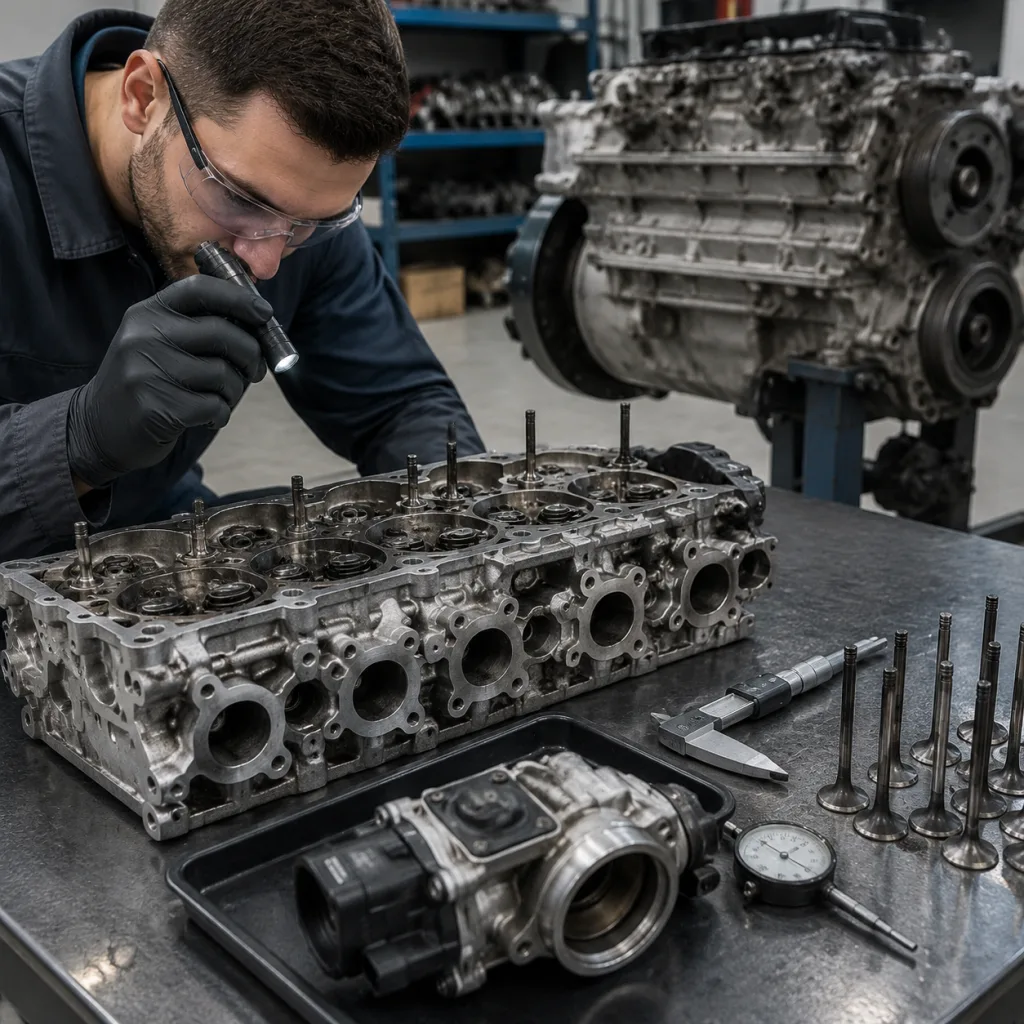
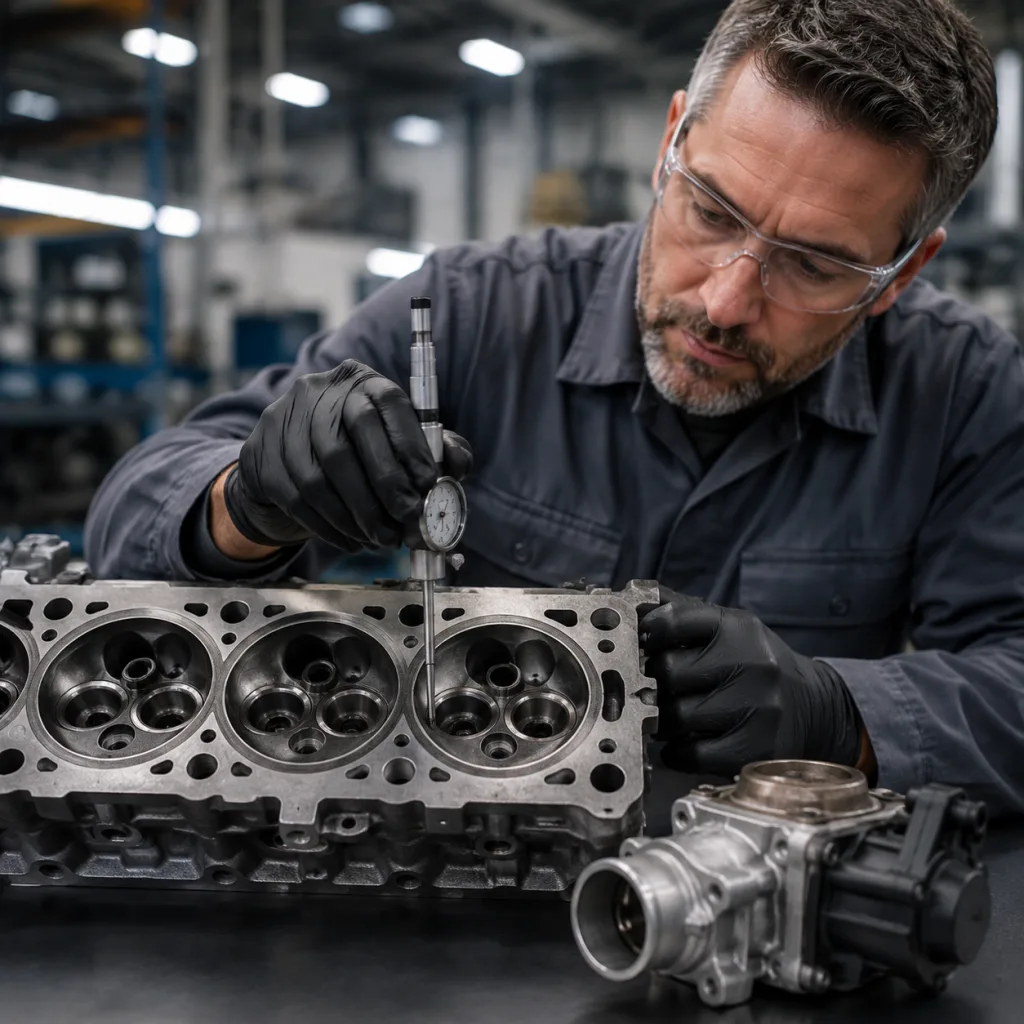
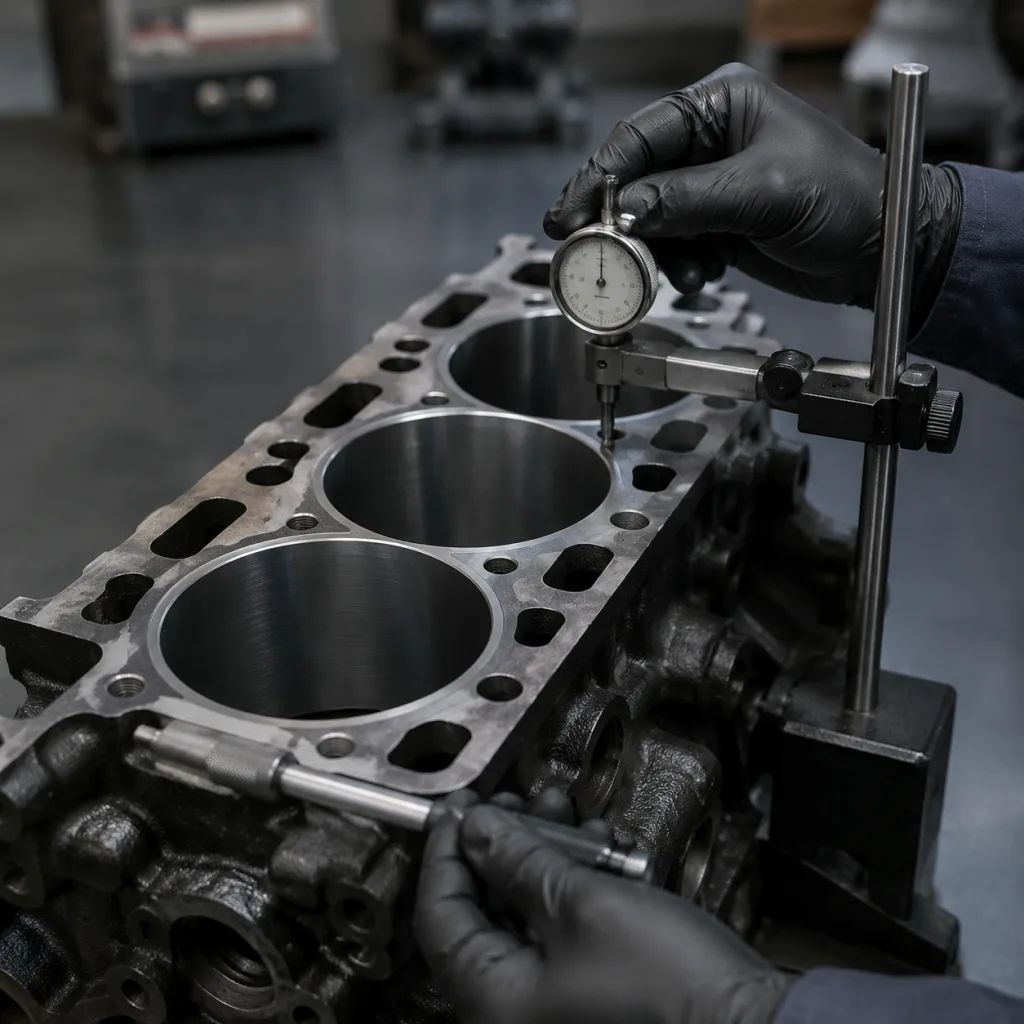
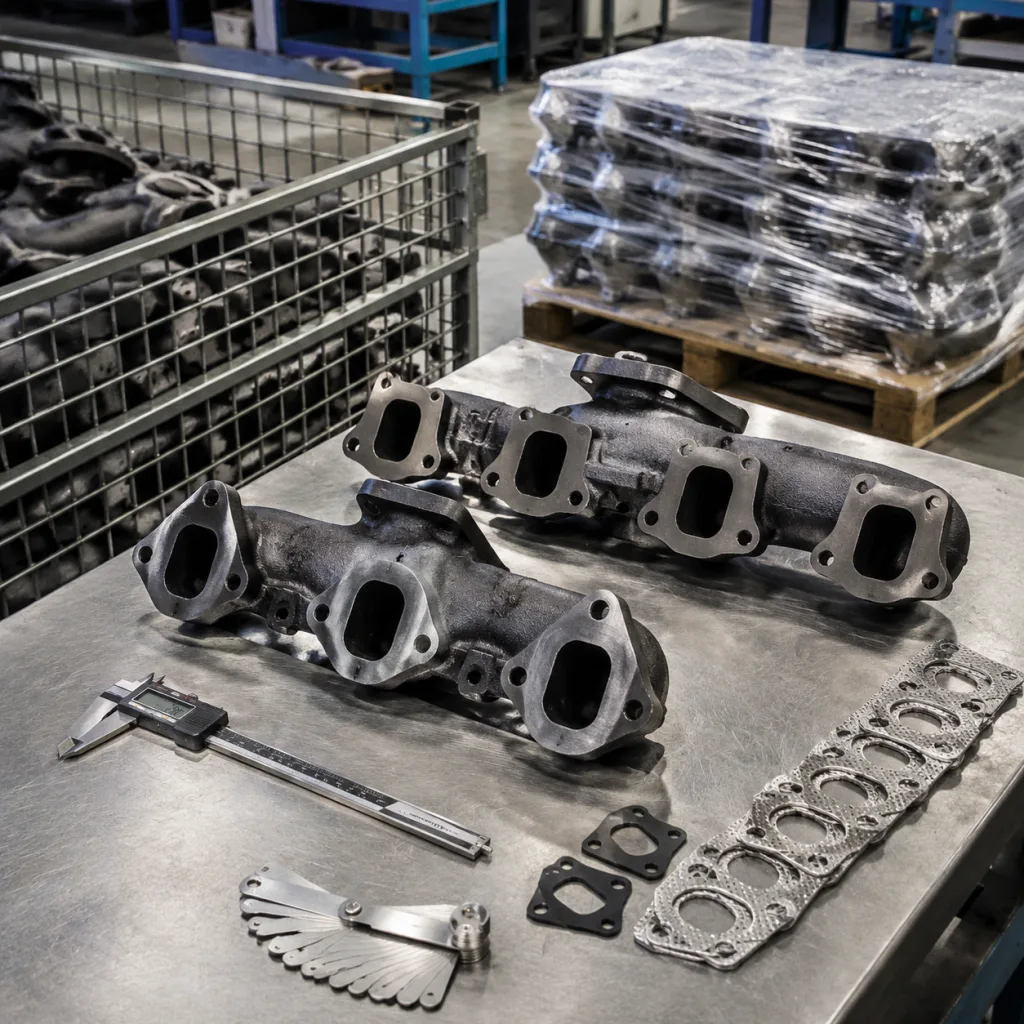
Valve seat recession is rarely an “EGR-only” failure. It usually sits at the intersection of combustion temperature, valve and seat metallurgy, fuel quality, lash control, cooling condition, exhaust backpressure, and service history. The EGR valve matters because it can shift that operating environment. A stuck-open, leaking, restricted, slow, or miscalibrated exhaust gas recirculation valve changes oxygen concentration, burn rate, soot loading, exhaust temperature, and pressure conditions around the exhaust valve.
For fleet repair chains, engine rebuilders, and aftermarket distributors, the commercial risk is not one returned valve. It is repeated labour, head rework, credit notes, disputed warranty files, and a parts programme that technicians stop trusting. A useful valve seat recession egr valve review therefore has to connect workshop data with supplier controls.
The investigation should capture compression spread, leak-down, valve lash trend, EGR command versus feedback, MAF response, closed-seat leakage, actuator movement, gasket match, cooler restriction, and part traceability. As screening points, many teams flag compression variation above 10–15%, leak-down above 20%, lash movement in 0.05 mm steps, or repeated EGR command/feedback deviation above 5–10 percentage points. Those values do not replace engine-maker limits, but they create a consistent warranty language across EU, UK, North American, Australian, and Brazilian markets.
This article is written for buyers and technical teams that need to decide whether an EGR valve is a contributor, a bystander, or a repeat-failure trigger—and how to specify replacement valves before volume sourcing.
Decision Framework: When the EGR Valve Belongs in a Seat-Recession Investigation
Start with one principle: an EGR valve does not physically cut the valve seat. It changes the combustion conditions that can make seat wear worse. That distinction matters in warranty reviews, because it prevents a weak claim such as “EGR caused recession” from replacing a defensible conclusion: “EGR control, leakage, or flow error contributed to operating conditions associated with accelerated seat wear.”
Valve seat recession occurs when the valve and seat interface loses material faster than the engine can tolerate. The valve sits deeper in the cylinder head. Mechanical lash reduces, or a hydraulic lifter moves toward the end of its compensation range. A useful early warning is lash loss of 0.05–0.10 mm over one service interval on an engine that normally remains stable. Later, compression falls, hot gas leakage increases, and the exhaust valve face or seat may show burning, pitting, or gas-cutting.
Use the EGR route when the symptoms fit the control pattern:
Stuck open or leaking closed: excessive dilution at idle or low load, unstable combustion, soot, oil-ash accumulation, rough idle, intake contamination, and possible closed-seat leakage even without a dramatic high-load complaint.
Restricted or stuck closed: reduced EGR flow where the ECU expects it, higher peak combustion temperature, increased NOx tendency, and additional thermal loading during part-load operation.
Slow or poorly calibrated movement: the valve reaches the right position too late, overshoots, hunts, or reports unstable feedback. The workshop sees intermittent driveability faults; the buyer sees repeat warranty noise.
Poor sealing or dimensional variation: gasket mismatch, weak return force, poor shaft sealing, inconsistent pintle position, unstable feedback voltage, or uncontrolled machining variation can create failures that resemble fuel, oil, or cylinder-head defects.
Ask repair partners to record the same fields every time: commanded EGR position, actual feedback position, MAF change during commanded EGR actuation, exhaust gas temperature where fitted, DTC freeze-frame load and rpm, compression, leak-down percentage, and lash trend. Screening triggers include actual EGR position trailing command by more than 5–10 percentage points, no measurable MAF response during commanded operation, actuator movement that is not smooth across a sweep, or evidence that the valve leaks when commanded closed.
For procurement, the key question is repeatability. If valve seat damage appears after EGR replacement across a repair network, do not stop at part-number matching. Check calibration, effective flow area, actuator response time, closed-position leakage, gasket sealing, cooler condition, contamination resistance, and batch records.
Driventus is an independent aftermarket manufacturer; brand names are referenced for fitment only.
Failure-Mode Map: Symptoms That Implicate EGR, Seats, or Something Else
Field notes often compress the problem into the phrase valve seat recession egr valve. That wording is convenient, but it can hide the actual cause. Seat wear can come from unleaded-fuel compatibility, valve and seat metallurgy, overheating, injector imbalance, excessive backpressure, LPG/CNG operation, incorrect valve clearance, or cylinder-head repair quality. EGR inspection is one path through the diagnosis, not the whole diagnosis.
Use the table as a sorting tool. The numbers are practical screening points, not universal pass/fail limits. Final decisions should follow engine service data and the buyer’s warranty policy.
Field symptom
Possible EGR-related cause
Inspection method
Procurement implication
Gradual compression loss on one or more cylinders
Elevated exhaust temperature from low, restricted, or no EGR flow
Record dry/wet compression; flag cylinders more than 10–15% below bank average; compare EGR command vs feedback and EGT if available
Require actuator calibration, flow-bench validation, and batch-level test records
Rough idle, soot deposits, and intake contamination
EGR valve stuck open or leaking at closed seat
Smoke test intake path; inspect pintle seating face; run bidirectional EGR sweep; check if idle changes when valve is commanded closed
Specify closed-position leakage limits and contamination-resistance checks
Valve lash closes up after service interval
Seat wear accelerated by thermal loading or hot gas leakage
Measure lash cold with feeler gauges; trend changes in 0.05 mm steps; inspect valve margin and seat width during head service
Avoid parts without validated flow curve, response time, and dimensional reports
Burnt exhaust valve after EGR service
Incorrect EGR rate, cooler blockage, gasket mismatch, or relearn not performed
Check gasket port shape, cooler pressure drop, valve adaptation status, and manifold leakage
Require OE-style interface dimensions, correct gasket kits, and installation notes
Repeat EGR fault codes after replacement
Feedback sensor instability, motor binding, wiring load issue, or carbon seizure
Run actuator sweep test; monitor feedback voltage or percentage for dropouts; compare current draw to reference
Audit end-of-line electrical and functional movement testing, not continuity only
Excessive NOx-related faults after repair
EGR under-flow due to small effective port area or slow opening
Compare MAF reduction during EGR command; inspect cooler and pipe restriction; road-test at part load
Ask supplier for application-specific flow targets and sampling plan
Inspect turbo seal condition, PCV system, cooler leakage, and EGR seat deposit pattern
Review material, coating, shaft seal, and pintle geometry before repeat orders
</tr></thead><tbody> </tbody></table>A single row should not close the case. For example, rough idle plus a leaking EGR seat may explain unstable combustion, but it does not prove the recession mechanism unless lash, compression, leak-down, heat history, and valve-face evidence also point in the same direction. Likewise, a burnt valve after EGR service may come from a reused gasket, an unperformed adaptation, or a blocked cooler rather than the replacement valve itself.
Step-by-Step Claim Triage Before the Cylinder Head Comes Off
A disciplined claim sequence saves money. Removing the cylinder head first can destroy context, scatter evidence, and leave the importer arguing from photos instead of live data. Use one report format across repair locations so claims can be compared by engine code, valve batch, mileage, installation date, and market.
1. Confirm the complaint. Record mileage, engine code, DTCs, freeze-frame rpm/load/coolant temperature, misfire counters, idle stability, smoke level, compression, cylinder leakage, NOx-related faults, and exhaust temperature data where available. Compression differences above 10–15% or leak-down above 20% should be escalated. 2. Review service history. Check fuel type, LPG/CNG conversion where relevant, valve clearance adjustments, cylinder-head repair records, injector replacement, turbo or PCV oil issues, cooling system repairs, overheating events, and previous EGR valve replacement date. 3. Scan EGR command and feedback. Compare commanded valve position with actual feedback during idle, part-load, deceleration, and a bidirectional actuator sweep. Note deviation in percentage points, response delay, current draw if the tool supports it, and whether feedback jumps or drops out. A repeated 5–10 percentage point deviation from command is a useful warranty trigger for deeper testing. 4. Check airflow response. On many MAF-equipped engines, commanded EGR opening should reduce fresh-air mass flow at steady idle or part-load. No MAF movement, excessive movement, or unstable movement can indicate blockage, leakage, incorrect calibration, or a sticking valve. 5. Inspect the EGR path before blaming the valve. Check the valve seat, pintle, shaft, cooler, gasket, and connecting pipe for carbon restriction, oil ash, coolant deposits, loose fragments, bent flanges, cracked welds, or mechanical damage. Photograph the gasket orientation before removal. 6. Bench-check the valve. Confirm connector condition, pin security, coil or motor resistance where service data is available, smooth actuator travel, closed seating, and visible machining damage. For vacuum units, apply vacuum and confirm that the diaphragm holds for at least 30 seconds without obvious decay. 7. Check valve-train evidence. Measure valve lash or hydraulic lifter compensation range. Inspect valve face, valve margin, seat width, seat concentricity, stem height, guide wear, and gas-cutting. Record measurements in millimetres rather than only writing “worn”. 8. Verify replacement fitment and software steps. Confirm connector type, pin count, mounting face, gasket profile, coolant port location where applicable, pipe angle, software learning requirements, and whether an adaptation reset is needed after installation.
Claim-file red flags
EGR valve replaced without actuator adaptation, basic setting, or relearn where the engine management system requires it.
Gasket port does not match the valve and manifold geometry, or an old crushed gasket was reused.
Carbon build-up returned within 5,000–10,000 km without PCV, turbo, injector, or cooler checks.
Valve seat wear appears across multiple cylinders after an overheating or over-fuelling event.
EGR cooler restriction, internal leakage, or pipe blockage was not checked.
Claim file lacks live data, photos, batch code, installation date, and mileage.
The report should separate observations from conclusions. “Closed-position leakage found, MAF response abnormal, lash reduced by 0.10 mm, exhaust valve shows gas-cutting” is useful. “EGR caused valve seat recession” is too broad unless the evidence supports that chain.
Specification Deep-Dive: What an EGR Valve Must Prove Before Volume Buying
Replacement should be based on measurable faults, not just stored diagnostic trouble codes. A code can point to wiring, vacuum supply, cooler restriction, a failed temperature or pressure sensor, contamination, missing adaptation, or a control-strategy issue. For buyers, the RFQ should define how a replacement EGR valve will be accepted—not merely which part number it crosses to.
Build the specification around the failure modes that drive repeat claims:
Dimensional fit: mounting hole position, flange flatness, gasket land width, pipe interface, connector orientation, and coolant-port location matched to the application family. RFQs should call out critical machined surfaces, such as flange flatness within 0.05–0.10 mm and bolt-hole position within drawing tolerance, rather than accepting “fit OK”.
Flow control: stable opening curve across the operating range, verified on flow or functional test equipment. Request a reference curve or at least low/mid/high opening validation points for each application family.
Leakage control: closed-position leakage checked before packing, especially for electronically actuated units. Define test pressure and maximum leakage for the programme instead of leaving leakage as a visual judgement.
Thermal durability: housing, shaft, seals, and actuator isolation suitable for exhaust-side heat exposure. Validation may include thermal cycling, hot soak, and post-cycle movement checks.
Contamination resistance: pintle and seat design evaluated against soot and oil-ash deposits. For high-soot diesel applications, ask how the supplier validates sticking resistance after deposit exposure.
Electrical validation: motor current, sensor output, insulation, pin retention, and response time checked at end of line. Continuity testing alone is not enough for electronic EGR valves.
Traceability: batch code, cavity or line identification where applicable, test record retention, and packaging labels suitable for importer warranty management.
Service kit completeness: correct gasket, O-ring, clamp, or installation note included when the application requires it.
Stage the commercial release. Start with 5–20 sample pieces for dimensional and workshop fitment review. Move to 50–200 pilot pieces across several repair locations. Release volume only after 60–90 days of field feedback or an agreed mileage threshold. This slower path is cheaper than launching a weak part and then paying for diagnostics, freight, credit notes, and reputation repair.
MOQ depends on the programme. Catalogue items may have lower entry quantities. Private-label packaging, connector variants, special gaskets, new tooling, or added validation can raise MOQ and require a deposit. Unit price should be judged with warranty rate, freight cube, packaging damage rate, and credit-note handling—not as an isolated FOB figure.
Driventus manufactures EGR valves and related engine components in Taizhou, Zhejiang, under IATF 16949:2016 and ISO 9001:2015 controls. Buyers can review our catalog, relevant engine component lines at /products/engine-components.html, and our documented quality system. For programmes requiring application-specific flow curves, connector variants, gasket kits, or private-label packaging, custom manufacturing can be assessed before tooling, sampling, or pilot release.
Importer Compliance: Claims You Can Make, Records You Should Keep
EGR valves sit close to emissions performance, so catalogue language needs discipline. A replacement part can be presented for fitment and functional equivalence without claiming vehicle manufacturer approval, endorsement, or emissions certification for the complete vehicle. This is not a wording detail. It affects invoices, labels, marketplace listings, technical sheets, and dispute handling.
Relevant compliance and quality references include:
Area
Standard or regulation
Practical sourcing relevance
Quality management
IATF 16949:2016
Process control, traceability, corrective action, change control, and automotive production discipline
General quality system
ISO 9001:2015
Documented procedures, supplier control, inspection records, and continual improvement
Chemical compliance
REACH (EC) No 1907/2006
Substance controls for materials, coatings, seals, lubricants, and packaging entering the EU market
Vehicle emissions context
ECE R-83
Regulatory framework relevant to emissions behaviour for certain vehicle categories
Durability and field control
Customer-specific validation plans
Flow testing, leakage testing, thermal cycling, vibration, salt spray where relevant, and contamination checks agreed by buyer and supplier
Import documentation
Buyer market requirements
HS code review, country-of-origin marking, packing list accuracy, label language, and material declarations
</tr></thead><tbody> </tbody></table>Ask for certification copies, material declarations where required, production part inspection records, control plans, PFMEA or equivalent process-risk summaries when available, and end-of-line test summaries. For electronically actuated EGR valves, confirm what “tested” means. Continuity only is a weak control. Functional movement, feedback signal, current draw, response behaviour, and closed-seat checks are more relevant to field reliability and to defending valve seat recession egr valve warranty disputes.
Change control deserves a written rule, not a phone call. Require notification before changes to casting source, motor supplier, sensor supplier, seal compound, machining fixture, software calibration where applicable, gasket supplier, or packaging. For repeat orders, carton labels should include part number, batch number, production date, quantity, and purchase order reference. Test records should be retained for an agreed period, commonly at least 24 months for aftermarket importer programmes.
Where OE part-number cross-references are used, treat them as fitment references only. For example, a catalogue may map a part family against a generic reference such as OE 06A… or OE 11251… when applicable to the buyer’s own data. Driventus is an independent aftermarket manufacturer; brand names are referenced for fitment only.
Buyer Scenario: A Cheap EGR Valve Becomes an Expensive Repeat Failure
Consider a distributor supplying a multi-location repair chain. The first shipment looks attractive: low unit price, acceptable appearance, and fast delivery. Three months later, claims begin. Some vehicles return with rough idle and soot. Others show repeat EGR codes. A few develop compression loss and suspected valve seat wear. The workshop writes “valve seat recession egr valve” on the claim form, but the files are inconsistent. Some include photos. Few include live data. Almost none record gasket orientation or adaptation status.
This is where sourcing discipline protects margin.
Use this checklist when qualifying an EGR valve supplier:
Request a sample inspection report covering critical dimensions, flange flatness, connector fit, actuator movement, feedback signal, and leakage.
Confirm whether every valve receives end-of-line functional testing or whether testing is by sampling only. For electronic units, request movement and feedback checks, not continuity alone.
Ask for flow or position-control validation at defined opening points, including the test pressure or bench method used.
Define acceptable cosmetic and functional conditions for machined sealing faces, gasket lands, pins, and actuator housings.
Review packaging protection for actuator housings and machined faces during sea freight, including inner dividers, caps, desiccant where needed, and drop-test expectations.
Confirm batch traceability down to production date, line, test station, and inspection lot.
Agree warranty evidence requirements before the first shipment: photos, DTCs, live data, mileage, installation date, vehicle application, batch code, and return-part handling.
Set MOQ and lead-time expectations early. Separate catalogue-stock orders from private-label packaging, new-tooling, or connector-variant orders.
Use pilot orders before large launches. A common pattern is sample approval, pilot shipment, field feedback, then volume release by application family.
For repair-chain supply, provide technicians with an inspection sequence so claims are documented consistently.
Price needs context. Quote it with annual volume, order frequency, packaging type, gasket inclusion, test level, Incoterms, and forecast stability visible. A small MOQ can carry a higher unit price because setup, testing, labels, and export documents are spread over fewer units. Larger blanket orders can lower cost, but only if release schedules, safety stock, and forecast-change rules are agreed.
Lead time also has layers: sample preparation, sample evaluation, production queue, manufacturing, inspection, packing, and freight. Do not compare one supplier’s catalogue-stock lead time with another supplier’s new-application development lead time.
Driventus supports distributors, wholesalers, OEM/Tier-1 buyers, and multi-location repair chains with EGR valve sourcing, private-label packaging, and application development. Export shipments are supplied to 60+ countries, with documentation aligned to importer needs. For a specific application, buyers can request a quote with engine code, target market, annual volume, target price band, forecast order quantity, packaging requirement, and any known cross-reference data.
Frequently asked questions
It can contribute to operating conditions that accelerate seat wear, but it should not be treated as the only cause without evidence. Check EGR flow, closed-seat leakage, actuator feedback, MAF response, exhaust temperature, fuel system condition, cooling performance, valve clearance trend, and leak-down before assigning root cause.
Inspect live command versus feedback data, carbon deposits, gasket alignment, cooler restriction, pipe leakage, wiring, actuator movement, and closed-seat condition. Also check compression, valve lash, valve margin, seat width, and leak-down if recession is suspected.
Request IATF 16949:2016 or ISO 9001:2015 certification, control plans, sample inspection reports, end-of-line functional test evidence, flow or movement validation, material compliance information for REACH (EC) No 1907/2006 where applicable, batch traceability records, and change-control commitments.
If you are reviewing EGR valve failures or qualifying a supplier for a repair-chain or distribution programme, Driventus can provide fitment review, samples, pilot-order planning, and production documentation. Send application details, engine code, annual volume, target market, and packaging needs through /contact.html